
RECENT ADDITIONS & FEATURED ORCHIDS

(Cattleya violacea × Cattlianthe Busy Bev)
Grown from seed so flower characteristics vary somewhat from plant to plant. Compare the blooms pictured for examples of these variations.
Plants Available: Growing in 4” pots. The 4” Pot - Small option is near blooming size. The 4” Pot option is blooming-size.
Orchid Care: Grow in bright indirect light with strong air circulation and moderate to high humidity. Allow plants to dry out between waterings. Mature plants can be grown potted or mounted. Fertilize weakly, weekly.
-
06.06.25
(Brassavola nodosa x Cattleya dormaniana)
Primary hybrid of the species Brassavola nodosa and Cattleya dormaniana. Plants reach blooming-size at an early age—the flower pictured is a plant from this crop blooming in a 2” pot. Plants produce more flowers as they mature.
‘Merry Green’ mericlone
Plants Available: Growing in 4” pots. An example of the 4” Pot option is pictured. Plants are blooming-size.
Orchid Care: Grow in high light (bright, indirect sun) with strong air circulation and moderate to high humidity. Allow plants to dry between watering. Plants may be grown potted or mounted. Plants are prime size for mounting when they outgrow their 4” pots. Fertilize weakly, weekly.
—
10.08.26

(Rlc. Meditation × Rlc. Donna Kimura)
Flowers open light pink and become a darker shade of lavender as they age. Blooms are large, showy and fragrant. Mature plants can bloom twice a year.
‘Julie’ mericlone.
Plants Available: Growing in 4” pots. An example of the size available is pictured. Orders will be filled with plants in sheath/bud/bloom as blooming season and blooming stock permit.
Orchid Care: Grow in bright indirect light with strong air circulation and moderate to high humidity. Allow plants to dry out between waterings. Plants may be grown in pots or mounted. We recommend growing potted or in a basket in order to accommodate the stature of the plant. Fertilize weakly, weekly.
-
09.19.26
(Van. Lou Sneary x Rhy. coelestis)
Compact Neofinetia-Rhy. coelestis hybrid. Blooms are light coerulea (darker when grown in higher light) and fragrant.
Grown from seed so flower characteristics vary somewhat from plant to plant.
Plants Available: Examples of the size available are pictured. Plants have multiples fans and are growing bare root on black plastic plaques.
Orchid Care: Grow in bright, indirect light, with strong air circulation and moderate to high humidity. Plants can grown as they come on plastic plaques or remounted on cork or wood. Water generously, allowing the root system to dry thoroughly between waterings. Fertilize weakly, weekly.
—
09.12.26
Introducing our signature orchid—Vanda sanderiana alba. Endemic to the Philippines, this species and has a long and significant history in Vanda hybridizing. Its two-tone color form and flower shape were prized by earlier breeders, making it a key ancestor to many popular commercial Vanda hybrids.
We’re currently offering plants from our most recent lines of breeding. (These may be sib crosses or selfings.)
Grown from seed.
Plants Available: Growing in 2” pots and in hanging baskets. Examples of the size available are pictured. The basket option (Basket - NBS) is a near blooming-size.
Orchid Care: Grow in high light—bright, indirect sun (about 50% shade). Protect from direct midday sun. Younger plants should be kept in slightly shadier conditions than mature, blooming-size plants to ensure robust root and foliar development. Allow roots to expand and hang freely. Provide strong air circulation and high humidity in the growing environment. Water regularly—daily when conditions are hot and plants do not receive rain. Protect from temperatures below 60F. Fertilize weakly, weekly.
-
09.11.26
Syn. Cattleya tenebrosa
Grown from seed so flower characteristics will vary somewhat from plant to plant.
Plants Available: Growing in 4” pots. Examples of the size available are pictured.
Orchid Care: Indigenous to Brazil, though virtually extinct in nature. Plants require bright light, high humidity, and strong air circulation. Grow in open, fast-draining media (e.g. coarse bark, perlite, LECA) and a container or mount that will likewise allow roots to dry out quickly (e.g. wooden basket, cork slab, or driftwood). Roots that remain wet for prolonged periods are susceptible to rot. Fertilize weakly, weekly.
-
10.06.26
(Rlc. Mahina Yahiro × Cattleya Odom’s Grand Delight)
The first bloom of the crop is pictured and we’re delighted to find she looks like a compact Mahina Yahiro! Flowers are also fragrant—a pleasantly sweet scent.
This crop has been grown from seed, so flower characteristics may vary from plant to plant. Stay tuned fro additional examples from the crop as we continue to bloom them.
Plants Available: Growing in 4” and 6” pots. An example of the 4” Pot option is pictured. This option is a blooming-size plant. The 4” Pot - Sm option is near blooming-size, expected to reach bloom size in summer 2026. The 6” Pot option is a mature plant.
Orchid Care: Grow in bright indirect light with strong air circulation and moderate to high humidity. Allow plants to dry out between waterings. Plants may be grown in pots or mounted. Fertilize weakly, weekly.
-
10.06.26
(Guarianthe bowringiana × Cattleya guttata)
This primary hybrid of Gur. bowringiana and C. guttata is a classic. Mature plants produce impressive heads of flowers with several waxy magenta blooms and are highly fragrant.
‘Grape Wax’ mericlone.
Plants Available: Growing in 3” pots. Plants available are near blooming-size. Examples of the size available are pictured.
Orchid Care: Grow in bright indirect light with strong air circulation and moderate humidity. Allow plants to dry out between waterings. Once mature, plants may be grown in pots or mounted. Fertilize weakly, weekly.
—
08.10.26
(Cattleya intermedia x Cattleya nobilior)
Primary hybrid of Cattleya species C. intermedia and C. nobilior. Blooms in a pair or cluster of creamy coerulea flowers with a lavender flare. Fragrant.
‘Chief’ mericlone.
Plants Available: Growing 4” pots. An example of the size available is pictured. Plants are blooming-size.
Orchid Care: This variety has a rambling growth habit, which makes it a good candidate for mounting. But plants can be also be grown potted, using a bark-based substrate that drains freely. Grow in bright indirect light with good air circulation and moderate humidity. Allow plants to dry out between waterings. Fertilize weakly, weekly.
—
08.06.26
(Rlc. Hisako Akatsuka x Rlc. Hawaiian Lightning)
Fragrant, splash petal Cattleya hybrid. Mature plants blooms in a cluster.
‘Paradise’ mericlone.
Plants Available: Growing in 4” pots. Examples of the sizes available are pictured. The 4” Pot option is a blooming-size plant. The 4” Pot - Small option is near blooming size (perhaps an additional year to first flowering).
Orchid Care: Grow in bright, indirect light with strong air circulation and moderate to high humidity. Mature plants can be potted or mounted. Provide strong air circulation in the growing environment. Plants should dry out between waterings. Fertilize weakly, weekly.
—
07.23.26
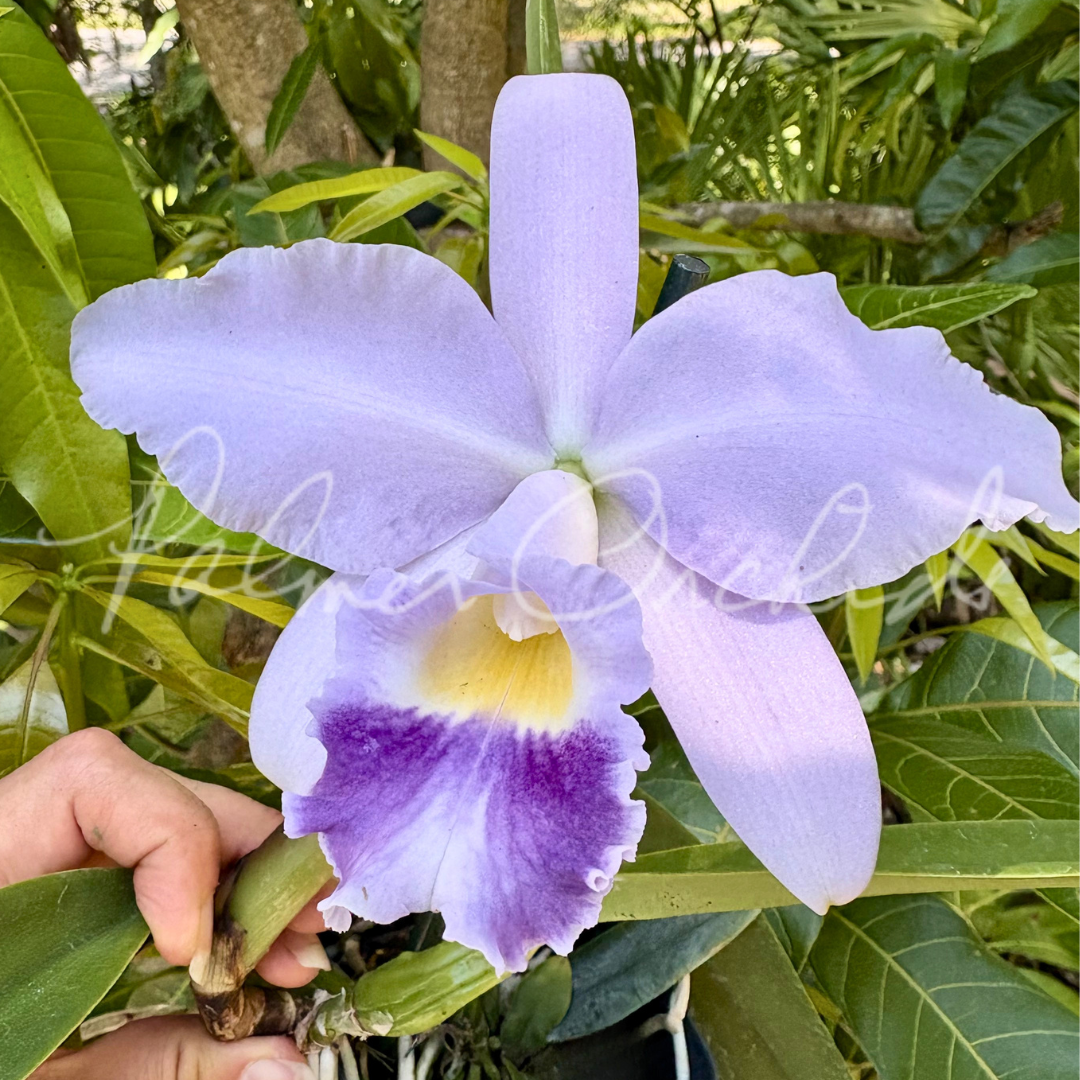
(Lc. Cornelia ‘Floralia’ x Lc. Love Knot ‘SVO’)
Compact-growing Cattleya hybrid with indigo blue and purple flowers that typically bloom in a pair.
Grown from seed so flower characteristics vary somewhat from plant to plant. Blooms from three individuals are pictured to illustrate these variations.
Plants Available: Growing 4” pots. Examples of the size available are pictured. Plants are blooming-size.
Orchid Care: Plants can be grown potted, using a bark-based substrate that drains freely, or mounted. Grow in bright indirect light with good air circulation and moderate humidity. Allow plants to dry out between waterings. Fertilize weakly, weekly.
—
05.29.26
(Onc. Mem. Dale Lawless × Alcra. Mem. Jay Yamada)
Blooms in a spray of large, star-shaped fuchsia flowers. Each new growth produces 1-2 inflorescences of several flowers.
‘Hoku’ mericlone.
Plants Available: Growing in 4” pots. Examples of the sizes available are pictured. Orders will be filled with plants in spike or bloom as blooming season and blooming stock permit; otherwise, mature plants, previously bloomed.
Orchid Care: As for intergeneric Oncidiums. Grow in bright, diffused light, no direct sun. Plants may be grown mounted, established in baskets, or potted in a bark mix or sphagnum. Whichever is used, water just as the media are approaching dryness.
-
10.09.26
(Rlc. Mahina Yahiro × Haruko Kanzaki)
The ruffly purple bloom pictured is the first bloom of the crop.
This crop has been grown from seed, so flower characteristics may vary from plant to plant.
In this instance, the colors resemble those of parent Rlc. Haruko Kanzaki. Other plants may bloom with similar or lighter shades of purple/pink like the Rlc. Mahina Yahiro parent of the hybrid.
Plants Available: Growing in 4” and 6” pots. Examples of the 4” pot sizes are pictured. The 4” Pot option is a blooming-size plant. The 6” Pot option is mature. Orders will be filled with plants in sheath/bud/bloom as stock permits.
Orchid Care: Grow in bright indirect light with strong air circulation and moderate to high humidity. Allow plants to dry out between waterings. Plants may be grown in pots or mounted. Fertilize weakly, weekly.
-
06.20.26
This hybrid does not currently have a registered name.
Spotted Cattleya hybrid. Fragrant.
Grown from seed, so flower characteristics will vary somewhat from plant to plant. Blooms from three individuals are pictured to illustrate such variations.
Plants Available: Growing in 4” pots. Examples of the 4” Pot and 4” Pot - Lg options are pictured. Both options are blooming-size.
Orchid Care: Grow in bright indirect light with strong air circulation and moderate humidity. Allow plants to dry out between waterings. Plants may be grown potted or mounted. We recommend leaving younger plants potted and mounting as they mature and begin to outgrow their pots. Baskets and wood mounts are both good options. Fertilize weakly, weekly.
—
05.29.26
(Ren. Kalsom × Vanda Vilairat)
Renantanda with a head of vibrant orange blooms.
Mericlone.
Plants Available: Examples of the size available are pictured. Plants are mature, previously bloomed. Orders will be filled with plants in spike/bloom as stock permits; otherwise, mature plants which have bloomed previously.
Orchid Care: Grow in high light—bright, but indirect sun—and water generously. In the hotter months, plants should be watered daily. Reduce watering somewhat with cooler temperatures, when plants are not actively growing. Protect from temperatures below 55F. Fertilize weakly, weekly.
-
07.29.26
(Ons. Rustic Bridge × Onc. Crowborough)
‘Golden Red Star’ mericlone.
Floriferous, branching bloom spikes of rich red flowers (about half-dollar size). Golden yellow petal tips. Pseudobulbs are distinctively plump and round. Each new growth produces 1-2 inflorescences of several flowers.
Plants Available: Growing in 4” pots. Orders will be filled with plants in spike/bud/bloom as blooming season and blooming stock permit; otherwise, mature plants, previously bloomed.
Orchid Care: As for intergeneric Oncidiums. Grow in bright, diffused light, no direct sun. Plants may be grown mounted, established in baskets, or potted in a bark mix or sphagnum. Whichever is used, water just as the media are approaching dryness.
—
10.06.26
(Bc. Richard Mueller × Cattleya tenebrosa)
A new favorite for lovers of nodosa hybrids. This variety blooms easily and often. Flowers are golden shades of yellow, orange, and peach. Blooms often change color as flowers open and age.
Grown from seed so flower characteristics vary from plant to plant.
Plants Available: Growing in 3" and 4” pots. Both options are blooming-size. Examples of the 3” Pot and 4” Pot options are pictured. Orders will be filled with plants in spike/bud/bloom as blooming season and blooming stock permit.
Orchid Care: Grow in bright indirect light with good air circulation and high humidity. Allow plants to dry between watering. Plants may be grown potted or mounted. For potted plants, use an open, freely draining medium. (Plants in this initial release (Spring 2025), should not be repotted/mounted for 1-2 years.) Fertilize weakly, weekly.
-
09.13.25
(Oncidium Jimbo × Oncidium Sharry Baby)
Much like Onc. Sharry Baby in care, appearance, and fragrance, but perhaps a bit fruitier in aroma. Petal tips and nose are light yellow and bloom spikes, shorter and stockier.
Blooms with the maturation of each new growth, typically twice a year (spring and fall).
‘Raspberry Chocolate’ mericlone.
Plants Available: Growing in 4” pots. Examples of the 4” Pot option are pictured. Orders will be filled with plants in spike/bud/flower as blooming season and blooming stock permit; otherwise, mature plants, previously bloomed.
Orchid Care: Generally easy to care for. Grow in dappled to bright indirect light. Water frequently if grown in a porous potting medium (e.g. bark mix) or, if in sphagnum, water just as the medium starts to dry.
-
04.18.26
(Den. Fiftieth State x Dendrobium speciosum)
‘Sato’ mericlone.
Evergreen and hard-caned with an inflorescence of several long-lasting white flowers.
Plants Available: Growing in 4” and 6” pots. An example of the 4” Pot - Sm option is pictured. The 4” Pot option is blooming-size. The 6” Pot option is mature (first bloom/spike or previously bloomed).
Orchid Care: Grow in high light—very bright, but indirect sun. Water generously and frequently in spring and summer during active growth, but reduce watering during the cooler months. Roots should not remain wet for extended periods. Canes may start to wrinkle slightly during this dry, cool period.
We recommend potting rather than mounting this variety. Repotting should be done only during active growth (spring, summer) when plants are producing new canes and have active root tips. Plants should be snug in their pots.
-
10.06.26
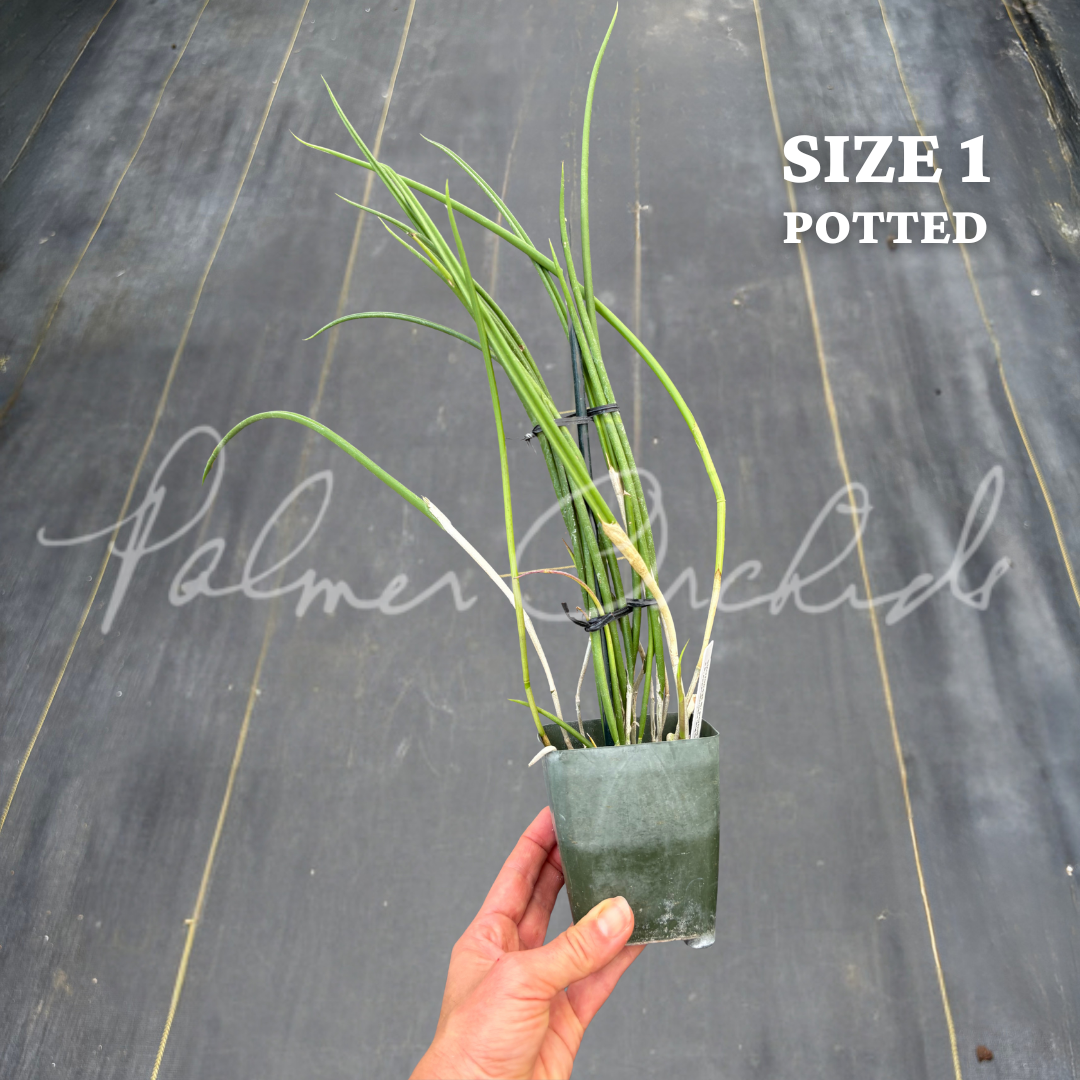
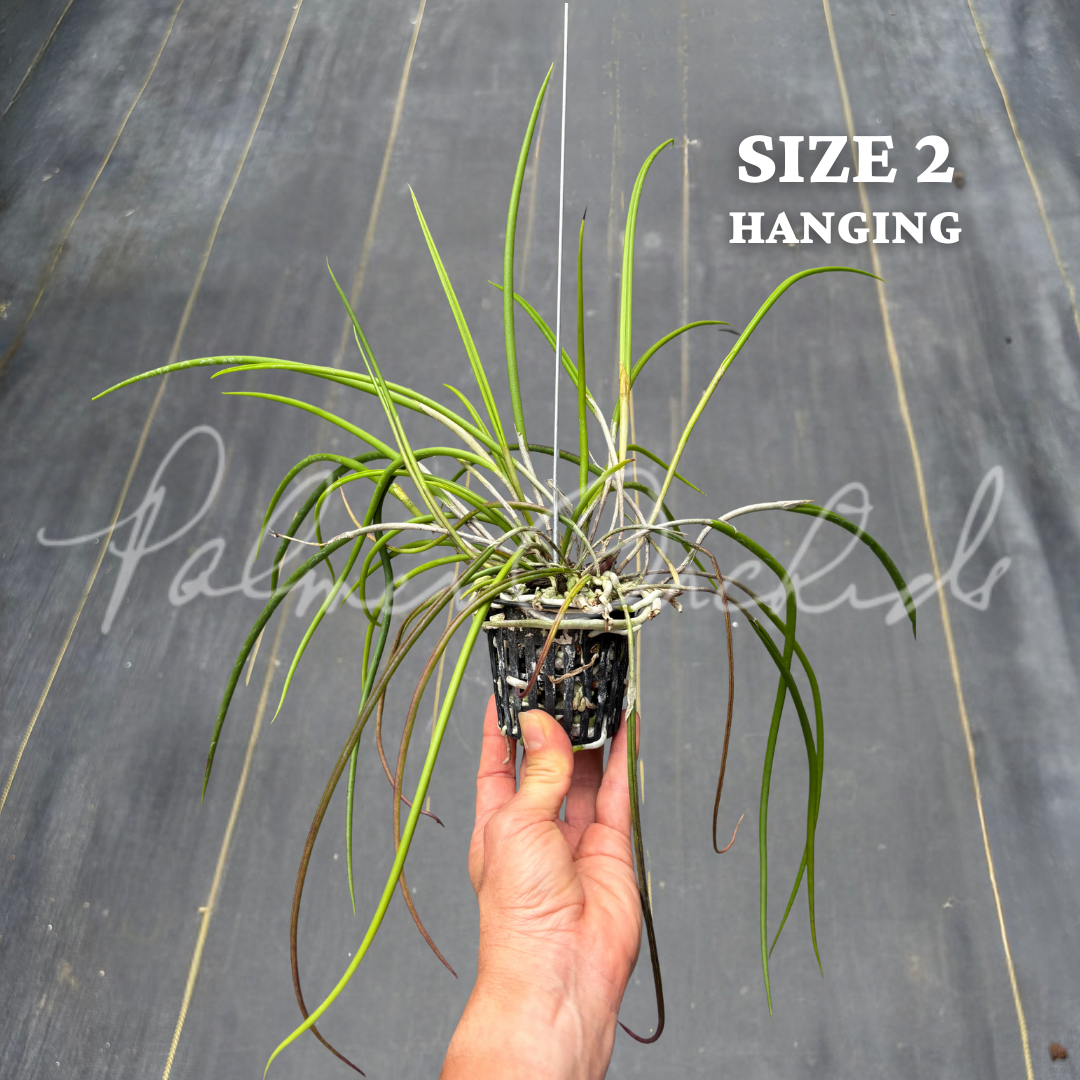
(Brassavola perrinii × Brassavola appendiculata)
This variety is one hybridizer’s take on “Crazyarachno”—a spidery primary hybrid of Brassavola species B. perrinii (Syn. B. tuberculata) and B. appendiculata. Easy to grow and bloom and, like most Brassavolas, great for beginners. Free-flowering. Typically blooms more than once a year.
Grown from seed, so characteristics vary somewhat from plant to plant. Blooms from multiple individuals are pictured to illustrate this variation.
Plants Available: Growing in 3”/4” pots. Plants available are in hanging net pots or staked upright in pots. The hanging option is available in two sizes. Examples are pictured. Orders will be filled with plants in spike/bud/bloom as blooming stock permits.
Orchid Care: Grow in bright indirect light with strong air circulation. Plants should be allowed to dry between waterings. Mature plants are ideal for mounting. Fertilize weakly, weekly.
-
09.03.25
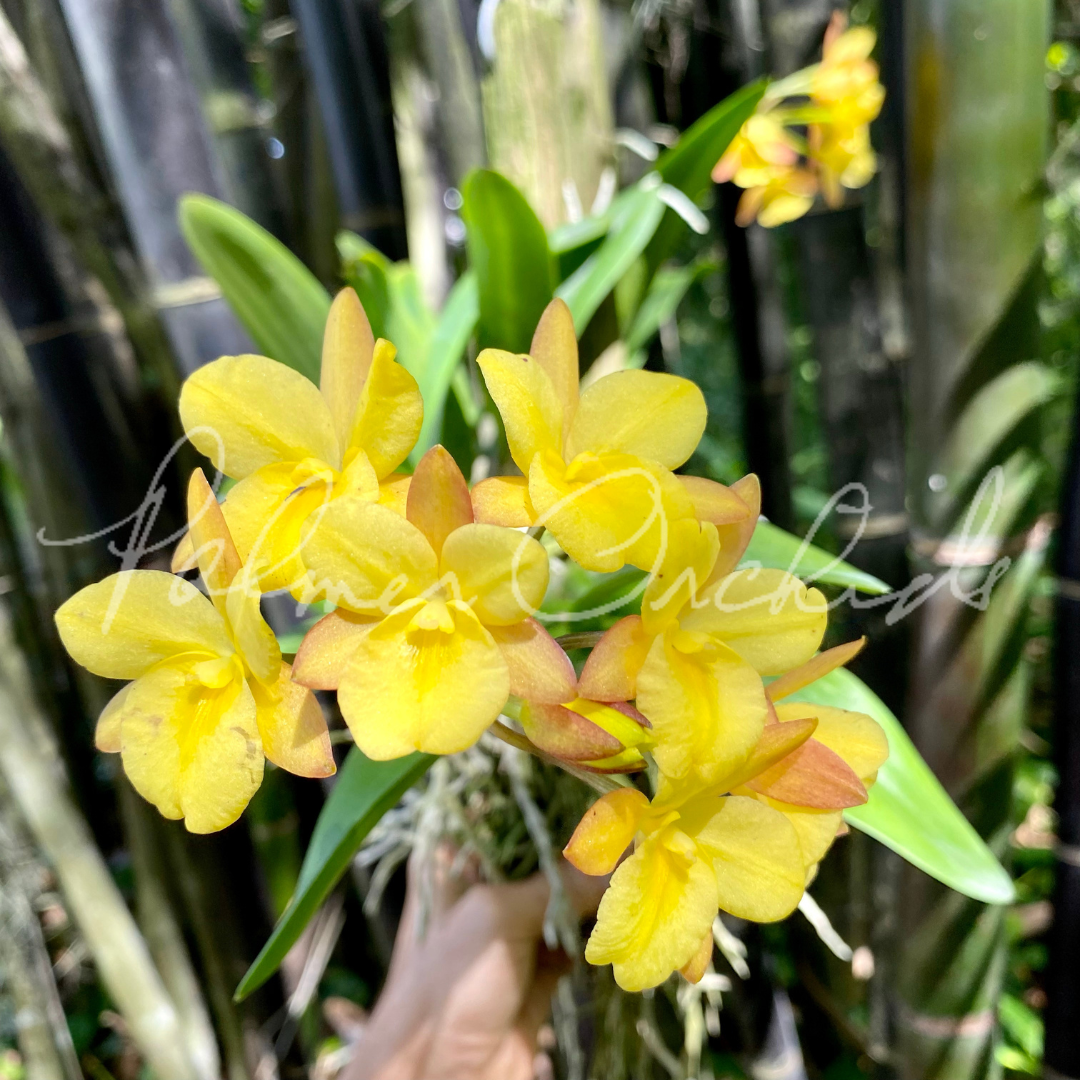
(Guarianthe aurantiaca x Broughtonia sanguinea)
Yellow form of the hybrid. This plant is half Broughtonia—well, suited for bright, dry conditions, and great for mounting. Mature plants flower multiple times a year.
Grown from seed, so flower characteristics will vary somewhat from plant to plant.
Plants Available: Growing in plugs, 3” pots, and 4” pots.
Plugs (Plug Pack) are sold as a pack of three plants. Examples of the individual plugs are pictured. Plugs may be nearly blooming-size or blooming-size (Yes—we bloom this variety as a plug!).
The 3" Pot option may be blooming-size or mature.
The 4" Pot option may be blooming-size or mature.
The 4" Pot - Lg option is a mature plant with two or more directions of growth.
Orders for any of the above will be filled with plants in spike/bud/bloom as stock permits.
Orchid Care: As for Cattleya hybrids—grow bright and dry. In general, plants may be grown potted or mounted.* We recommend mounting or baskets as plants outgrow 3” or 4” pots. Provide very bright, indirect light. Allow potting media to dry between watering. Fertilize weakly, weekly.
*For plugs, plants are shipped straight out of the plug tray and should be potted within days of receipt. We use a medium to large grade bark mix (as for Cattleyas) and recommend this or similar for the substrate.
—
07.31.25

(Bro. sanguinea x C. aurantiaca)
Primary hybrid of Broughtonia and Cattleya species. Easy and rewarding. Plants begin blooming in 2” pots. Each new growth produces a cluster of red flowers. Great for mounting.
Typically blooms multiple times a year, with one bloom period in the summer.
Grown from seed.
Plants Available: Growing in 3” and 4” pots. An example of the 4” Pot option is pictured. Orders will be filled with plants in spike/bud/bloom as blooming season and blooming stock permit.
Orchid Care: Grow in high light with good air circulation. Plants should dry out between waterings. Plants may be grown potted or mounted. Once mature, we recommend mounting this variety. Fertilize weakly, weekly.
-
05.29.26
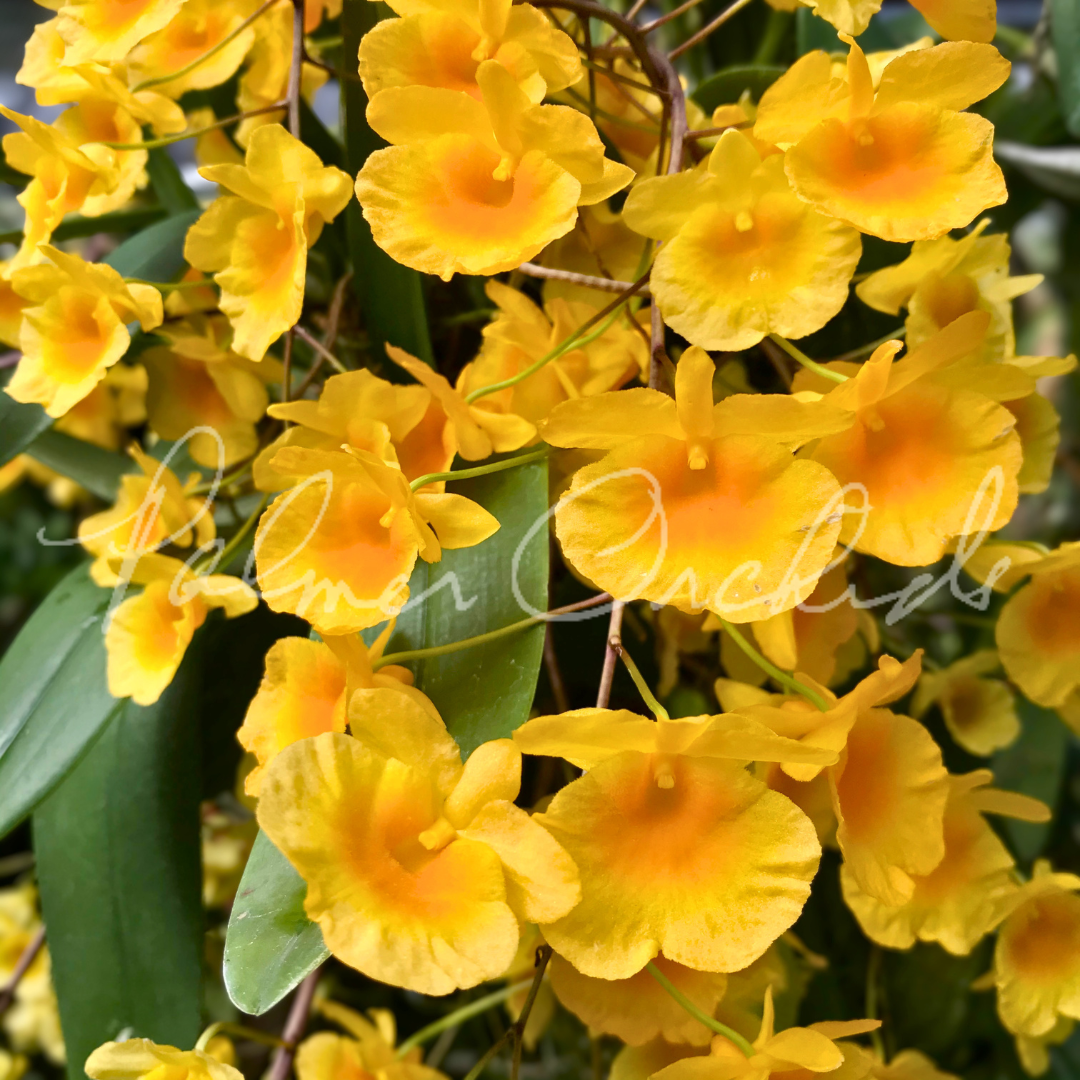
Syn. Dendrobium lindleyi
Dendrobium species native to Thailand and much of southeast Asia. Blooms in showy sprays of yellow buttercup flowers.
Spring blooming.
Grown from seed.
Plants Available: Growing in 4” pots. The options available are established divisions from mature plants. Examples of the sizes available are pictured.
Note: Our aggregatum typically bloom in March and April—that is, plants cultivated in a FL Gulf Coast greenhouse. Naturalized plants and plants grown outside year round typically bloom a bit later. At our nursery, even the aggregatum mounted on trees outside the greenhouse flower well after those that grown in our greenhouse conditions.
Orchid Care: Grow in bright indirect light with good air circulation and moderate to high humidity. Plants can be acclimated to full or nearly full sun (. Water heavily while plants are in active growth (spring through early fall), but give plants a dry rest during the cooler months. At the nursery, we reduce watering from about Thanksgiving through the beginning of March.
-
10.17.26
This hybrid does not have a registered name.
Plants produce large pink flowers. The blooms pictured are early examples from young plants in the crop. Expect multiple blooms per spike on mature plants.
Pda. Mevr. L. Velthuis × V. Nichanan is a quarter-terete Vanda hybrid, also referred to as a Paplionanda. The light requirements for Paplionandas are high, making them ideal candidates for landscaping in tropical and subtropical locations.
Grown from seed so flower characteristics may vary somewhat from plant to plant.
Plants Available: Growing in 2” pots (near blooming-size/blooming-size) pots and hanging baskets (blooming-size/first bloom). Examples of the available sizes are pictured. Plants in 2” pots are ready for mounting, establishing in baskets, or potting (e.g. with coarse well-draining material like charcoal and lava rock).
Orchid Care: Grow in high light and water often. This variety will perform best with bright, filtered sun for most of the day. It can tolerate full morning sun but should be provided with some shade or filtered light during the hottest midday hours. In the hotter months, plants should be watered daily. Watering can be reduced somewhat with cooler temperatures, when plant growth has slowed. Fertilize weakly, weekly.
-
10.08.26

(Cattleya Tickled Pink × Rlc. Llano)
Large, showy pink blooms with an egg yolk yellow throat. Petal tips are flared with a line of magenta, which also marks the midlip. Fragrant.
‘Palmer Orchids’ mericlone.
Plants Available: Growing in 6” pots. Plants are established divisions from our breeding stock. An example of the size available is pictured.
Orchid Care: Grow in bright indirect light with moderate humidity and good air circulation. Water generously during active growth but ensure roots dry between waterings. Reduce water when days are shorter and temperatures are cooler. Plants may be potted or mounted. For potted plants, we recommend an open, freely-draining bark mix that dries easily. Fertilize weakly, weekly.
-
10.10.26
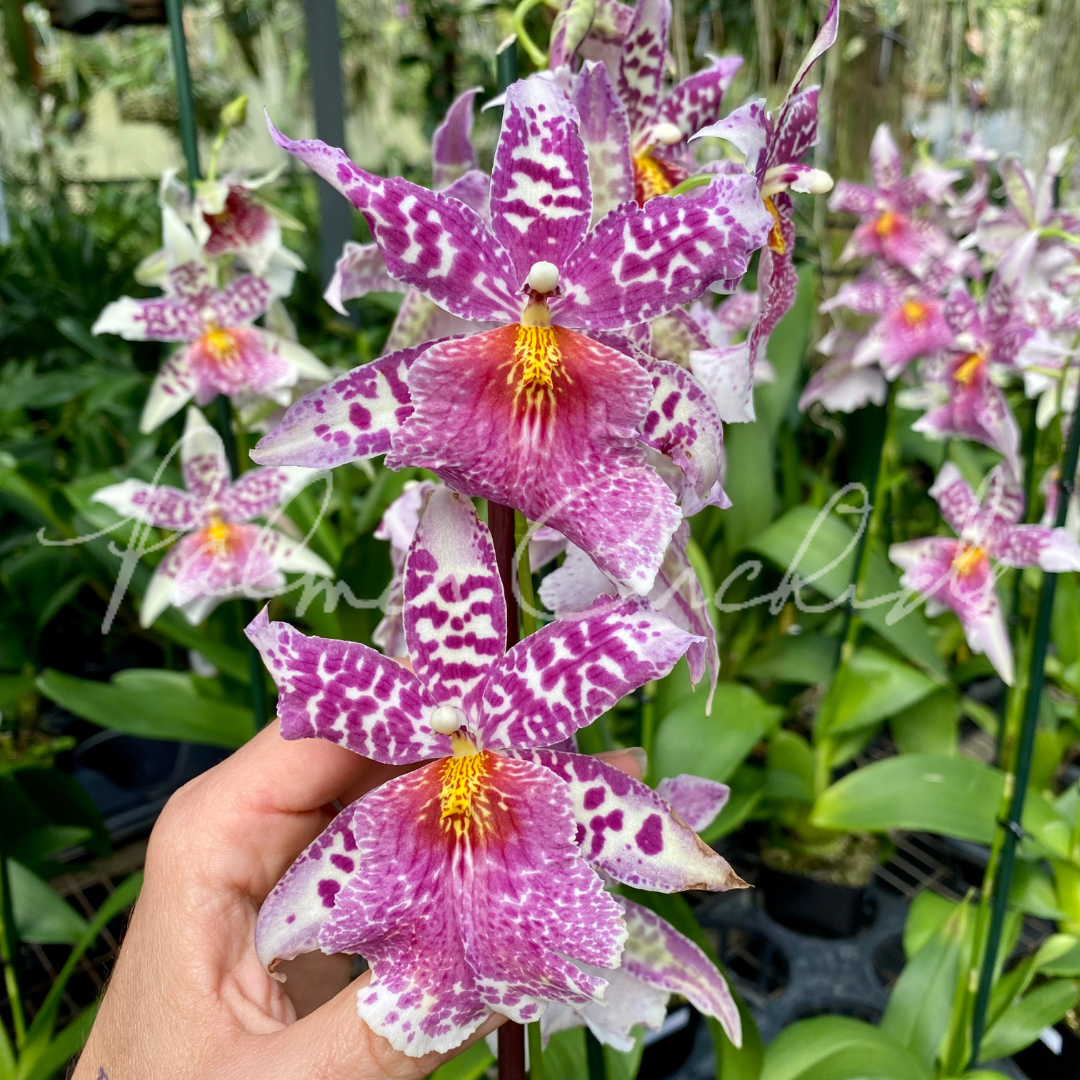
Syn. Schunkeara Big Shot (Alcra. Tahoma Glacier × Mps. Maui Titan)
A particularly pink and spotty cultivar of the Big Shot hybrid. Blooms in a spray of large, white star-shaped flowers overlaid with purple-pink spots. Each new growth produces 1-2 bloom spikes of multiple flowers. Plants bloom twice a year or more as they mature into large plants. Mildly fragrant.
‘Pink Panther’ mericlone.
Plants Available: Growing in 4” pots. An example of the 4” Pot option is pictured. Orders will be filled with plants in spike/bud/bloom as blooming season and blooming stock permit; otherwise, mature plants, previously bloomed.
Orchid Care: As for intergeneric Oncidiums. Grow in bright, diffused light, no direct sun. Plants may be grown mounted, established in baskets, or potted in a bark mix or sphagnum. Whichever is used, water just as the media are approaching dryness.
-
02.14.26
x sib
Vanda denisoniana is native to Southern China and southeast Asia, where it can be found growing on the trunks of trees in montane forests. Plants produce waxy, substantive flowers in shades of buttery yellow to golden yellow—and sometimes even orange! The lip of each flower, by contrast, is light yellow and uniquely fiddle-shaped.
V. denisoniana is prized for its vanilla-like fragrance, which is typically strongest in the evening and during the nighttime hours.
Grown from seed.
Plants Available: Growing in 2” pots and in baskets. Examples of the sizes available are pictured. The Basket - NBS option is a plant that is near blooming-size.
Orchid Care: Grow in high light—bright, indirect sun (about 50% shade). Protect from direct midday sun. Younger plants should be kept in slightly shadier conditions than mature, blooming-size plants to ensure robust root and foliar development. Plants may be grown in hanging pots or slatted baskets that allow roots to expand and hang freely. Provide strong air circulation and high humidity in the growing environment and water regularly. Plants should be watered daily when conditions are hot and plants do not receive rain. Fertilize weakly, weekly.
-
10.15.26
(Bc. Richard Mueller × Prosthechea vitellina)
She’s back, baby! Golden Peacock is a real fan favorite among lovers of the B. nodosa and Bc. Richard Mueller hybrids. This variety, which blooms in sprays of bright orange star-shaped flowers, owes its vibrant color to its Psh. vitellina. When combined with Bc. Richard Mueller, this parentage makes for an adaptable and warm/hot temperature tolerant plant.
Though young plants may bloom 1-2 times per year, mature individuals are free-flowering and can bloom quite frequently.
‘Orange Beauty’ mericlone.
Plants Available: Growing in 3" and 4” pots, blooming-size. An example of the 4” Pot option is pictured. Orders will be filled with plants in spike/bud/bloom as blooming stock permits.
Orchid Care: Grow in bright indirect light with good air circulation and high humidity. Allow plants to dry between watering. Plants may be grown potted or mounted. For potted plants, use an open, freely draining medium. (Plants in this initial release (Summer 2024), should not be repotted/mounted for 1-2 years.) Fertilize weakly, weekly.
—
08.02.25

(Den. Dawn Maree × Den. Peng Seng)
Dendrobium section Formosae hybrid. Buds emerge directly from the cane at the leaf axial, typically in pairs or clusters. Blooms are creamy to light green with a red-orange throat and waxy in substance, which provides for a long-lasting flower.
The canes of this variety are naturally semi-pendulous when not staked or tied upright. Bear this in mind as the new growth emerges. Staking or allowing the growths to cascade is simply a matter of preference since the new growth will be self-supporting.
Seed-grown, so flower characteristics vary plant to plant as these images illustrate.
Blooms late spring/summer.
Plants Available: Growing in 3”/4” net pots. An example of the Net Pot option is pictured. Orders will be filled with plants in bud or bloom as blooming season and blooming stock permit.
Orchid Care: Grow in bright, diffused light. Keep moist in spring and summer while plants are actively growing. If potted in an open mix that drains freely and does not easily saturate, you can even grow them alongside your Vandas, watering daily. Reduce watering somewhat during the cooler months, but plants are evergreen* and do not require a dry rest. Plants should be tight in their pots.
*Note: Although this is not a deciduous variety, some leaf drop is normal, particularly in response to stress. It is common for the canes on Formosae-type Dens like this one to shed a few leaves after shipping. Just give them a good watering and protect from extremes (e.g. in terms of light and heat) while they acclimate to your growing space.
-
05.08.25
(C. Dubiosa ‘Scully’s’ HCC/AOS × Ctt. Trick or Treat ‘Orange Magic’ AM/AOS)
Blooms in clusters of flowers, whose colors may include shades of orange, yellow, and pink. Some plants produce flowers with flared petals or markings on the petal tips.
Grown from seed so flower characteristics vary somewhat from plant to plant. Blooms from multiple plants are pictured to illustrate these variations.
Plants Available: Growing in 4” pots. Plants available are blooming-size. Examples of the sizes available are pictured.
Orchid Care: Grow in bright indirect light with strong air circulation and moderate humidity. Allow plants to dry out between waterings. Plants may be grown in pots or mounted.
—
04.09.26
(Encyclia randii f. alba × Encyclia plicata f. alba)
Vigorous and adaptable and fragrant! A great option for Encyclia beginners—grow it potted or mounted. Bright or super bright. Intermediate/warm or warm/hot. This plant is easy to please.
Blooms have a scent that is creamy, spicy, and earthy—a combination of sweet and woody notes similar to root beer.
Grown from seed, so flower characteristics will vary somewhat from plant to plant. Although this grex is a primary hybrid of the alba forms of two Encyclia species, we have yet to see any alba blooms from these Enc. Hunty’s Home Run.
The alba flowers shown (green-yellow petals, white lip) are examples of the two species used to make this cross. The other flowers pictured (golden yellow to brown petals, pink lip) are typical of the flowers produced from this crop.
Plants Available: Growing in 4” pots. An example of the 4” Pot option is pictured. Relative to the 4” Pot, the 4” Pot - Lg option is a plant with more growths (2 or more growths preparing to spike/flower). Orders will be filled with plants in spike/bud/bloom as stock permits.
Orchid Care: Grow in bright light and high humidity with good air circulation. Allow plants to dry thoroughly between waterings. Encyclias do not like to keep their feet wet—particularly during the cooler months! We recommend mounting plants on wood/in baskets or growing in an open, freely-draining bark mix if plants are grown potted.
—
10.15.25
(Rth. Orange Nuggett × Rth Twentyfour Carat)
This Cattleya hybrid is one of our own crosses. Blooms are golden yellow progressing to orange with age. A faint red picotee marks the perimeter of the petals and lip.
‘Palmer Orchids’ mericlone.
Plants Available: Growing in 4” and 6” pots. A limited number of plants growing in 4” pots remain—the 4” Pot - Large option are large, overgrown plants, ready for potting up. Examples of the 4” Pot- Large are shown. Plants are blooming-size. Orders will be filled with plants in sheath/bud/bloom as blooming season and blooming stock permit.
Orchid Care: Grow in bright indirect light with moderate humidity and good air circulation. Water generously during active growth but ensure roots dry between waterings. Reduce water when days are shorter and temperatures are cooler. Plants may be potted or mounted. For potted plants, we recommend an open, freely-draining bark mix that dries easily. Fertilize weakly, weekly.
—
09.04.26
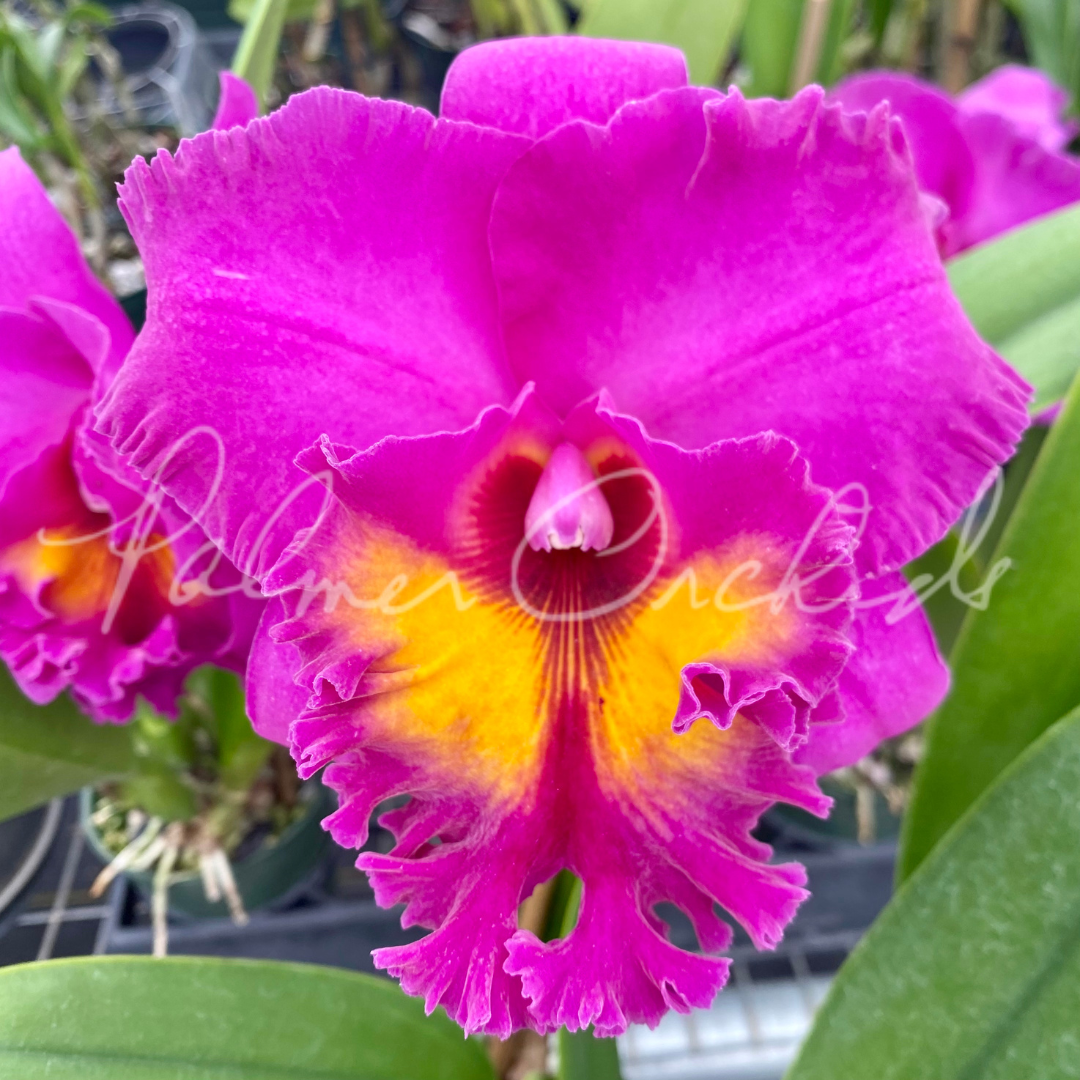
(Rlc. Always Dream × Rlc. Hawaiian Ruby)
Large-flowered Cattleya hybrid with ruffled blooms of vibrant pink and a marigold butterfly marking the throat. Fragrant.
‘Hawaii’ mericlone.
Plants Available: Growing in 4” and 6” pots. An example of the original 4” Pot option is pictured—a limited number of overgrown plants in 4” pots remain. These plants have outgrown their pots and are ready for immediate repotting (e.g. into 6” pots).
Orchid Care: Grow in bright indirect light with strong air circulation and moderate to high humidity. Allow plants to dry out between waterings. Plants may be grown potted or mounted.
-
06.13.26

BRASSAVOLA
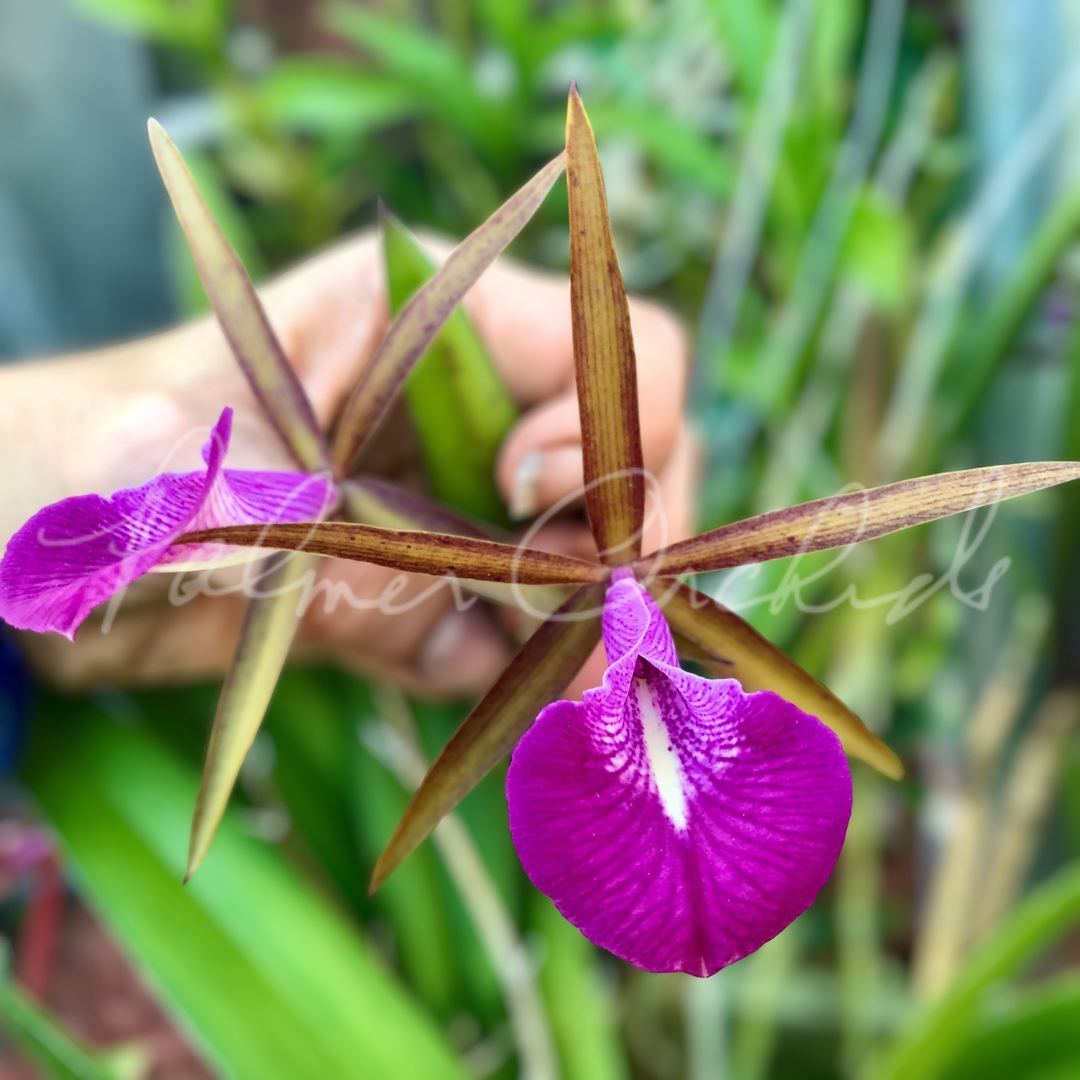
(Brassavola nodosa × Cattleya Batalinii)
Star-shaped bronze petals and a deep pink lip. Flowers open with brassy yellow petals that darken as the bloom ages. The plant’s new growths—distinguished by the glossy red pigment at the base of the leaf—likewise change color, becoming increasingly green as they mature.
Bc. Star Ruby blooms easily and early—plants reach blooming size in 2” pots. New growths typically produce a pair of flowers.
Plants may be grown potted or mounted, though mounting is recommended when plants outgrow their 4” pots.
‘Xanadu’ mericlone.
Plants Available: Growing in 4” pots. An example of the size available is pictured. Plants are blooming size.
Orchid Care: Grow in bright, indirect light with strong air circulation and high humidity. Water generously in spring and summer when plants are actively putting out new growth and new roots. But ensure the potting media and root system dry out between waterings. Reduce water somewhat with cooler temperatures. Fertilize weakly, weekly.
—
08.08.26
(Rcv. David Sander x Prosthechea mariae)
Grown from seed, so flower characteristics vary somewhat from plant to plant.
Plants Available: Growing in 4” pots or mounted on tree fern. Examples of the 4” Pot option are pictured. Orders will be filled with plants in spike/bud/bloom as blooming season and blooming stock permit. Otherwise, mature plants, previously bloomed.
Orchid Care: Grow in bright, indirect light with strong air circulation and high humidity. Plants may be grown potted or mounted, though mounting is recommended when plants outgrow 4” pots. Water generously and fertilize regularly with warmer temperatures, during active growth. Reduce water and fertilization somewhat with cooler temperatures. Plants should dry thoroughly between waterings.
—
04.14.26
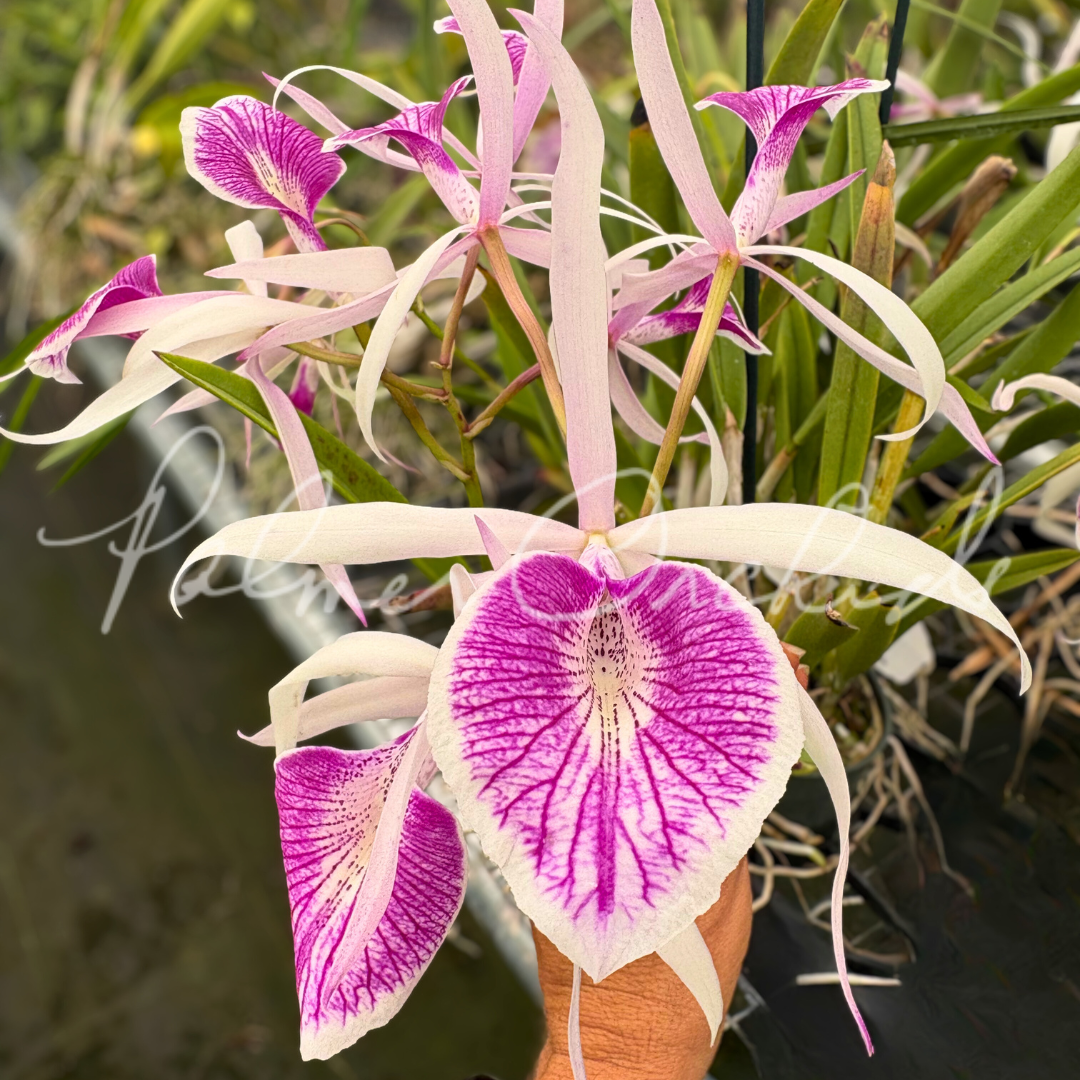
(B. nodosa 'Susan Fuchs' FCC/AOS x C. Hsinying Pub 'Albo Sanguinea')
‘Palmer Orchids’ mericlone.
Plants Available: Growing in 3” and 4” pots. Plants are blooming-size. Examples of the 4” Pot are pictured.
Orchid Care: Grow in bright, indirect light with strong air circulation and moderate humidity. Plants may be grown potted or mounted. For potted plants, use a medium to large aggregate bark mix that drains freely. Tree fern fiber may be appropriate for drier growing environments. Mounting is recommended for mature plants (e.g., those that have outgrown their 4” pots). Fertilize weakly, weekly.
—
03.02.26

(Bc. Richard Mueller × Cattleya tenebrosa)
A new favorite for lovers of nodosa hybrids. This variety blooms easily and often. Flowers are golden shades of yellow, orange, and peach. Blooms often change color as flowers open and age.
Grown from seed so flower characteristics vary from plant to plant.
Plants Available: Growing in 3" and 4” pots. Both options are blooming-size. Examples of the 3” Pot and 4” Pot options are pictured. Orders will be filled with plants in spike/bud/bloom as blooming season and blooming stock permit.
Orchid Care: Grow in bright indirect light with good air circulation and high humidity. Allow plants to dry between watering. Plants may be grown potted or mounted. For potted plants, use an open, freely draining medium. (Plants in this initial release (Spring 2025), should not be repotted/mounted for 1-2 years.) Fertilize weakly, weekly.
-
09.13.25

Collector’s item. This B. nodosa comes to us from the breeding of Allen Black, recipient of the American Orchid Society’s 2023 Award for Excellence in Hybridizing. A compact variety of the “lady of the night,” plants from this grex are relatively short in stature. Flowers are often larger than the foliage and tend to have purple spotting around the base of the lip.
As with nodosas more generally, this variety is fragrant at night, easy to grow, and great for beginners—especially those interested in mounting orchids.
Grown from seed, so flower characteristics vary somewhat from plant to plant.
Plants Available: Growing in 3” and 4” pots. Plants in 3” pots are blooming-size, while those in 4” pots may be blooming-size or mature. The 4” Pot option are full plants, with most in bud or bloom in May/June. Orders will be filled with plants in spike/bud/bloom as blooming season and blooming stock permit.
Orchid Care: Grow in bright indirect light with strong air circulation and moderate humidity. Plants should be allowed to dry between waterings. Mature plants are ideal for mounting or basket culture.
-
05.30.24

(Bc. Richard Mueller × Prosthechea vitellina)
She’s back, baby! Golden Peacock is a real fan favorite among lovers of the B. nodosa and Bc. Richard Mueller hybrids. This variety, which blooms in sprays of bright orange star-shaped flowers, owes its vibrant color to its Psh. vitellina. When combined with Bc. Richard Mueller, this parentage makes for an adaptable and warm/hot temperature tolerant plant.
Though young plants may bloom 1-2 times per year, mature individuals are free-flowering and can bloom quite frequently.
‘Orange Beauty’ mericlone.
Plants Available: Growing in 3" and 4” pots, blooming-size. An example of the 4” Pot option is pictured. Orders will be filled with plants in spike/bud/bloom as blooming stock permits.
Orchid Care: Grow in bright indirect light with good air circulation and high humidity. Allow plants to dry between watering. Plants may be grown potted or mounted. For potted plants, use an open, freely draining medium. (Plants in this initial release (Summer 2024), should not be repotted/mounted for 1-2 years.) Fertilize weakly, weekly.
—
08.02.25
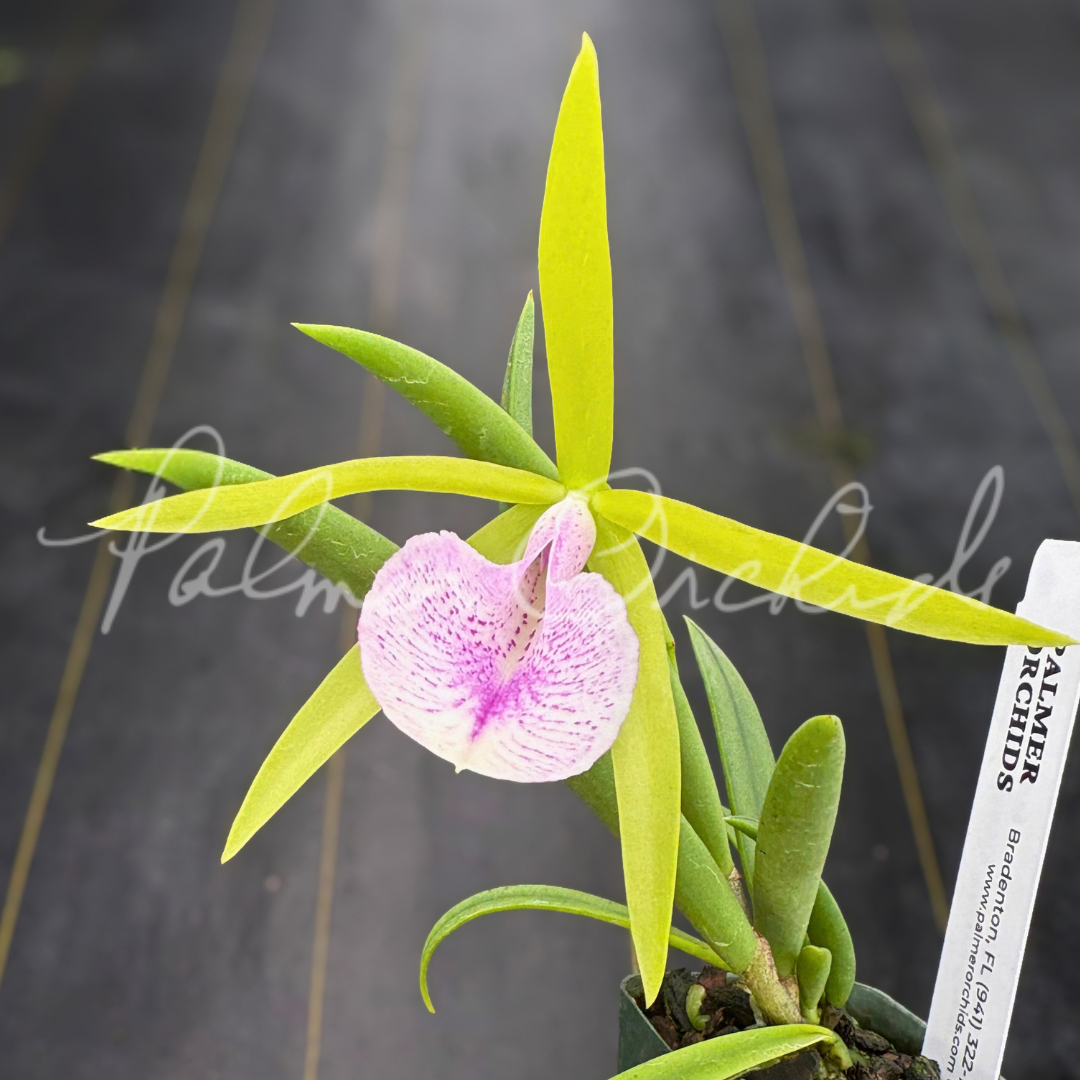
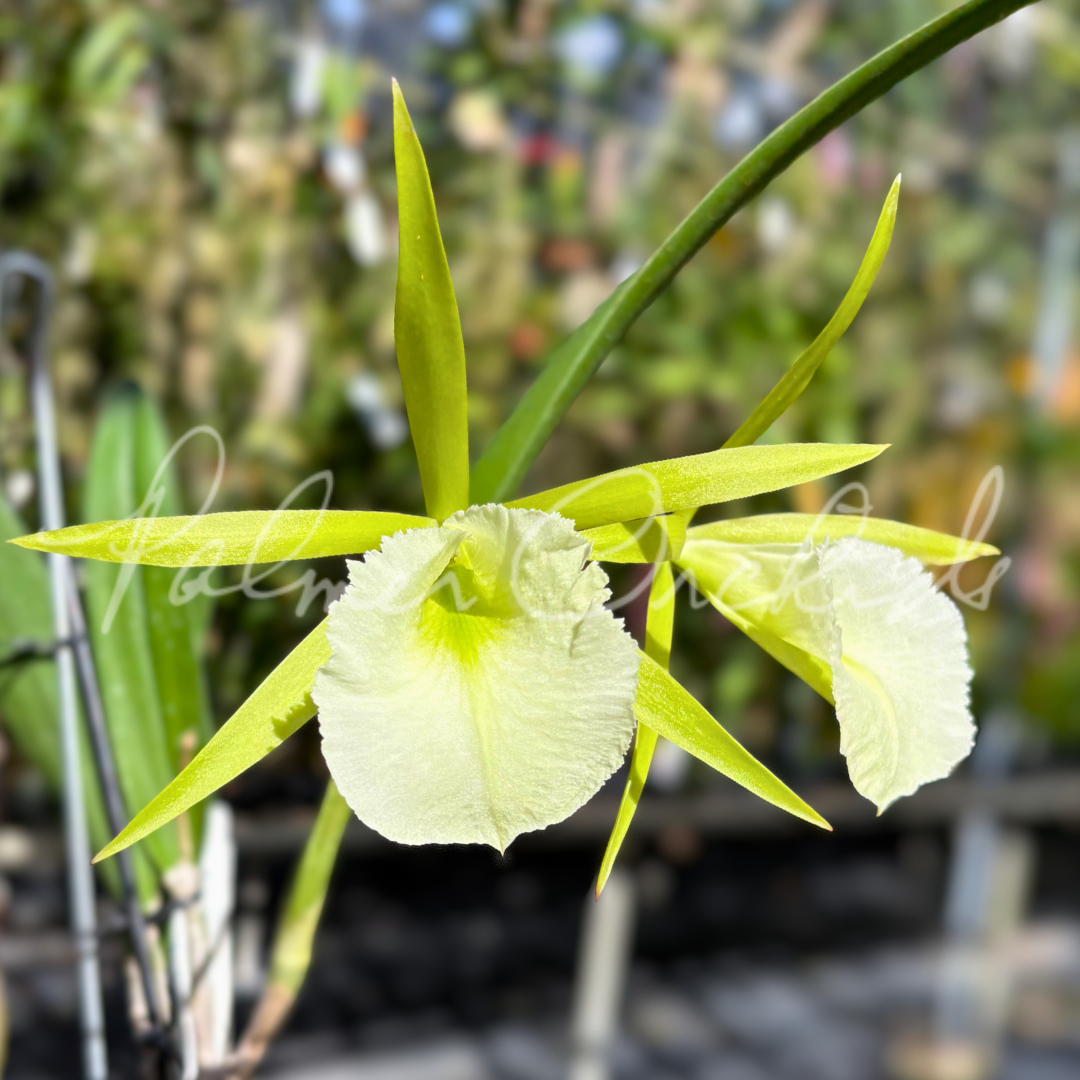
(Brassavola nodosa x Cattleya dormaniana)
Primary hybrid of the species Brassavola nodosa and Cattleya dormaniana. Plants reach blooming-size at an early age—the flower pictured is a plant from this crop blooming in a 2” pot. Plants produce more flowers as they mature.
‘Merry Green’ mericlone
Plants Available: Growing in 4” pots. An example of the 4” Pot option is pictured. Plants are blooming-size.
Orchid Care: Grow in high light (bright, indirect sun) with strong air circulation and moderate to high humidity. Allow plants to dry between watering. Plants may be grown potted or mounted. Plants are prime size for mounting when they outgrow their 4” pots. Fertilize weakly, weekly.
—
10.08.26

(B. nodosa x Bc. Richard Mueller)
Classic B. nodosa cross, great for mounting and in landscaping, easy to grow and bloom. Plants reach blooming size in 2” pots and can bloom twice a year or more.
This nodosa hybrid blooms in clusters of star-shaped yellow flowers that may be heavily or lightly spotted. Blooms range in color from light to dark yellow and bear pinprick red spots on the petals and/or lip. Flowers often have a blush cast in bud and as they first open and become more golden as the blooms age.
Our Bc. Yellow Bird are seed-grown, so flower characteristics will vary from plant to plant. Compare the blooms pictured here for an example of these variations.
Plants Available: A limited number of 6” pots are available now (We expect to release our new crop of plants 4” pots in the spring). An example of the 6” Pot option is pictured. Orders will be filled with plants in spike/bud/bloom as blooming stock permits.
Orchid Care: As for nodosa-types. Yellow Bird can be acclimated to direct sun, though plants will benefit from some shade during the hottest hours of the day. Makes a great addition to a subtropical yard, e.g. mounted on a palm whose fronds provide some cover from the sun at midday. Mounted plants require daily watering to establish and near daily watering (or rain) throughout the summer.
—
10.08.26
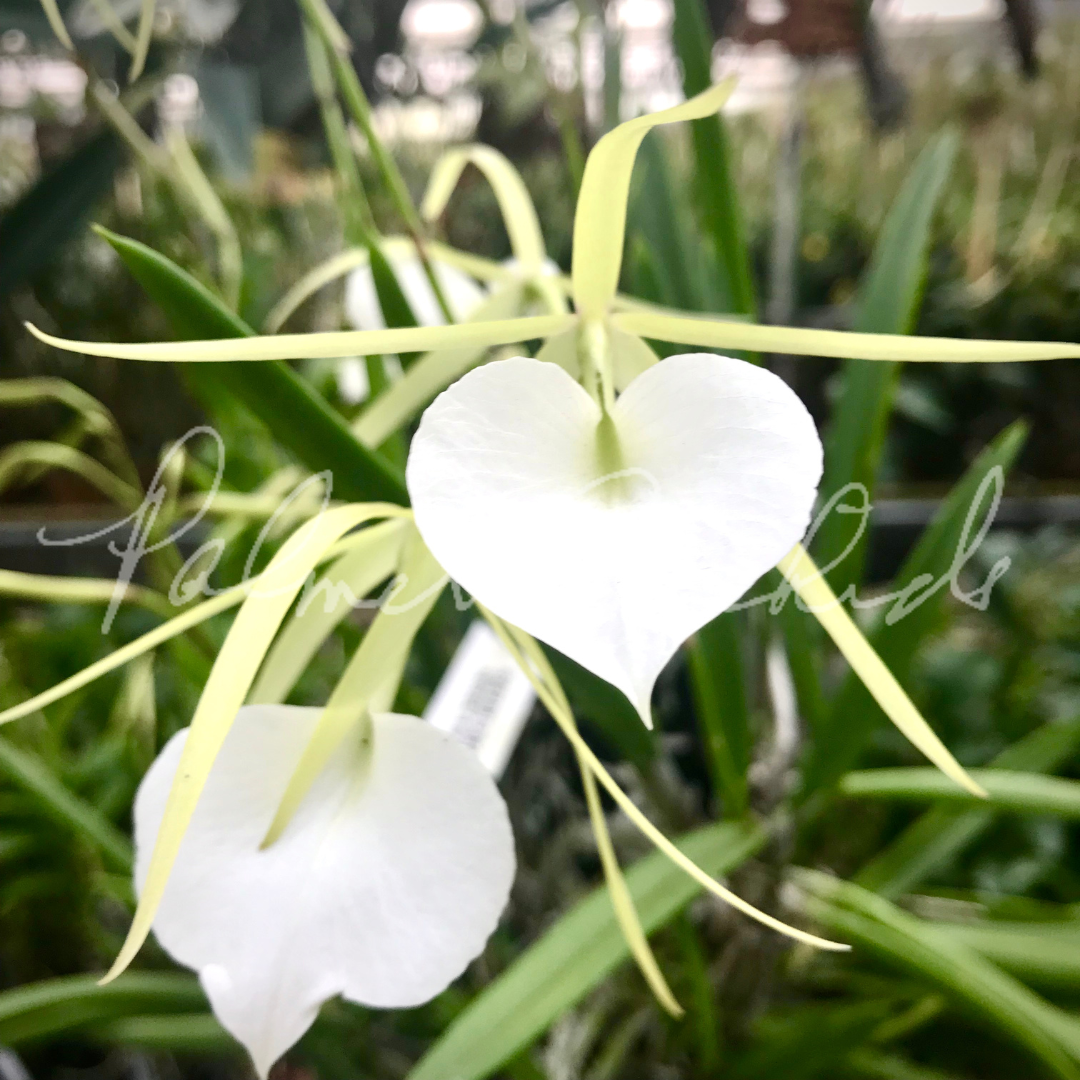
x sib
Brassavola species commonly known “Lady of the Night” for its nighttime fragrance. Easy to grow and great for beginners, especially those interested in mounting orchids. Typically blooms twice a year.
Grown from seed.
Plants Available: Growing in 3” pots. An example of the size available is pictured. Plants are blooming-size.
Orchid Care: Grow in bright indirect light with strong air circulation and moderate humidity. Plants should be allowed to dry between waterings. Mature plants are ideal for mounting.
-
10.06.26
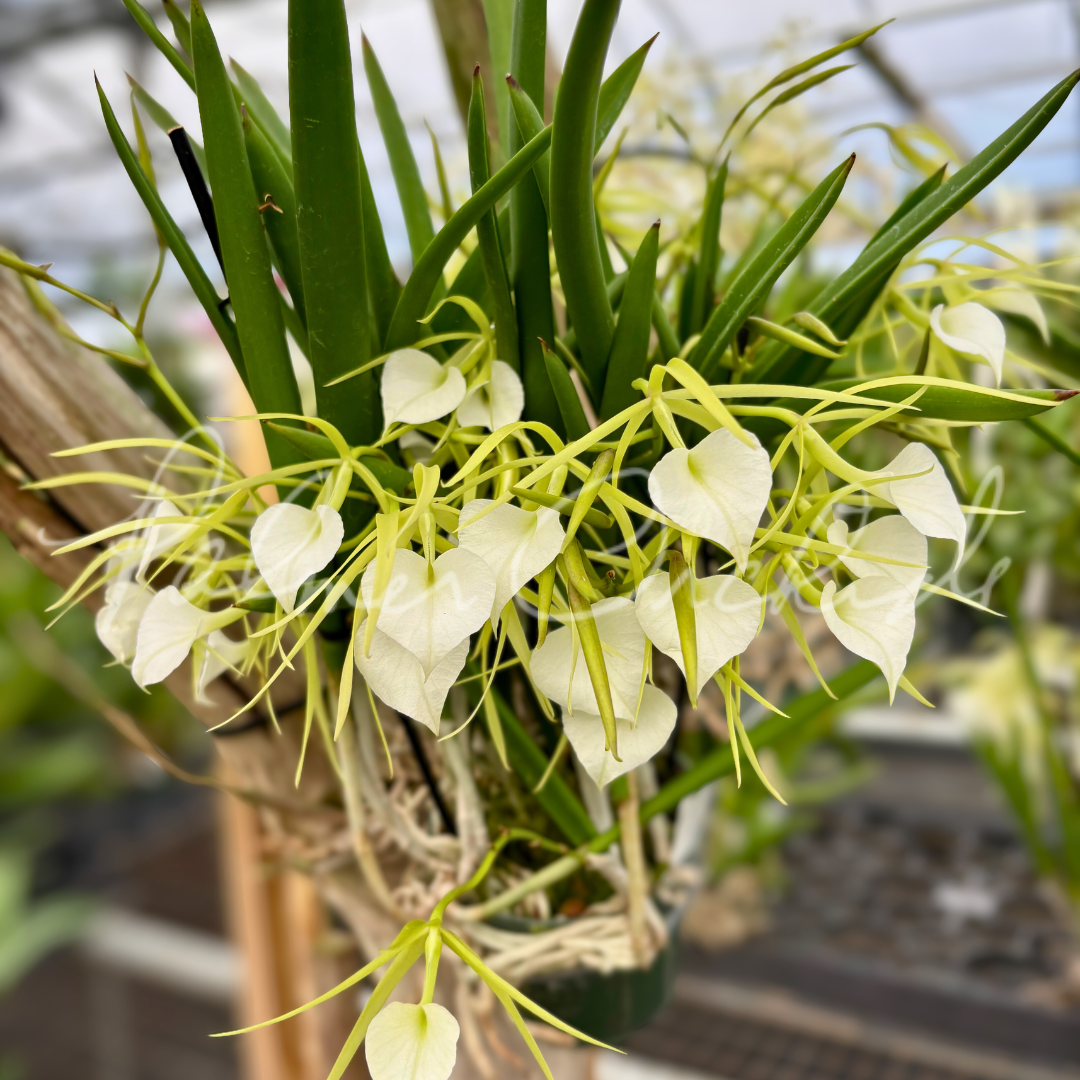
(Brassavola nodosa x Brassavola subulifolia)
Primary hybrid of two Brassavola species. Night fragrant. Mature plants are perfect for mounting. Typically blooms twice a year.
Grown from seed.
Plants Available: Growing in 3” pots. An example of the 3” Pot option is pictured. Plants are near blooming-size.
Orchid Care: Grow in very bright light with good air circulation and high humidity. Allow plants to dry between watering. Plants may be grown potted or mounted, but we recommend mounting plants that outgrow their 4” pots.
-
10.06.26
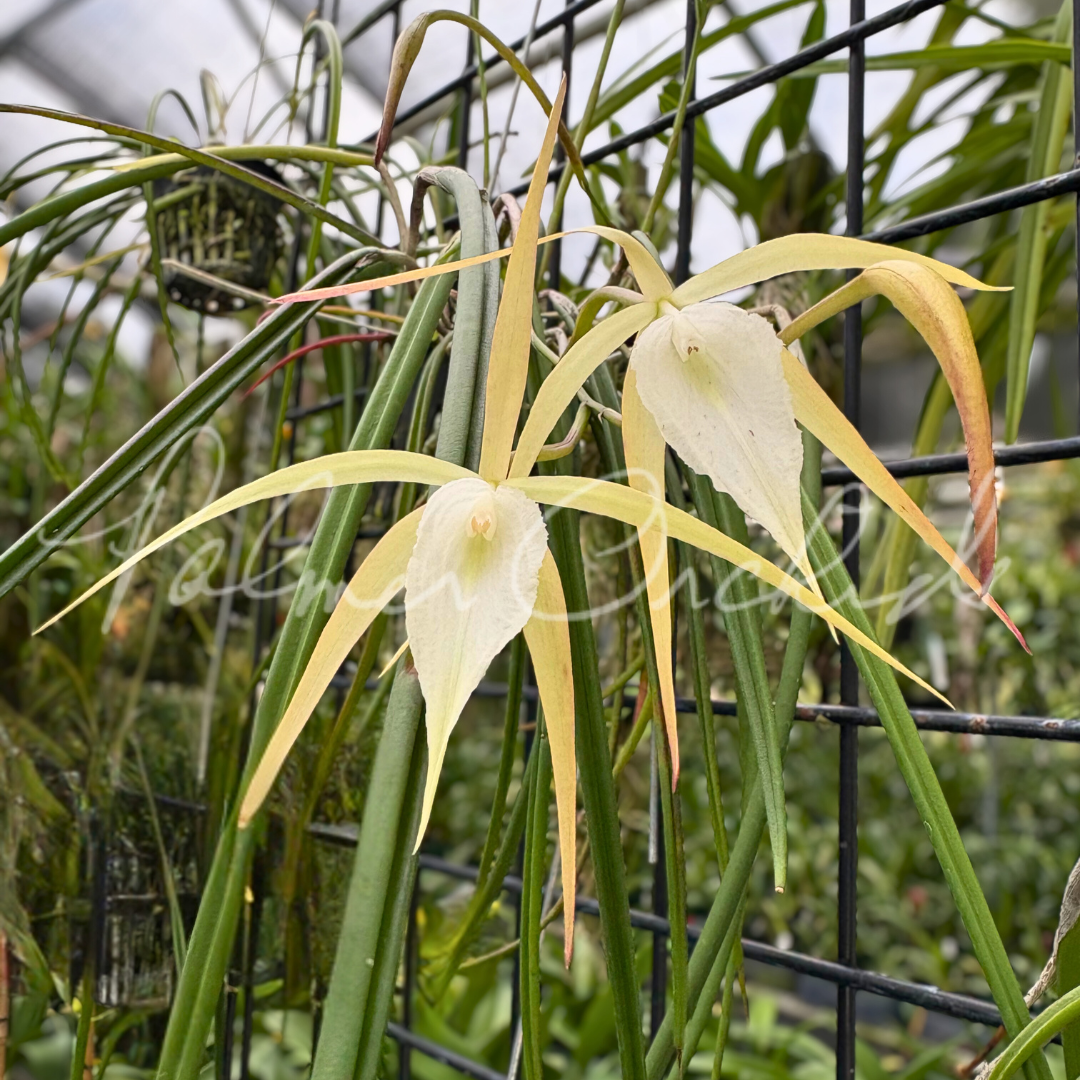
(Brassavola perrinii × Brassavola appendiculata)
This variety is one hybridizer’s take on “Crazyarachno”—a spidery primary hybrid of Brassavola species B. perrinii (Syn. B. tuberculata) and B. appendiculata. Easy to grow and bloom and, like most Brassavolas, great for beginners. Free-flowering. Typically blooms more than once a year.
Grown from seed, so characteristics vary somewhat from plant to plant. Blooms from multiple individuals are pictured to illustrate this variation.
Plants Available: Growing in 3”/4” pots. Plants available are in hanging net pots or staked upright in pots. The hanging option is available in two sizes. Examples are pictured. Orders will be filled with plants in spike/bud/bloom as blooming stock permits.
Orchid Care: Grow in bright indirect light with strong air circulation. Plants should be allowed to dry between waterings. Mature plants are ideal for mounting. Fertilize weakly, weekly.
-
09.03.25
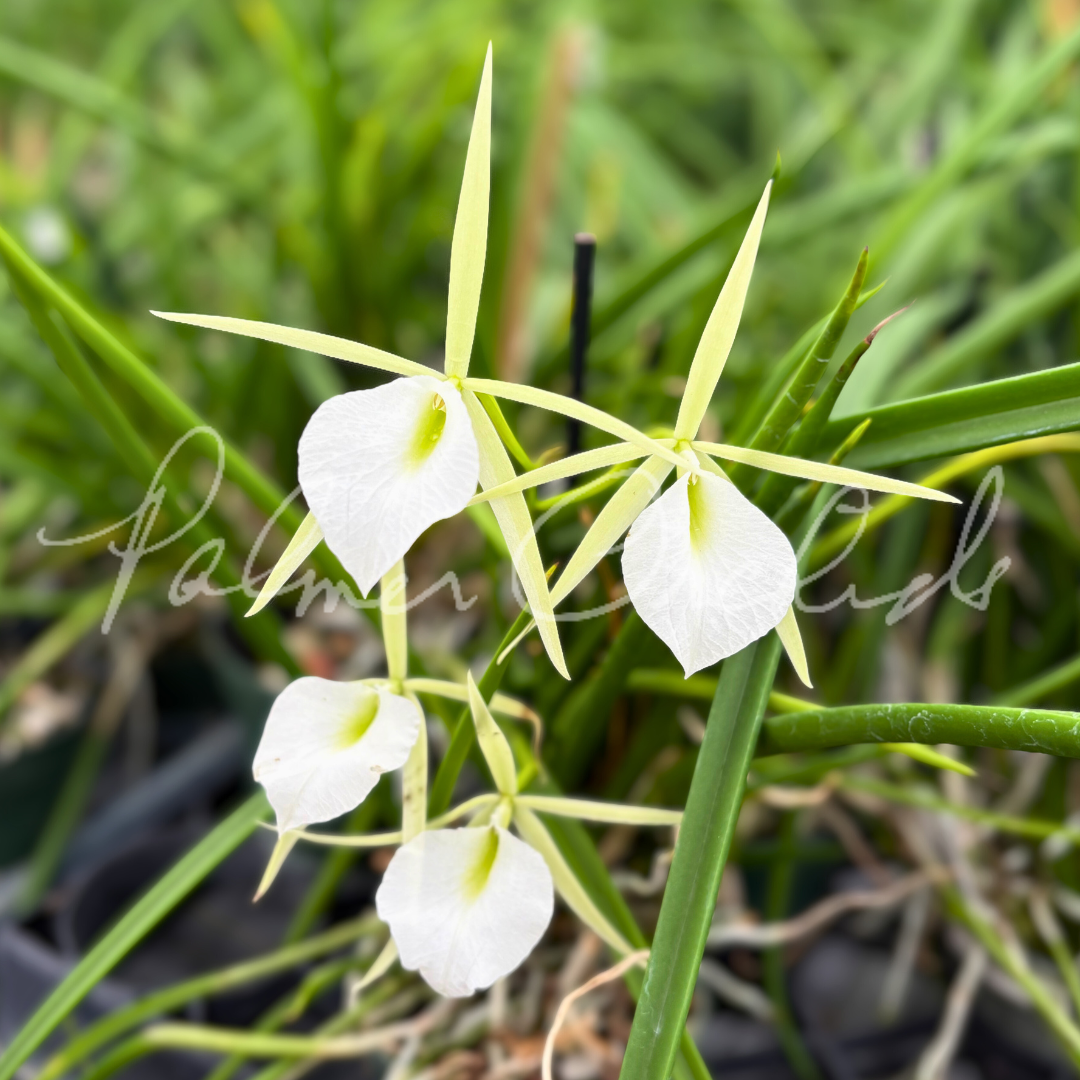
(Brassavola tuberculata × Brassavola nodosa)
Primary hybrid of Brassavola species B. perrinii (Syn. B. tuberculata) and B. nodosa. Easy to grow and bloom and, like most Brassavolas, great for beginners. Free-flowering. Typically blooms more than once a year.
Grown from seed, so characteristics may vary somewhat from plant to plant.
Plants Available: Growing in 4” pots. Examples of the size available are pictured. Orders will be filled with plants in spike/bud/bloom as blooming stock permits.
Orchid Care: Grow in bright indirect light with strong air circulation. Plants should be allowed to dry between waterings. Mature plants are ideal for mounting. Fertilize weakly, weekly.
-
09.03.25

Long, slender, pendent leaves with a flower to match, Brassavola cucullata has a spidery bloom—creamy white and yellow-green petals with a fringed lip. “Weird and wonderful,” according to the American Orchid Society, which includes this species among its list of collector’s items. (Read the AOS blurb here.)
The bloom period for this species is from summer into winter. Flowers are night fragrant, sweetly scented.
Grown from seed, so flower characteristics will vary somewhat from plant to plant. For example, though all blooms begin from the basic white and creamy yellow/green color palette, some may have a blush tinge to the petals like the flower from our specimen plant, which is shown in the first image. On the other hand, flowers from our current crop (blooming summer 2021) have so far bloomed with more golden tones, including a burnt orange petal perimeter. See the third and fourth images for two examples. These orange highlights are likely a product of growing in high light.
Plants Available: Growing in 4” pots. An example of the size available is pictured. Orders will be filled with plants in bud/bloom as blooming season and blooming stock permit.
Orchid Care: Because of the pendulous or drooping nature of the plant and its blooms, mounting or basket culture are recommended. Potted plants will benefit from a ring stake to rein in the growths.
Grow in bright, indirect light (Cattleya level) with strong air circulation. The frequency with which you water will vary according to the time of year and your growing conditions. In general, plants should be allowed to dry out between waterings. Check the moisture of your media regularly to gauge how quickly it dries throughout the year. When plants are kept in moss, a sharpened no. 2 pencil is handy tool for determining whether water is necessary. Just insert the pencil tip a few inches into the pot; remove after a moment and check the wood for moisture. If wet, wait to water.
-
07.26.24
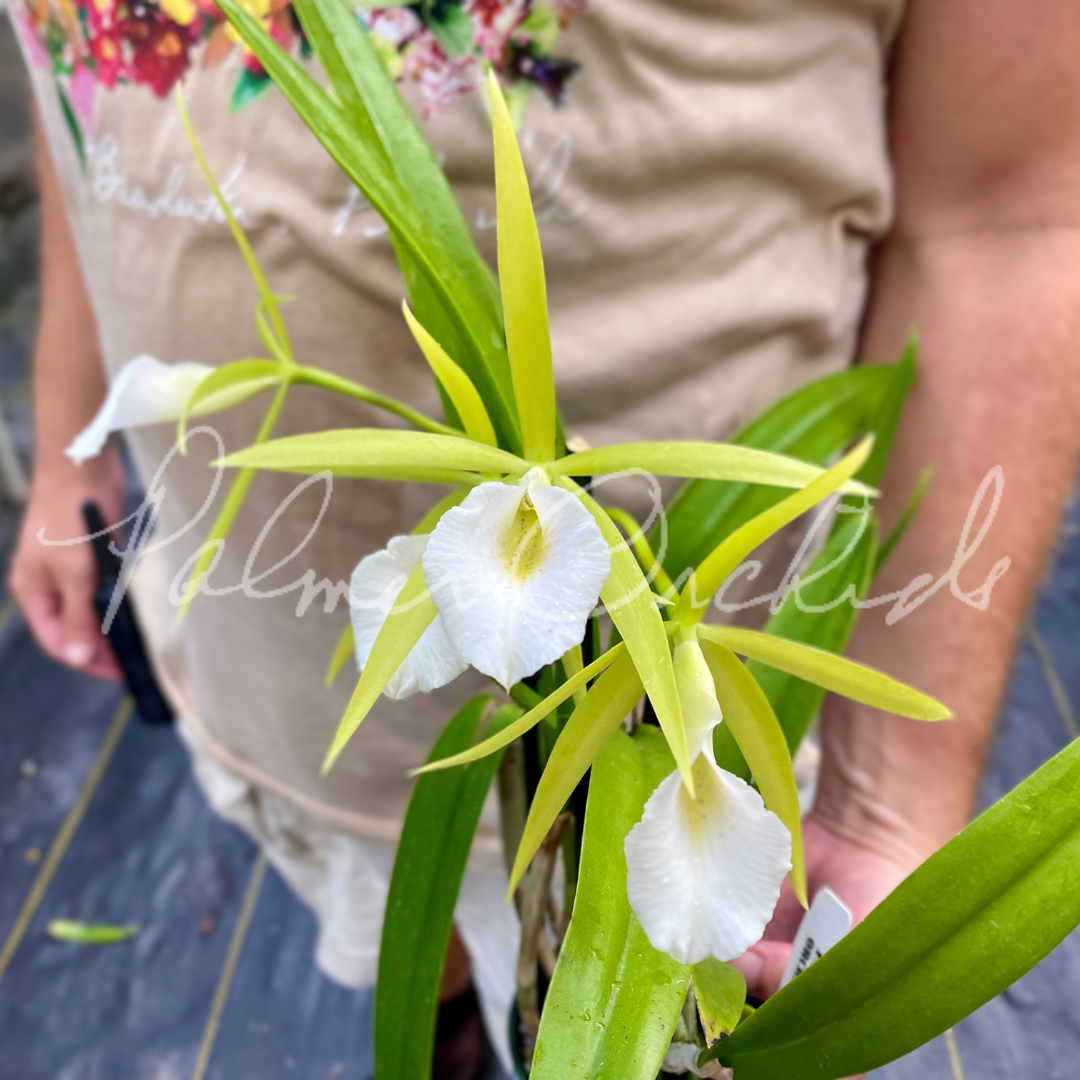
(Ctyh. Lime Sherbet x Brassavola nodosa)
Syn. (Epc. Lime Sherbet x B. nodosa)
An aptly named and easy-growing nodosa cross, similar to Pcv. Walnut Valley Lime Stars. Plants reach blooming size in 2” pots. On young plants, new growths typically produce 1-2 flowers, whereas mature plants are more prolific, blooming in clusters of several flowers.
Mildly fragrant in the evening.
Plants may be grown potted or mounted, though mounting is recommended when plants outgrow their 4” pots.
Grown from seed.
Plants Available: Growing in 3” pots. Orders will be filled with plants in spike/bud/bloom as blooming season and blooming stock permit.
Orchid Care: Grow in bright, indirect light with good air circulation and high humidity. Water frequently in spring and summer, during active growth—especially if plants are mounted. Reduce water during the cooler months. Allow plants to dry out between waterings.
-
07.31.25
CATTLEYA
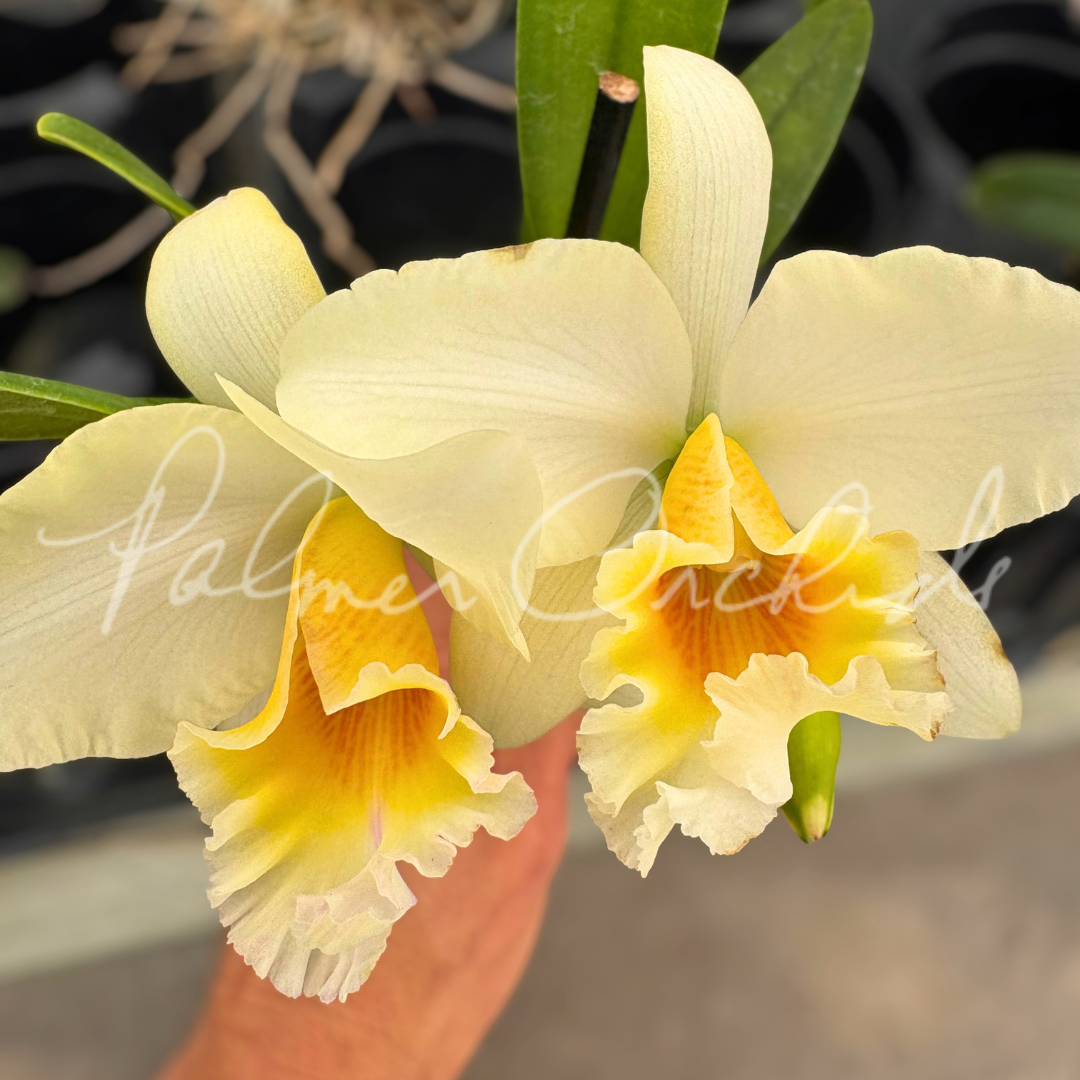
(Rlc. Mem. Jim Nickou ‘James’ × Rlc. William Farrell ‘Native Son’)
Blooms in shades of yellow and peach. New growths typically produce a pair of flowers, though some plants bloom in clusters.
Grown from seed, so flower characteristics vary somewhat from plant to plant.
Plants Available: Growing in 4” pots. Plants are blooming size. Examples of the 4” Pot option are pictured. Orders will be filled with plants in sheath/bud/bloom as blooming season and blooming stock permit.
Orchid Care: Grow in bright indirect light with moderate humidity and good air circulation. Water generously during active growth but ensure roots dry between waterings. Reduce water when days are shorter and temperatures are cooler. Plants may be potted or mounted. For potted plants, we recommend an open, freely-draining bark mix that dries easily. Fertilize weakly, weekly.
-
10.10.26

Syn. Cattleya tenebrosa
Grown from seed so flower characteristics will vary somewhat from plant to plant.
Plants Available: Growing in 4” pots. Examples of the size available are pictured.
Orchid Care: Indigenous to Brazil, though virtually extinct in nature. Plants require bright light, high humidity, and strong air circulation. Grow in open, fast-draining media (e.g. coarse bark, perlite, LECA) and a container or mount that will likewise allow roots to dry out quickly (e.g. wooden basket, cork slab, or driftwood). Roots that remain wet for prolonged periods are susceptible to rot. Fertilize weakly, weekly.
-
10.06.26
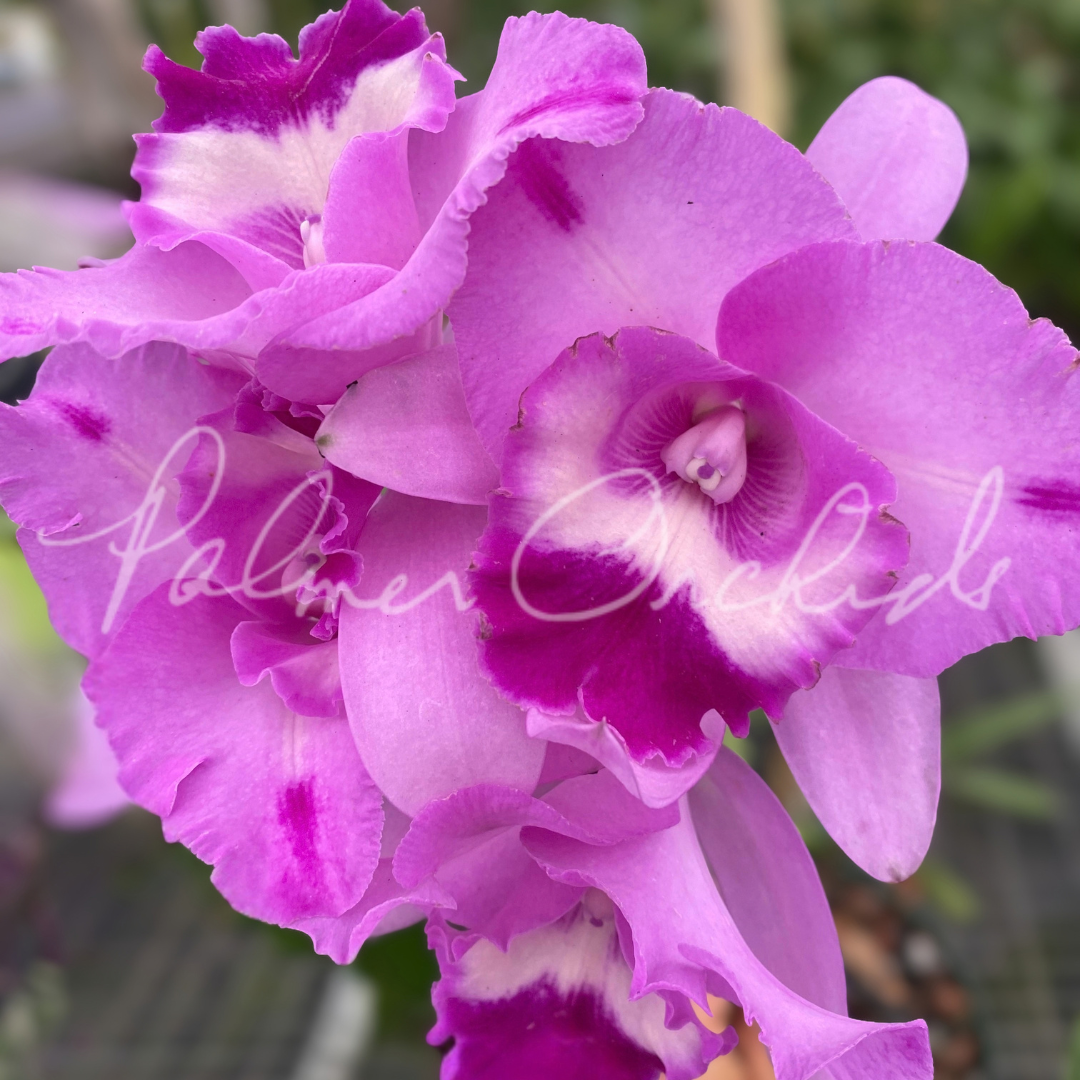
(Rlc. Donna Kimura × Cattleya intermedia)
Blooms in a cluster of pink/purple flowers. Large, mature plants bloom twice a year. Fragrant.
‘Elizabeth’ mericlone.
Plants Available: Growing in 4” pots. An example of the size available is pictured. Plants are mature, previously bloomed.
Orchid Care: Grow in bright indirect light with strong air circulation and moderate to high humidity. Allow plants to dry out between waterings. Plants may be grown in pots or mounted. We recommend growing potted or in a basket in order to accommodate the stature of the plant.
—
09.18.26
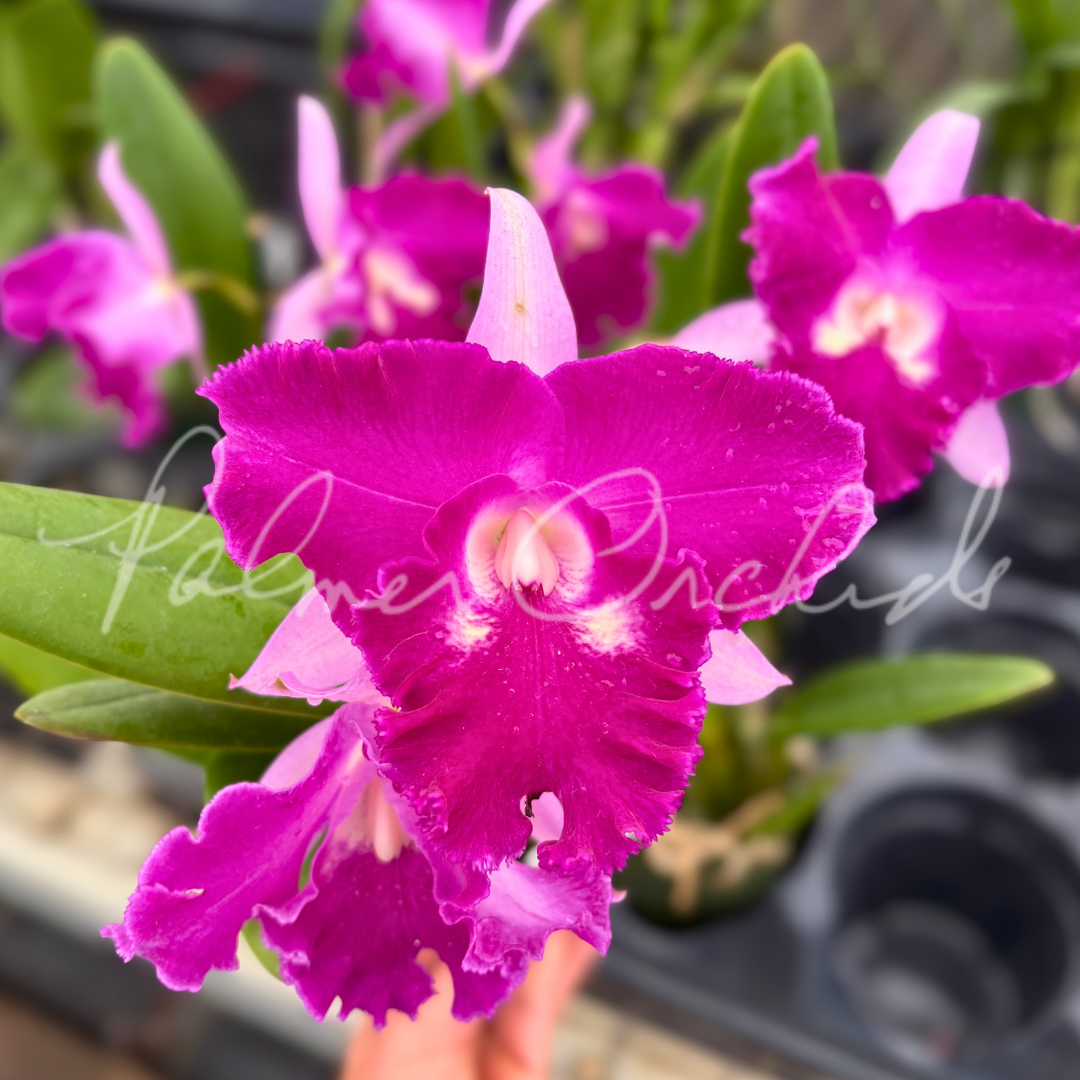
(Rlc. Dorcille Little x C. Interglossa)
Blooms are showy and fragrant. Younger plants bloom in a pair of flowers. Older, mature plants, often produce larger flowers in a cluster of three. Large, mature plants can bloom multiple times a year.
‘Krairit’ mericlone.
Plants Available: Growing in 4” pots. Plants are mature, previously bloomed. An example of the 4” Pot option is pictured.
Orchid Care: Grow in bright indirect light with strong air circulation and moderate humidity. Plants may be grown potted or mounted. The root system and substrate should dry out between waterings. Fertilize weakly, weekly.
—
09.03.26
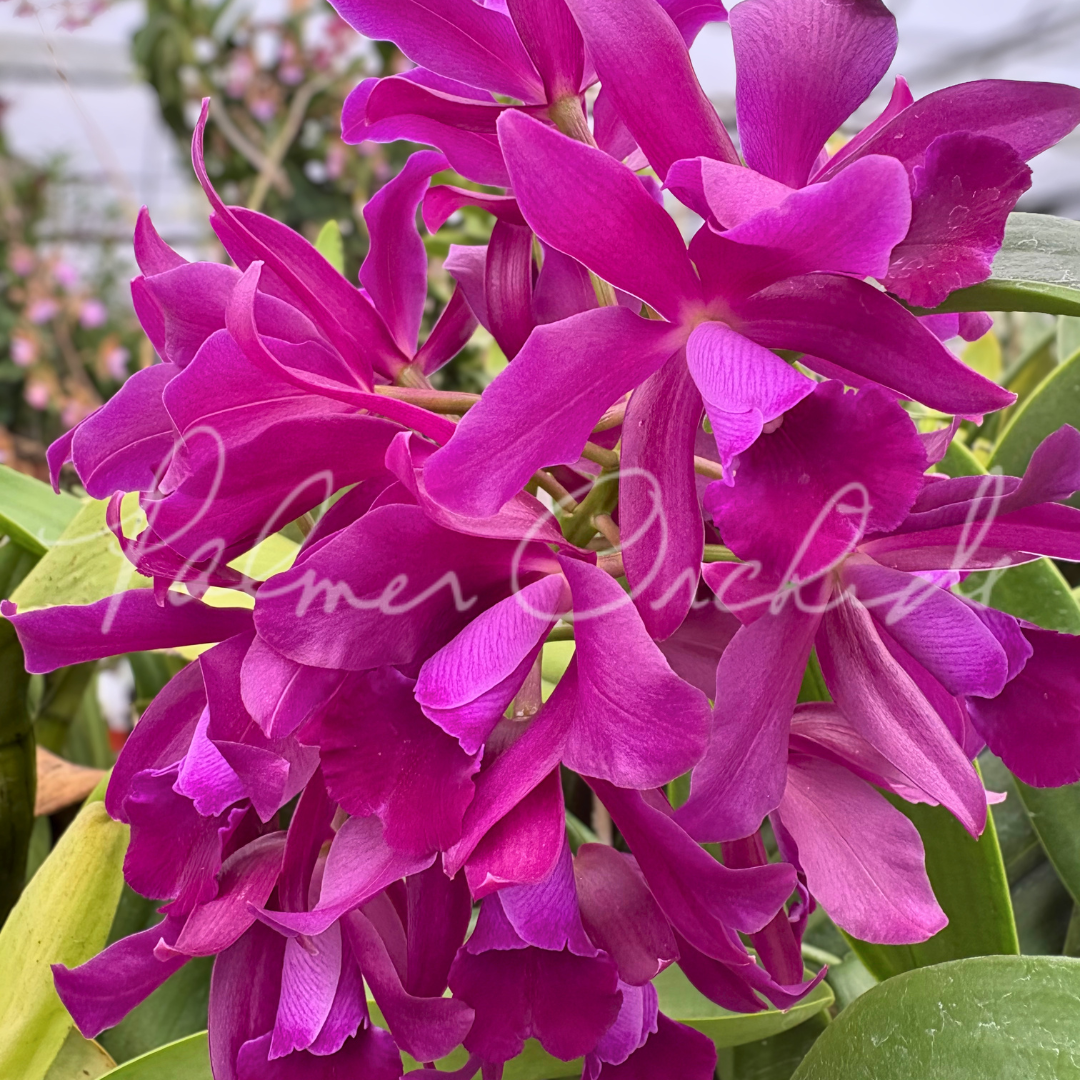
(Guarianthe bowringiana × Cattleya guttata)
This primary hybrid of Gur. bowringiana and C. guttata is a classic. Mature plants produce impressive heads of flowers with several waxy magenta blooms and are highly fragrant.
‘Grape Wax’ mericlone.
Plants Available: Growing in 3” pots. Plants available are near blooming-size. Examples of the size available are pictured.
Orchid Care: Grow in bright indirect light with strong air circulation and moderate humidity. Allow plants to dry out between waterings. Once mature, plants may be grown in pots or mounted. Fertilize weakly, weekly.
—
08.10.26
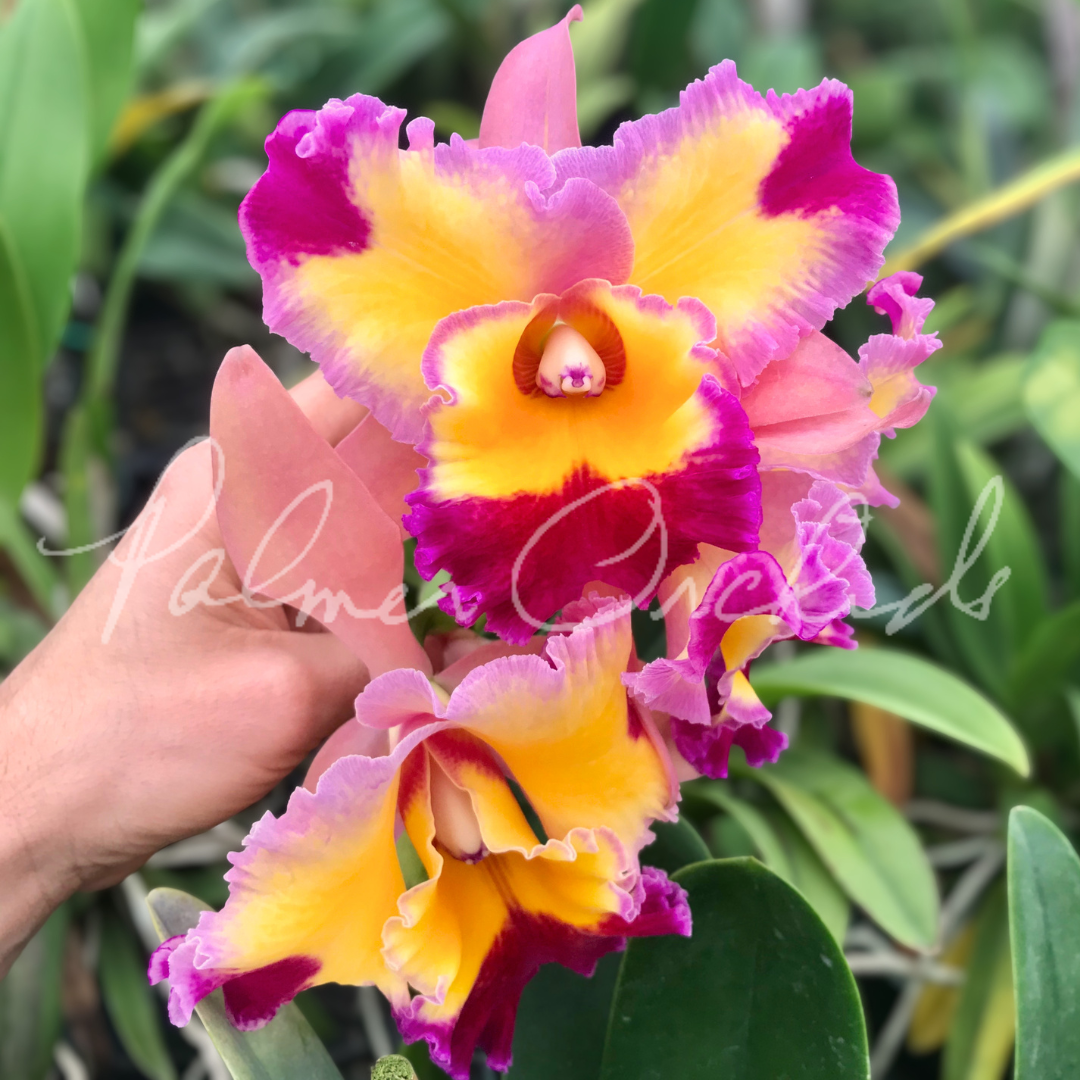
(Rlc. Hisako Akatsuka x Rlc. Hawaiian Lightning)
Fragrant, splash petal Cattleya hybrid. Mature plants blooms in a cluster.
‘Paradise’ mericlone.
Plants Available: Growing in 4” pots. Examples of the sizes available are pictured. The 4” Pot option is a blooming-size plant. The 4” Pot - Small option is near blooming size (perhaps an additional year to first flowering).
Orchid Care: Grow in bright, indirect light with strong air circulation and moderate to high humidity. Mature plants can be potted or mounted. Provide strong air circulation in the growing environment. Plants should dry out between waterings. Fertilize weakly, weekly.
—
07.23.26
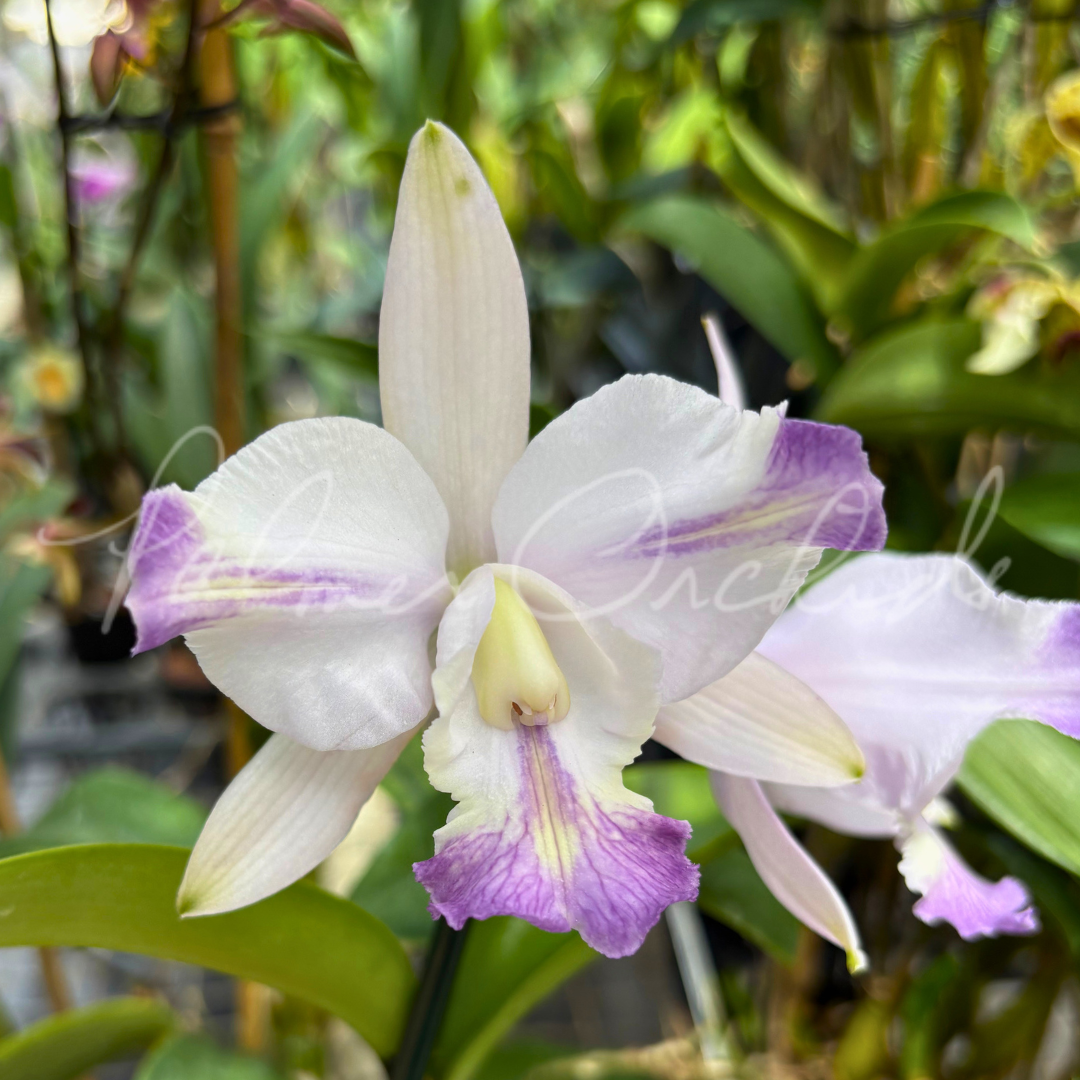
(Cattleya intermedia x Cattleya nobilior)
Primary hybrid of Cattleya species C. intermedia and C. nobilior. Blooms in a pair or cluster of creamy coerulea flowers with a lavender flare. Fragrant.
‘Chief’ mericlone.
Plants Available: Growing 4” pots. An example of the size available is pictured. Plants are blooming-size.
Orchid Care: This variety has a rambling growth habit, which makes it a good candidate for mounting. But plants can be also be grown potted, using a bark-based substrate that drains freely. Grow in bright indirect light with good air circulation and moderate humidity. Allow plants to dry out between waterings. Fertilize weakly, weekly.
—
08.06.26
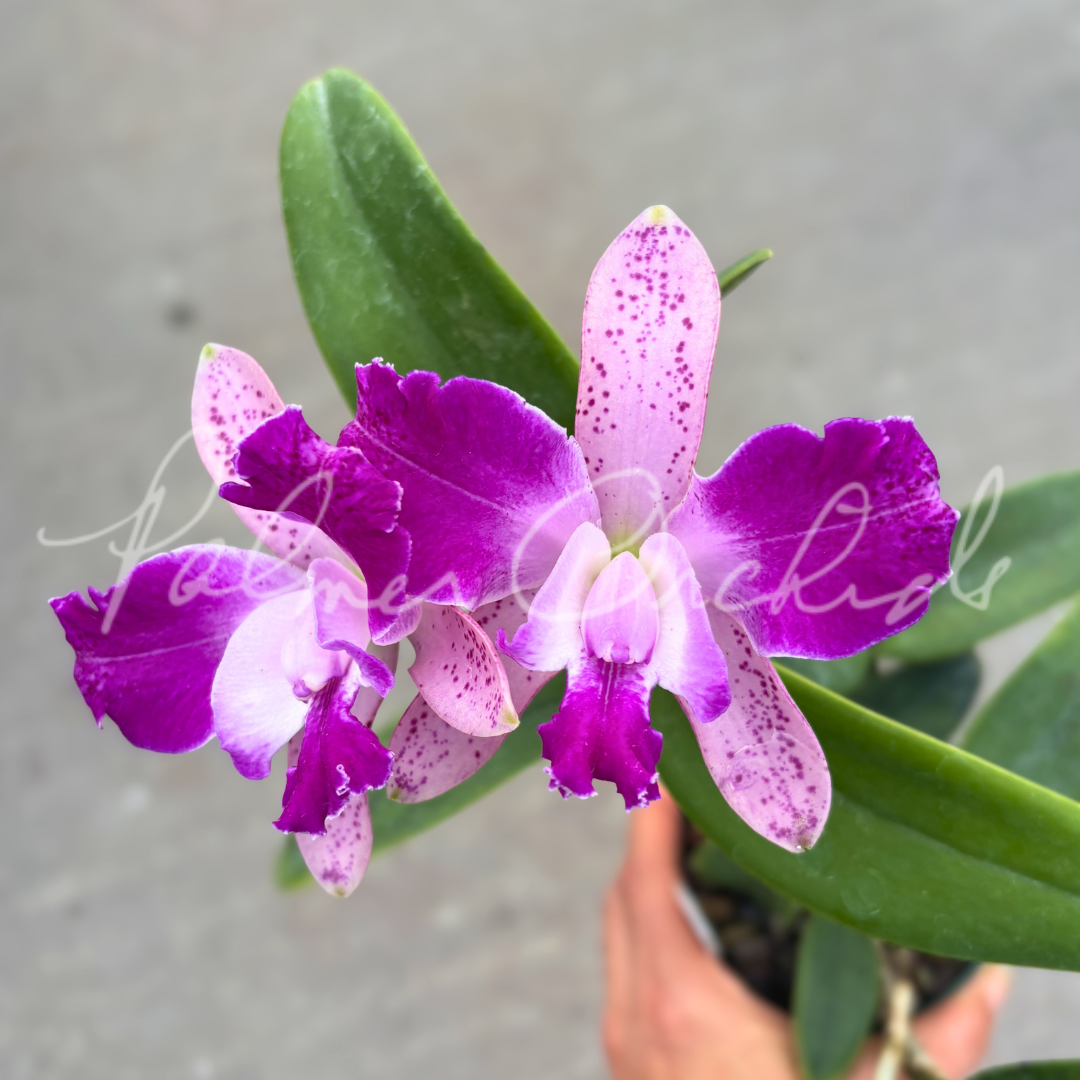
This hybrid does not currently have a registered name.
(Cattleya Monte Elegante x Cattleya tigrina ‘Francisco’)
This crop of C. Monte Elegante x tigrina are grown from seed, so flowers are variable. Some plants produce clusters of soft pink blooms densely marked with deep magenta spotting—a striking, tigrina-influenced pattern. Others produce peloric flowers in which two of the petals mimic the lip. Blooms from three individuals are pictured to illustrate this variation.
Plants Available: Growing in 4” pots and 6” pots. Examples of the 4” Pot and 6” Pot options are pictured. Orders will be filled with plants in sheath/bud/bloom as blooming season and blooming stock permit.
Orchid Care: Grow in bright indirect light with strong air circulation and moderate humidity. Allow plants to dry out between waterings. Fertilize weakly, weekly.
—
06.18.26
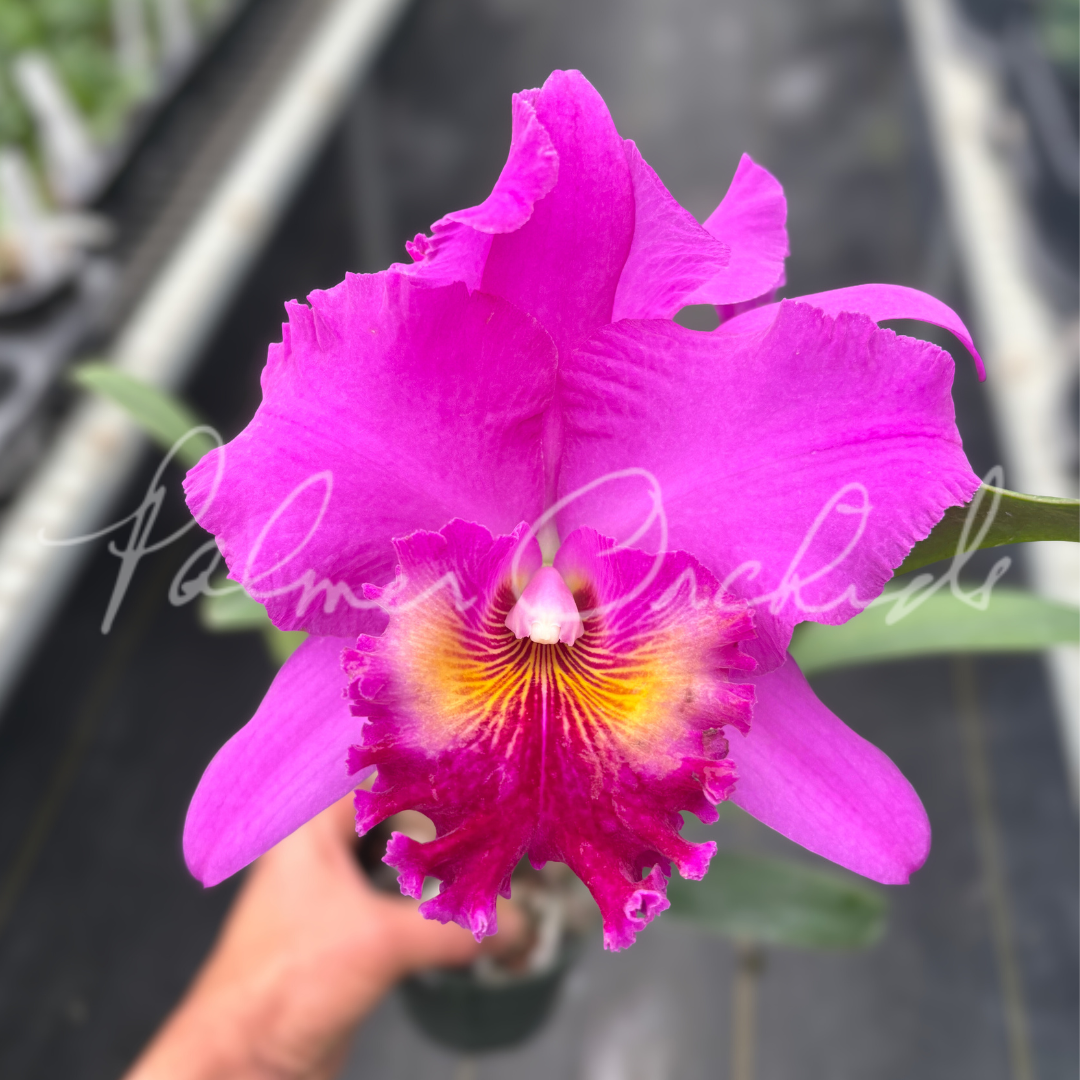
(Rlc. Mahina Yahiro × Haruko Kanzaki)
The ruffly purple bloom pictured is the first bloom of the crop.
This crop has been grown from seed, so flower characteristics may vary from plant to plant.
In this instance, the colors resemble those of parent Rlc. Haruko Kanzaki. Other plants may bloom with similar or lighter shades of purple/pink like the Rlc. Mahina Yahiro parent of the hybrid.
Plants Available: Growing in 4” and 6” pots. Examples of the 4” pot sizes are pictured. The 4” Pot option is a blooming-size plant. The 6” Pot option is mature. Orders will be filled with plants in sheath/bud/bloom as stock permits.
Orchid Care: Grow in bright indirect light with strong air circulation and moderate to high humidity. Allow plants to dry out between waterings. Plants may be grown in pots or mounted. Fertilize weakly, weekly.
-
06.20.26

(‘Father’s Day’ x self)
Cattleya species native to southeastern Brazil and prized for its large, showy flowers and distinctively vibrant lip. Fragrant.
Grown from seed so flower characteristics will vary somewhat from plant to plant.
Plants Available: Growing in 3” pots. Examples of the size available are pictured.
Orchid Care: Grow in bright, indirect sun. Provide strong air circulation and moderate to high humidity. When potting, the medium should be a well-draining, airy mix (e.g. bark-based with hydroton/LECA, charcoal, and sponge rock) to allow ample air flow around the root system. Water conscientiously as this species can be quite sensitive to overwatering. Water thoroughly when plants are actively growing during spring and summer, allowing the roots of the plant to dry fully before watering again. Reduce water and fertilizer with cooler temperatures and shorter day length in fall and winter.
-
09.13.25
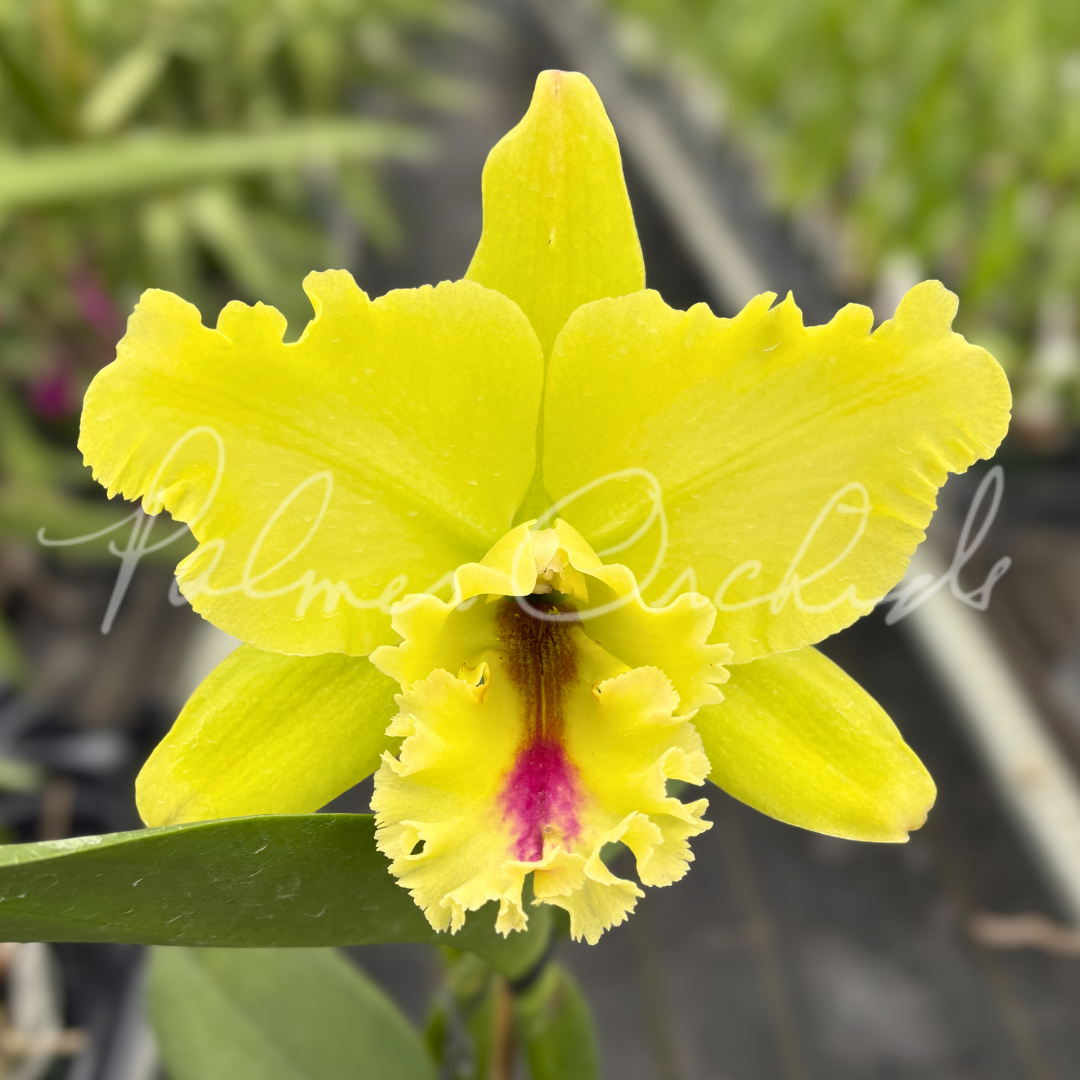
(Rlc. Mem. Helen Brown × Rl. digbyana)
Fragrant yellow-green Cattleya hybrid. Blooms are large, showy and substantive, with ruffled petals and a prominent magenta-red splotch from throat to lip.
‘Napoleon’ mericlone.
Plants Available: Growing in 4” and 6” pots. An example of the 4” Pot option is pictured. The 4” Pot option may be blooming-size or previously bloomed.
Orchid Care: Grow in bright indirect light with high humidity and good air circulation. Plants may be potted or mounted, though potting may better accommodate the stature of the plant as it ages. Allow plants to dry out between waterings.
-
05.29.26
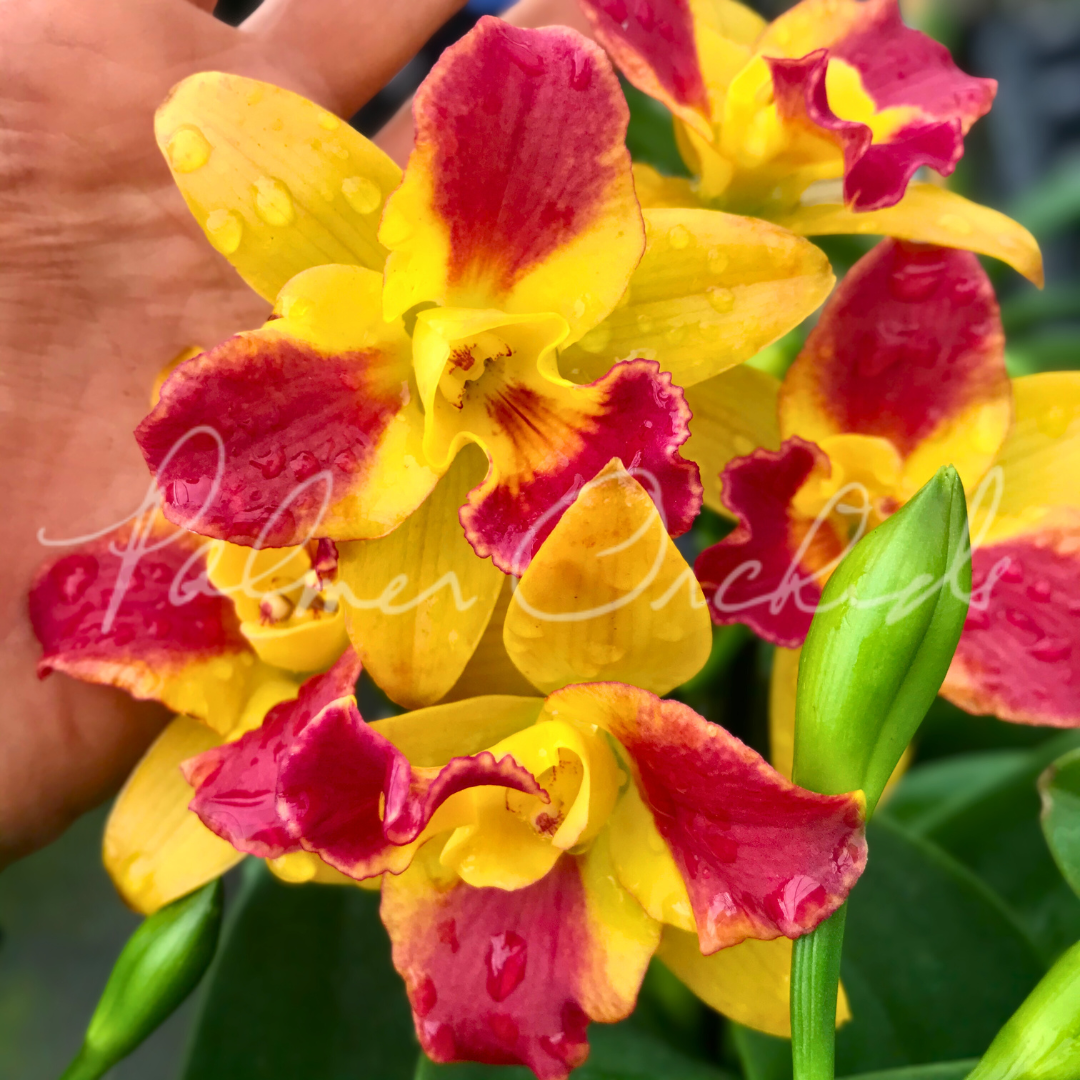
(Rth. Netrasiri Starbright × C. Netrasiri Beauty)
‘Burana’ mericlone.
Yellow and red splash petal Cattleya. Typically blooms in clusters as shown. Bright, cheery, fragrant, compact. Grow mounted or potted.
Plants Available: Growing in 4” pots. An example of the size available is pictured. Orders will be filled with plants in bud/bloom as blooming season and blooming stock permit; otherwise, mature plants which have bloomed previously.
Orchid Care: Grow in bright indirect light with strong air circulation and moderate humidity. Plants can be potted or mounted. Allow roots and substrate to dry out between waterings. Fertilize weakly, weekly.
—
07.31.25

This hybrid does not yet have a registered name.
Grown from seed, so flower characteristics vary somewhat from plant to plant. Blooms from two individuals from this crop are pictured to illustrate this variation.
Plants Available: Growing in 6” pots. An example of the 4” Pot is pictured. The 6” Pot option is a large, mature plant.
Orchid Care: Grow in bright indirect light with strong air circulation and moderate to high humidity. Allow plants to dry out between waterings. Plants may be grown in pots or mounted. Fertilize weakly, weekly.
—
08.08.26
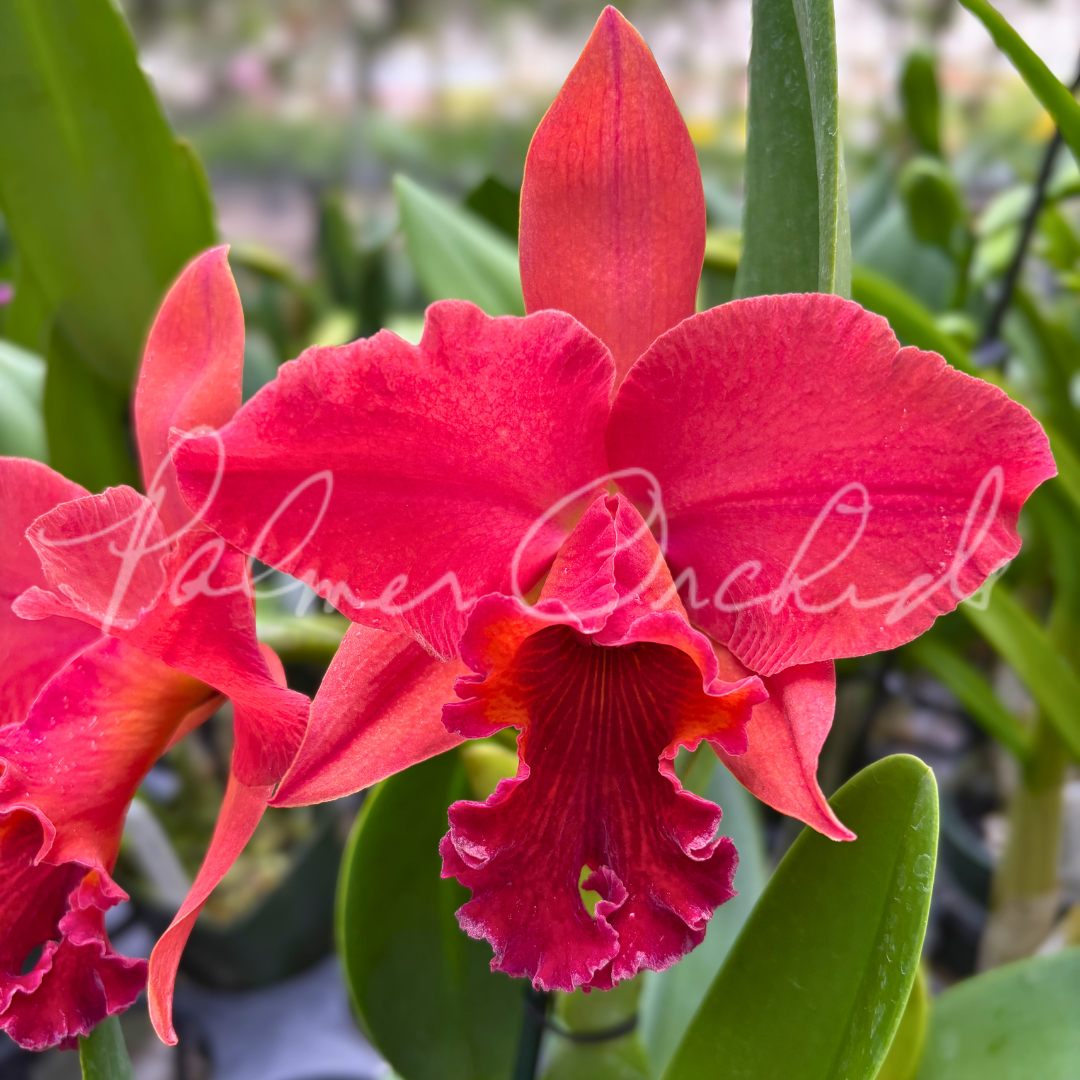
(Rlc. Tadao Kozumi × Rlc. Volcano Lovely)
Terumi Kaneko is a red Cattleya hybrid with large, showy flowers. Fragrant.
Mericlone.
Plants Available: Growing in 4” pots. Plants are blooming-size. Examples of the size available are pictured.
Orchid Care: Grow in bright indirect light with strong air circulation and moderate humidity. Plants may be grown potted or mounted. For potted plants, use a medium to large aggregate bark-based mix that drains freely. Roots and mix should dry out between waterings. Fertilize weakly, weekly.
—
05.30.26

(Rlc. Dick Smith × Rlc. Toshie Aoki)
‘Palmer Orchids’ mericlone.
Plants Available: Extra-large plants growing in 6” pots. An example from those available is pictured.
Orchid Care: Grow in bright indirect light with strong air circulation. Plants may be grown potted or mounted. Allow roots to dry out between waterings. Fertilize weakly, weekly.
—
09.03.26
(Rlc. Meditation × Rlc. Donna Kimura)
Flowers open light pink and become a darker shade of lavender as they age. Blooms are large, showy and fragrant. Mature plants can bloom twice a year.
‘Julie’ mericlone.
Plants Available: Growing in 4” pots. An example of the size available is pictured. Orders will be filled with plants in sheath/bud/bloom as blooming season and blooming stock permit.
Orchid Care: Grow in bright indirect light with strong air circulation and moderate to high humidity. Allow plants to dry out between waterings. Plants may be grown in pots or mounted. We recommend growing potted or in a basket in order to accommodate the stature of the plant. Fertilize weakly, weekly.
-
09.19.26
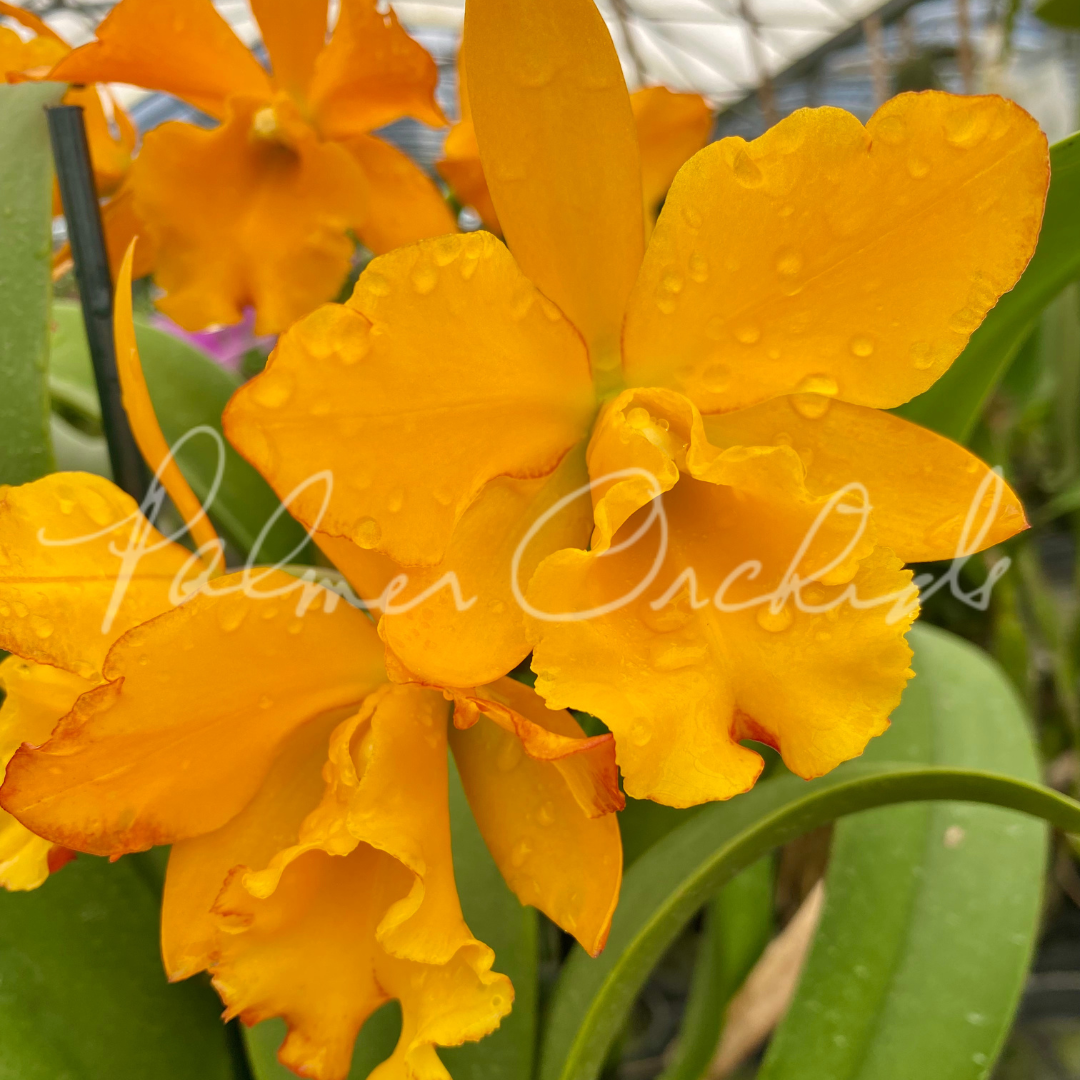
(Rth. Orange Nuggett × Rth Twentyfour Carat)
This Cattleya hybrid is one of our own crosses. Blooms are golden yellow progressing to orange with age. A faint red picotee marks the perimeter of the petals and lip.
‘Palmer Orchids’ mericlone.
Plants Available: Growing in 4” and 6” pots. A limited number of plants growing in 4” pots remain—the 4” Pot - Large option are large, overgrown plants, ready for potting up. Examples of the 4” Pot- Large are shown. Plants are blooming-size. Orders will be filled with plants in sheath/bud/bloom as blooming season and blooming stock permit.
Orchid Care: Grow in bright indirect light with moderate humidity and good air circulation. Water generously during active growth but ensure roots dry between waterings. Reduce water when days are shorter and temperatures are cooler. Plants may be potted or mounted. For potted plants, we recommend an open, freely-draining bark mix that dries easily. Fertilize weakly, weekly.
—
09.04.26
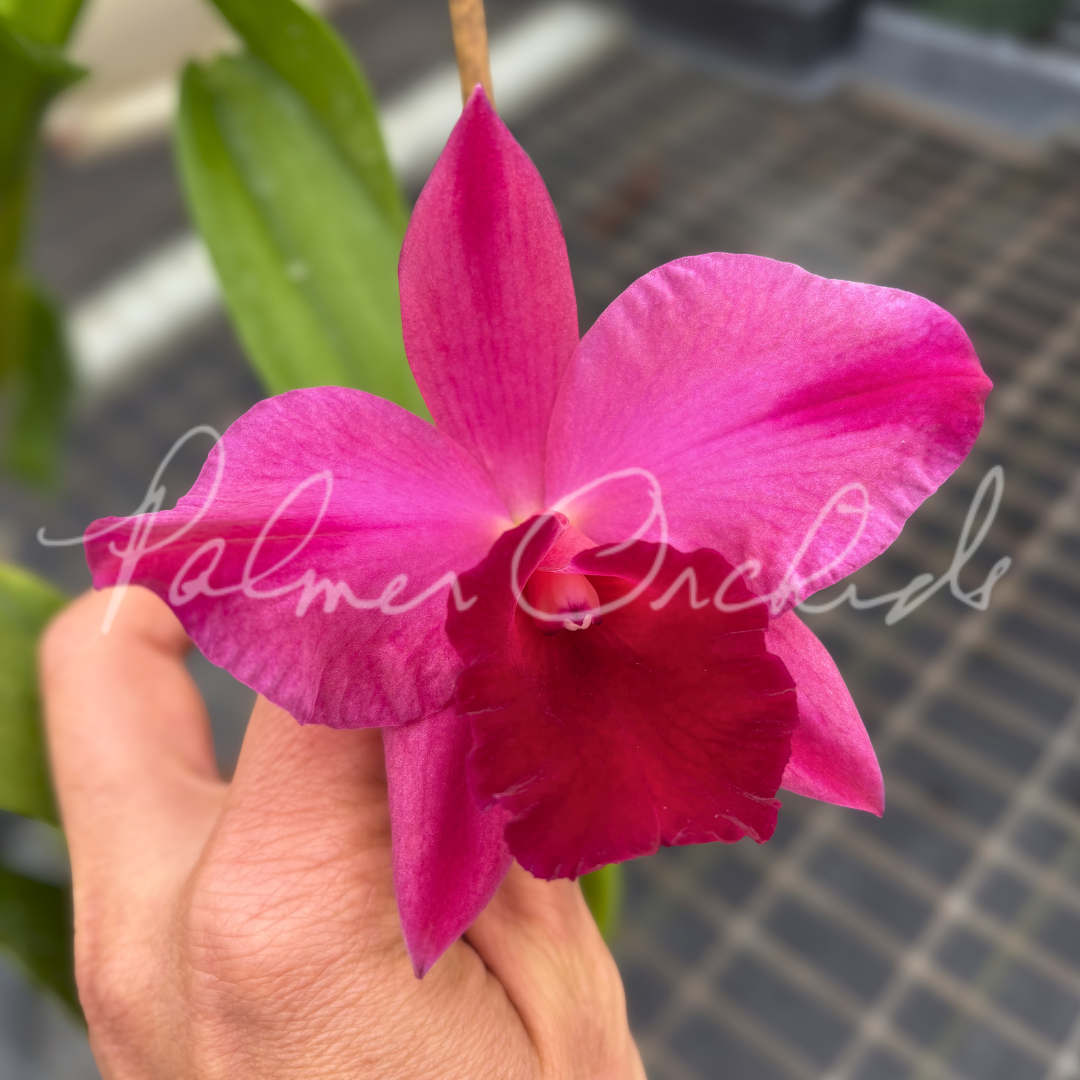
(C. Pink Doll ‘Midnight’ × Rlc. Rubescence ‘SVO’ AM/AOS)
Compact growing Cattleya hybrid with mid-sized red and pink flowers.
Grown from seed so flower characteristics will vary somewhat from plant to plant.
Plants Available: Growing in 4” pots. Plants are blooming-size. An example of the size available is pictured.
Orchid Care: Grow in bright, indirect light with strong air circulation and moderate humidity. Allow plants to dry out between waterings. May be grown potted or mounted. Fertilize weakly, weekly.
-
05.29.26
(Lc. Cornelia ‘Floralia’ x Lc. Love Knot ‘SVO’)
Compact-growing Cattleya hybrid with indigo blue and purple flowers that typically bloom in a pair.
Grown from seed so flower characteristics vary somewhat from plant to plant. Blooms from three individuals are pictured to illustrate these variations.
Plants Available: Growing 4” pots. Examples of the size available are pictured. Plants are blooming-size.
Orchid Care: Plants can be grown potted, using a bark-based substrate that drains freely, or mounted. Grow in bright indirect light with good air circulation and moderate humidity. Allow plants to dry out between waterings. Fertilize weakly, weekly.
—
05.29.26
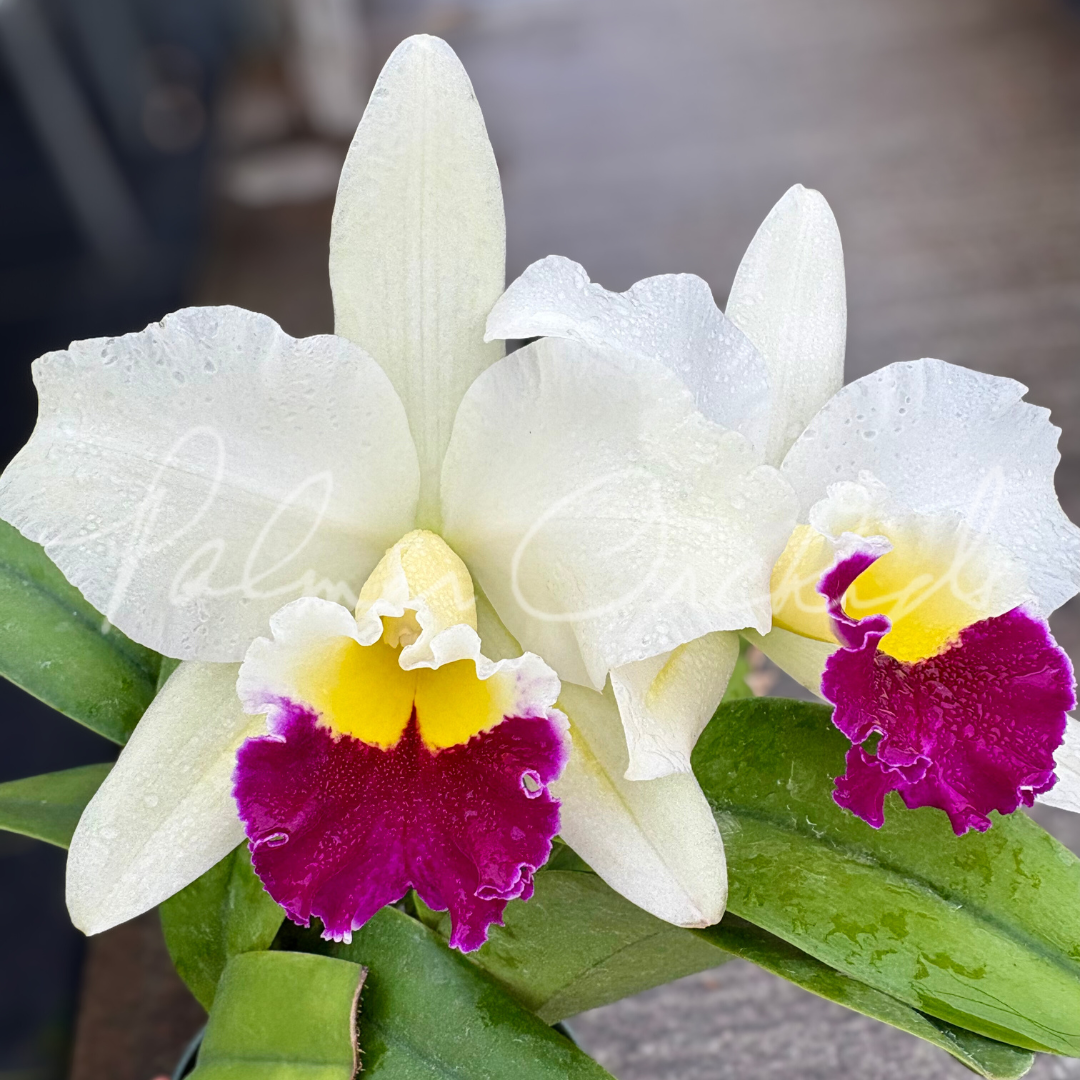
(Rth. Hsinying Catherine × Rlc. Pratum Green)
Blooms in pair or cluster of white flowers with a fuchsia lip and yellow throat. Fragrant.
Mericlone.
Plants Available: Growing in 4” pots. Examples of the sizes available are pictured. Orders will be filled with plants in sheath/bud/bloom as blooming season and blooming stock permit; otherwise, mature plants, previously bloomed.
Orchid Care: Grow in bright indirect light with strong air circulation and moderate to high humidity. Allow plants to dry out between waterings. Plants may be grown in pots, baskets, or mounted. We recommend growing potted or in a basket in order to accommodate the stature of the plant as it matures. Fertilize weakly, weekly.
-
12.06.25
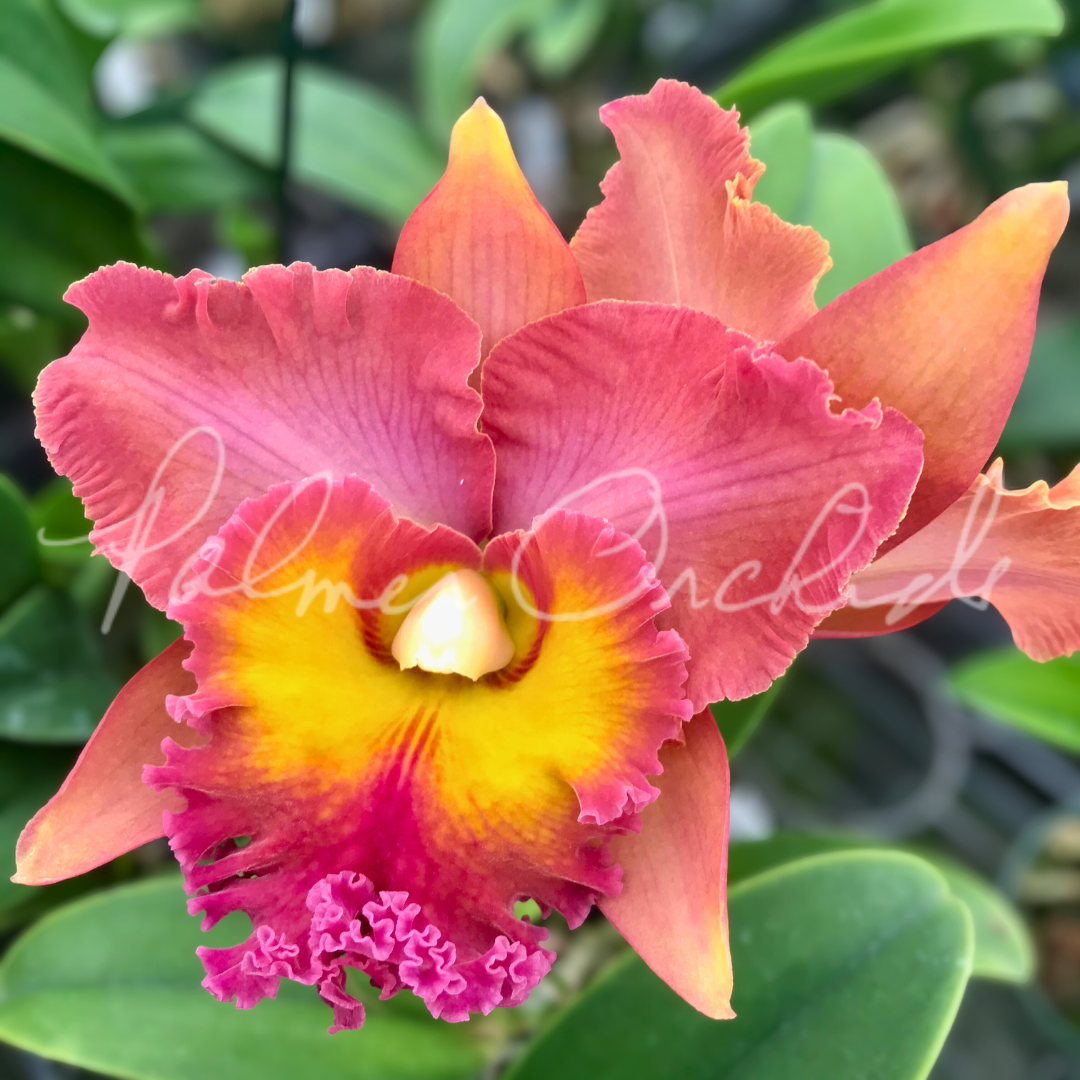
(Rlc. Mem. Yoshi Tsubaki x Rlc. Volcano Classic)
Large-flowered Cattleya hybrid that captures the colors of a tropical sunset. Flowers first open in a light orange hue, which lingers on the petal tips even as the blooms mature into darker orange-pink tones.
‘Volcano Queen’ mericlone.
Plants Available: Growing in 4” pots, with small and blooming-size options. Examples of the available options are pictured. The 4” Pot option is a blooming-size plant.
Orchid Care: Grow in bright indirect light with moderate humidity and strong air circulation. Water generously during active growth but ensure roots dry between waterings. Mature plants may be potted or mounted. Fertilize weakly, weekly.
—
09.03.26
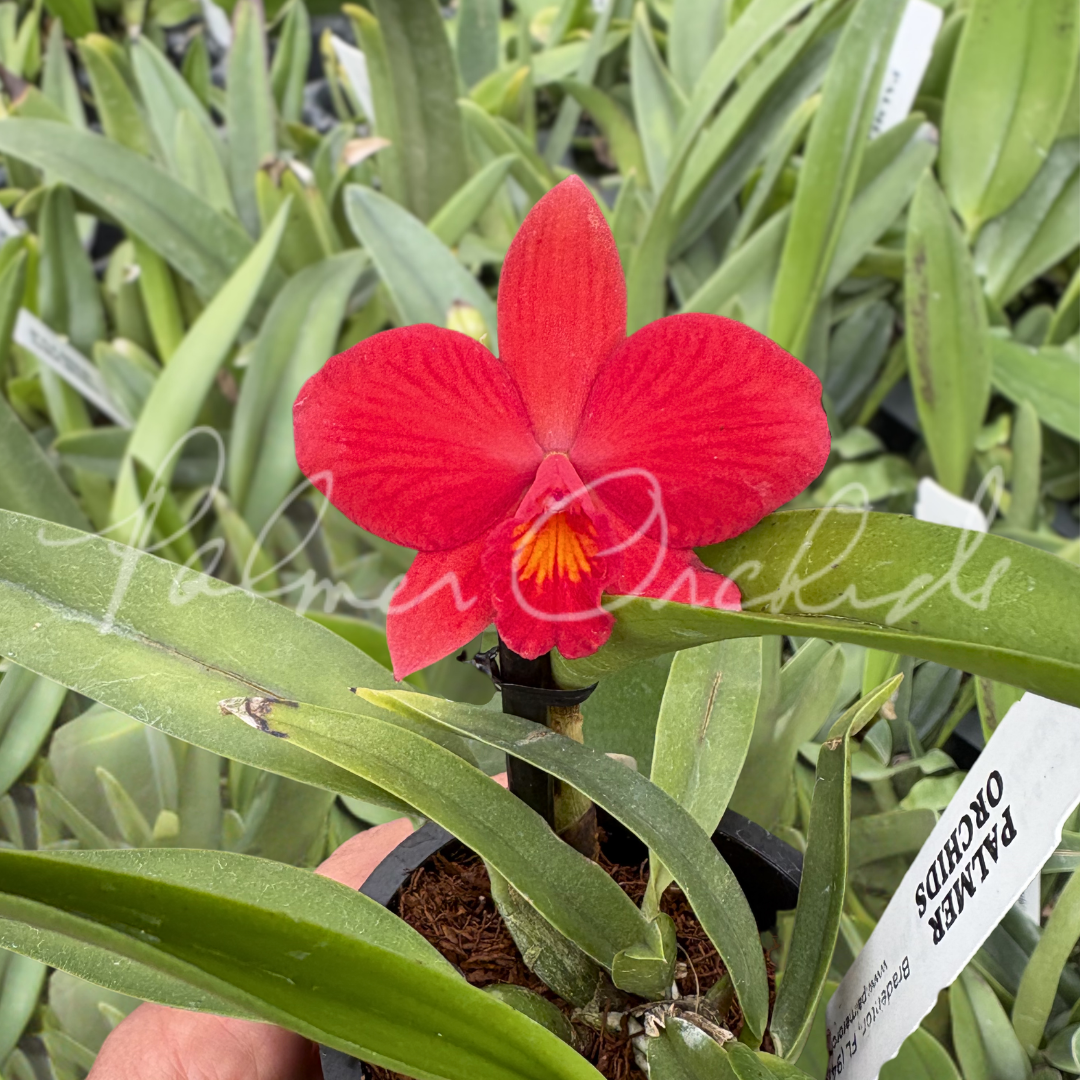
(Rth. Laszlo’s Spark ‘Mini Flare’ × Cattleya Virginia Dickey ‘Diamond Orchids’ AM/AOS)
Mini-catt with round, Sophronitis-type blooms. Flowers tend to be predominantly red—some, with shades of orange or yellow at the base of the petals or in the throat.
Plants are grown from seed, so flower characteristics vary somewhat from plant to plant. Blooms from the multiple individuals are pictured to illustrate these variations.
Plants Available: Growing in 3” pots, blooming-size. Examples of the size available are pictured. Orders will be filled with plants in bud/bloom as blooming season and blooming stock permit.
Orchid Care: Grow in bright indirect light with strong air circulation and moderate humidity. Allow plants to dry out between waterings. Plants may be grown in pots or mounted. We grow this variety potted, using tree fern, sphagnum, or fine (seedling grade) orchid bark. Fertilize weakly, weekly.
-
05.30.26

This hybrid does not currently have a registered name.
Spotted Cattleya hybrid. Fragrant.
Grown from seed, so flower characteristics will vary somewhat from plant to plant. Blooms from three individuals are pictured to illustrate such variations.
Plants Available: Growing in 4” pots. Examples of the 4” Pot and 4” Pot - Lg options are pictured. Both options are blooming-size.
Orchid Care: Grow in bright indirect light with strong air circulation and moderate humidity. Allow plants to dry out between waterings. Plants may be grown potted or mounted. We recommend leaving younger plants potted and mounting as they mature and begin to outgrow their pots. Baskets and wood mounts are both good options. Fertilize weakly, weekly.
—
05.29.26

(Rlc. Mahina Yahiro × Cattleya Odom’s Grand Delight)
The first bloom of the crop is pictured and we’re delighted to find she looks like a compact Mahina Yahiro! Flowers are also fragrant—a pleasantly sweet scent.
This crop has been grown from seed, so flower characteristics may vary from plant to plant. Stay tuned fro additional examples from the crop as we continue to bloom them.
Plants Available: Growing in 4” and 6” pots. An example of the 4” Pot option is pictured. This option is a blooming-size plant. The 4” Pot - Sm option is near blooming-size, expected to reach bloom size in summer 2026. The 6” Pot option is a mature plant.
Orchid Care: Grow in bright indirect light with strong air circulation and moderate to high humidity. Allow plants to dry out between waterings. Plants may be grown in pots or mounted. Fertilize weakly, weekly.
-
10.06.26

(Cattleya Princess Margaret × Cattleya R. Cadwalader)
What a beauty. Mature plants produce big floofy white blooms with a pair of golden eyes on either side of a vibrant pink lip. Highly recommended for lovers of those classic showy Cattleya hybrids with large and showy fragrant flowers.
‘Caruthers’ AM/AOS mericlone.
Plants Available: Growing in 4” pots. Examples of the 4” Pot - Small and 4” Pot options are pictured.
Orchid Care: Grow in bright indirect light with strong air circulation and moderate to high humidity. Allow plants to dry out between waterings. Plants may be grown in pots or mounted. Fertilize weakly, weekly.
-
06.13.25

(Rlc. Paradise Rose ‘My Valentine’ x Rlc. Mem. Alida Laboy ‘SVO Top Pick’)
Compact growing Cattleya hybrid with pink-red flowers.
Grown from seed, so flower characteristics will vary somewhat from plant to plant.
Plants Available: Growing in 3” pots, blooming-size. Examples of the size available are pictured.
Orchid Care: Grow in bright, filtered light with strong air circulation and moderate humidity. Allow plants to dry out between waterings. Grow potted using medium to fine grade bark mix or tree fern. Fertilize weakly, weekly.
—
04.14.26
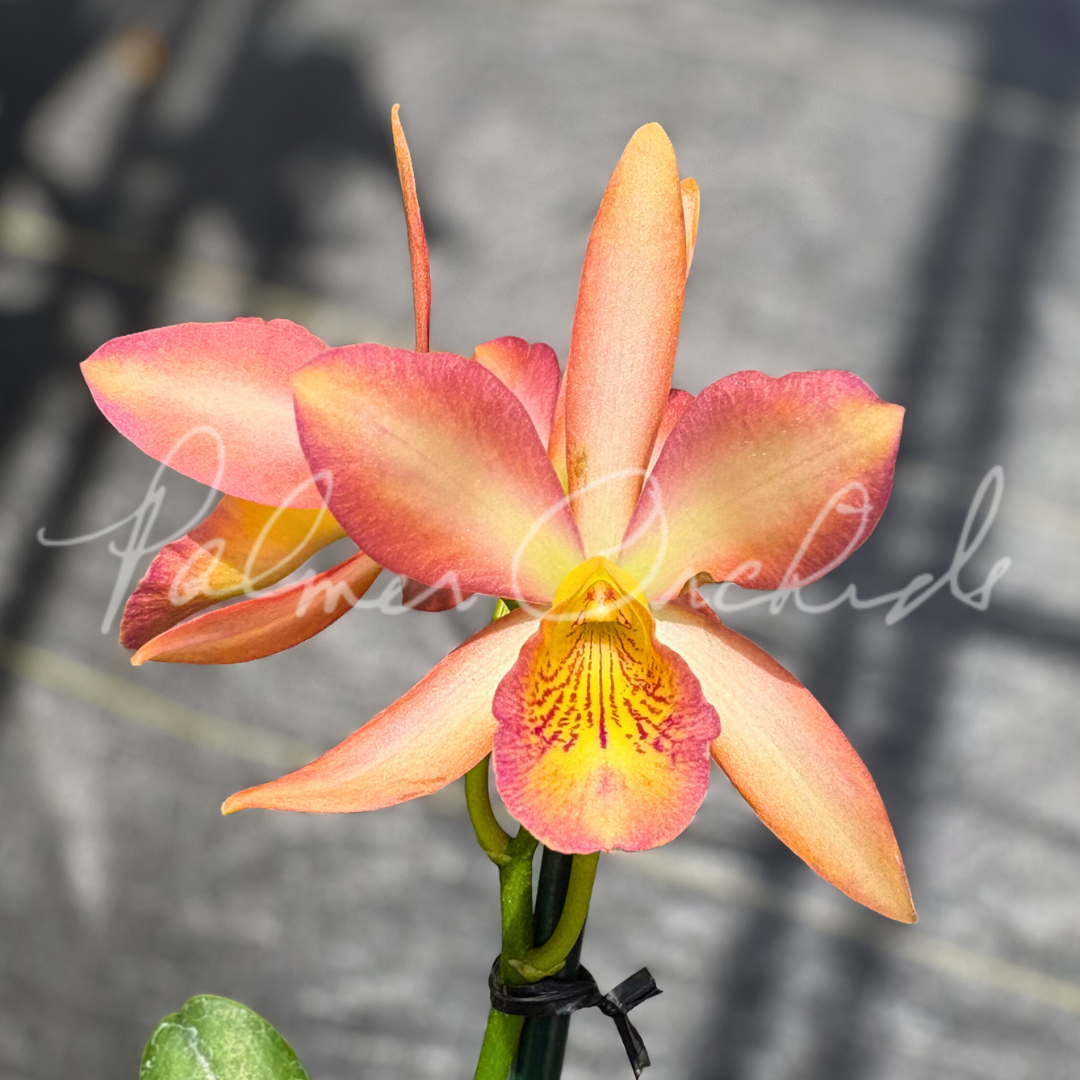
(Rth. Carolina Orange D'Or ‘Linette’ AM/AOS × Gcy. Kyoguchi ‘M. Sauno’ 4N)
Compact Cattleya-Encyclia hybrid. Blooms in clusters of peach, orange, and yellow flowers. Mature plants are expected to be quite floriferous.
Grown from seed so flower characteristics vary from plant to plant. Flowers from two plants are pictured to illustrate this variation.
Plants Available: Growing in 4” pots. Plants are blooming-size. An example of the size available is pictured.
Orchid Care: Grow in bright indirect light with strong air circulation and moderate humidity. Allow plants to dry out between waterings. Plants may be grown in pots or mounted. Fertilize weakly, weekly.
-
12.06.25

(Brassavola nodosa × Rhyncholaelia digbyana)
Primary hybrid of the species B. nodosa and Rl. digbyana. Plants remain compact in stature as they mature, producing blooms that are large relative to the size of the plant. Flowers are fragrant at night.
Grown from seed so flower characteristics may vary somewhat from plant to plant.
Plants Available: Growing in 4” pots. Examples of the sizes available are pictured.
Orchid Care: Grow in high light—bright, indirect sun. Allow the root system of the plant to dry thoroughly between waterings. When plants outgrow 4” pots, they can be potted up or mounted/established in baskets. Fertilize weakly, weekly.
—
11.06.25
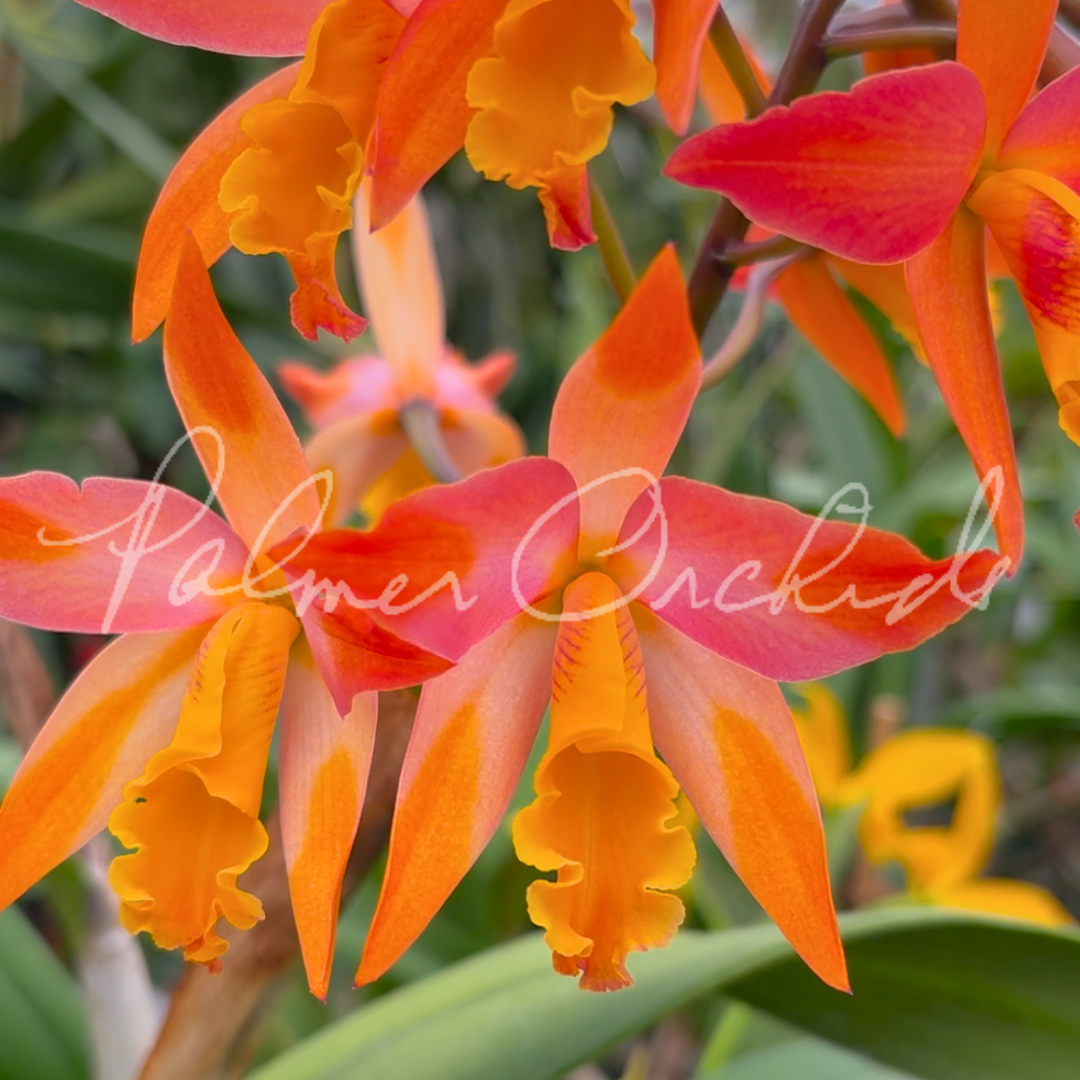
(C. Dubiosa ‘Scully’s’ HCC/AOS × Ctt. Trick or Treat ‘Orange Magic’ AM/AOS)
Blooms in clusters of flowers, whose colors may include shades of orange, yellow, and pink. Some plants produce flowers with flared petals or markings on the petal tips.
Grown from seed so flower characteristics vary somewhat from plant to plant. Blooms from multiple plants are pictured to illustrate these variations.
Plants Available: Growing in 4” pots. Plants available are blooming-size. Examples of the sizes available are pictured.
Orchid Care: Grow in bright indirect light with strong air circulation and moderate humidity. Allow plants to dry out between waterings. Plants may be grown in pots or mounted.
—
04.09.26
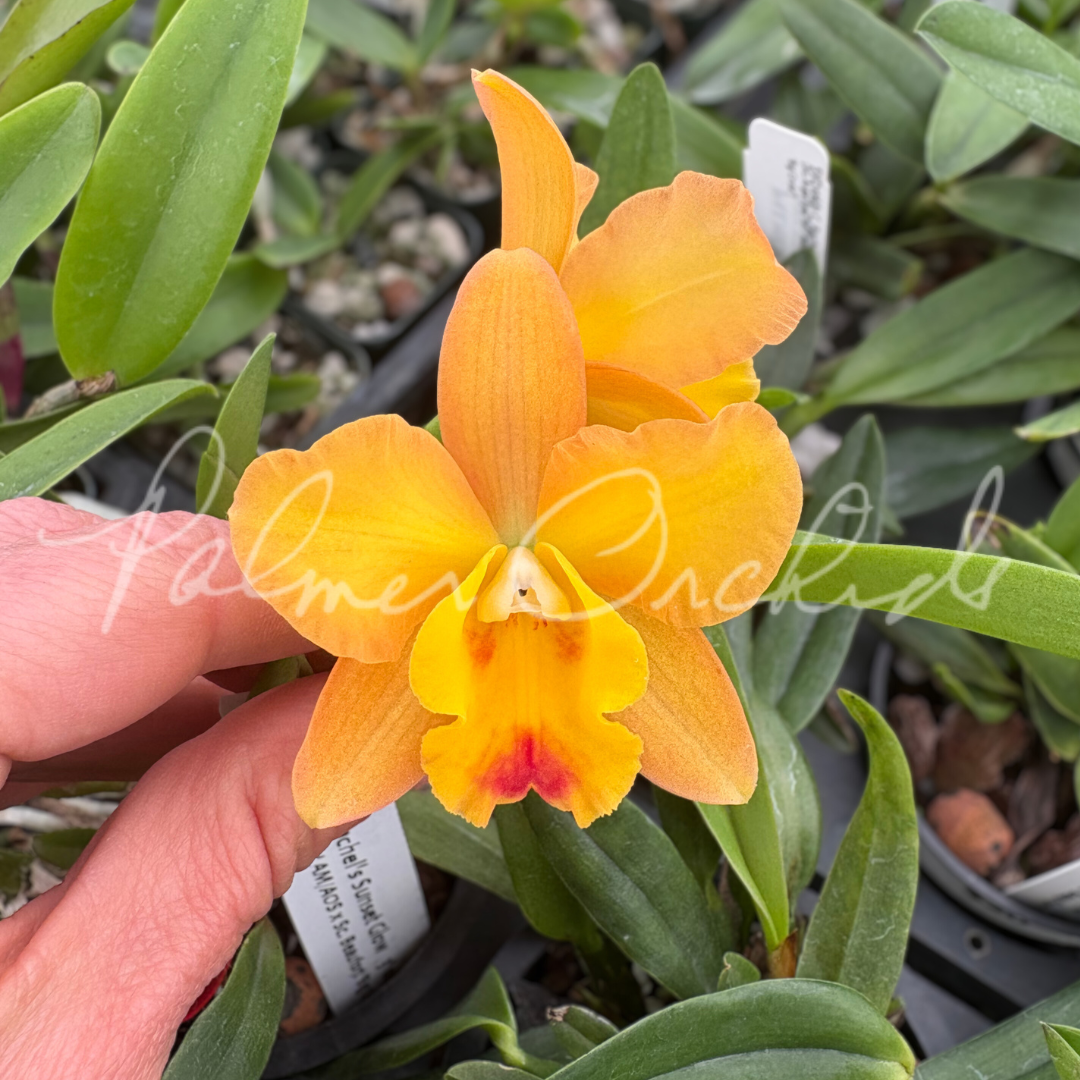
(Slc. Angel Eyes ‘SVO’ AM/AOS × Sc. Beaufort 'Big Circle’)
Mini-catt with round, Sophronitis-type blooms of yellow-orange.
Plants are grown from seed, so flower characteristics will vary somewhat from plant to plant. Flowers from the first individual to bloom from the crop are pictured.
Plants Available: Growing in 3” pots, blooming-size. An example of the size available is pictured. Orders will be filled with plants in bud/bloom as blooming season and blooming stock permit.
Orchid Care: Grow in bright indirect light with strong air circulation and moderate humidity. Allow plants to dry out between waterings. Plants may be grown in pots or mounted. Fertilize weakly, weekly.
-
07.15.25
DENDROBIUM
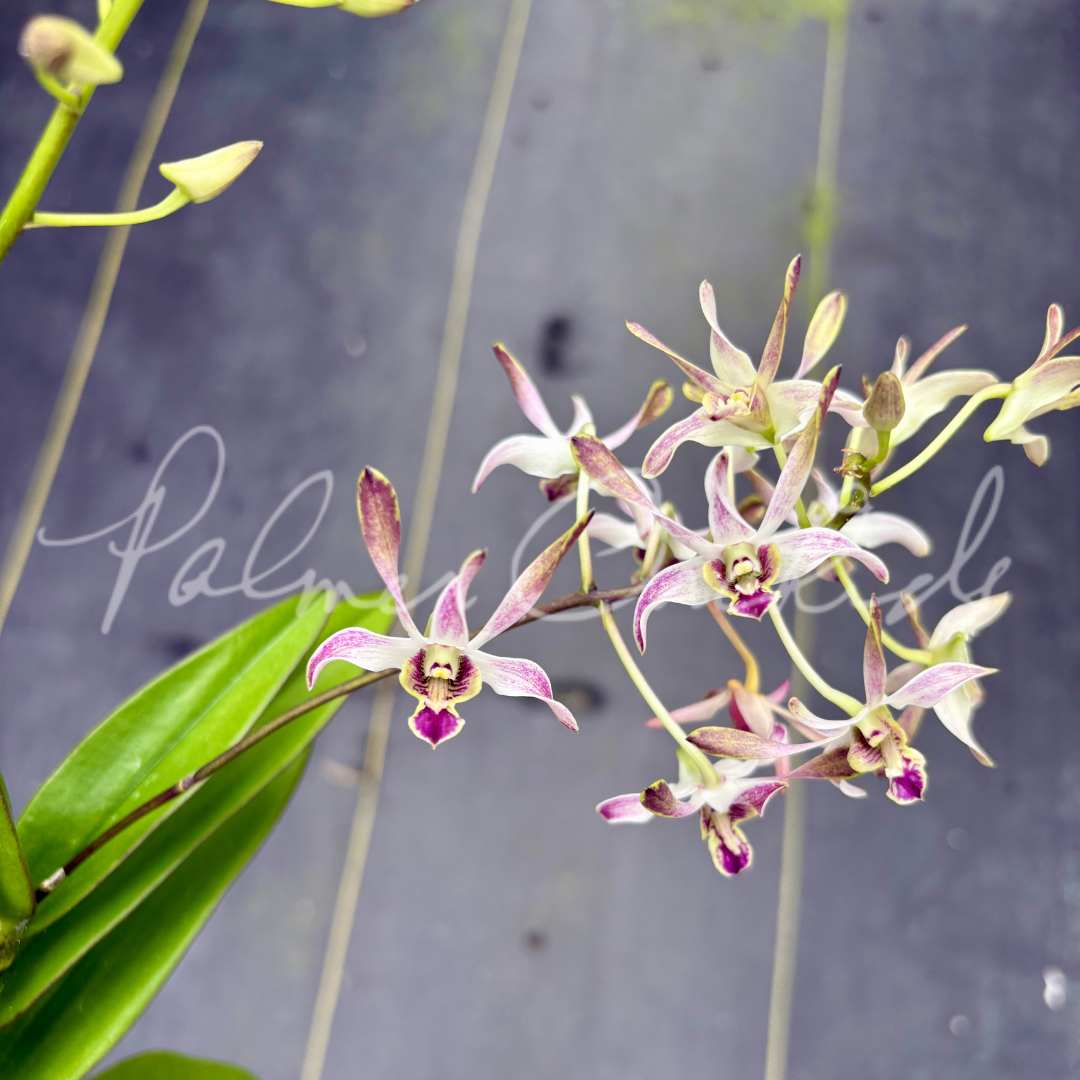
(Den. Blue Twinkle x Dendrobium antennatum)
A stocky, compact antelope Den with coerulea-purple flowers whose colors become bolder when grown in higher light.
Mericlone.
Plants Available: Growing in 4" pots. Examples of the size available are pictured. Orders will be filled with plants in spike/bud/bloom as blooming season and blooming stock permit; otherwise, mature plants which have bloomed previously.
Orchid Care: Generally easy to grow, particularly alongside Cattleyas. Provide high light and good air circulation. Water generously while plants are actively growing in spring and summer, but allow plants to dry out between watering. A medium or large aggregate bark mix that drains freely is recommended for potted plants. Reduce watering during fall and winter.
-
09.04.26

(Den. Penang Little Magic × Den. Blue Twinkle)
Blooms in sprays of several small, twisty flowers, typically in combinations of pink, magenta, merlot, and rose.
Grown from seed, so flower characteristics vary from plant to plant. Bloom spikes from three individuals are pictured.
Plants Available: Growing in 3” and 4” pots. Orders will be filled with plants in spike/bud/flower as blooming season and blooming stock permit; otherwise, mature plants that have bloomed previously. An example of the 4” Pot - Large option is pictured.
Orchid Care: Grow in bright, indirect light and moderate humidity. Plants can be acclimated to some direct sun but should be provided filtered light during the hottest hours of the summer day. Roots and mix should be allowed to dry out between watering.
Plants may be grown potted or mounted. When potting, use a medium aggregate bark mix and choose a pot that will keep the plant snug. Repot only during spring and summer when plants are actively growing.
—
09.11.26
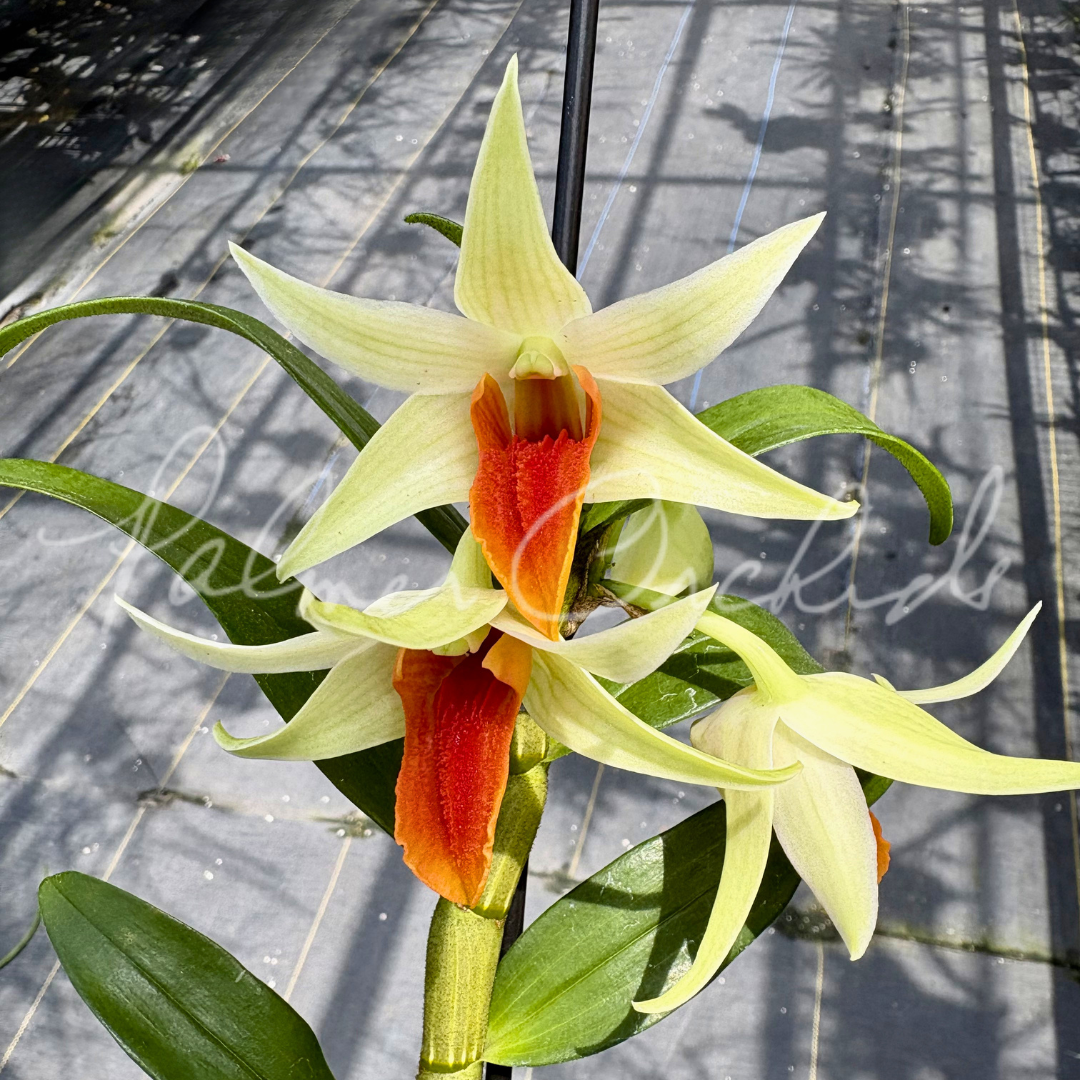
(Den. Hsinying Frostymaree × Dendrobium tobaense)
Dendrobium section Formosae hybrid, with creamy light green petals and a red-orange lip.
‘Red Lips’ mericlone.
Plants Available: Growing in 2” pots. Plants are blooming-size. Examples of the size available are pictured. Orders will be filled with plants in bud or bloom as blooming season and blooming stock permit.
Orchid Care: Grow in bright, diffused light. Keep moist in spring and summer while plants are actively growing. If potted in an open mix that drains freely and does not easily saturate, you can even grow them alongside your Vandas, watering daily. Reduce watering somewhat during the cooler months, but plants are evergreen* and do not require a dry rest. Plants should be tight in their pots.
The canes of this variety are naturally semi-pendulous when not staked or tied upright. Bear this in mind as the new growth emerges. Staking or allowing the growths to cascade is simply a matter of preference since the new growth will be self-supporting.
*Note: Although this is not a deciduous variety, some leaf drop is normal, particularly in response to stress. It is common for the canes on Formosae-type Dens like this one to shed a few leaves after shipping. Just give them a good watering and protect from extremes (e.g. in terms of light and heat) while they acclimate to your growing space.
-
06.13.26

(Den. Betty Goto × Dendrobium canaliculatum)
Compact antelope Dendrobium with indigo-purple flowers.
Grown from seed, so flower characteristics may vary plant to plant.
Plants Available: Growing in 4” pots. An example of the 4” Pot option is pictured. Orders will be filled with plants in spike/bud/bloom as blooming season and blooming stock permit; otherwise, mature plants which have bloomed previously.
Orchid Care: Generally easy to grow, particularly alongside Cattleyas. Provide high light and good air circulation. Water generously while plants are actively growing in spring and summer, but allow plants to dry out between watering. A medium or large aggregate bark mix that drains freely is recommended for potted plants. Reduce watering during fall and winter. Fertilize weakly, weekly.
-
10.09.26
(Den. Dawn Maree × Den. Peng Seng)
Dendrobium section Formosae hybrid. Buds emerge directly from the cane at the leaf axial, typically in pairs or clusters. Blooms are creamy to light green with a red-orange throat and waxy in substance, which provides for a long-lasting flower.
The canes of this variety are naturally semi-pendulous when not staked or tied upright. Bear this in mind as the new growth emerges. Staking or allowing the growths to cascade is simply a matter of preference since the new growth will be self-supporting.
Seed-grown, so flower characteristics vary plant to plant as these images illustrate.
Blooms late spring/summer.
Plants Available: Growing in 3”/4” net pots. An example of the Net Pot option is pictured. Orders will be filled with plants in bud or bloom as blooming season and blooming stock permit.
Orchid Care: Grow in bright, diffused light. Keep moist in spring and summer while plants are actively growing. If potted in an open mix that drains freely and does not easily saturate, you can even grow them alongside your Vandas, watering daily. Reduce watering somewhat during the cooler months, but plants are evergreen* and do not require a dry rest. Plants should be tight in their pots.
*Note: Although this is not a deciduous variety, some leaf drop is normal, particularly in response to stress. It is common for the canes on Formosae-type Dens like this one to shed a few leaves after shipping. Just give them a good watering and protect from extremes (e.g. in terms of light and heat) while they acclimate to your growing space.
-
05.08.25
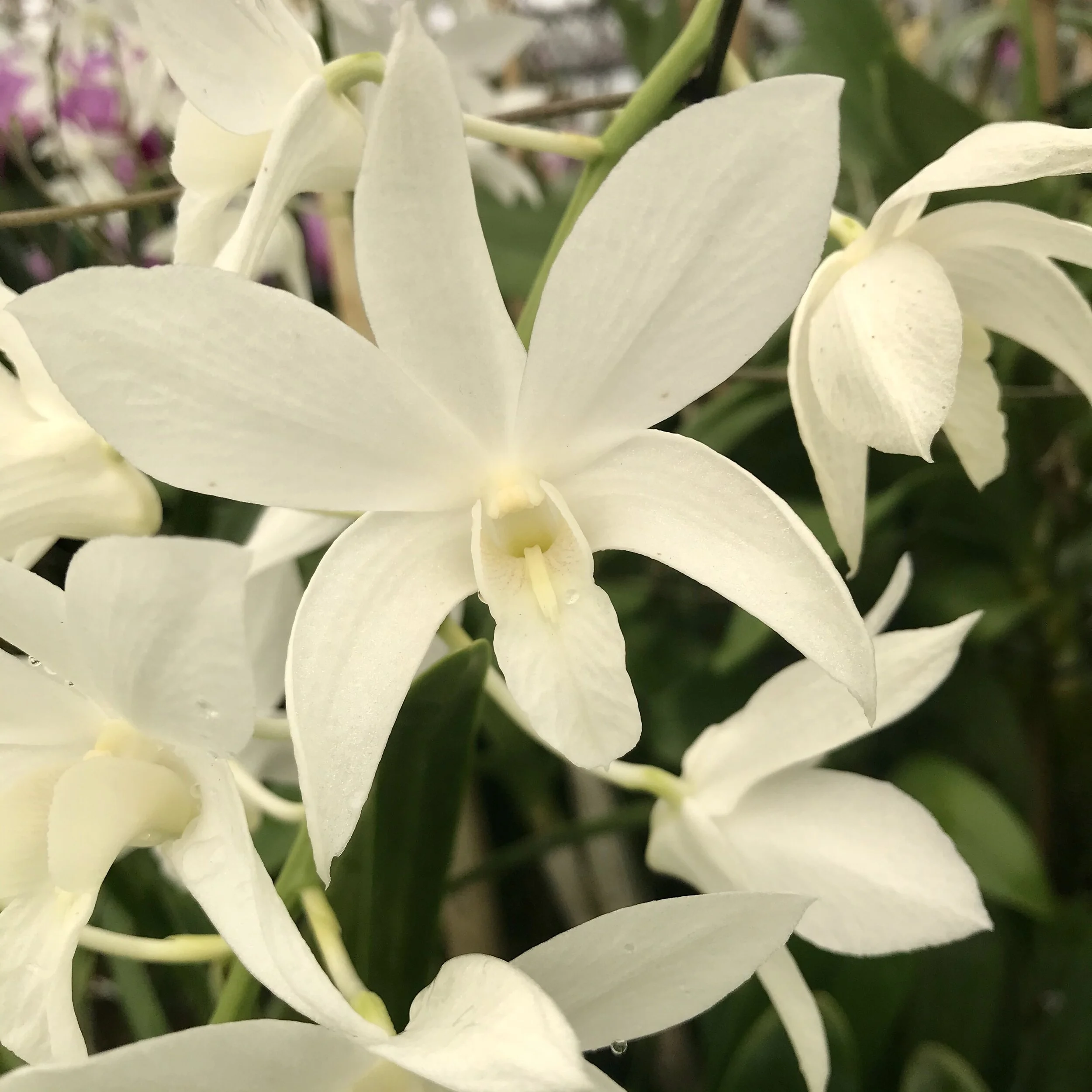
(Den. Fiftieth State x Dendrobium speciosum)
‘Sato’ mericlone.
Evergreen and hard-caned with an inflorescence of several long-lasting white flowers.
Plants Available: Growing in 4” and 6” pots. An example of the 4” Pot - Sm option is pictured. The 4” Pot option is blooming-size. The 6” Pot option is mature (first bloom/spike or previously bloomed).
Orchid Care: Grow in high light—very bright, but indirect sun. Water generously and frequently in spring and summer during active growth, but reduce watering during the cooler months. Roots should not remain wet for extended periods. Canes may start to wrinkle slightly during this dry, cool period.
We recommend potting rather than mounting this variety. Repotting should be done only during active growth (spring, summer) when plants are producing new canes and have active root tips. Plants should be snug in their pots.
-
10.06.26

(var. luzonicum x sib)
Dendrobium species, native to the Philippines, where it can be found growing epiphytically in tropical pine forests.
Buds form near the tips of the canes between the leaves and bloom in clusters of white flowers.
Grown from seed, so flower characteristics vary somewhat from plant to plant.
Plants Available: Growing in 4” pots. An example of the 4” Pot option is pictured. Orders will be filled with plants in bud or bloom as blooming season and blooming stock permit; otherwise, mature plants, previously bloomed.
Orchid Care: Grow in high light (bright, but indirect) and high humidity. Watering should be adjusted by season and temperature. Water generously in spring and summer while plants are actively growing. Do not allow plants to dry completely. Reduce water gradually after new growths mature in the fall, allowing for only slight drying between waterings.
-
05.29.26

(Dendrobium carronii × Dendrobium mirbelianum)
Compact antelope Dendrobium with vibrant magenta petals.
Mericlone.
Plants Available: Growing in 4” pots. An example of the 4” Pot option is pictured. Orders will be filled with plants in spike/bud/bloom as blooming season and blooming stock permit; otherwise, mature plants which have bloomed previously.
Orchid Care: Generally easy to grow, particularly alongside Cattleyas. Provide high light and good air circulation. Water generously while plants are actively growing in spring and summer, but allow plants to dry out between watering. A medium or large aggregate bark mix that drains freely is recommended for potted plants. Reduce watering during fall and winter. Fertilize weakly, weekly.
-
06.13.25
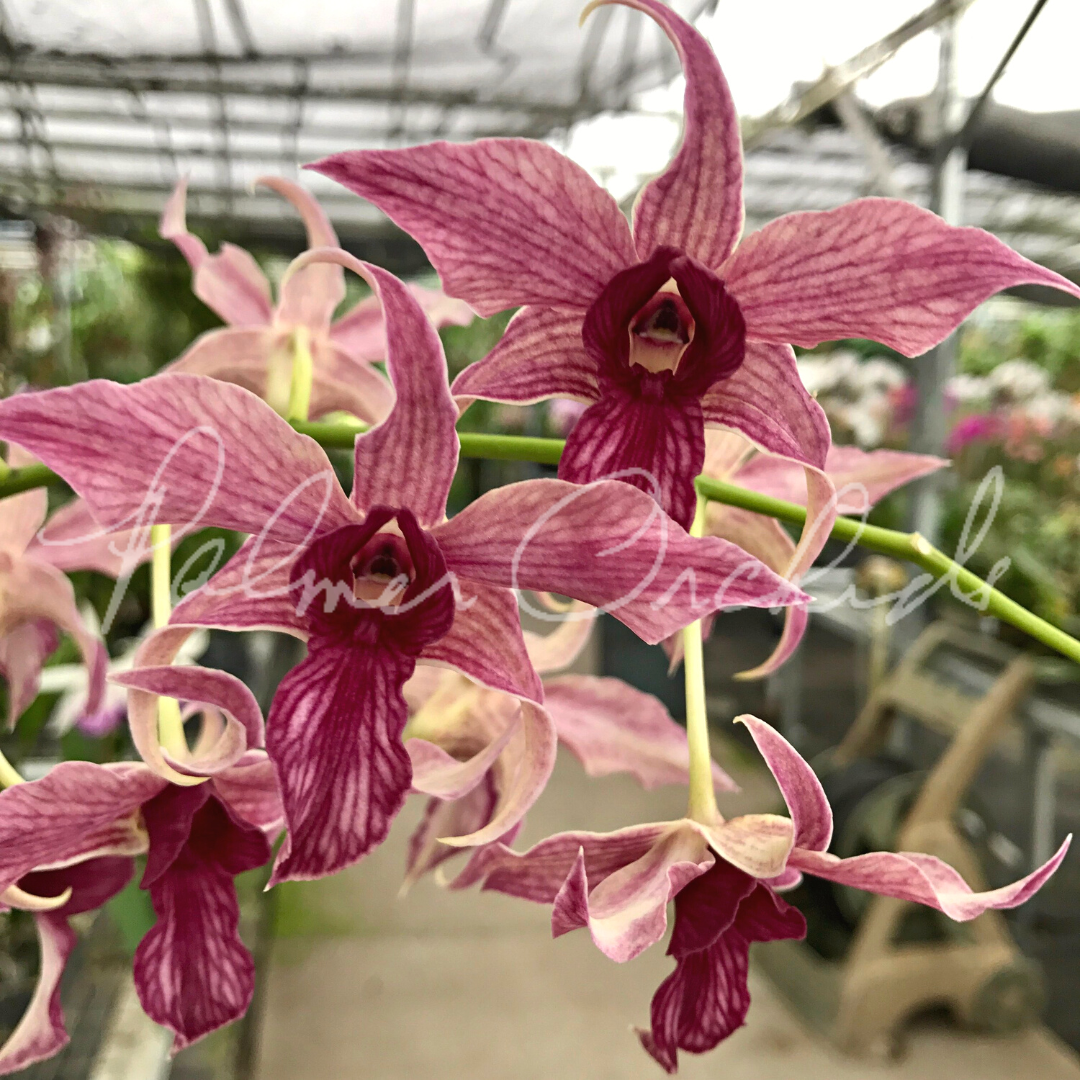
(Den.Big Alex x Dendrobium spectabile)
Grown from seed so flower characteristics vary somewhat from plant to plant.
Plants Available: Growing in 4” Pots. An example of the size available is pictured.
Orchid Care: Grow in very bright light, though plants should be shaded (filtered sun) during the hottest hours of the day when the sun is most intense. Pot in a medium aggregate bark mix and top dress with time release fertilizer annually. As a rule, the mix and root system should dry between waterings. Younger plants may require water more frequently than larger, mature plants.
—
10.17.26
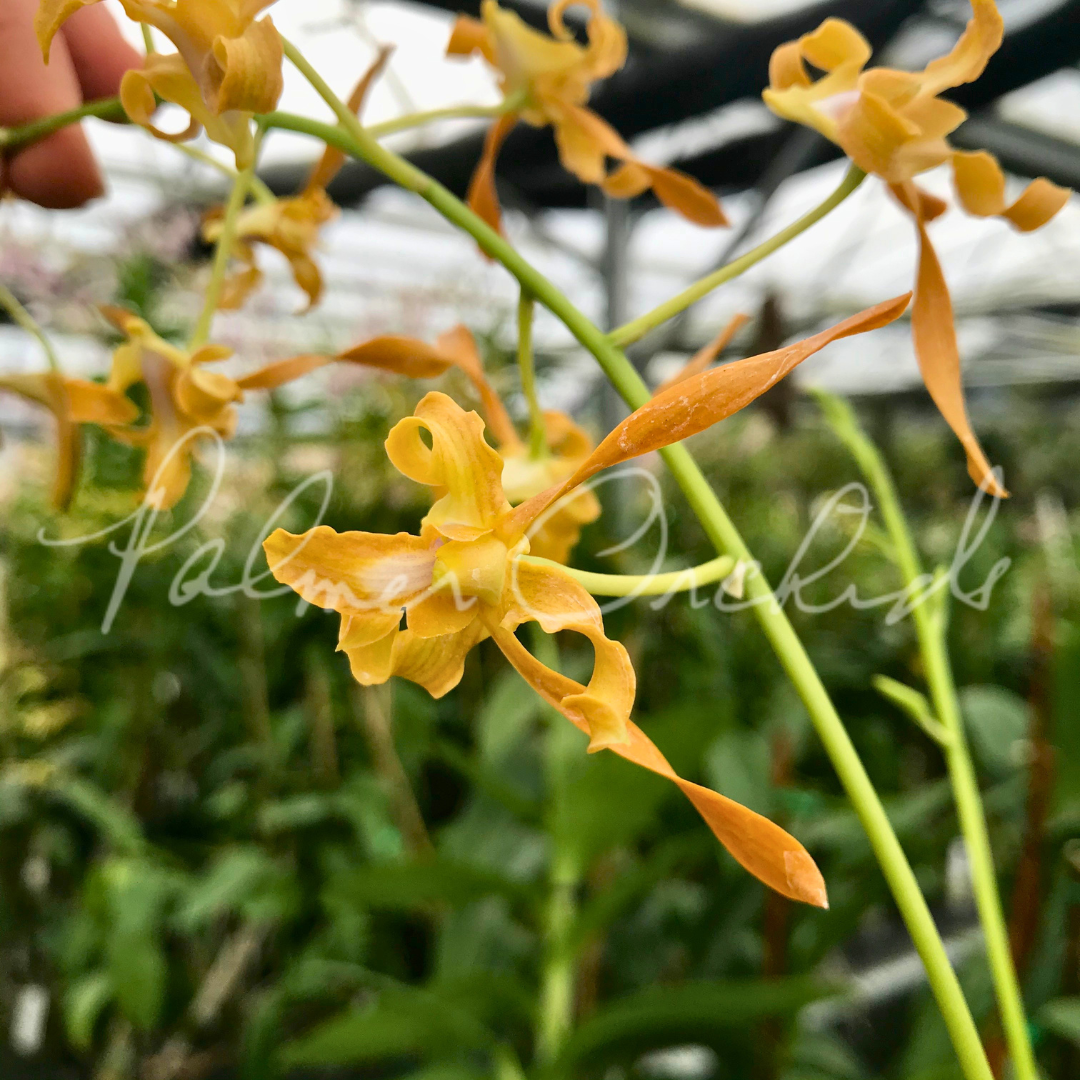
x sib
Orange/tangerine-colored antelope Dendrobium species.
Grown from seed so flower will vary somewhat from plant to plant.
Plants Available: Growing in 2” and 4” pots. An example of the 2” Pot option is pictured. Plants in both pot sizes are overgrown and ready to be repotted (before the end of the growing season). The 2” Pot option may be blooming-size or previously bloomed. The 4” Pot option is mature, as pictured.
Orchid Care: Grow in bright indirect light with strong air circulation and moderate to high humidity. Water generously while plants are putting out new roots and growth (spring and summer). Reduce water and fertilizer during the cooler months.
—
08.01.26
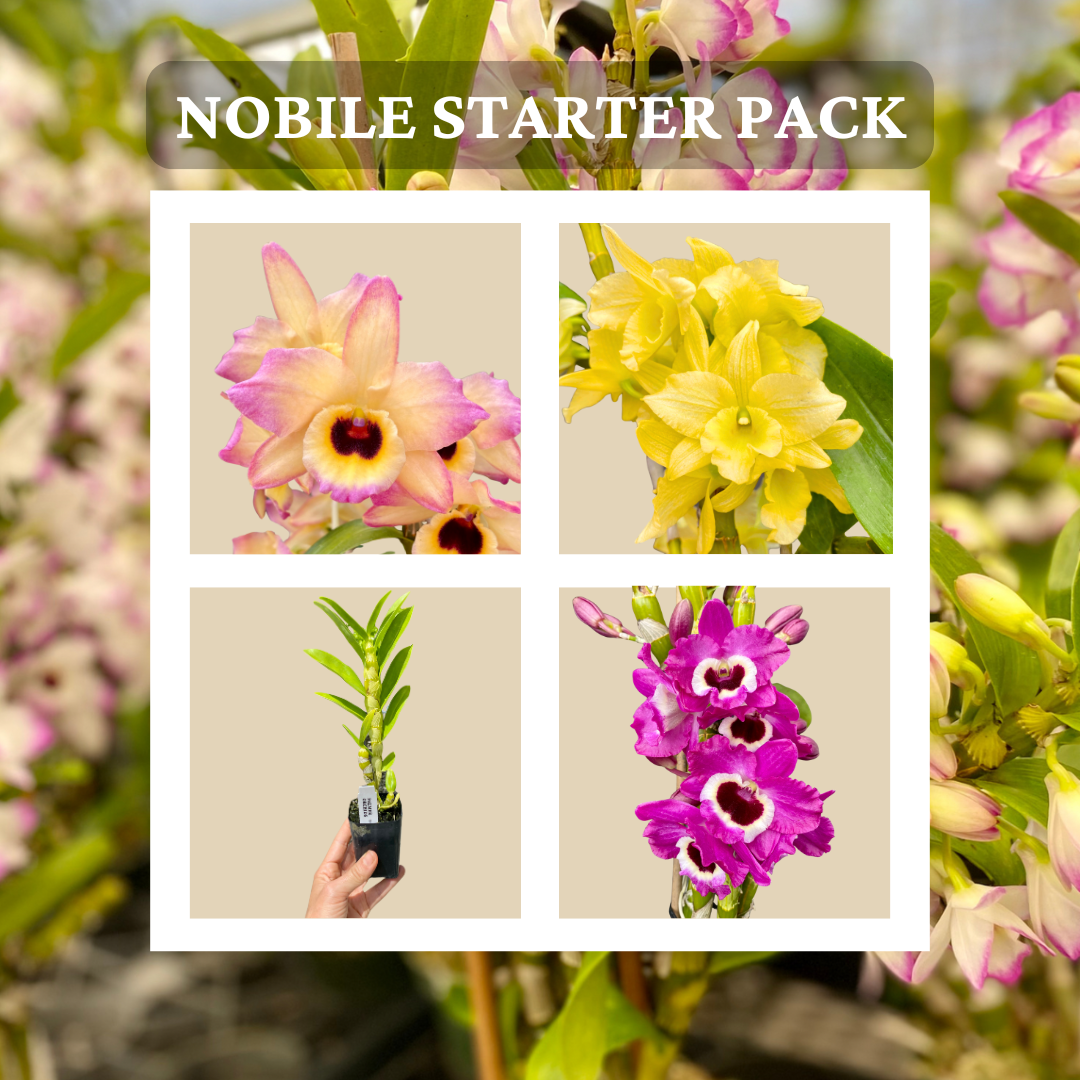
Grower's choice assortment of four Nobile-type Dendrobium hybrids.
This starter pack of Den. nobile types is a great way to try your hand at a set of fragrant, pendulous Dendrobiums in a variety of color forms.
The blooms pictured are examples of the color combinations available but are not necessarily the specific clones available in this assortment.
Plants Available: Growing in soft pots and 2" pots. Examples of the plants in each 4-pack are pictured.
The Soft Pot 4-Pack includes the following four varieties:
Den. Yellow Diamond (yellow w/ dark center)
Den. Tianmu Amber (yellow)
Den. Red Army (magenta red w/ dark center ringed in white)
Den. Crown (white w/ dark pink picotee and yellow center)
The 2” Pot 4-Pack may include any four of the following varieties:
Den. Yellow Diamond (yellow w/ dark center)
Den. Tianmu Amber (yellow)
Den. Red Army (magenta red w/ dark center ringed in white)
Den. Crown (white w/ dark pink picotee and yellow center)
Den. Tianmu Purple Botan (magenta w/ light yellow and white center)
Den. Sunny Egg (white w/ yolk yellow center)
Den. Lucky Girl (white w/ yellow center and pink petal tips)
Den. Tianmu Red Model (magenta red w/ dark center ringed in light yellow)
* Additional varieties may be included in the 2” Pot 4-Pack at grower’s discretion.
Orchid Care: Grow in high light (e.g. 30%-50% shade). Mature plants can be acclimated to direct sun, but younger plants are best grown in high, filtered light (e.g. less than 5000 fc).
Plants in soft pots are ready for immediate repotting. Plants in 2” pots can also be potted up if putting out new growth and roots. Note that repotting for nobile-types is best done in late spring and early summer. Plants should not be repotted in fall/winter.
Water and fertilize regularly during active growth, but give plants a "dry rest" in the cooler months. During this time plants should be watered sparingly and fertilized rarely.
Note: Nobile-type Dendrobiums are deciduous—you can expect them to drop leaves during their rest period. Plants require a cool, dry rest in fall/winter to initiate flowering.
-
09.05.25

(Den. Dawn Maree × Den. Lori Tokunaga)
Dendrobium section Formosae hybrid. Buds emerge directly from the cane at the leaf axial, typically in pairs or clusters. Blooms are creamy to light green with a red-orange throat and waxy in substance, which provides for a long-lasting flower.
The canes of this variety are naturally semi-pendulous when not staked or tied upright. Bear this in mind as the new growth emerges. Staking or allowing the growths to cascade is simply a matter of preference since the new growth will be self-supporting.
Grown from seed so flower characteristics vary somewhat from plant to plant.
Plants Available: Growing in 4” pots. An example of the smaller size is pictured. Orders will be filled with plants in bud or bloom as blooming season and blooming stock permit.
Orchid Care: Grow in bright, diffused light. Keep moist in spring and summer while plants are actively growing. If potted in an open mix that drains freely and does not easily saturate, you can easily grow them alongside your Vandas, watering daily. Reduce watering somewhat during the cooler months, but plants are evergreen* and do not require a dry rest. Plants should be tight in their pots.
*Note: Although this is not a deciduous variety, some leaf drop is normal, particularly in response to stress. It is common for the canes on Formosae-type Dens like this one to shed a few leaves after shipping. Just give them a good watering and protect from extremes (e.g. in terms of light and heat) while they acclimate to your growing space.
-
08.27.25
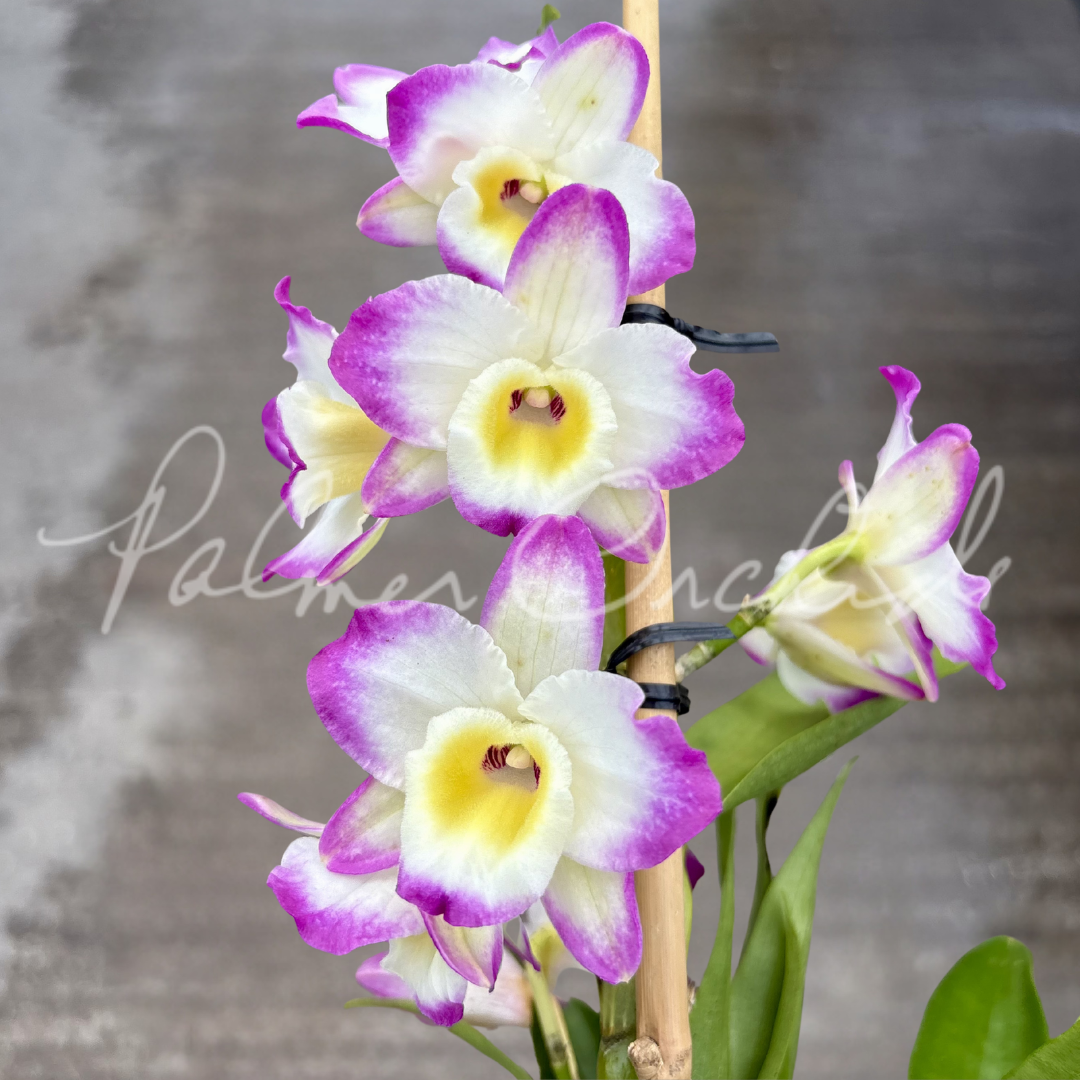
Registered Name: Den. Gold Diamond
(Den. Lucky Angel x Den. Spring Angel)
‘DMP008’ mericlone.
The flowers pictured are from the first plants of the crop to bloom (February 2025).
Blooms in the spring.
Plants Available: Growing in 4" pots. Examples of the 4” Pot option are pictured. Orders will be filled with plants in bud/bloom as blooming season and blooming stock permit; otherwise mature plants, previously bloomed.
Orchid Care: Grow in high light (e.g. 30%-50% shade). Mature plants can be acclimated to direct sun, but younger plants are best grown in high, filtered light (e.g. less than 5000 fc). Water and fertilize regularly during active growth, but give plants a "dry rest" in the cooler months. During this time plants should be watered sparingly and fertilized rarely.
Note: Nobile-type Dendrobiums are deciduous—you can expect them to drop leaves during their rest period. Plants require a cool, dry rest in fall/winter to initiate flowering.
-
02.28.26

Latouria-type Dendrobium. Blooms in clusters of creamy white flowers with purple spots and a vibrant purple lip. Generally easy to grow and flower. Blooms can last several weeks. Plants may bloom twice a year.
Grown from seed so flower characteristics vary somewhat from plant to plant.
Plants Available: Growing in 4” pots. Orders will be filled with plants in spike/bud/bloom as blooming season and blooming stock permit; otherwise, mature plants which have bloomed previously.
Orchid Care: Grow in bright light and moderate humidity. Direct sun is not recommended. Plants should be evenly kept moist (not wet or soggy) and fertilized weakly, weekly. Grow potted in a medium aggregate bark mix that allows for regular watering without becoming saturated or stagnant. We recommend baskets or clay pots if plants are to be grown hanging.
—

(Dendrobium atroviolaceum × Dendrobium johnsoniae)
Latouria-type Dendrobium and primary hybrid of Den. species Dendrobium atroviolaceum and Dendrobium johnsoniae.
Blooms in clusters of medium-sized white flowers, marked by vivid purple striations on the interior lip. Petals have light or heavy spotting on the anterior side. Blooms can last 6-12 weeks.
Among members of the Latouria group, this variety is intermediate in size.
Grown from seed so flower characteristics may vary somewhat from plant to plant. Plants currently available are semi-alba x sib.
Plants Available: Growing in 4” pots. Examples of available sizes are pictured. Orders will be filled with plants in spike/bud/bloom as blooming season and blooming stock permit; otherwise, mature plants, previously bloomed.
Orchid Care: Hard-caned and evergreen Latouria Dens like this one grow best in warm conditions and medium-high light. Water generously and fertilize regularly while plants are actively growing in spring and summer. The potting media should be kept evenly moist with only slight drying allowed in between. When day length shortens and temperatures cool, reduce water and fertilizer somewhat to keep plants a little on the drier side throughout the cooler, drier months.
-
07.11.24
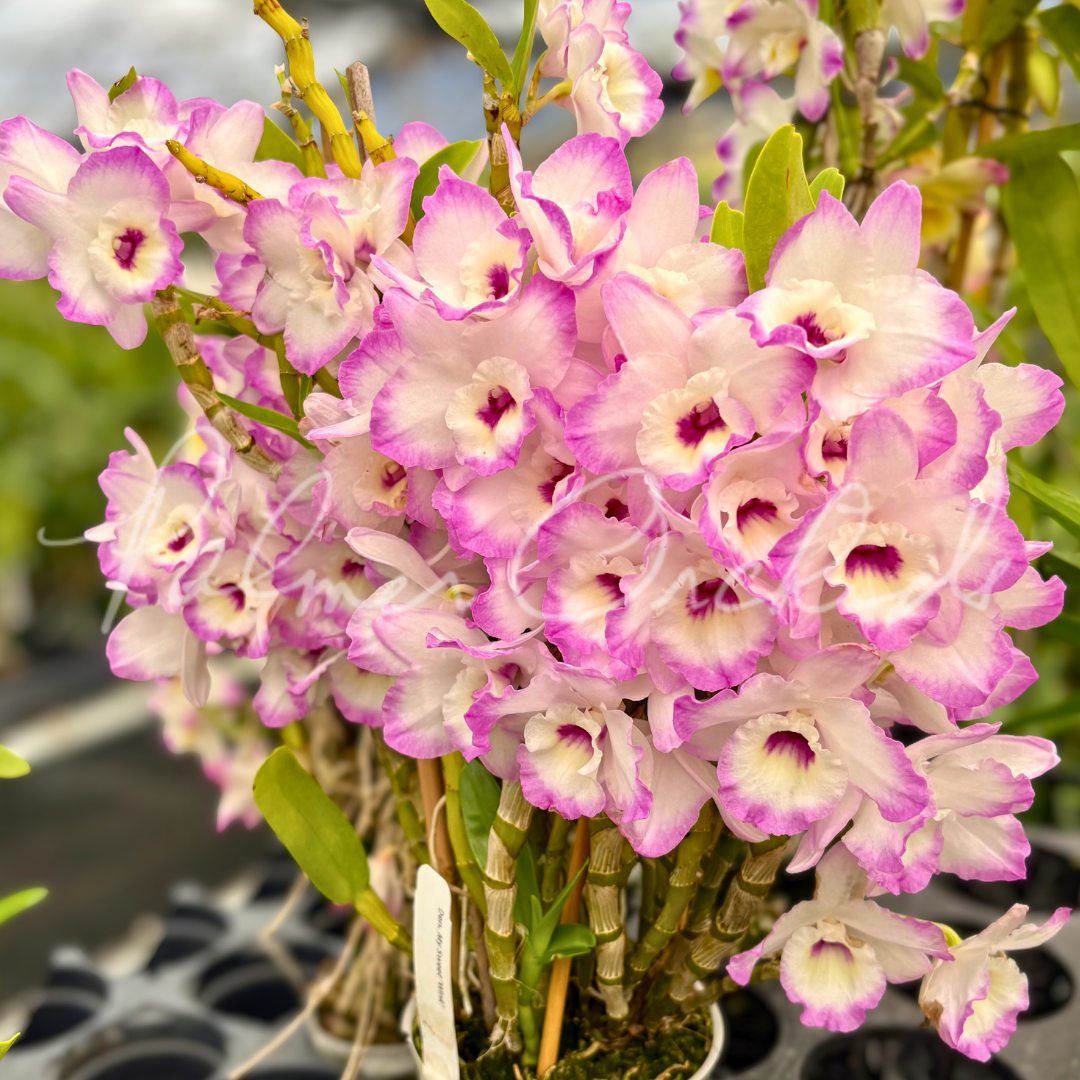
(Den. Sweet Pinky x Den. Sachi)
‘Wink’ mericlone.
The blooms pictured are from the first plants of the crop to bloom (February 2025).
Blooms in the spring.
Plants Available: Growing in 4" pots, blooming-size. An example of the size available is pictured.
Orchid Care: Grow in high light (e.g. 30%-50% shade). Mature plants can be acclimated to direct sun, but younger plants are best grown in high, filtered light (e.g. less than 5000 fc). Water and fertilize regularly during active growth, but give plants a "dry rest" in the cooler months. During this time plants should be watered sparingly and fretilized rarely.
Note: Nobile-type Dendrobiums are deciduous—you can expect them to drop leaves during their rest period. Plants require a cool, dry rest in fall/winter to initiate flowering.
-
08.28.25

(Den. Roy Tokunaga × Den. rhodostictum)
Grown from seed so flower characteristics vary somewhat from plant to plant.
Plants Available: Growing in 4” pots. The plant pictured is an example of the 4” Pot option currently available. Orders will be filled with plants in spike/bud/bloom as blooming season and blooming stock permit; otherwise, mature plants, previously bloomed.
Orchid Care: Hard-caned and evergreen Latouria Dens like this one grow best in warm conditions and medium-high light. Water generously and fertilize regularly while plants are actively growing in spring and summer. The potting media should be kept evenly moist with only slight drying allowed in between. When day length shortens and temperatures cool, reduce water and fertilizer somewhat to keep plants a little on the drier side throughout the cooler, drier months.
-
10.27.23
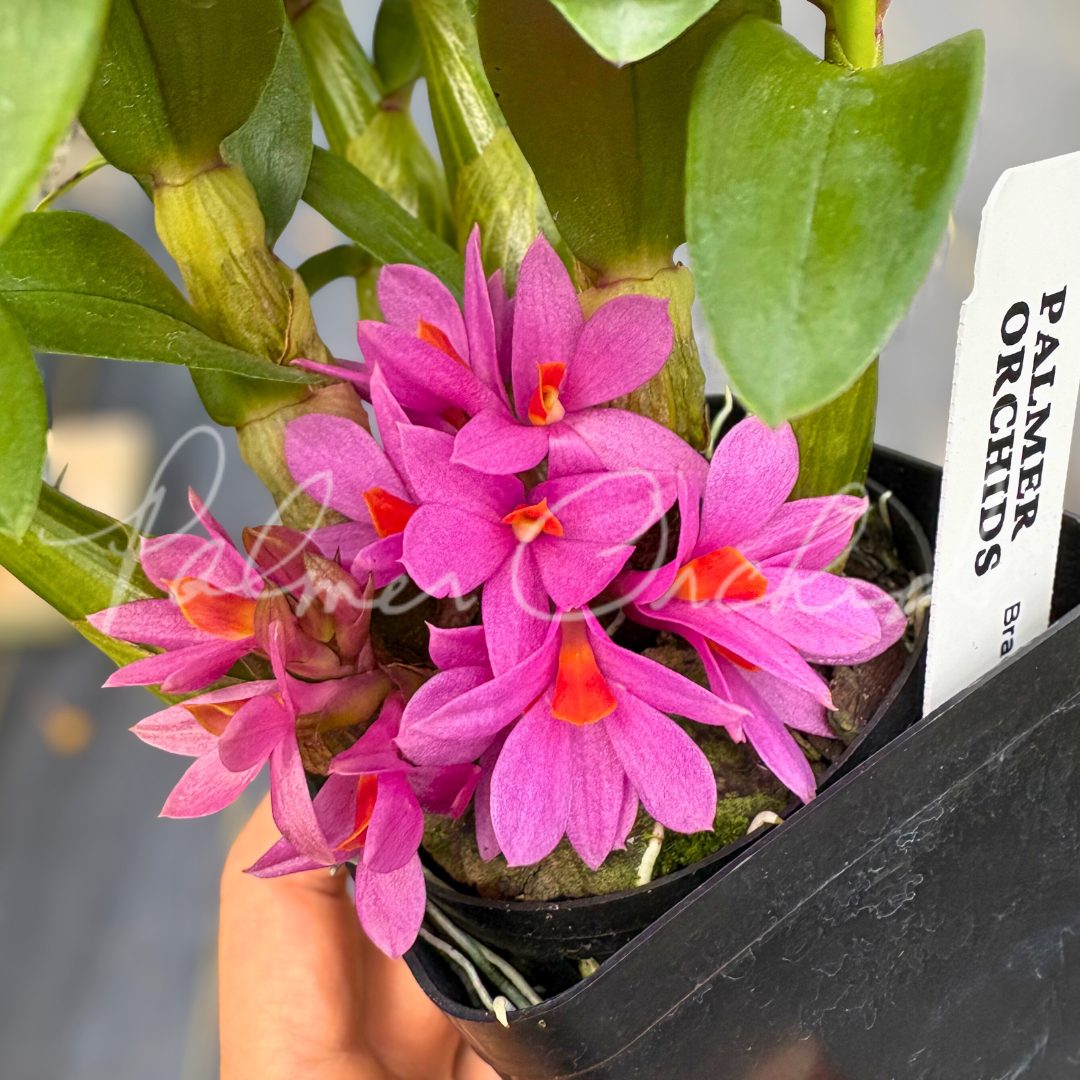
(Dendrobium bracteosum x Dendrobium laevifolium)
Den. Hibiki is among the first generation offspring of Dendrobium laevifolium and blooms in similar lovely little pink clusters. Compact growing. Typically blooms twice a year.
Mericlone.
Plants Available: Growing in 4” pots. Examples of the 4” Pot option are pictured. Orders will be filled with plants in bud/bloom as stock permits.
Orchid Care: Grow in bright shade/dappled light and moderate humidity. Plants should be watered generously in Spring and Summer, when putting on new growth. Reduce water and fertilizer during the cooler months as growth slows. Hibiki can be grown potted in an open, free-draining potting media. Or if mounting is preferable, we recommend baskets. In either case, the plant should be snug in its pot/basket.
—
08.29.25
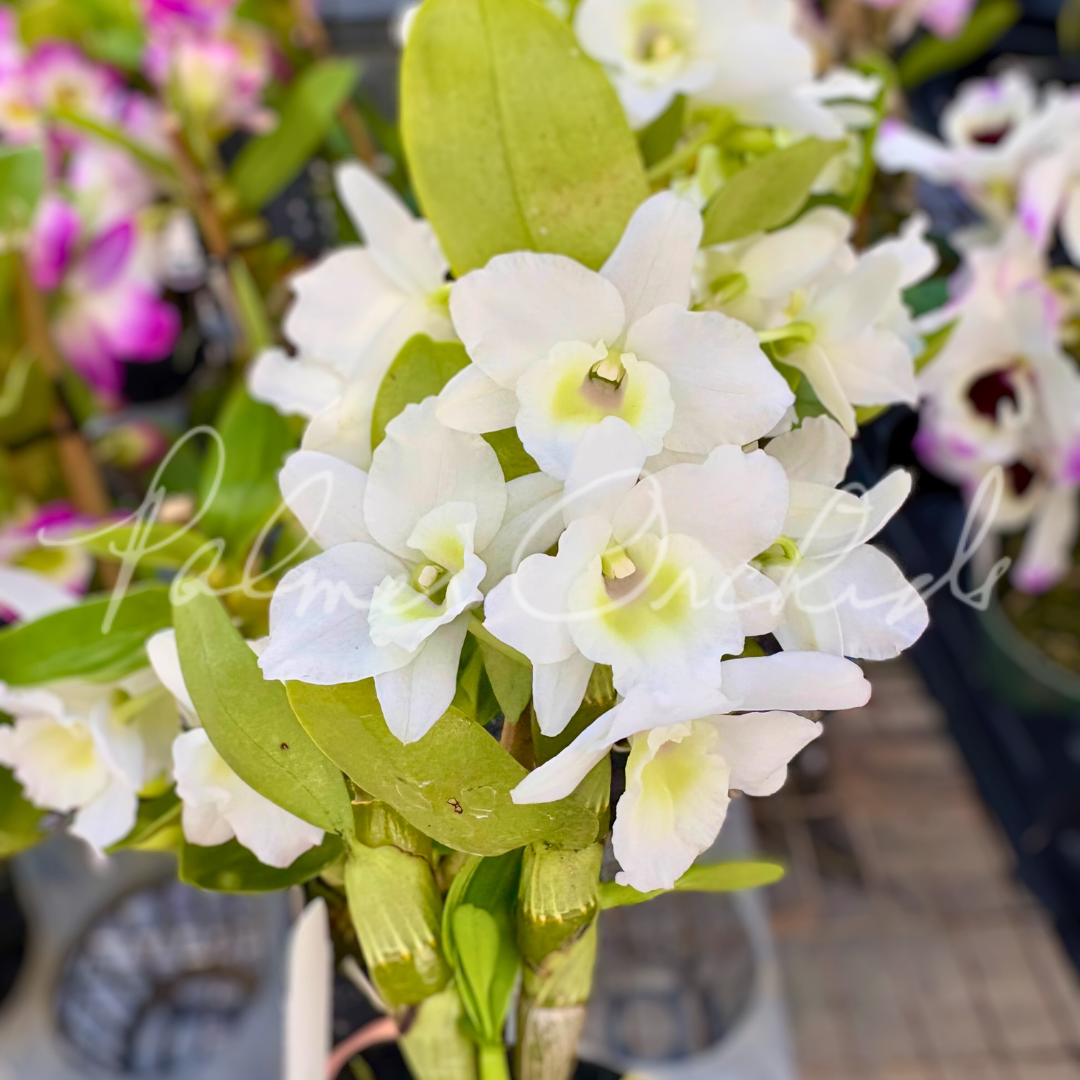
(Den. Spring Snow x Den. Tianmu Green Elf)
‘DMP037’ mericlone.
The blooms pictured are from the first plants of the crop to bloom (February 2025).
Blooms in the spring.
Plants Available: Growing in 4" pots. An example of the 4” Pot option is pictured.
Orchid Care: Grow in high light (e.g. 30%-50% shade). Mature plants can be acclimated to direct sun, but younger plants are best grown in high, filtered light (e.g. less than 5000 fc). Water and fertilize regularly during active growth, but give plants a "dry rest" in the cooler months. During this time plants should be watered sparingly and fertilized rarely.
Note: Nobile-type Dendrobiums are deciduous—you can expect them to drop leaves during their rest period. Plants require a cool, dry rest in fall/winter to initiate flowering.
-
08.27.25

(Den. Angel Baby x Den. Red Emperor)
Mericlone.
The blooms pictured are from the first plants of the crop to bloom (February 2025).
Blooms in spring.
Plants Available: Growing in 4" pots, blooming-size. An example of the 4” Pot option is pictured.
Orchid Care: Grow in high light (e.g. 30%-50% shade). Mature plants can be acclimated to direct sun, but younger plants are best grown in high, filtered light (e.g. less than 5000 fc). Water and fertilize regularly during active growth, but give plants a "dry rest" in the cooler months. During this time plants should be watered sparingly and fertilized rarely.
Note: Nobile-type Dendrobiums are deciduous—you can expect them to drop leaves during their rest period. Plants require a cool, dry rest in fall/winter to initiate flowering.
-
08.27.25

(Den. Super Star × Den. Warabe)
‘Kumi’ mericlone.
This is a dwarf variety of a Dendrobium nobile-type hybrid. Plants will stay relatively short and compact. Flowers are pinky purple with a white center and lightly fragrant.
Easy to grow, great for mounting, and fragrant. Although plants are staked upright for greenhouse/commercial growing, the canes of Den. nobile hybrids are naturally pendulous. They require a dry rest in fall/winter until they produce buds late winter/early spring.
Plants Available: Growing in 4” pots. Examples of the sizes available are pictured. Orders will be filled with plants in bud/bloom as blooming season and blooming stock permit; otherwise, mature plants, previously bloomed.
Orchid Care: Grow in very bright indirect light. Blooming-size plants can be acclimated to direct sun, but will thank you if you give them shade/filtered sun during the hottest hours of the day during the summer (typically 11-3). Great for mounting on most palms. Water and fertilize regularly during active growth, but give plants a dry rest in the cooler months. At our nursery, this period is typically from Thanksgiving through Feb/March.
Note: Nobile-type Dendrobiums are deciduous—you can expect leaves to yellow and drop during their cool, dry rest period.
-
03.15.25

(Den. Royal Chip x Roy Tokunaga semi-alba)
A new addition to the Latouria line. This hybrid blooms in clusters of medium-sized white flowers with pin-prick purple spots and purple striations on the interior lip. Petals have a pink-purple blush, as if lightly dusted with color
Blooms last several weeks.
Among members of the Latouria group, this variety is intermediate in size.
Grown from seed so flower characteristics may vary somewhat from plant to plant.
Plants Available: Growing in 4” pots. An example of the 4” Pot option is pictured. Orders will be filled with plants in spike/bud/bloom as blooming season and blooming stock permit; otherwise, mature plants, previously bloomed.
Orchid Care: Hard-caned and evergreen Latouria Dens like this one grow best in warm conditions and medium-high light. Water generously and fertilize regularly while plants are actively growing in spring and summer. The potting media should be kept evenly moist with only slight drying allowed in between. When day length shortens and temperatures cool, reduce water and fertilizer somewhat to keep plants a little on the drier side throughout the cooler, drier months.
-
07.11.24

(Den. Norma Jackson x Den. Blue Twinkle)
If you’re new to Antelope Dendrobiums and looking to try your hand at this twisty-petaled pack of plants, Den. Hawaiian Punch is the perfect place to start. This classic hybrid is easy to grow and bloom and can really make a splash as a tropical yard orchid (given the right grow zone). Typically produces multiple bloomspikes per bloom period once mature.
Grown from seed so flower will vary somewhat from plant to plant. The large bloom spikes pictured first are examples from mature plants. The smaller spike is the first bloom from a younger plant.
Easy to grow and bloom and a great orchid for the patio, yard, or landscaping in subtropical environs. Plants can take on significant stature over time.
Plants Available: Growing in 4” pots. The plant pictured in is an example of the 4” Pot option, which is a blooming-size plant. The 4” Pot - Mature option is a larger, mature plant. Orders for the latter will be filled with plants in spike/bud/bloom as available; otherwise, mature plants previously bloomed.
Orchid Care: Grow in very bright indirect light with strong air circulation and moderate to high humidity. Some direct sun early or late in the day is okay. Water heavily while plants are in active growth. Reduce water and fertilizer somewhat during the cooler months, but continue to provide bright light during this time.
-
10.07.25

(Little Atro x normanbyense)
Fragrant Latouria-type Den. that blooms in a cluster of spotted, creamy white flowers with a vibrant purple throat.
Grown from seed.
Plants Available: Growing in 4” pots. Examples of the size available are pictured. Orders will be filled with plants in bud/flower as blooming season and blooming stock permit. Otherwise, mature plants, previously bloomed.
Orchid Care: Generally easy to grow. Provide dappled to bright, indirect light and moderate humidity. Plants should be kept moist during active growth (spring and summer). But reduce water and fertilizer somewhat during the cooler months. Plants should be snug in their pots.
-
12.04.24

(Den. Blue Twinkle × Dendrobium stratiotes)
While Den. Blue Twinkle typically keeps the stature of its hybrids on the compact side, Den. Doralba Mesa Rodriguez tends to take after its other parent—Den. stratiotes—in its stature. Plants range from 2-3’ and typically produce multiple spikes of pink to indigo-purple flowers.
Grown from seed, so flower characteristics may vary plant to plant. Flowers from three individuals are pictured to illustrate these variations.
Plants Available: Growing in 4” pots. Orders will be filled with plants in spike/bud/bloom as blooming season and blooming stock permit; otherwise, mature plants which have bloomed previously.
Orchid Care: Generally easy to grow, particularly alongside Cattleyas. Provide high light and good air circulation. Water generously while plants are actively growing in spring and summer, but allow plants to dry out between watering. A medium or large aggregate bark mix that drains freely is recommended for potted plants. Reduce watering during fall and winter.
-
01.18.24

(Den. Cygnus × Den. Fancy Girl)
'‘Sweetie’ mericlone.
The flowers of this variety are yellow with a pink picotee and deep yellow throat. Buds form at the joints of the canes in clusters that produce sweetly fragrant flowers.
Easy to grow, great for mounting and landscaping in temperate to subtropical climes.
Plants typically bud/bloom in February, March.
Plants Available: Growing in 4” pots. The 4” Pot option is blooming-size plant (first bloom or previously bloomed). Orders will be filled with plants in bud or bloom as blooming season and blooming stock permit; otherwise, mature plants previously bloomed.
Orchid Care: Grow in high light. Plants can be acclimated to direct sun, but will thank you if you give them shade during the hottest hours of the day (typically 11-3). Great for mounting on most palms. Water and fertilize regularly during active growth, but give plants a dry rest in the cooler months. At our nursery, this is typically from Thanksgiving through early February.
Note: Nobile-type Dendrobiums are deciduous—you can expect them to drop leaves during their rest period. Plants require a cool, dry rest in fall/winter to initiate flowering.
-
02.21.26

(Den. White Rabbit × Den. Sachi)
A nobile-type Den. Easy to grow, great for mounting, and fragrant. Deciduous and pendulous, they require a cool, dry rest in fall/winter.
Blooms in the spring.
‘Fizz’ mericlone. This is a lovely, floriferous hybrid. Great bloomer.
Plants Available: Growing in 4” Pots. Orders will be filled with plants in bud/bloom as stock permits; otherwise, mature plants that have bloomed previously.
Orchid Care: Grow in bright indirect light. Plants can be acclimated to direct sun, but will thank you if you give them shade during the hottest hours of the day (typically 11-3). Great for mounting on most palms. Water and fertilize regularly during active growth, but give plants a dry rest in the cooler months. At our nursery, this is typically from Thanksgiving through early March.
-
11.08.24
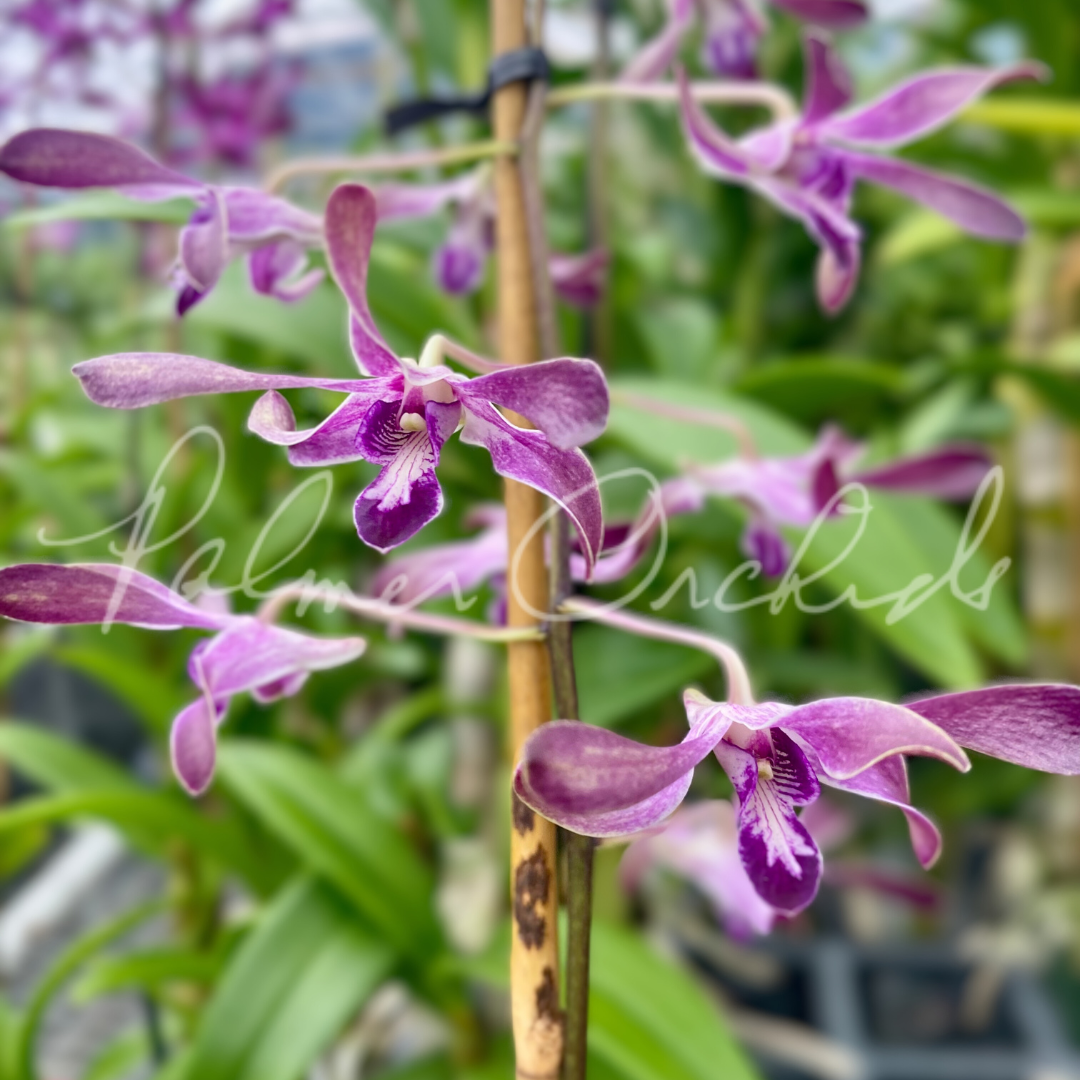
(Den. Hawaiian Punch × Dendrobium canaliculatum)
Half Hawaiian Punch, half Den. canaliculatum, this cross has produced flowers in a variety of color combinations--from vivid fuchsia and magenta to purple to light yellow and lavender. Expect plants to remain on the compact side.
Grown from seed, so flower characteristics may vary plant to plant. Blooms from multiple plants are shown to illustrate the variations.
Plants Available: Growing in 4” pots, mature. Orders will be filled with plants in spike/bud/bloom as blooming season and blooming stock permit; otherwise, mature plants which have bloomed previously.
Orchid Care: Generally easy to grow, particularly alongside Cattleyas. Provide high light and good air circulation. Water generously while plants are actively growing in spring and summer, but allow plants to dry out between watering. A medium or large aggregate bark mix that drains freely is recommended for potted plants. Reduce watering during fall and winter. Protect from temperatures below 60F. Fertilize weakly, weekly.
-
10.19.24
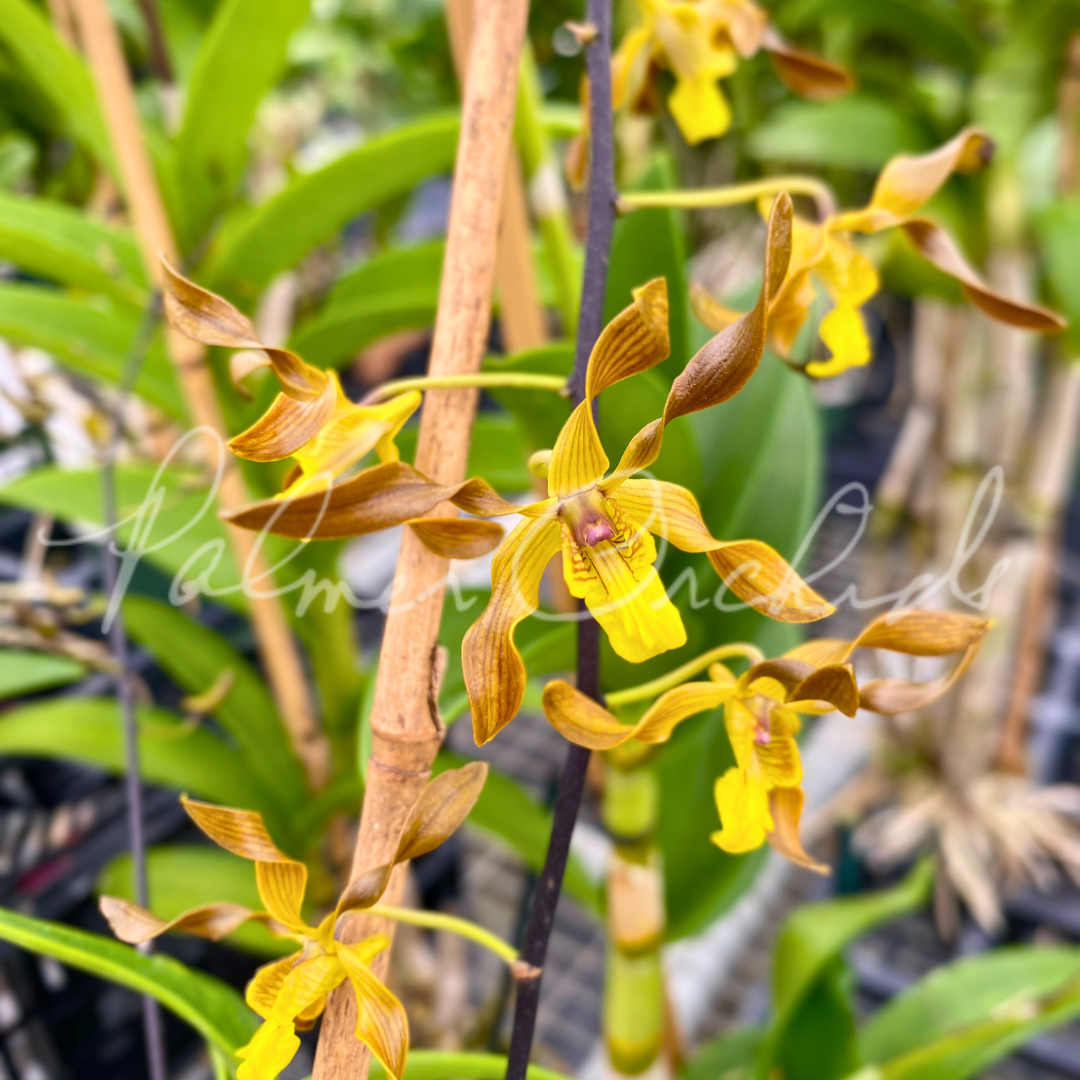
(Den. Touch of Gold × Dendrobium johannis)
Blooms in sprays of several small flowers with corkscrew petals. This cross is a second generation hybrid of the well-loved Den. Touch of Gold, which is a prolific bloomer. Flowers are a combination of the browns, yellows, and golds of both parents.
Grown from seed, so flower characteristics vary from plant to plant.
Plants Available: Growing in 4” pots. Orders will be filled with plants in spike/bud/flower as blooming season and blooming stock permit; otherwise, mature plants that have bloomed previously.
Orchid Care: Grow in bright, indirect light and moderate humidity. Plants can be acclimated to some direct sun but should be provided filtered light during the hottest hours of the summer day. Roots and mix should be allowed to dry out between watering.
Plants may be grown potted or mounted. When potting, use a medium aggregate bark mix and choose a pot that will keep the plant snug. Repot only during spring and summer when plants are actively growing.
-
10.22.24

(Den. Kaila Quintal × Den. Royal Wings)
Grown from seed so flower characteristics may vary somewhat from plant to plant.
Plants Available: Growing in 4” pots. An example of the 4“ Pot option is pictured. Orders will be filled with plants in spike/bud/bloom as blooming season and blooming stock permit; otherwise, mature plants that have bloomed previously.
Orchid Care: Hard-caned and evergreen Latouria Dens like this one grow best in warm conditions and medium-high light. Water generously and fertilize regularly while plants are actively growing in spring and summer. The potting media should be kept evenly moist with only slight drying allowed in between. When day length shortens and temperatures cool, reduce water and fertilizer somewhat to keep plants a little on the drier side throughout the cooler, drier months.
-
04.10.25
ENCYCLIA

alba form of the Florida native, Encyclia tampensis. Blooms in the summer. Fragrant.
Grown from seed.
Plants Available: Growing in 3” and 4” pots. Larger mature plants are growing in net baskets. Examples are pictured. The 3” Pot and 3” Pot Large/Select options are from our latest crop of tampensis alba (Encyclia tampensis alba x ‘Palmer’s alba’) and are treated for ploidy.
Plants in 4” are mature. Orders will be filled with plants in bud/bloom as blooming stock permits; otherwise, mature plants, previously bloomed.
Orchid Care: As for Encyclia tampensis. Grow bright and keep on the dry side. Plants tend to grow best when mounted as they mature. We recommend wooden baskets or driftwood for the mount. Provide strong air circulation and moderate to high humidity. Allow roots to dry between waterings.
-
08.08.26

Encyclia species found in the Bahamas. This species naturally grows as an epiphyte on the base of trees and shrubs near sea level, occasionally on limestone outcrops, in dry coastal forest habitat.
Enc. rufa is prized for its unassuming yet highly fragrant flowers—small, yellow to yellow-brown blooms that nod downward in clusters along tall inflorescences. The fragrance evokes jasmine tea. Typically blooms in late spring to early summer.
Grown from seed so flower characteristics vary somewhat from plant to plant. The small bloom spike pictured is from the first individual in the crop to bloom.
Plants Available: Growing in 3” pots. An example of the 3” Pot option is pictured. Plants are near blooming size.
Orchid Care: Enc. rufa grows natively in a hot, dry coastal Caribbean climate, and does best with warm to hot temperatures, bright light, and good air movement. Allow plants to dry out between waterings. Plants can be grown potted or mounted. When potted, use an open, fast-draining bark mix — or, since this species also grows lithophytically on limestone in the wild, straight lava rock can also be used as substrate with larger, mature plants.
—
08.08.26
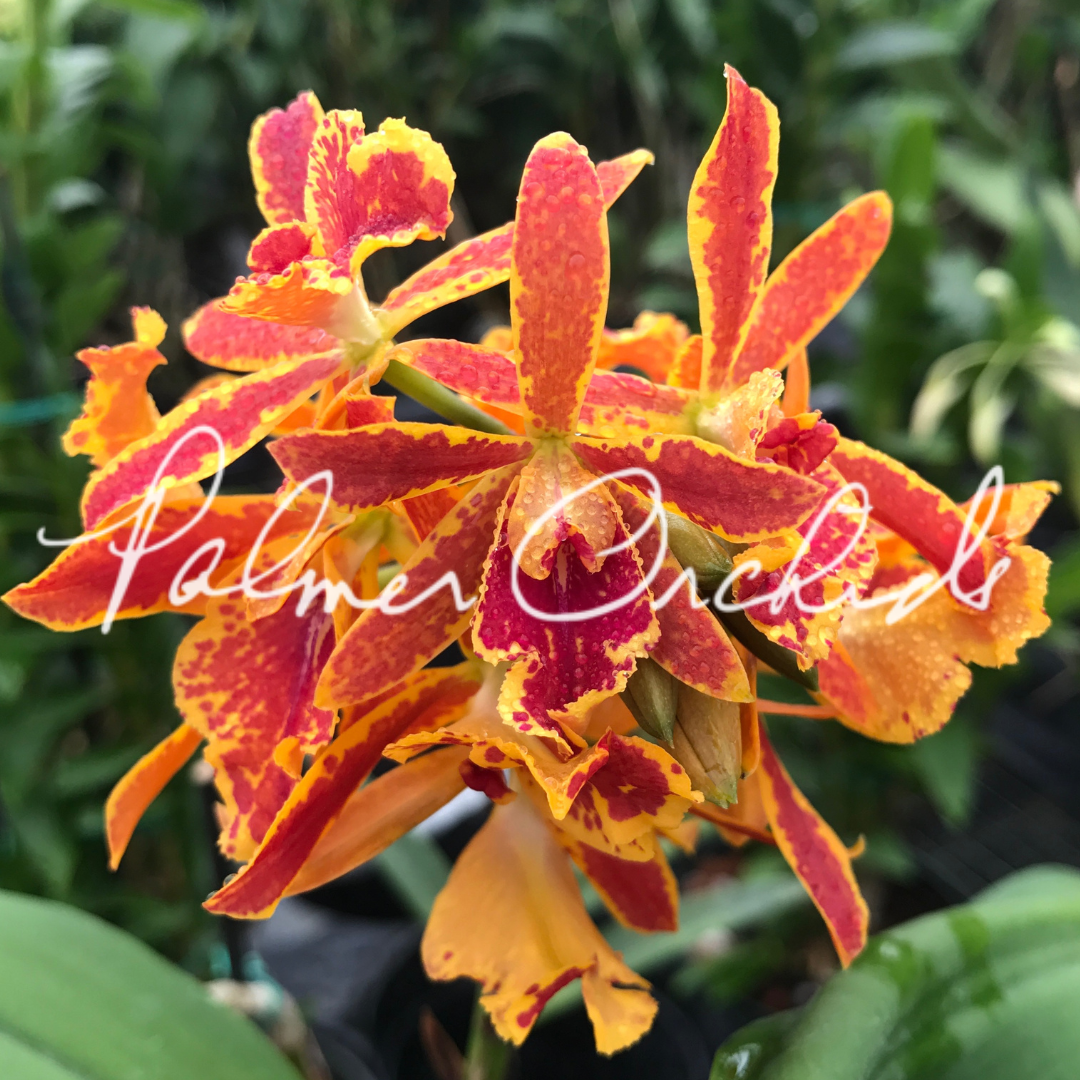
(Ctt. Trick or Treat × Epidendrum stanfordianum)
This is an Epidendrum-Cattleya hybrid that blooms in clusters of yellow-orange flowers, overlaid in fiery red. Mature plants can be grown mounted or potted.
Plants Available: ‘Paradise’ mericlone. Growing in 3” pots, blooming-size. Examples of the size available are pictured.
Orchid Care: Grow in bright indirect light with strong air circulation and moderate humidity. Allow plants to dry out between waterings. Plants may be grown in pots or mounted. Fertilize weakly, weekly.
-
08.01.26
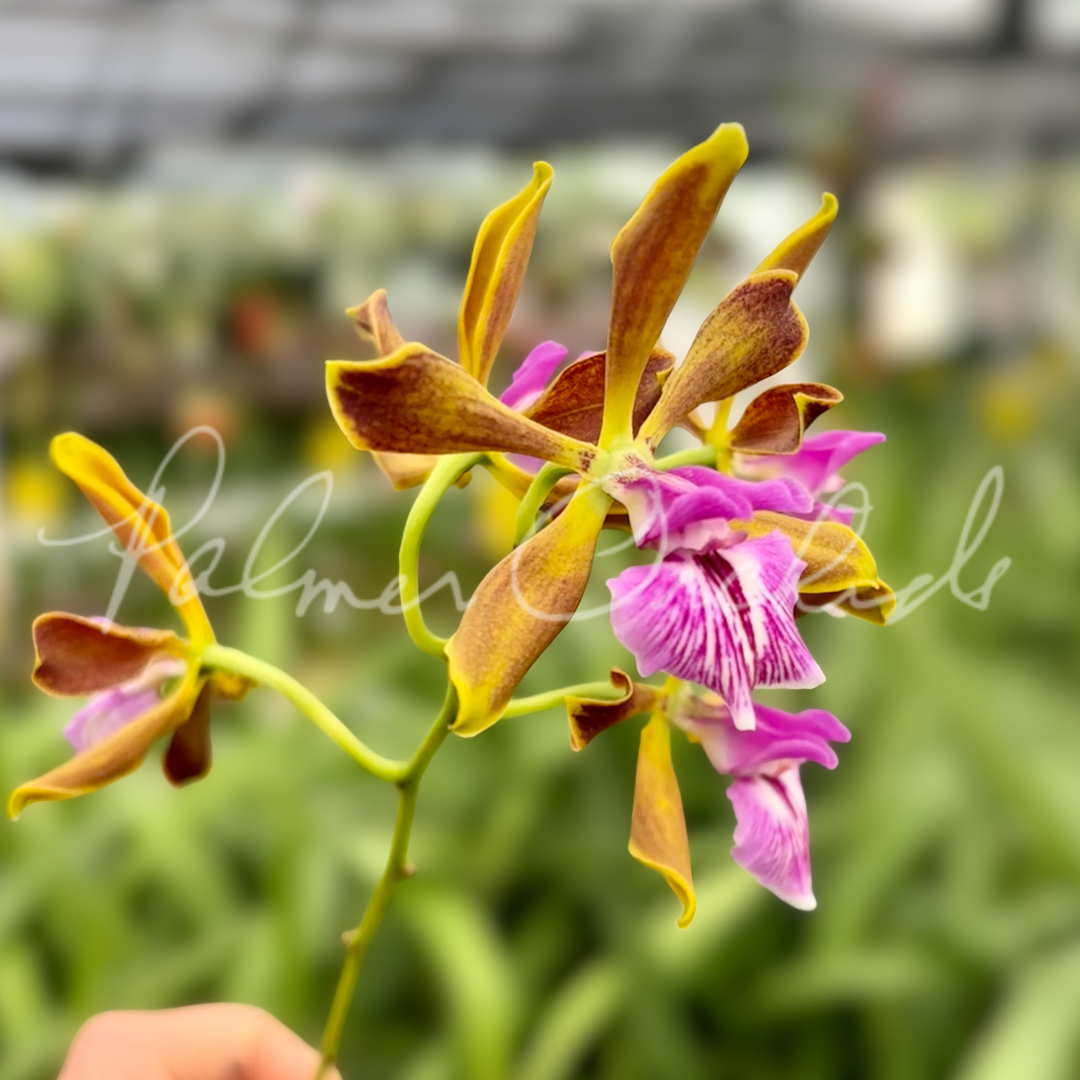
(Encyclia randii f. alba × Encyclia plicata f. alba)
Vigorous and adaptable and fragrant! A great option for Encyclia beginners—grow it potted or mounted. Bright or super bright. Intermediate/warm or warm/hot. This plant is easy to please.
Blooms have a scent that is creamy, spicy, and earthy—a combination of sweet and woody notes similar to root beer.
Grown from seed, so flower characteristics will vary somewhat from plant to plant. Although this grex is a primary hybrid of the alba forms of two Encyclia species, we have yet to see any alba blooms from these Enc. Hunty’s Home Run.
The alba flowers shown (green-yellow petals, white lip) are examples of the two species used to make this cross. The other flowers pictured (golden yellow to brown petals, pink lip) are typical of the flowers produced from this crop.
Plants Available: Growing in 4” pots. An example of the 4” Pot option is pictured. Relative to the 4” Pot, the 4” Pot - Lg option is a plant with more growths (2 or more growths preparing to spike/flower). Orders will be filled with plants in spike/bud/bloom as stock permits.
Orchid Care: Grow in bright light and high humidity with good air circulation. Allow plants to dry thoroughly between waterings. Encyclias do not like to keep their feet wet—particularly during the cooler months! We recommend mounting plants on wood/in baskets or growing in an open, freely-draining bark mix if plants are grown potted.
—
10.15.25

(Prosthechea cochleata × Grc. Miva Etoile Noire)
This purple clamshell orchid is predominantly Psh. cochleata—a green Prosthechea species native to Florida. Its lovely “indigo” purple shade comes from the Cattleya species Gurianthe bowringiana, a grandparent in the cross.
‘Indigo Blue’ mericlone.
Plants Available: Growing in 3” pots. An example of the 3” Pot option is pictured. This option is a blooming-size plant. The 3” Pot - Lg option is a larger plant, mature.
Orchid Care: Grow in bright, indirect light with strong air circulation and moderate to high humidity. Tree fern fiber makes for an excellent potting medium for this hybrid. Water generously when dry; allow roots to dry between waterings. Fertilize weakly, weekly.
—
03.31.26

(Guarianthe bowringiana × Prosthechea fragrans)
Primary hybrid of the Cattleya-type species Guarianthe bowringiana and the former Epidendrum species Prosthecheafragrans. Plants bloom in plum purple flowers with a striated lip.
‘Foxes Plum’ AM/AOS mericlone.
Plants Available: Growing in 3” pots. Plants are blooming-size. An example of the 3” Pot option is pictured.
Orchid Care: Grow in bright, indirect light with strong air circulation and moderate to high humidity. Tree fern fiber makes for an excellent potting medium for this hybrid. Water generously when dry; allow roots to dry between waterings. Fertilize weakly, weekly.
—
07.31.25

x sib
Encyclia species native to southern Mexico and Central America, where it grows epiphytically on trees. Bloom spikes can reach 2-3 feet in length and produce several flowers with reddish brown petals and a yellow center. Mature plants are prolific, producing multiple, floriferous spikes with highly fragrant flowers.
Grown from seed, so flower characteristics will vary somewhat from plant to plant.
Plants Available: Growing in 3” pots. Plants are blooming-size. Examples of the options available are pictured.
Orchid Care: Grow in bright, filtered light, with strong air circulation. E. alata can tolerate some direct sun—for example, in the morning; but light should be filtered during the hottest parts of the day, particularly in subtropical/tropical conditions. Provide high humidity and water generously during active growth, but ensure the root system of the plant dries between waterings. Water and fertilizer should be reduced during winter/cooler months, at which time plants should be allowed to dry thoroughly between waterings.
—
04.14.26

(Encylia alata × Encyclia fowliei)
Primary hybrid of Enc. alata and Enc. fowliei. Fragrant.
Grown from seed so flower characteristics vary somewhat from plant to plant.
Plants Available: Growing in 4” pots. All available plants are mature. Orders will be filled with plants in spike/bloom as blooming season and blooming stock permit.
Orchid Care: Grow bright and dry. Plants must dry out between waterings. Provide good air circulation to the roots. Plants grow particularly well on driftwood and in wooden baskets.
-
02.24.26

Florida native Encyclia species. Blooms in the summer. Fragrant.
Grown from seed, so flower characteristics vary somewhat from plant to plant.
Plants Available: Growing in 3” pots. Plants are blooming-size. An example of the 3” Pot option is pictured. The 3” Pot - Lg option is a plant with more growths and/or spikes. Orders will be filled with plants in spike/bud/bloom as blooming season and blooming stock permit.
Orchid Care: Grow bright and keep on the dry side. Plants tend to grow best when mounted once they are mature. We recommend wooden baskets or driftwood for the mount. Provide strong air circulation and moderate to high humidity. Allow roots to dry between waterings.
-
10.17.24
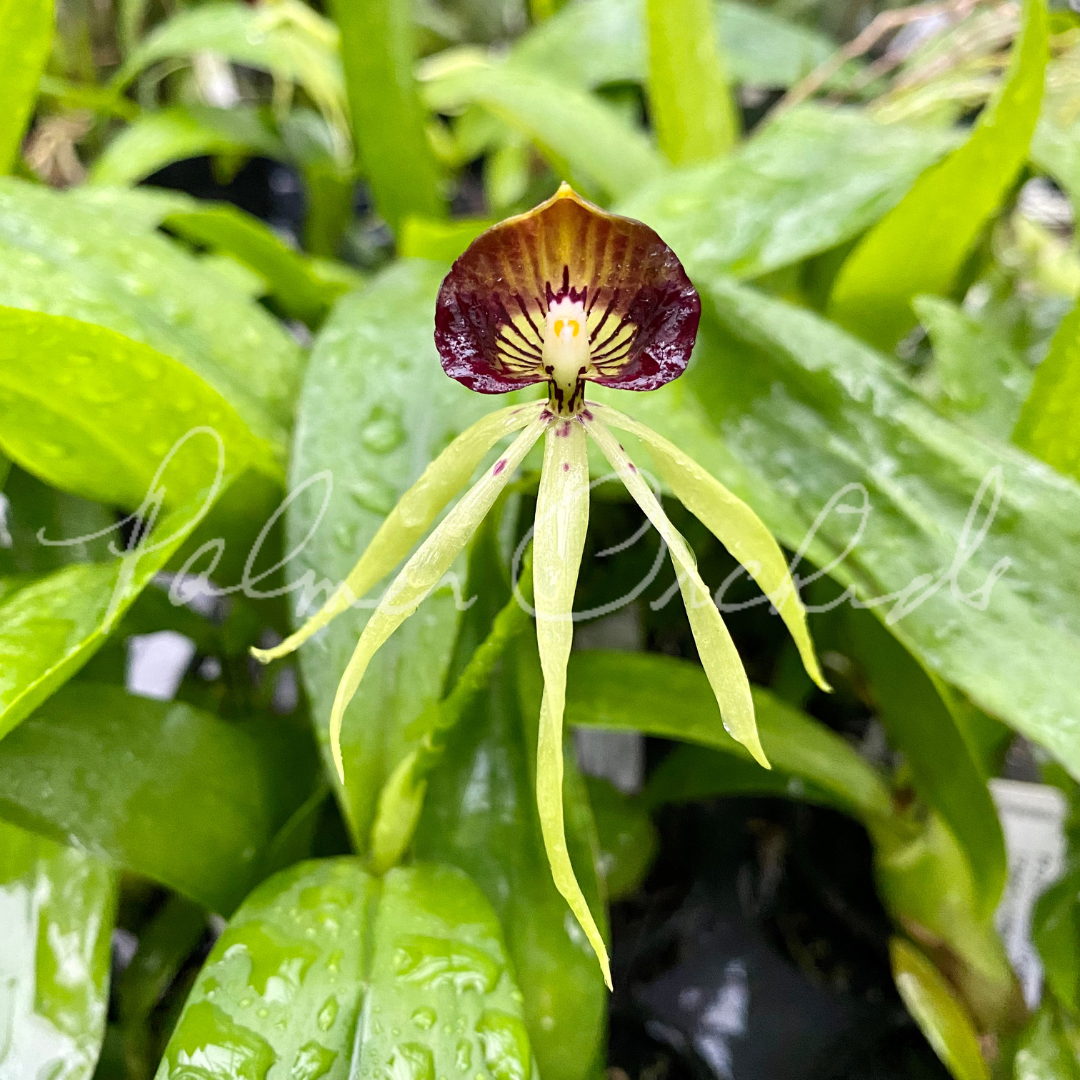
Commonly known as “the Florida clamshell orchid” or “the cockleshell orchid” owing to the appearance of the lip. Psh. cochleata is among the native Florida orchids, but is also found in Southern Mexico, Central America, and throughout the Caribbean.
Flowers are very mildly fragrant, with a spicy scent. Blooms sequentially.
Grown from seed.
Plants Available: The 3” Pot - Large option currently available is pictured.
Orchid Care: Grow in bright, indirect light with strong air circulation and moderate to high humidity. Tree fern fiber makes for an excellent potting medium for this species. Water generously when dry; allow roots to dry between waterings.
-
12.04.24
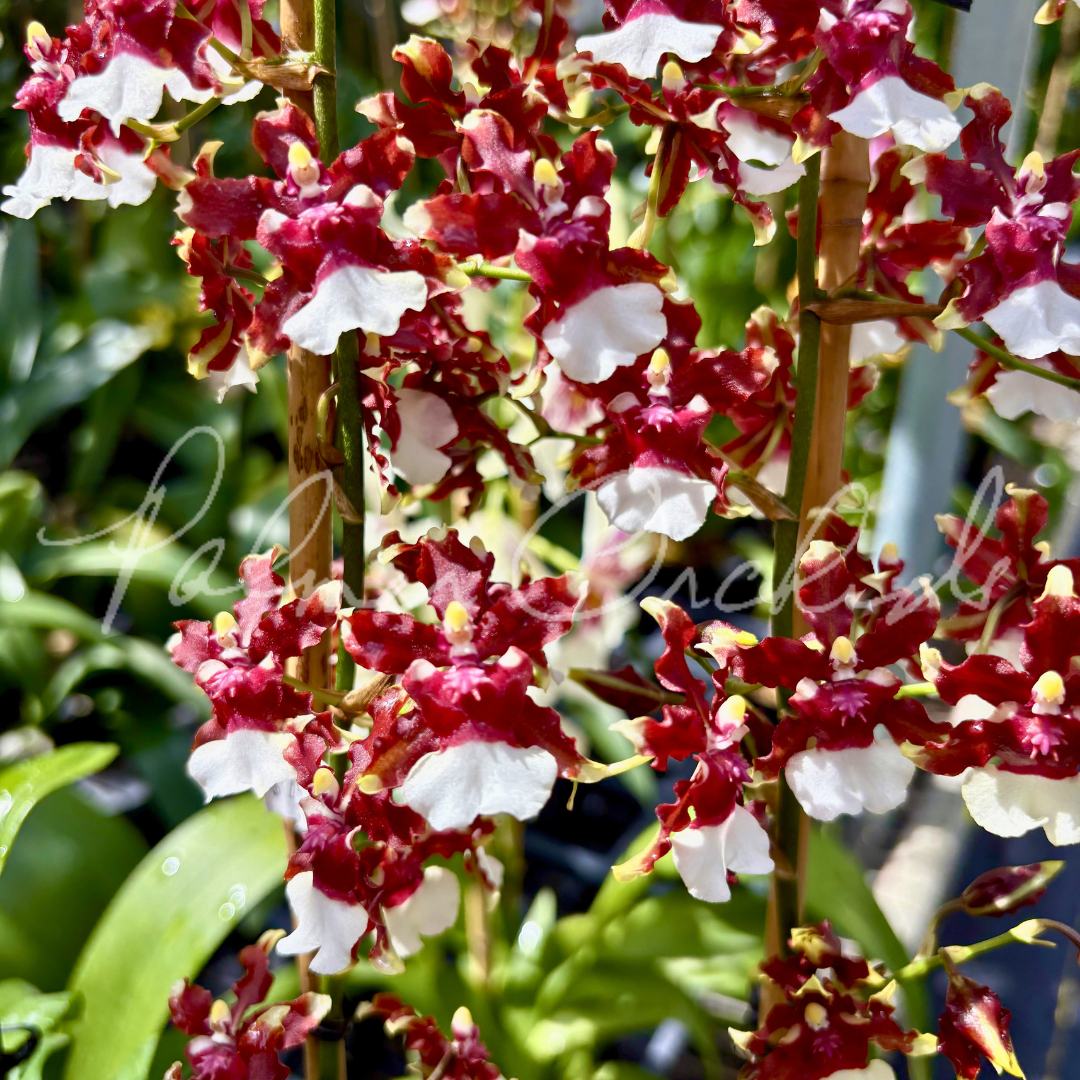
(Oncidium Jimbo × Oncidium Sharry Baby)
Much like Onc. Sharry Baby in care, appearance, and fragrance, but perhaps a bit fruitier in aroma. Petal tips and nose are light yellow and bloom spikes, shorter and stockier.
Blooms with the maturation of each new growth, typically twice a year (spring and fall).
‘Raspberry Chocolate’ mericlone.
Plants Available: Growing in 4” pots. Examples of the 4” Pot option are pictured. Orders will be filled with plants in spike/bud/flower as blooming season and blooming stock permit; otherwise, mature plants, previously bloomed.
Orchid Care: Generally easy to care for. Grow in dappled to bright indirect light. Water frequently if grown in a porous potting medium (e.g. bark mix) or, if in sphagnum, water just as the medium starts to dry.
-
04.18.26

Syn. Bllra. Marfitch (Bratonia Charles M. Fitch × Oncidium Fremar)
Blooms in a spray of large, star-shaped purple flowers. Each new growth produces 1-2 inflorescences of several flowers.
AOS awarded ‘Howard’s Dream’ mericlone.
Plants Available: Growing in 4” pots. An example of the 4” Pot - Lg. option is pictured. Orders will be filled with plants in spike/bud/bloom as stock permits; otherwise, plants previously bloomed.
Orchid Care: As for intergeneric Oncidiums. Grow in bright, diffused light, no direct sun. Plants may be grown mounted, established in baskets, or potted in a bark mix or sphagnum. Whichever is used, water just as the media are approaching dryness.
-
09.13.25
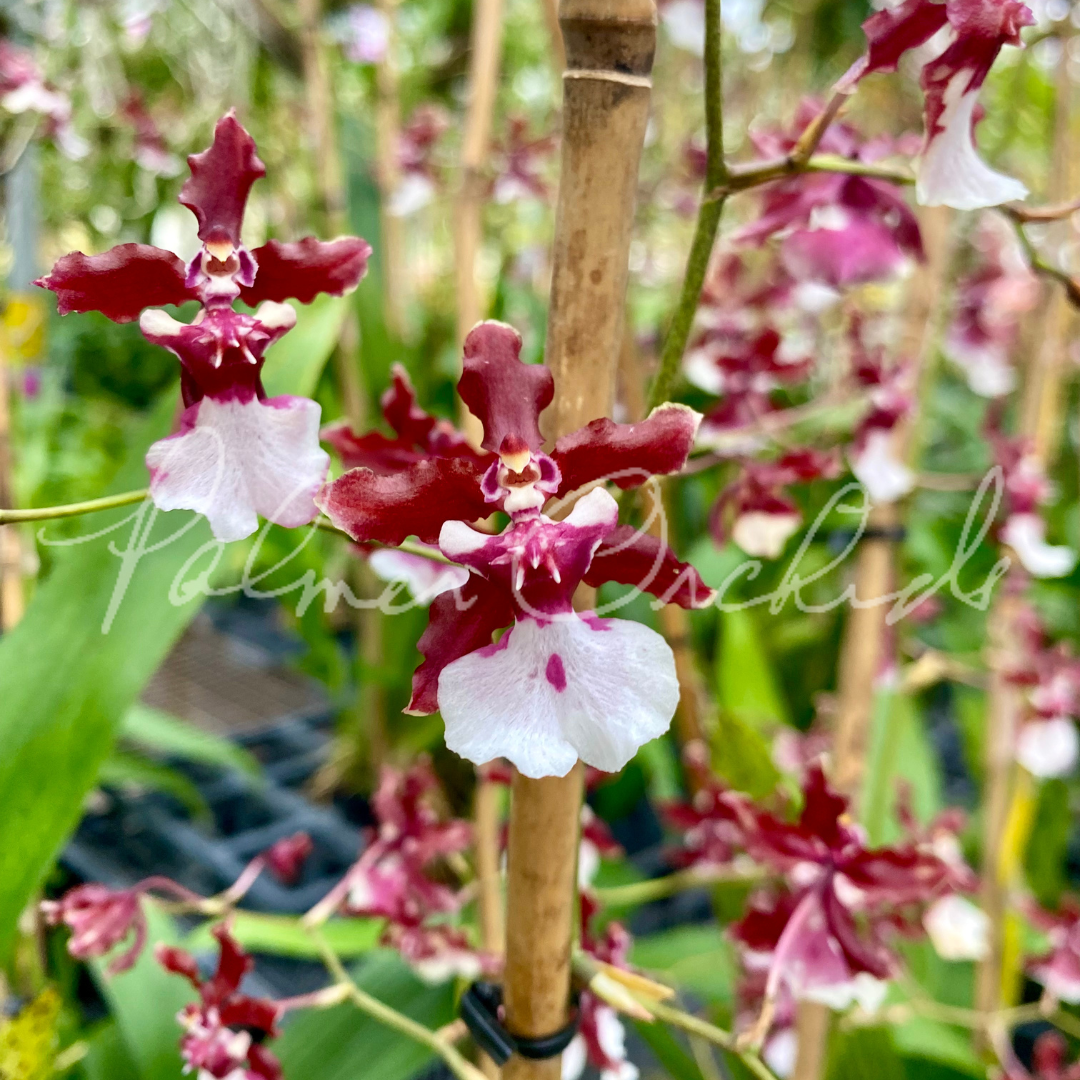
If you’re new to orchids and looking to expand your repertoire, this is a great “second orchid.” Onc. Sharry Baby blooms twice a year with long, arcing bloom spikes of small maroon and white flowers that produce a lovely chocolate scent.
Our Oncidium Sharry Baby typically bloom in spring and fall.
AOS awarded ‘Sweet Fragrance’ mericlone.
Plants Available: Growing in 4” pots. An example of the 4” Pot option is pictured. Orders will be filled with plants in spike/bud/bloom as blooming stock permits; otherwise, mature plants, previously bloomed.
Orchid Care: Generally easy to care for. Grow in dappled to bright indirect light. Water frequently if grown in a porous potting medium (e.g. bark mix) or, if in sphagnum, water just as the medium starts to dry.
-
06.12.24

(Ons. Rustic Bridge × Onc. Crowborough)
‘Golden Red Star’ mericlone.
Floriferous, branching bloom spikes of rich red flowers (about half-dollar size). Golden yellow petal tips. Pseudobulbs are distinctively plump and round. Each new growth produces 1-2 inflorescences of several flowers.
Plants Available: Growing in 4” pots. Orders will be filled with plants in spike/bud/bloom as blooming season and blooming stock permit; otherwise, mature plants, previously bloomed.
Orchid Care: As for intergeneric Oncidiums. Grow in bright, diffused light, no direct sun. Plants may be grown mounted, established in baskets, or potted in a bark mix or sphagnum. Whichever is used, water just as the media are approaching dryness.
—
10.06.26
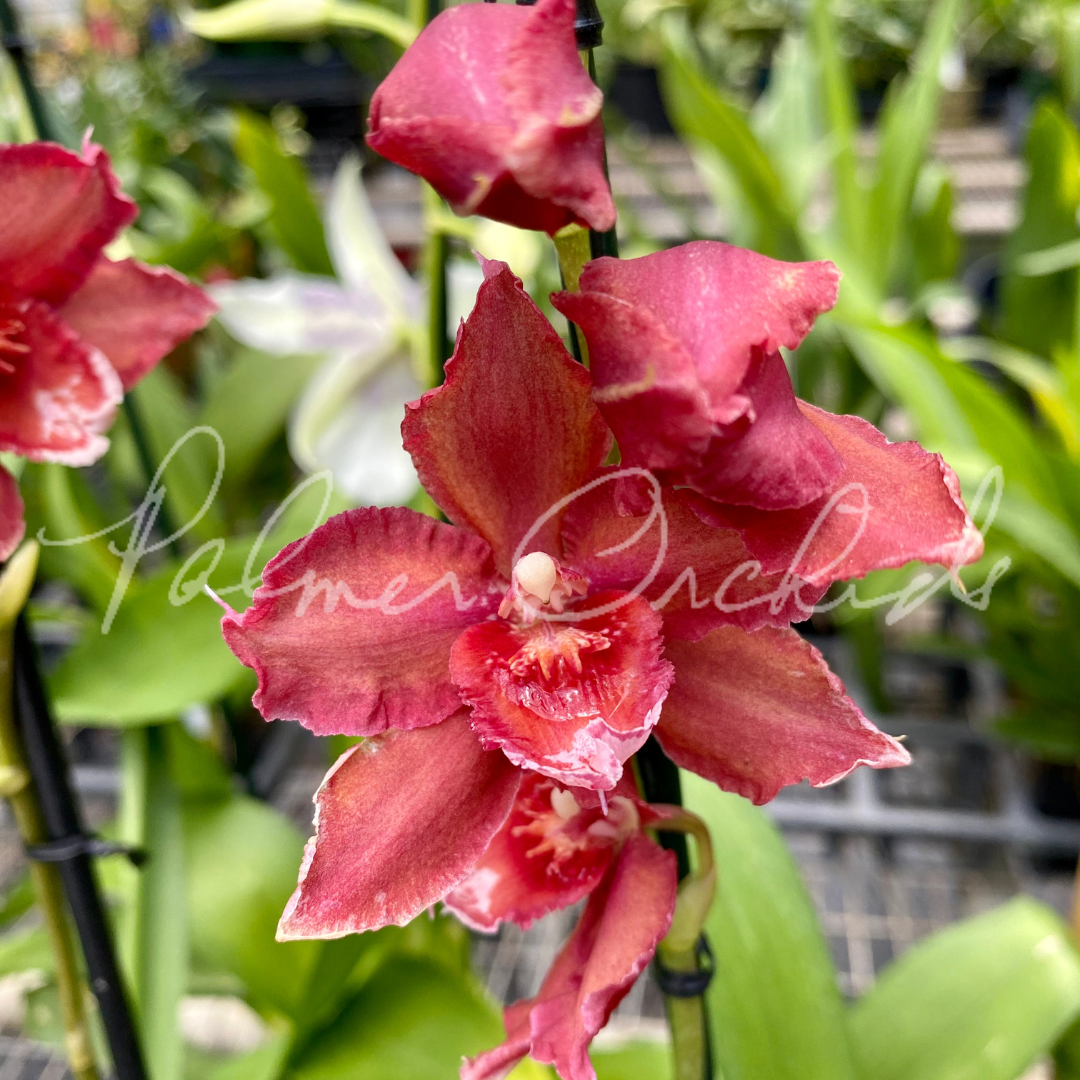
(Ons. Aloha Sparks × Onc. Aissa McLaughlin)
‘HOF’ mericlone.
Plants Available: Growing in 4” pots. An example of the size available is pictured. Orders will be filled with plants in spike/bud/bloom as blooming season and blooming stock permit.
Orchid Care: Grow in dappled light and high humidity. Water often while plants are actively growing, but potting media should not remain soggy. Roots are somewhat fine and should only dry slightly between waterings.
-
04.02.26
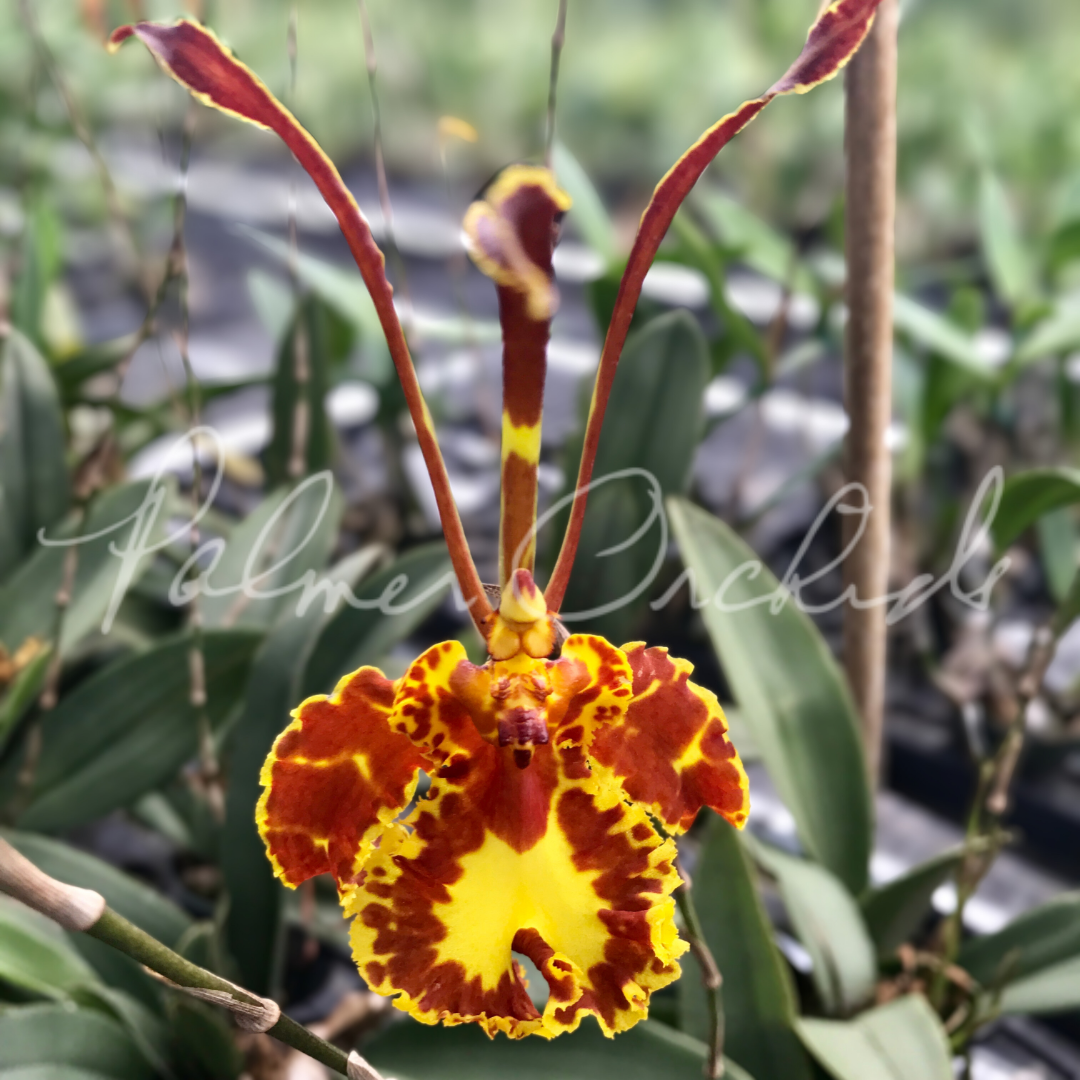
(Psychopsis papilio × Psychopsis Kalihi)
Pyp. Mariposa is one of few members of the genus Pyschopsis, which includes just four species and their hybrids. The lot are commonly known as “butterfly orchids” for the insects their flowers resemble.
Psychopsis are wonderfully rewarding bloomers. Though their bloom spikes may be slow to develop, once a flower is produced, the spike may continue to bud and bloom sequentially for an indefinite period, a new bud forming behind each flower that drops. In this way, it is not uncommon for plants to remain in bud or bloom for months on end. Cut the bloom spike only when dry and browning (or if repotting).
Plants Available: Growing in 4” pots, blooming-size. Examples of the size available are pictured.
Orchid Care: Psychopsis have tropical origins, so tend to grow best in warm conditions with high humidity and good air circulation.
Grow in low to moderate light and water at the base of the plant just as the potting media dries out. Typically the light level and watering schedule that works for reblooming your Phals. will also serve you well with Psychopsis. Sphagnum, LECA, bark—virtually any can be used with watering adjusted accordingly.
But nota bene: These plants do not like to have their roots disturbed, so repot only when necessary and handle gingerly. Repotting should be done when potting mix or media has become stale. Do not repot while plants are in spike/flower.
—
09.12.26
Syn. Schunkeara Big Shot (Alcra. Tahoma Glacier × Mps. Maui Titan)
A particularly pink and spotty cultivar of the Big Shot hybrid. Blooms in a spray of large, white star-shaped flowers overlaid with purple-pink spots. Each new growth produces 1-2 bloom spikes of multiple flowers. Plants bloom twice a year or more as they mature into large plants. Mildly fragrant.
‘Pink Panther’ mericlone.
Plants Available: Growing in 4” pots. An example of the 4” Pot option is pictured. Orders will be filled with plants in spike/bud/bloom as blooming season and blooming stock permit; otherwise, mature plants, previously bloomed.
Orchid Care: As for intergeneric Oncidiums. Grow in bright, diffused light, no direct sun. Plants may be grown mounted, established in baskets, or potted in a bark mix or sphagnum. Whichever is used, water just as the media are approaching dryness.
-
02.14.26
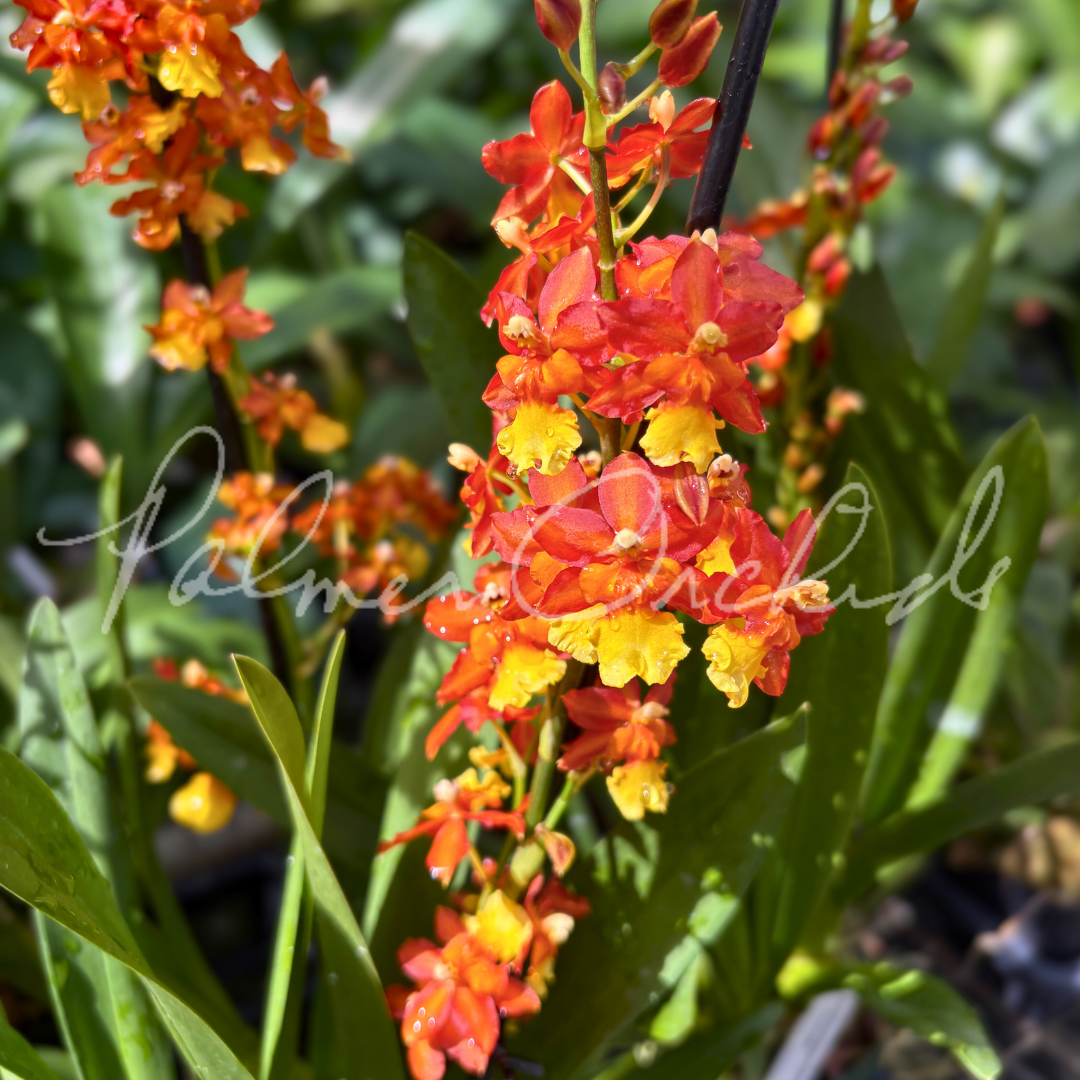
(Onc. Kilauea × Oncidium noezlianum)
‘Volcano Queen’ mericlone.
Plants Available: Growing in 4” pots. An example of the 4” Pot option is pictured. Orders will be filled with plants in spike/bud/bloom as blooming season and blooming stock permit; otherwise, mature plants that have bloomed previously.
Orchid Care: As for intergeneric Oncidiums. Grow in bright, diffused light, avoiding direct sun. Plants may be grown mounted, established in baskets, or potted in a bark mix or sphagnum. Whichever is used, water just as the media are approaching dryness.
-
10.21.25
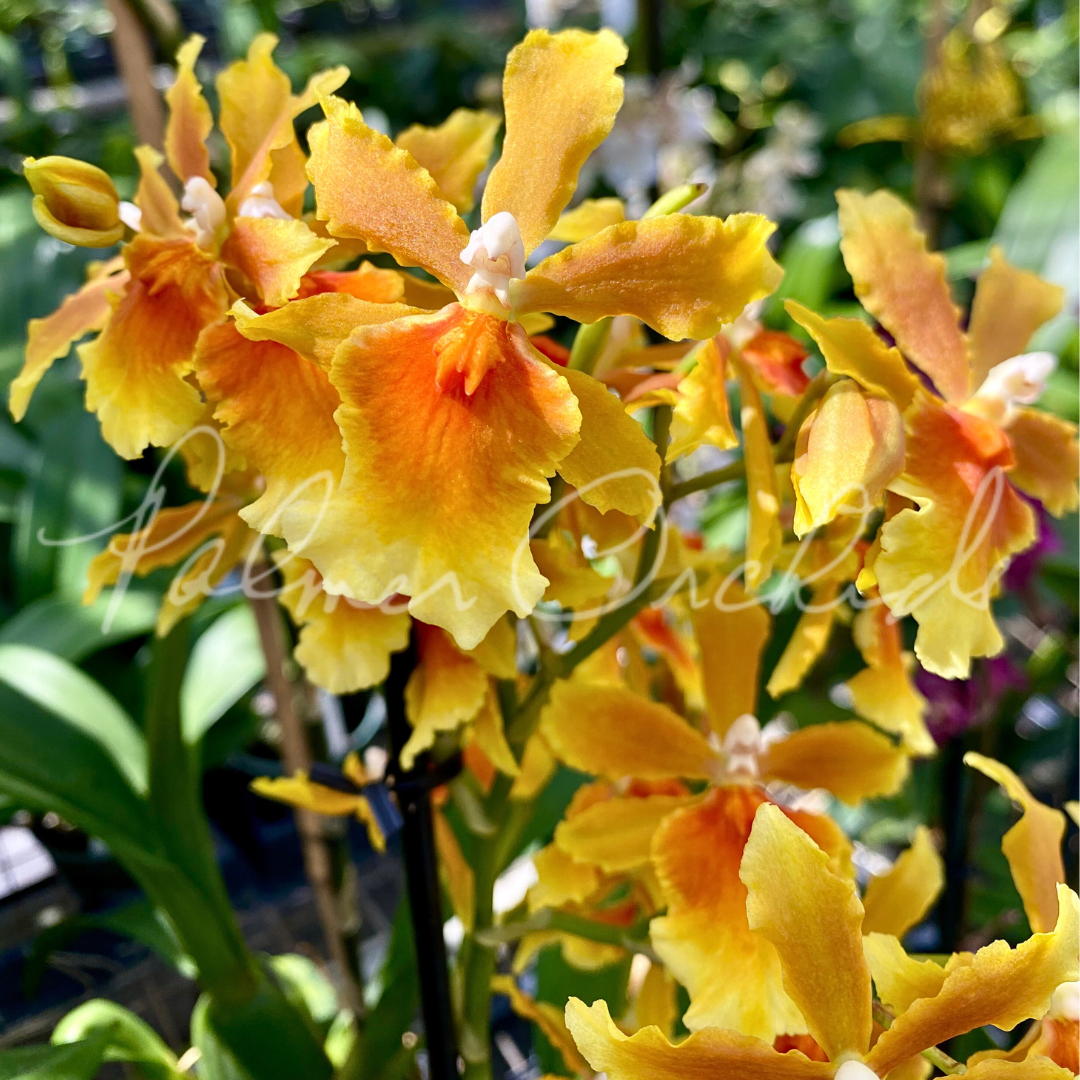
(Oip. Pacific Waters × Ons. Sunup)
Mericlone.
Plants Available: Growing in 4” pots. Examples of available sizes are pictured. Orders will be filled with plants in spike/bud/bloom as blooming season and blooming stock permit; otherwise, mature plants that have bloomed previously.
Orchid Care: As for intergeneric Oncidiums. Grow in bright, diffused light, no direct sun. Plants may be grown mounted, established in baskets, or potted in a bark mix or sphagnum. Whichever is used, water just as the media are approaching dryness. Protect from extreme summer temperatures.
-
09.13.25
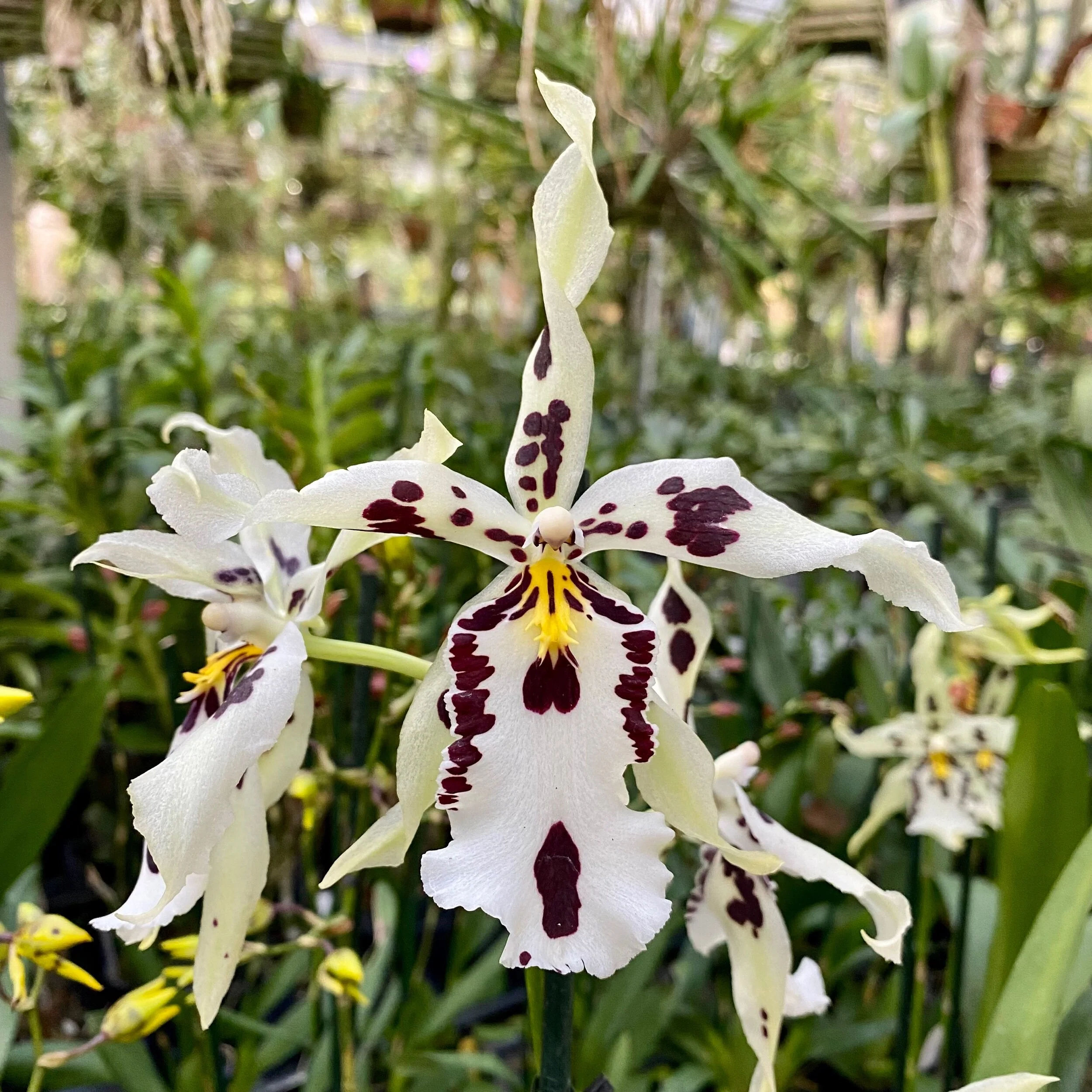
(Onc. Black Diamond × Alcra. Tropic Splendor)
Blooms in a spray of oblong, star-shaped flowers with spiraling petals and sepals. Flowers are creamy white flowers, spotted with dark reddish brown dots.
‘Sweet Spots’ mericlone.
Plants Available: Growing in 4” pots. Plants are mature—in bud/spike/flower as available, or plants that have bloomed previously. The plant pictured in full represents the size you will receive when you order the 4” Pot.
Orchid Care: As for intergeneric Oncidiums. Grow in bright, diffused light, no direct sun. Plants may be grown mounted, established in baskets, or potted in a bark mix or sphagnum. Whichever is used, water just as the media are approaching dryness.
-
04.22.23
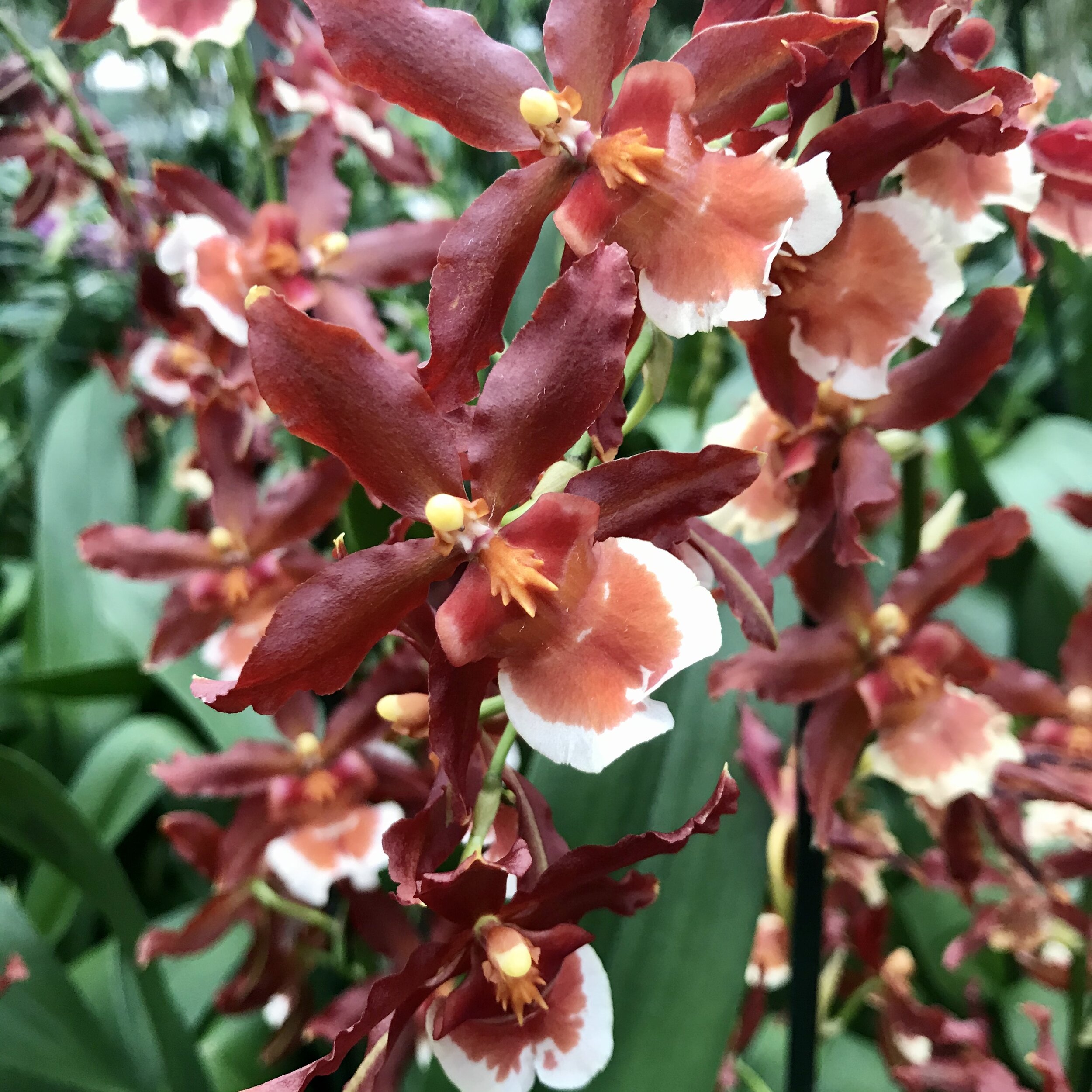
(Ons. Catatante × Ons. Aloha Sparks)
Blooms in sprays of several red and white flowers. Each new growth produces 1-2 bloom spikes. Typically blooms twice a year.
'New Year' mericlone.
Plants Available: Growing in 4” pots. The plants available are mature. Orders will be filled with plants in spike/bud/flower as available; otherwise, mature previously bloomed plants.
Orchid Care: Generally easy to care for. Grow in dappled to bright indirect light. Water frequently if grown in a porous potting medium (e.g. bark mix) or, if in sphagnum, water just as the medium starts to dry.
-
09.13.24
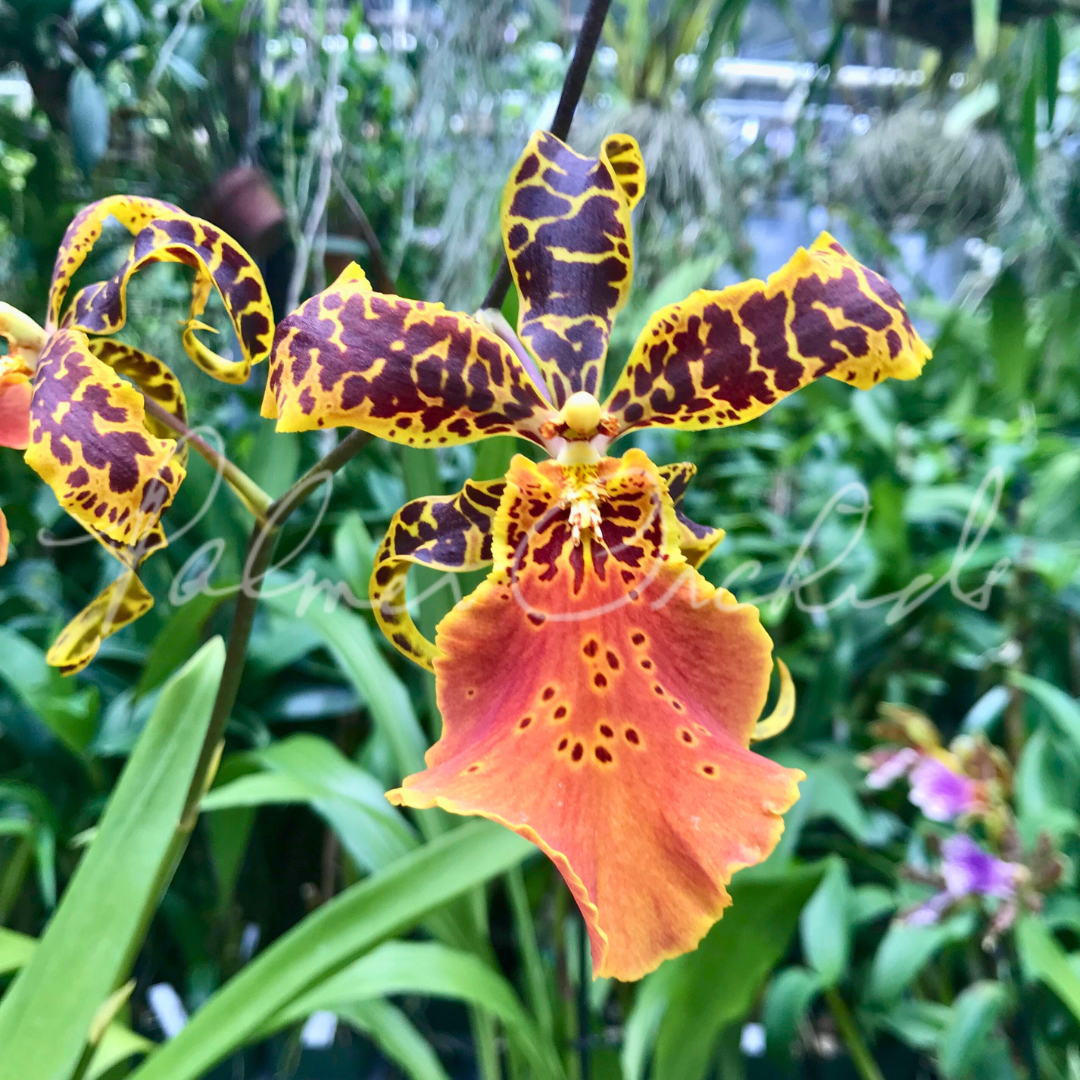
(Bratonia Olmec × Gomesa Mantinii)
AOS awarded ‘Hilo Gold’ mericlone.
Plants Available: Growing in 2" and 4” pots. All plants are blooming-size or first bloom. Examples of theoptions available are pictured. Orders will be filled with plants in spike or bloom as stock permits.
Orchid Care: As for intergeneric Oncidiums. Grow in bright, diffused light, no direct sun. Plants may be grown mounted, established in baskets, or potted in a bark mix or sphagnum. Whichever is used, water just as the media are approaching dryness.
Growing tip: Overgrown pots and baskets of this variety may seem ripe for dividing and repotting—but it’s best to do this only when plants are actively growing. With this variety and other Brassia types, we recommend waiting until spring to repot, divide, or otherwise disturb the root system.
-
02.26.26
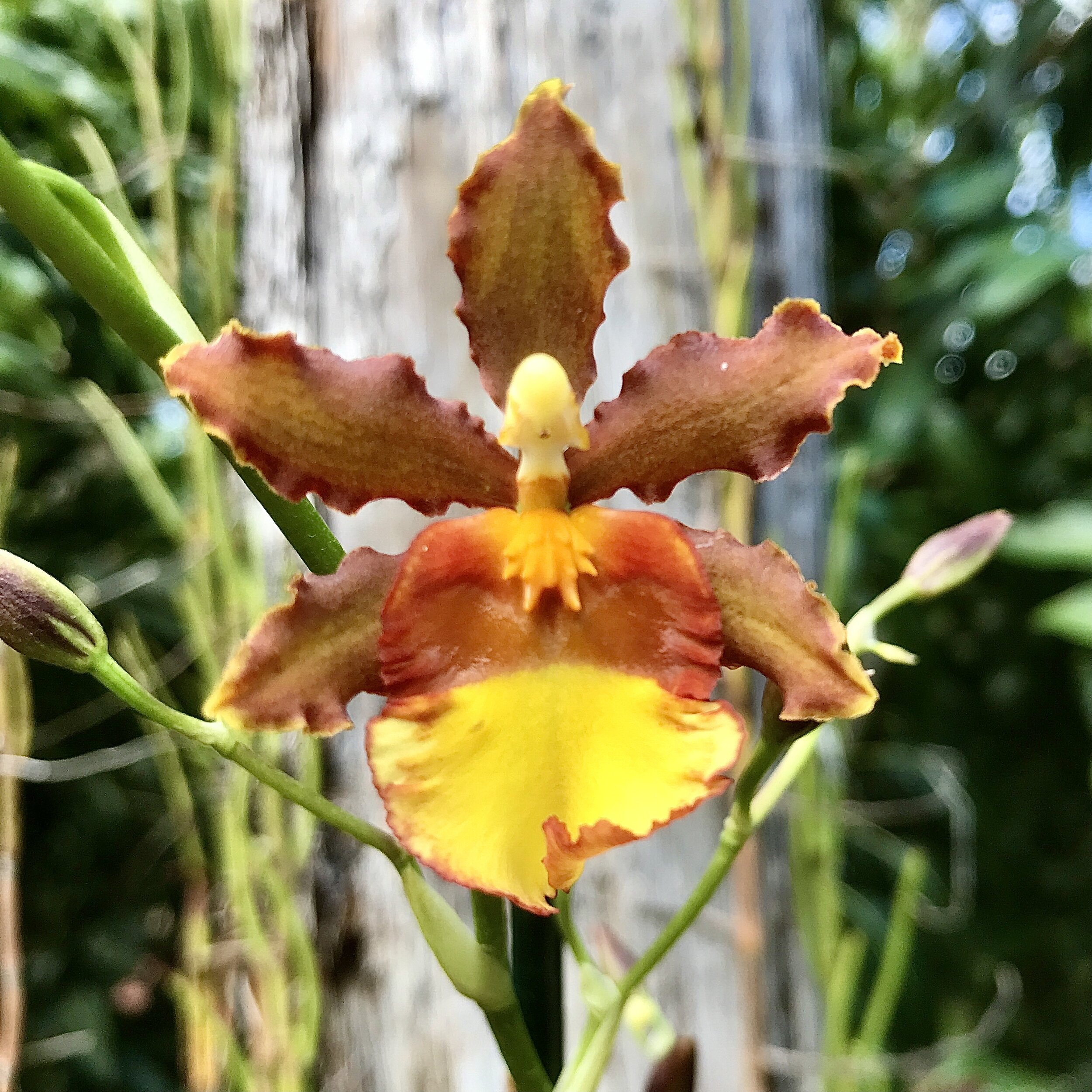
(Onc. Sphacetante × Ons. Wildcat)
‘Orange Kiss’ mericlone.
Oncidium hybrid with branching bloom spikes of orange and yellow flowers. Each new growth produces an inflorescence of several flowers small flowers (roughly the size of a quarter) with rust colored petals and a golden orange and yellow lip.
Plants Available: Growing in 4” pots. Orders will be filled with plants in spike/bud/bloom as blooming season and blooming stock permit; otherwise, mature plants that have bloomed previously.
Orchid Care: As for intergeneric Oncidiums. Grow in bright, diffused light, no direct sun. Plants may be grown mounted, established in baskets, or potted in a bark mix or sphagnum. Whichever is used, water just as the media are approaching dryness.
-
04.03.26

An easy grower and floriferous bloomer. Great for a cheery pop of color. Grow potted or mounted.
‘Lemon Drop’ mericlone.
Plants Available: Growing in 4” pots. The 4" Pot - Sm option is a blooming-size plant. Orders will be filled with plants in spike/bud/bloom as blooming season and blooming stock permit; otherwise mature plants, previously bloomed.
Orchid Care: Grow in dappled light and high humidity. Water often while plants are actively growing, but potting media should not remain soggy. Roots are somewhat fine and should only dry slightly between waterings.
-
09.06.24

Syn. Rossioglossum ampliatum
Yellow-flowered Oncidium species with distinctive tortoiseshell-like pseudobulbs. Blooms in the spring.
Grown from seed.
Plants Available: Growing in 3” and 4” pots. Plants in 3” pots are near blooming-size. Plant in 4” pots are blooming-size or mature. Examples of the sizes available are pictured.
Orchid Care: Grow in diffused light with moderate to high humidity and strong air circulation. Plants grown in overly high light will respond with discolored leaves (yellow mottling). Younger plants, those suitable for growing in 4” pots, grow well in moss. We recommend mounting plants as they mature and outgrow this pot size. Large, mature plants can also be gainfully established in baskets. Should you need to grow them potted, switch from moss to bark mix when potting up into 6” pots or larger.
-
07.27.24
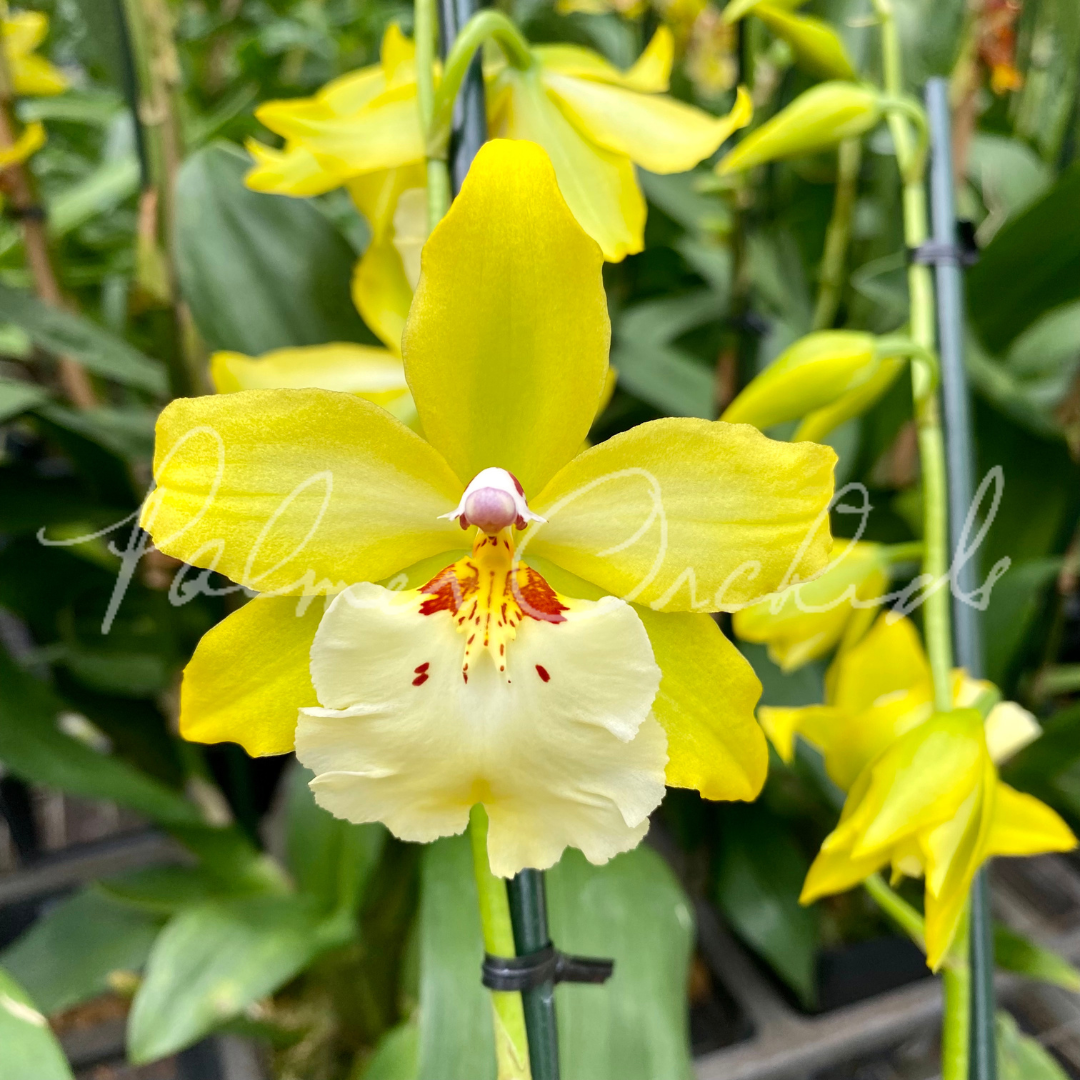
Syn. Vuyl. Celtic Sun (Onc. Golden Rialto × Mps. Zorro)
Bright yellow and white Miltoniopsis hybrid. Blooms in sprays of several mid-sized flowers, with yellow petals and a white skirt lip. Lightly fragrant.
Each new growth produces 1-2 inflorescences. Plants bloom twice a year or more as they mature into large plants.
‘Maya’ mericlone.
Plants Available: Growing in 4” pots. An example of the size available is pictured. Orders will be filled with plants in spike/bloom as blooming season and blooming stock permit; otherwise, mature plants, previously bloomed.
Orchid Care: As for intergeneric Oncidiums. Grow in bright, diffused light, no direct sun. Plants may be grown mounted, established in baskets, or potted in a bark mix or sphagnum. Whichever is used, water just as the media are approaching dryness. Protect from extreme temperatures in summer.
-
09.13.24
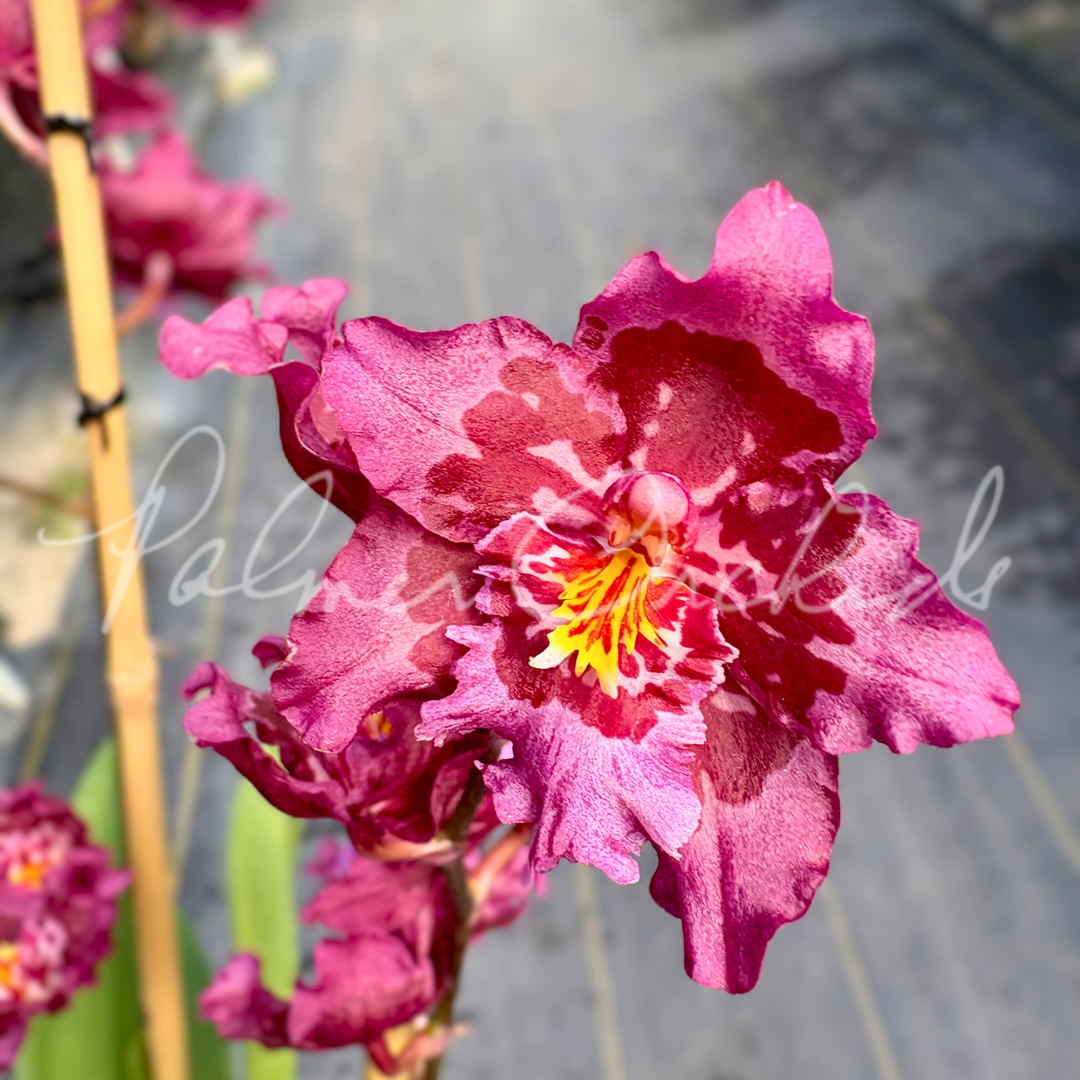
(Onc. Cherry Glow × Onc. Crowborough)
‘Burgundy’ AM/AOS mericlone.
Plants Available: Growing in 4” pots. Examples of the sizes available are pictured. Orders will be filled with plants in spike/bud/bloom as blooming season and blooming stock permit; otherwise, mature plants, previously bloomed.
Orchid Care: As for intergeneric Oncidiums. Grow in bright, diffused light, no direct sun. Plants may be grown mounted, established in baskets, or potted in a bark mix or sphagnum. Whichever is used, water just as the media are approaching dryness. Fertilize weakly, weekly.
—
01.10.25

(Oncidium cariniferum × Brassia arcuigera)
'Santa Barbara' mericlone.
Plants Available: Growing in 4” pots. Examples of the available sizes are pictured. Orders will be filled with plants in spike/bud/bloom as blooming season and blooming stock permit; otherwise, mature plants that have bloomed previously.
Orchid Care: As for intergeneric Oncidiums. Grow in bright, diffused light, no direct sun. Plants may be grown mounted, established in baskets, or potted in a bark mix or sphagnum. Whichever is used, water just as the media are approaching dryness.
-
01.09.25

Syn. Schunkeara Big Shot (Alcra. Tahoma Glacier × Mps. Maui Titan)
Blooms in a spray of large, star-shaped white flowers, each with sparkly purple splotches at its center. Each new growth produces 1-2 inflorescences of several flowers. Plants can bloom twice a year or more as they mature into large plants. Mildly fragrant.
‘Hilo Sparkle’ mericlone.
Plants Available: Growing in 4” pots. An example of the 4” Pot option is pictured. Orders will be filled with plants in spike/bud/bloom as stock permits; otherwise, mature plants, previously bloomed.
Orchid Care: As for intergeneric Oncidiums. Grow in bright, diffused light, no direct sun. Plants may be grown mounted, established in baskets, or potted in a bark mix or sphagnum. Whichever is used, water just as the media are approaching dryness.
—
10.17.25
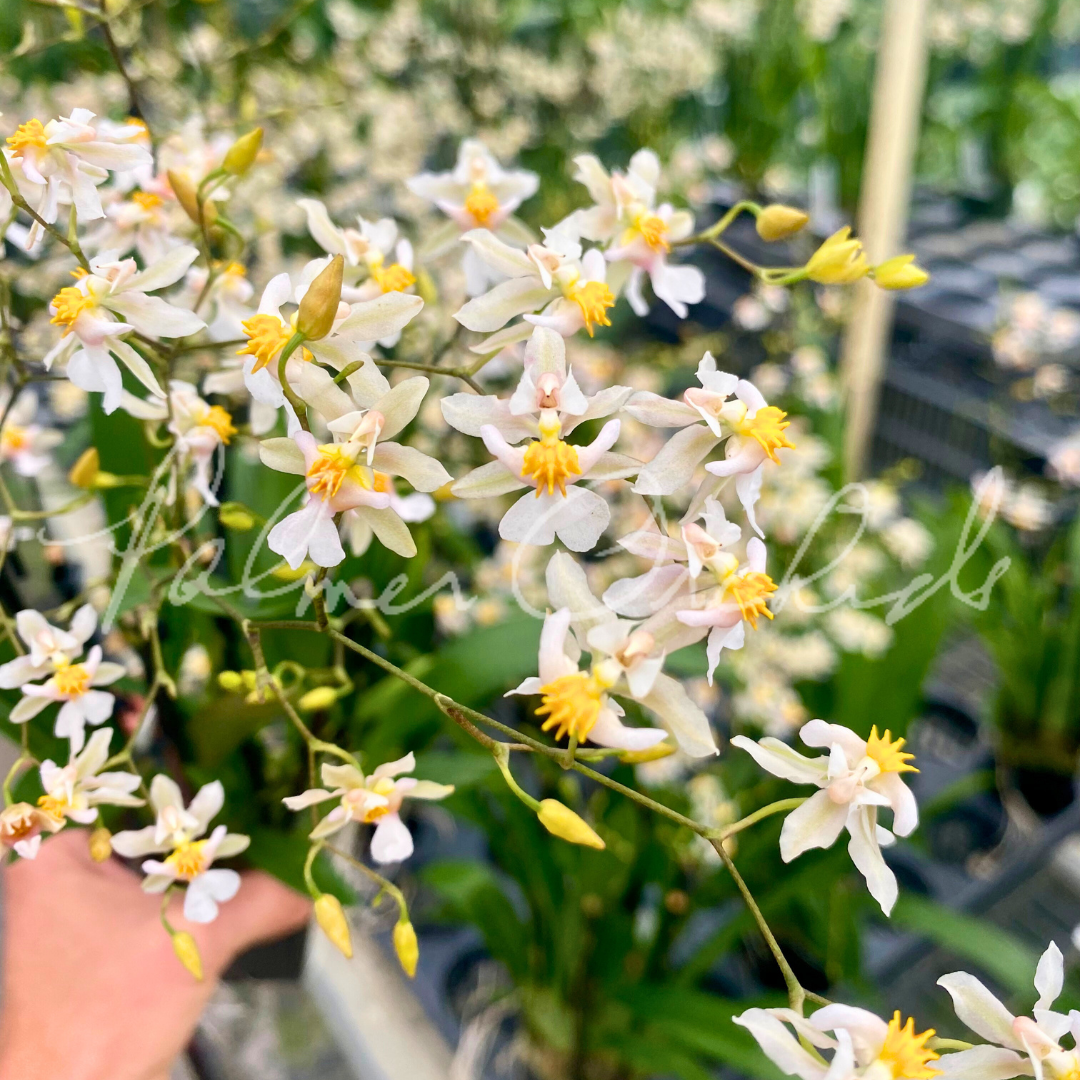
(Onc.Twinkle × Oncidiumsotoanum)
A Twinkle-type Oncidium hybrid that blooms in spray of small soft pink flowers. Lightly fragrant.
Mericlone.
Plants Available: Growing in 2”/3” pots and 4" pots. An example of the 2"/3" Pot option available is pictured. Orders will be filled with plants in spike/bud/bloom as blooming season and blooming stock permit.
Orchid Care: Generally easy to care for. Grow in bright indirect light, and water just as the medium starts to dry. Plants grown in a porous potting medium (e.g. a chunky bark mix) will require more frequent watering than those grown in sphagnum, which retains moisture for longer periods. Orchid pots (the holey kind) and baskets are recommended, as they allow air flow around the roots.
-
08.30.24
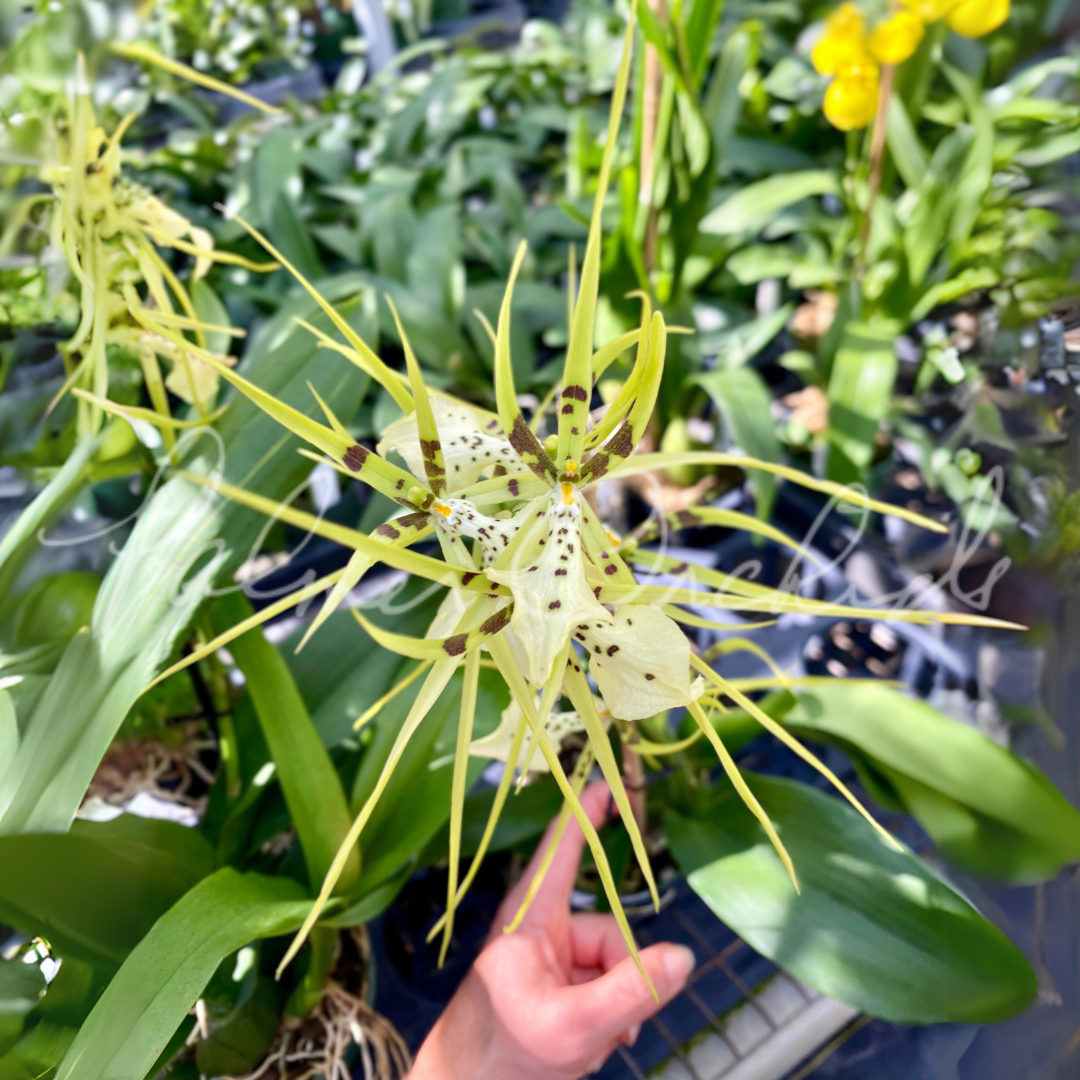
(Brassia verrucosa × Brassia gireoudiana)
‘Sakata’ AM/AOS clone.
Plants Available: Chunky plants, growing in 4” pots. An example of the size available is pictured. Select 4” Pot - Variegated for a plant with variegated foliage. Plants are mature, previously bloomed.
Orchid Care: Grow in bright, indirect light with intermediate temperatures and moderate humidity. Plants may be grown in pots or baskets. Use a medium-aggregate potting mix that drains easily. Plants should be watered just as the mix approaches dryness. Repot only after the plant has initiated new growth, including new roots. Fertilize weakly, weekly.
-
07.22.25

(Bst. Summit × Brsdm. Gilded Urchin)
Flowers are bright yellow and waxy with spindly star-shaped petals overlaid with tiger-stripe type markings.
‘Mystic Maze’ mericlone.
Plants Available: Large, substantive plants growing in 4” pots. Examples of the 4” Pot - Lg option are pictured. Orders will be filled with plants in spike/bud/bloom as blooming season and blooming stock permit; otherwise, mature plants that have bloomed previously. Note that this variety is prone to developing flecked foliage as pictured.
Orchid Care: As for intergeneric Oncidiums. Grow in bright, diffused light, no direct sun. Plants may be grown mounted, established in baskets, or potted in a bark mix or sphagnum. Whichever is used, water just as the media are approaching dryness.
-
06.21.25
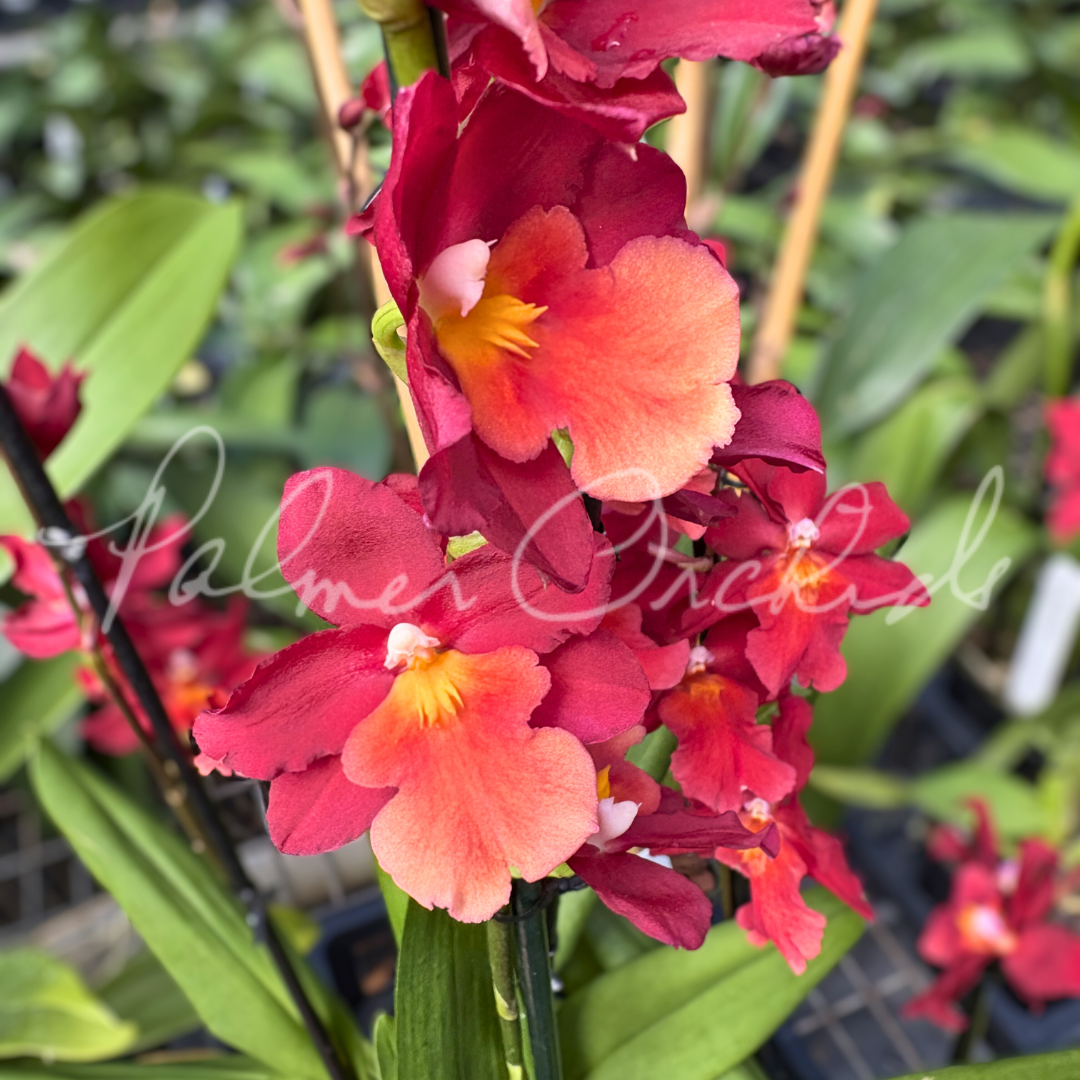
(Ons. Warm Memories × Oip. Francine)
‘JF069’ mericlone.
Blooms in sprays of half-dollar-sized pinky red flowers with yellow and peach to red lip.
Plants Available: Growing in 4” pots. An example of each size available is pictured. Orders will be filled with plants in spike/bud/bloom as blooming season and blooming stock permit.
Orchid Care: Grow in dappled light and high humidity. Water often while plants are actively growing, but potting media should not remain soggy. Roots are somewhat fine and should only dry slightly between waterings.
-
05.31.25

(Ons. Rustic Bridge × Onc. Crowborough)
‘1229’ is an awesome cultivar in the Wildcat series. This mericlone produces long, branched bloom spikes that among the tallest of the Wildcat group. Flowers are crisp, brilliant yellow with burgundy and red leopard markings.
Plants Available: Growing in 4” pots. An example of the 4” Pot - Lg option is pictured. Orders will be filled with plants in spike/bud/bloom as blooming season and blooming stock permit; otherwise, mature plants, previously bloomed.
Orchid Care: As for intergeneric Oncidiums. Grow in bright, diffused light, no direct sun. Plants may be grown mounted, established in baskets, or potted in a bark mix or sphagnum. Whichever is used, water just as the media are approaching dryness. Fertilize weakly, weekly.
-
10.24.24

(Ons. Rustic Bridge × Onc. Crowborough)
‘Yellow King’ mericlone.
Plants Available: Growing in 4” pots. Plants are mature—in bud/spike/flower as available, or plants that have bloomed previously.
Orchid Care: As for intergeneric Oncidiums. Grow in bright, diffused light, no direct sun. Plants may be grown mounted, established in baskets, or potted in a bark mix or sphagnum. Whichever is used, water just as the media are approaching dryness.
-
04.06.23

(Brassiaaurantiaca × Brassostele Summit)
‘Sweet Orange’ mericlone.
Brassia hybrid with mid-sized spidery blooms in rust colored tones of orange, yellow, and brown.
Plants Available: Growing in 2” pots, blooming-size. An example of the size available is pictured. Orders will be filled with plants in spike/bud/bloom as blooming season and blooming stock permit; otherwise, plants that have bloomed previously.
Orchid Care: As for intergeneric Oncidiums. Grow in bright, diffused light, no direct sun. Plants may be grown mounted, established in baskets, or potted in a bark mix or sphagnum. Whichever is used, water just as the substrate approaches dryness.
-
12.06.24
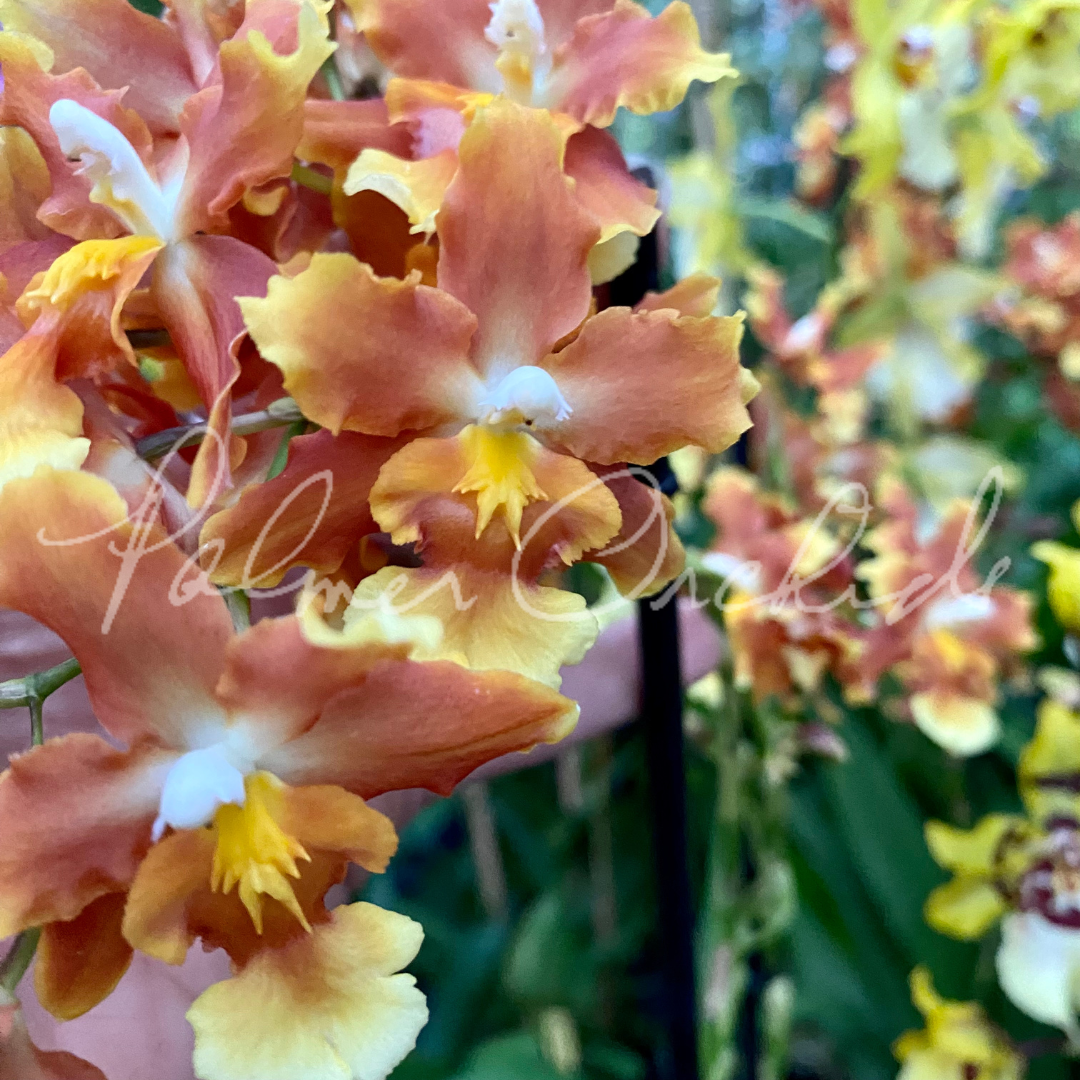
(Oip. Living Fire × Ons. Catatante)
‘Butterscotch’ mericlone.
Intergeneric Oncidium hybrid with branching bloom spikes of multi-tone orange flowers. Each new growth produces an inflorescence of several flowers small flowers (roughly the size of a quarter) with buttery orange petals overlaid in ginger.
Plants Available: Growing in 4” pots. The plant pictured in full represents the size you will receive when you order the 4” Pot option. Orders will be filled with plants in spike/bud/bloom as blooming season and blooming stock permit; otherwise, mature plants that have bloomed previously.
Orchid Care: As for intergeneric Oncidiums. Grow in bright, diffused light, no direct sun. Plants may be grown mounted, established in baskets, or potted in a bark mix or sphagnum. Whichever is used, water just as the media are approaching dryness. Protect from extreme summer temperatures.
-
12.15.22

(Ons. Jacks Alive × Oip. Francine)
Blooms in sprays of half-dollar-sized bright red flowers with a red lip.
‘Ruby’ mericlone.
Plants Available: Growing in 4” pots. An example of the size available is pictured. Orders will be filled with plants in spike/bud/bloom as blooming season and blooming stock permit.
Orchid Care: Grow in bright, indirect light, avoiding direct sunlight, which can scorch the leaves. A location with dappled light and morning sun is ideal. This variety does best in intermediate temperatures—those ranging from 65-80F during the day and 55-65F at night. Plants should be watered regularly during active growth to keep the potting media moist but not soggy. Roots are somewhat fine and should only dry slightly between waterings. Fertilize with a weak solution every 1-2 weeks.
—
09.13.25
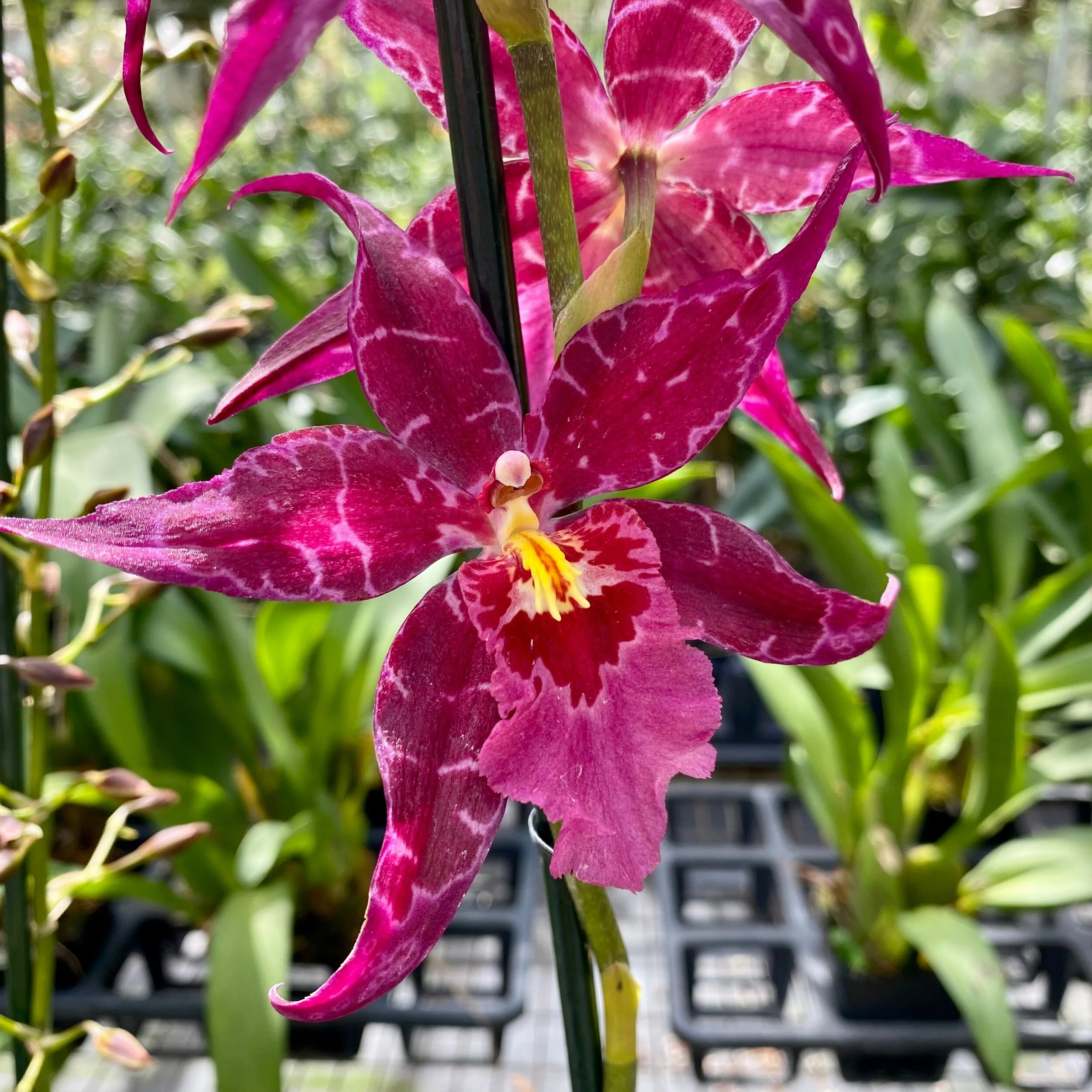
(Onc. Mem. Dale Lawless × Alcra. Mem. Jay Yamada)
Blooms in a spray of large, star-shaped fuchsia flowers. Each new growth produces 1-2 inflorescences of several flowers.
‘Hoku’ mericlone.
Plants Available: Growing in 4” pots. Examples of the sizes available are pictured. Orders will be filled with plants in spike or bloom as blooming season and blooming stock permit; otherwise, mature plants, previously bloomed.
Orchid Care: As for intergeneric Oncidiums. Grow in bright, diffused light, no direct sun. Plants may be grown mounted, established in baskets, or potted in a bark mix or sphagnum. Whichever is used, water just as the media are approaching dryness.
-
10.09.26

Syn. Alcra. Tropic Lily (Onc. Nichirei Lilac × Alcra. Tropic Splendor)
Blooms in a spray of large, star-shaped creamy white flowers, spotted with reddish brown dots. Each new growth produces 1-2 inflorescences of several flowers. May bloom twice a year or more as they mature into large plants.
‘Hilo Space Ship’ mericlone.
Plants Available: Mature plants, growing in 4” pots. The plant pictured in full represents the size you will receive when you order the 4” Pot - Standard option. Orders will be filled with plants in spike/bud/bloom as blooming season and blooming stock permit; otherwise, mature plants, previously bloomed.
Orchid Care: As for intergeneric Oncidiums. Grow in bright, diffused light, no direct sun. Plants may be grown mounted, established in baskets, or potted in a bark mix or sphagnum. Whichever is used, water just as the media are approaching dryness.
-
06.15.22
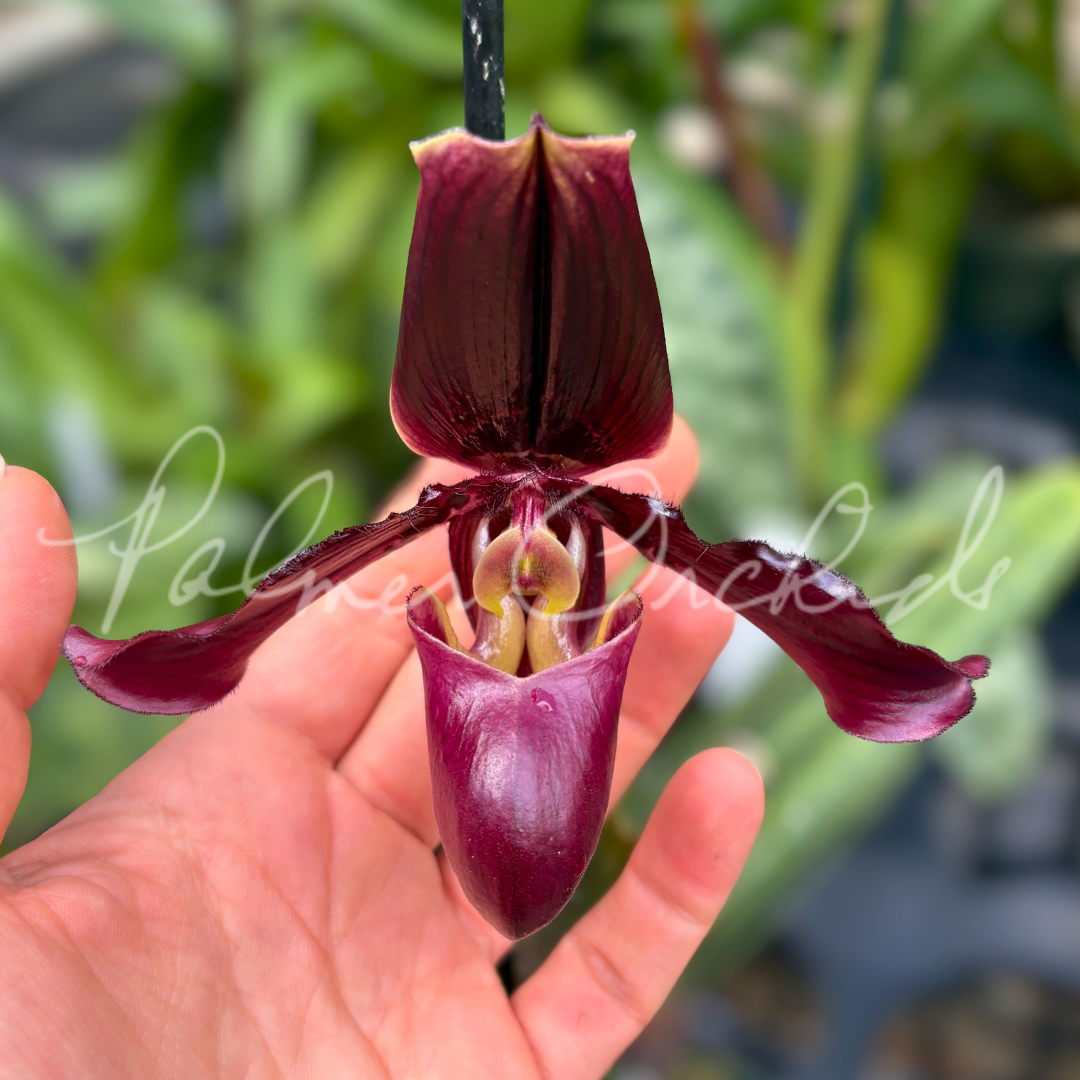
(Paphiopedilum henryanum × Paph. Lorraine’s Pride)
Grown from seed, so flower characteristics vary somewhat from plant to plant.
Plants Available: Growing in 4” pots. An example of the size available is pictured. Orders will be filled with plants in bud/bloom as blooming season and blooming stock permit; otherwise, mature plants, previously bloomed.
Orchid Care: Grow in filtered light/bright shade. The substrate should be kept moist, but not soggy. Watering should be frequent and heavy in the summer, but more conservative in the winter. When repotting, pot in seedling mix (e.g. small aggregate bark-based) or tree fern fiber and top dress with lime or your preferred calcium supplement.
-
09.06.25
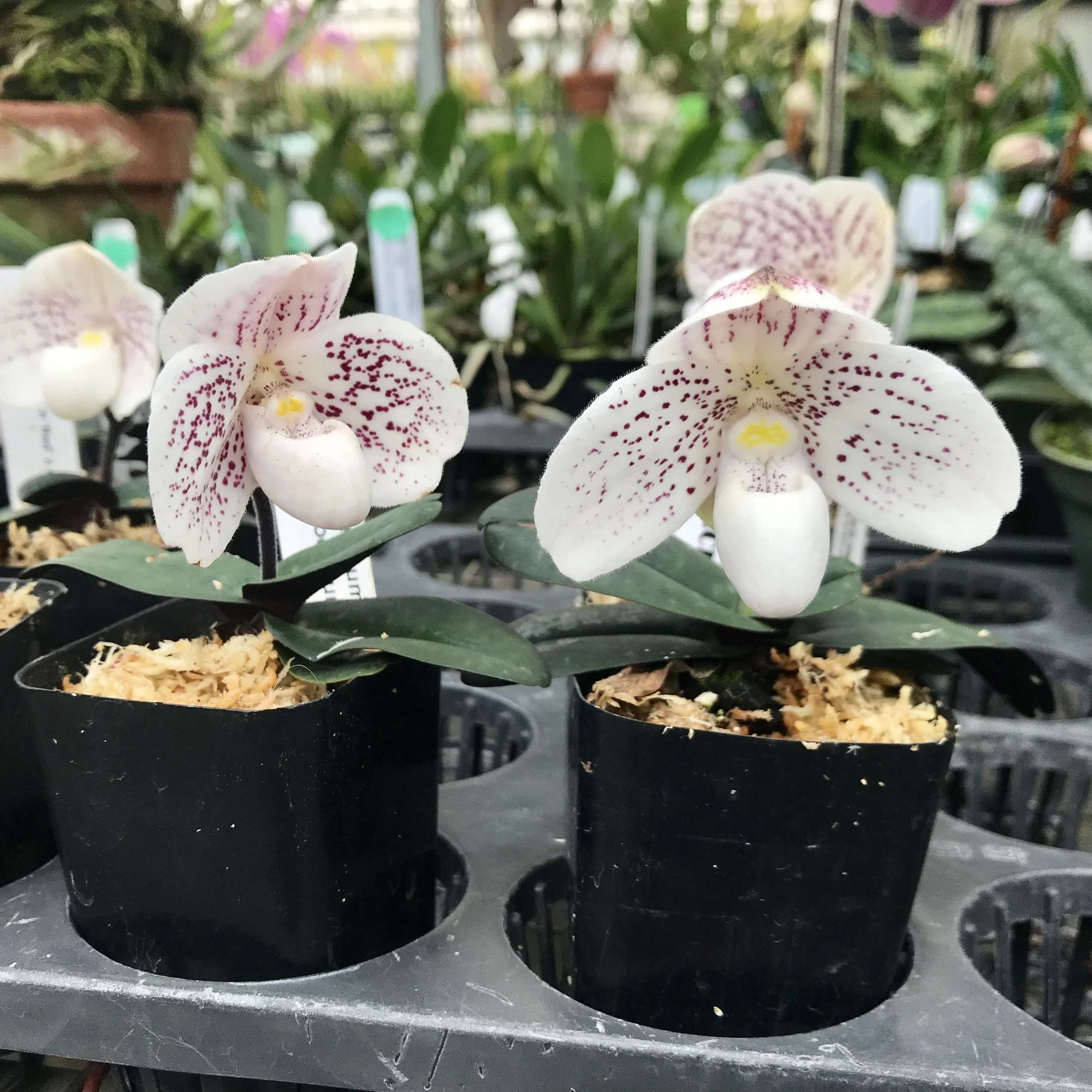
Little lady slippers.
Plants Available: Growing in 2” pots. Examples pictured. Grown from seed so flower characteristics vary somewhat from plant to plant.
Paph. QF Mini (Paph. thaianum x Paph. leucochilum)
Paph. QF Mini Bell (Paph. QF Mini x Paph. bellatulum)
Paph. QF Mini Me (Paph. QF Mini x Paph. wenshanense) - Double plant
Paph. Donvischilum (Paph. concolor x Paph. leucochilum)
Paph. Doctor Jack (Paph. concolor x Paph. niveum)
Paph. White Madonna (Paph. niveum x Paph. acmodontum)
Paph. Gisela Utz (Paph. wenshanense x Paph. thaianum)
Paph. QF Alani (Paph. Greyi x Paph. Topaz Charm)
Orders will be filled with plants in bud or bloom as blooming season and stock permit.
Orchid Care: Grow in bright shade/diffused light. Plants should be keep moist--but not soggy--for most of the year, though allow for slight drying in the cooler months.
--
08.27.25
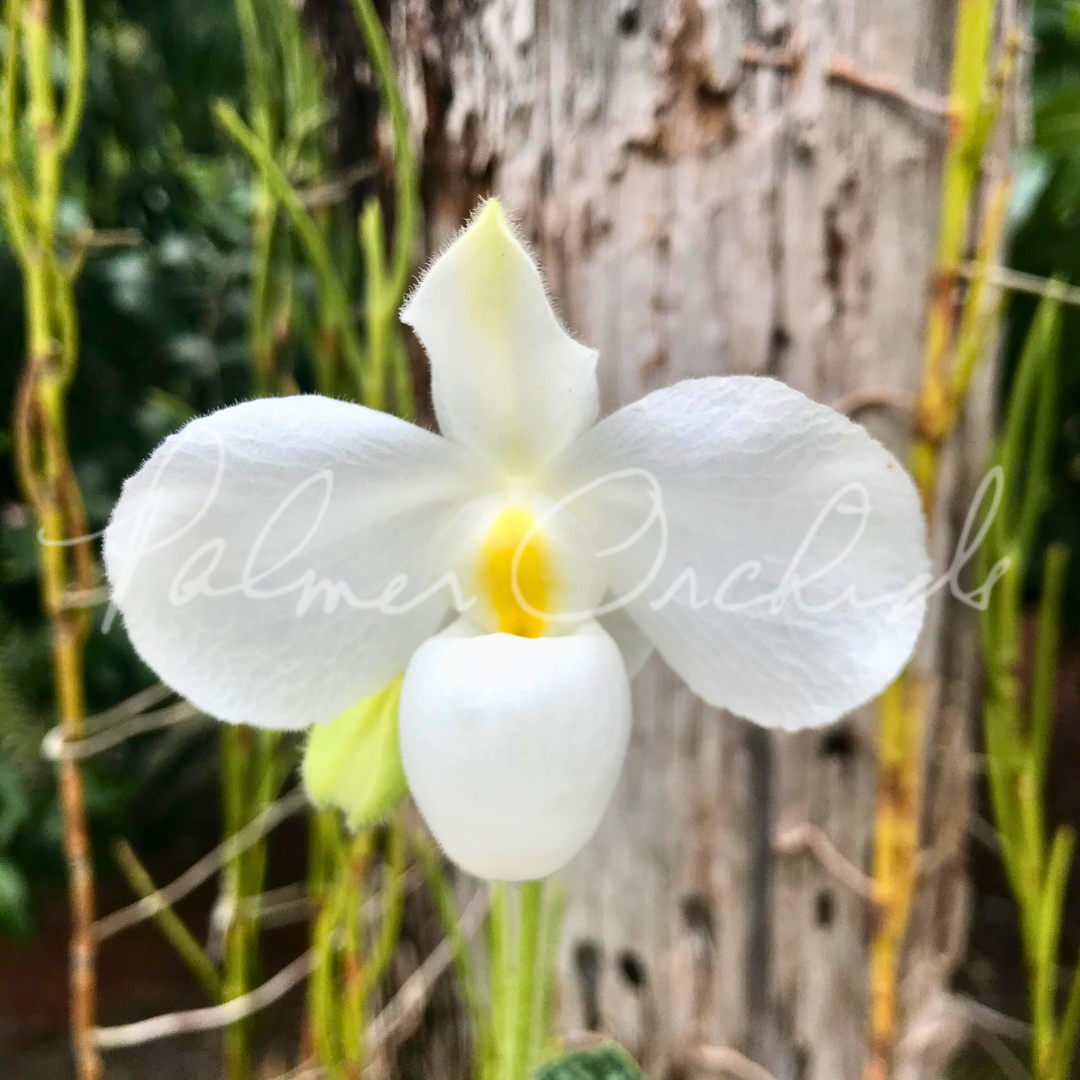
Lady slipper species, section Barbata. Native to Southeast and South-Central China and Vietnam.
Grown from seed so flower characteristics may vary somewhat from plant to plant.
Plants Available: Growing in 2” pots. Examples of the plants available are pictured.
Orchid Care: Grow in bright shade and keep evenly moist. Ensure water is low in salts and fertilizer weakly (1/4-1/2 strength) on a weekly basis. Repot annually.
—
08.27.25

(Paphiopedilum barbatum × Paphiopedilum fairrieanum) x sib
Grown from seed so flower characteristics vary somewhat from plant to plant.
Plants Available: Growing in 2” and 4” pots. An example of the 4” Pot-Lg option is pictured. Orders will be filled with plants in bud/bloom as blooming season and blooming stock permit.
Slipper Care: Grow in bright shade and keep moist. Mimic monsoon conditions, as per the natural growing conditions of the parents of this hybrid (Paph. barbatum and Paph. fairrieanum). Rain/water should be heavier during spring and summer, with somewhat drier conditions during the cooler months, however plants should not be allowed to dry completely. A period of cool autumn nights (e.g. in the 50s F) is necessary for plants to flower the following bloom season. Repot annually.
-
06.13.25

(delenatii v. dunkle x vietnamense)
Primary hybrid of Paph. species delenatii and vietnamense, with full pink blooms and attractive mottled foliage. Typically produces two flowers per spike. Blooms in the spring.
Grown from seed so flower characteristics vary somewhat from plant to plant.
Plants Available: Growing in 4” pots. Plants are blooming-size. Examples of the size available are pictured. Orders will be filled with plants in spike/bud/flower as blooming season and blooming stock permit.
Orchid Care: Grow in bright shade, no direct sun. The potting media should be kept moist, but not saturated or soggy. Repot annually and top dress with calcium supplement.
—
03.15.25
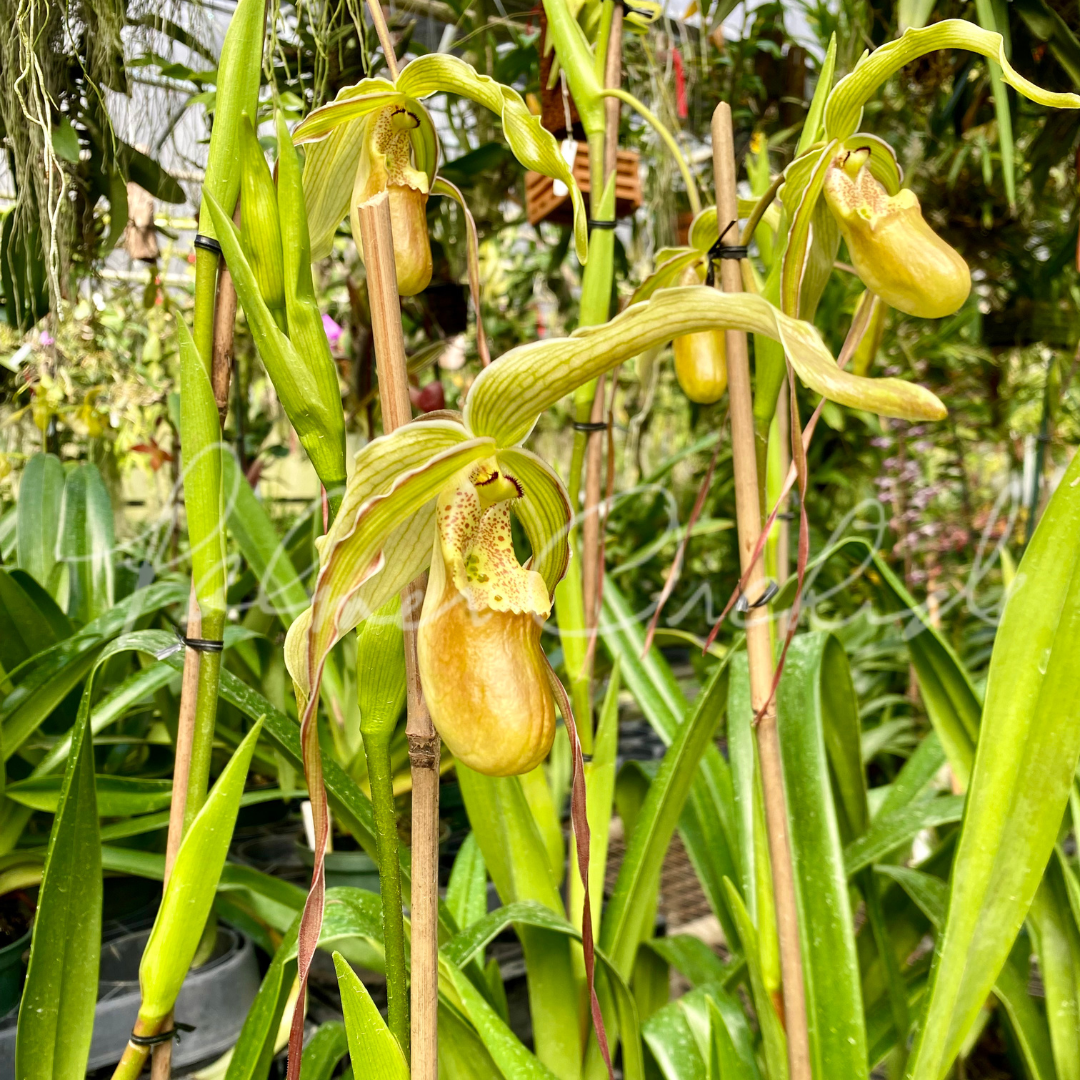
(Phragmipedium longifolium × Phrag. Grande)
Grown from seed, so flower characteristics and color may vary somewhat from plant to plant.
Plants Available: Growing in 4” pots. The 4” Pot option is a plant with a single fan. Orders will be filled with plants in spike/bud/bloom as stock permits.
Orchid Care: A semi-lithophytic/terrestrial, this plant should be grown potted. The substrate should be kept moist, but not soggy; good drainage is essential (e.g. a layer of styrofoam peanuts or pot shards beneath beneath a bark-based substrate). Provide bright, filtered light with strong air circulation so that conditions around the roots do not become stagnant. Repot annually.
-
11.02.24
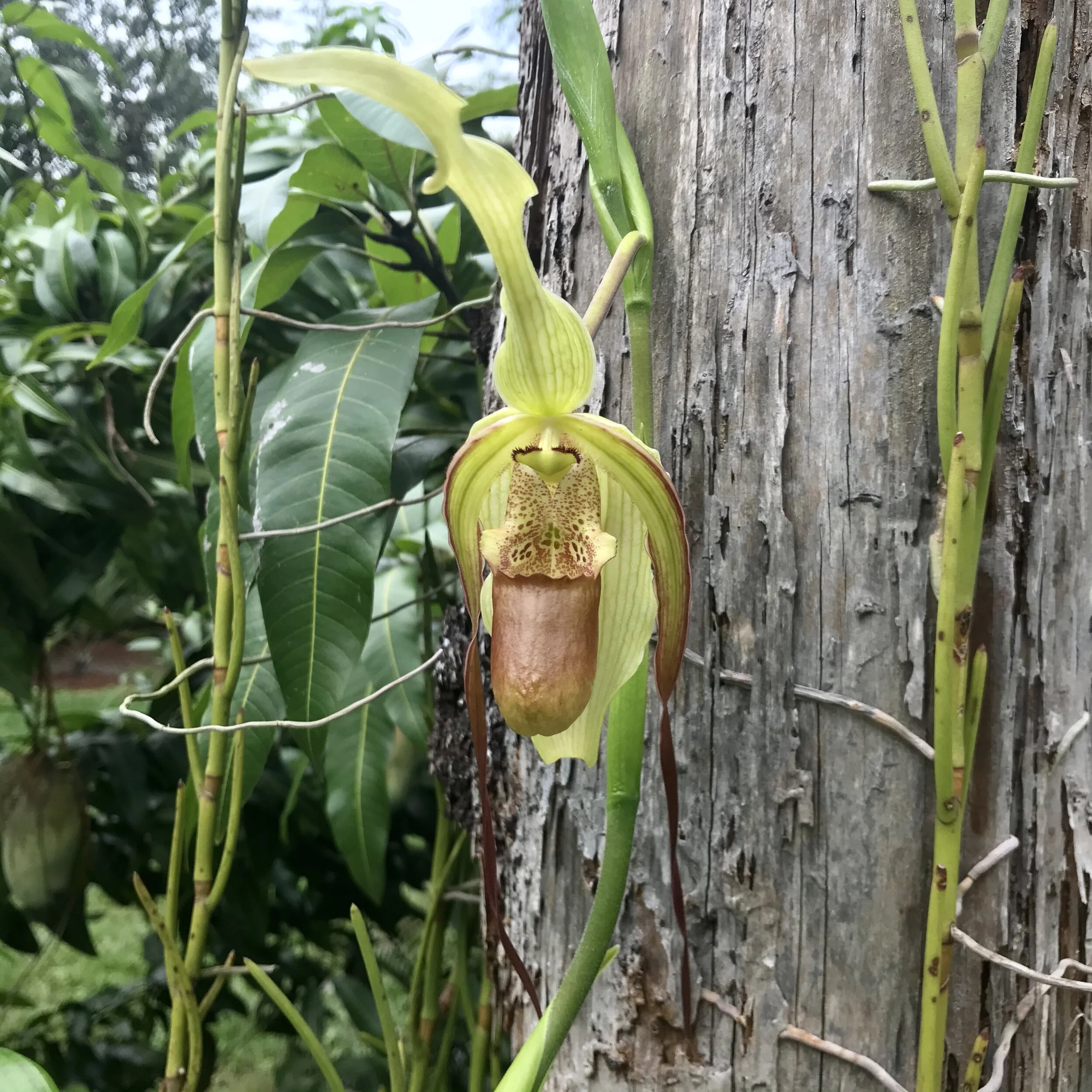
(Phragmipedium longifolium × Grande)
Grown from seed.
Plants Available: An example of the 4” Pot option is pictured. Orders will be filled with plants in spike/bud/bloom as blooming season and blooming stock permit; otherwise, mature plants, previously bloomed.
Orchid Care: Grow in dappled light and keep moist. Mature plants of this variety should not be allowed to dry out between waterings. Grow in a pot with media that drains well but retains moisture. Plastic pots and glazed orchid pots both work well. Plants may be grown indoors.
-
09.06.25
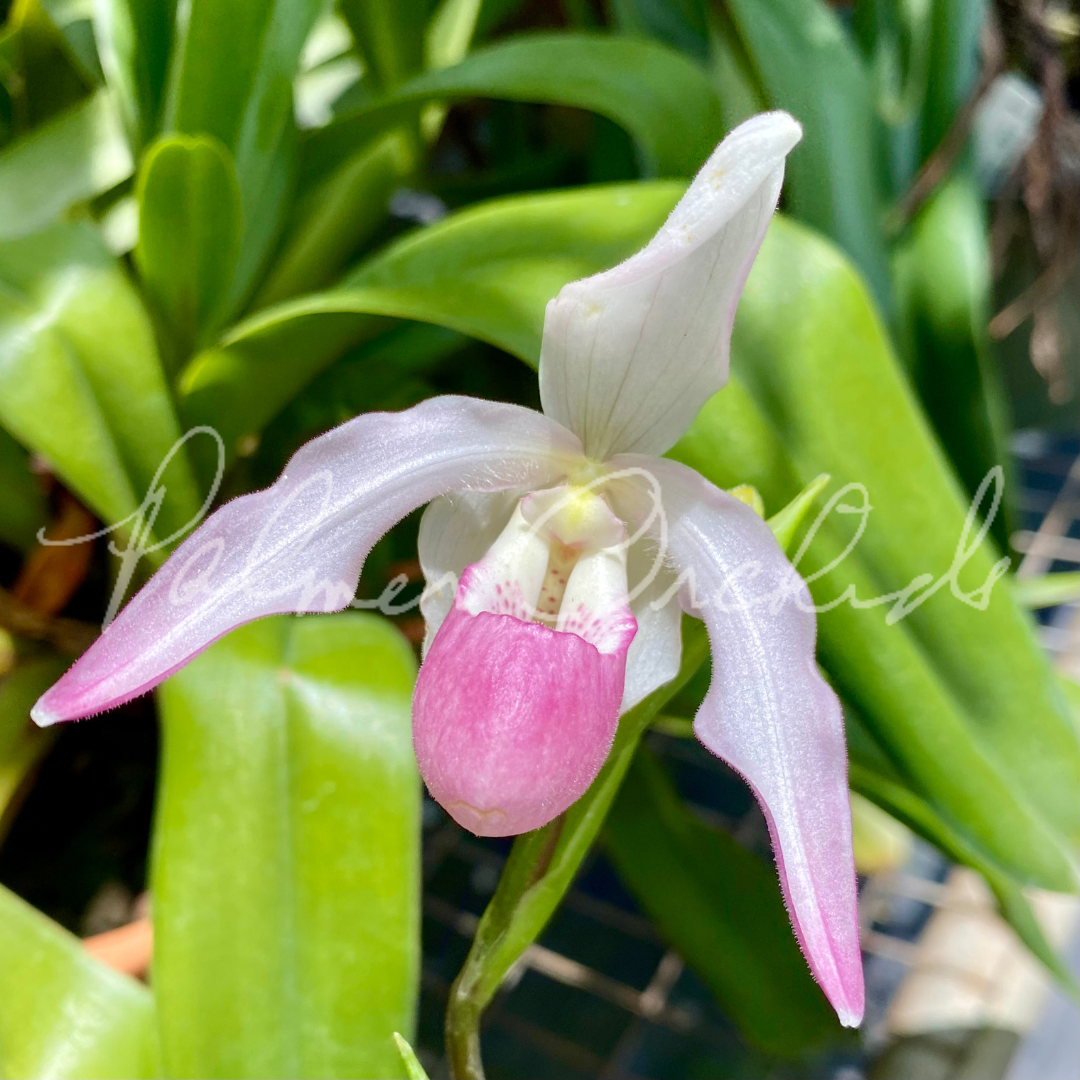
(Phrag. longifolium × Phrag. schlimii)
Grown from seed, so flower characteristics vary somewhat from plant to plant. Flowers from two individuals are pictured.
Plants Available: Examples of the 4” Pot and 6” Pot options are shown. Relative to the 6” Pot example shown, the 6” Pot - Sm option is a plant with fewer fans. Orders will be filled with plants in spike/bud/bloom as blooming season and blooming stock permit.
Orchid Care: Grow in dappled to bright indirect light. Mature plants can be grown nearly as bright as Cattleyas. But, if growing in a warmer climate, err on the side of lower light to offset the effects of high temperatures. Keep moist. Plants should not dry out between waterings. For potting, we recommend tree fern fiber or a predominantly bark-based mix (seedling size) as the substrate. Top dress with calcium supplement annually, if not at the at time of repotting.
-
01.20.24

(Phragmipedium caudatum × Phragmipedium longifolium)
Primary hybrid of lady slipper species Phrag. caudatum and Phrag. longifolium. Blooms sequentially from a single inflorescence. Vigorous plants can produce several flowers from the same spike. Bloom pigment darkens as the flower ages and/or with exposure to brighter light.
Grown from seed, so flower characteristics and color may vary somewhat from plant to plant.
Plants Available: Growing in 4” pots. Examples of the 4” Pot - Lg option are pictured. Orders will be filled with plants in spike/bud/bloom as stock permits.
Orchid Care: A semi-lithophytic/terrestrial, this plant should be grown potted. The substrate should be kept moist, but not soggy; good drainage is essential (e.g. a layer of styrofoam peanuts or pot shards beneath beneath a bark-based substrate). Provide bright, filtered light with strong air circulation so that conditions around the roots do not become stagnant. Repot annually.
-
10.17.24

(Paphiopedilum hookerae × Paphiopedilum barbatum)
Plants Available: Growing in 2” and 4” pots. The 4” Pot - Lg option is a plant with multiple fans. Orders will be filled with plants in spike/flower as blooming season and blooming stock permit.
Slipper Care: Grow in bright shade and keep moist. Mimic monsoon conditions in the growing environment. Rain/water should be heavier during spring and summer, with somewhat drier conditions during the cooler months, however plants should not be allowed to dry completely for long periods.
-
09.07.24

Section Spathopetalum.
Grown from seed, so flower characteristics vary somewhat from plant to plant.
Plants Available: Growing in 2”/3” pots. Plants are blooming-size. An example of the 2" Pot option is pictured.
Orchid Care: Grow in dappled light, with good air circulation and high humidity. Plants should be kept moist, but not soggy. Keep temperatures above 60F in the growing environment—this plant is native to tropical Borneo, where average temperatures are in the 80Fs and rainfall is heavy year round.
-
09.07.24

(Phrag. QF Rita × Phrag. Eric Young)
Grown from seed, so flower characteristics and color may vary somewhat from plant to plant.
Plants Available: Growing in 4” pots. Examples of the size available are pictured. Orders will be filled with plants in spike/bud/bloom as blooming season and blooming stock permit.
Orchid Care: Grow potted in bright, filtered light with good air circulation. Plants should be watered generously and regularly; do not dry hard between waterings. Repot every 1-2 years. Add limestone and oyster shells to your potting mix to increase the alkalinity and availability of calcium and magnesium to the root system.
-
05.31.24

x sib
Mottled leaf Paph species in the Barbata group. Paph. venustum has a distinctively veiny (or shall we say “brainy”) pouch. This is the alba form of the species.
Grown from seed.
Plants Available: The plant available is the 4” Pot - Large plant pictured.
Orchid Care: Grow in filtered light/bright shade. Pot in seedling mix or tree fern fiber and top dress with lime or your preferred calcium supplement. The substrate should be kept moist, but not soggy. Watering should be frequent and heavy in the summer, but more conservative in the winter.
-
09.25.26

x sib
Mottled leaf Paph species in the Barbata group.
Grown from seed.
Plants Available: Growing in 2” and 4” pots. Orders will be filled with plants in spike/bud/bloom as blooming season and blooming stock permit.
Orchid Care: Grow in filtered light/bright shade. Pot in seedling mix or tree fern fiber and top dress with lime or your preferred calcium supplement. The substrate should be kept moist, but not soggy. Watering should be frequent and heavy in the summer, but more conservative in the winter.
-
12.14.22
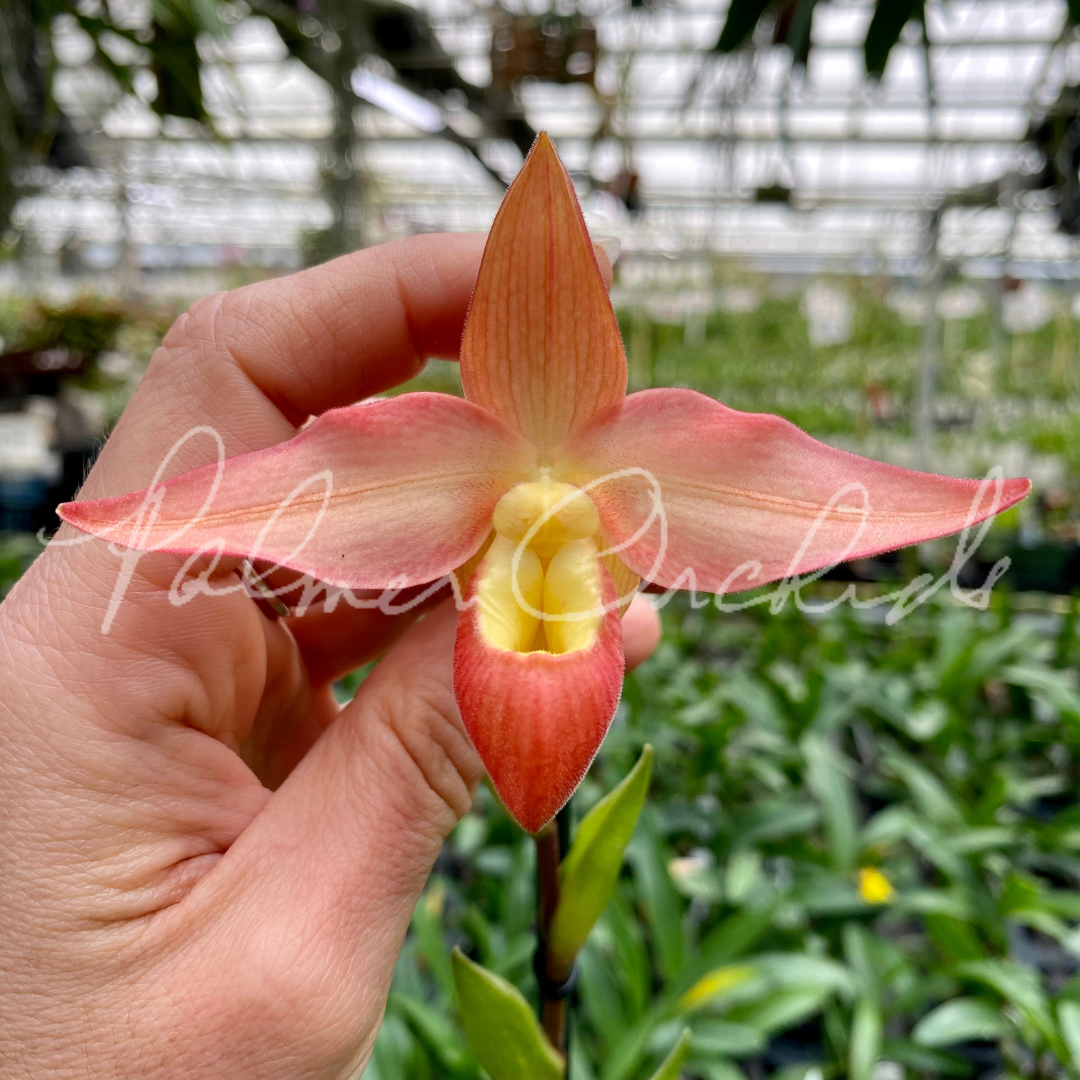
(Phrag. Eric Young × Phrag. besseae)
Sequentially blooming Phrag. hybrid with salmon-colored flowers. This hybrid is 75% Phrag. besseae, which means flowers and plants will be relatively compact.
Grown from seed, so flower characteristics may vary somewhat from plant to plant.
Plants Available: The plant currently available is the 6” Pot option pictured. Orders will be filled with plants in spike/bud/bloom as blooming season and blooming stock permit; otherwise, mature plants, previously bloomed.
Orchid Care: Grow potted. Provide bright, filtered light, strong air circulation* and keep moist. Plants should be watered regularly and generously; do not allow them to dry hard between waterings. Repot annually.
*Buoyant air movement is a must, particularly for those growing in warmer climates. Many Phrag. hybrids do not take kindly to hot weather with still conditions.
-
05.31.24

(Phragmipedium dalessandroi × Phragmipedium longifolium)
Primary hybrid of lady slipper species Phrag. dalessandroi and Phrag. longifolium.
Grown from seed, so flower characteristics and color may vary somewhat from plant to plant. Compare the blooms pictured for examples of the variations in flower characteristics among three plants.
Plants Available: Growing in 4” pots. Plants available are single or double growth plants. Orders will be filled with plants in spike/bud/bloom as blooming season and blooming stock permit.
Orchid Care: Grow in intermediate to bright light and water generously. In nature, Phrags typically grow along stream banks with ready access to water. Cultivated plants should, likewise, be well-irrigated. Plants should be grown potted and, in most cases, repotted annually.
-
09.16.23
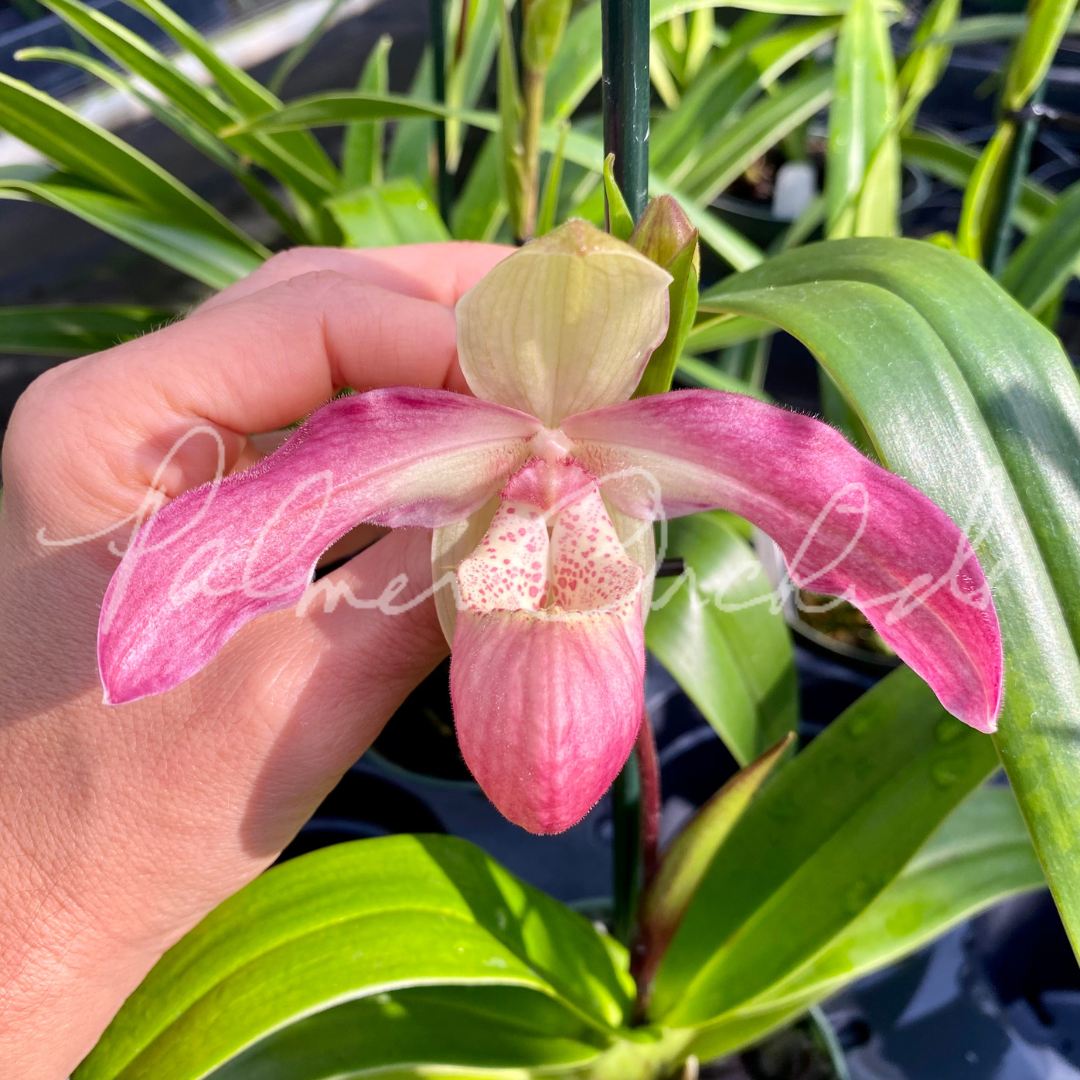
(Phrag. QF Kamakakilo Tyler × Phragmipedium sargentianum)
Grown from seed, so flower characteristics and color may vary somewhat from plant to plant. Blooms from two plants in this cross are pictured for comparison.
Plants Available: Growing in 4” pots. The plant currently available is a mature, multi-fan plant. Orders will be filled with plants in spike/bud/bloom as blooming season and blooming stock permit.
Orchid Care: Grow potted in bright, filtered light with good air circulation. Plants should be watered generously and regularly; do not dry hard between waterings. Repot every 1-2 years. Add limestone and oyster shells to your potting mix to increase the alkalinity and availability of calcium and magnesium to the root system.
-
01.20.24
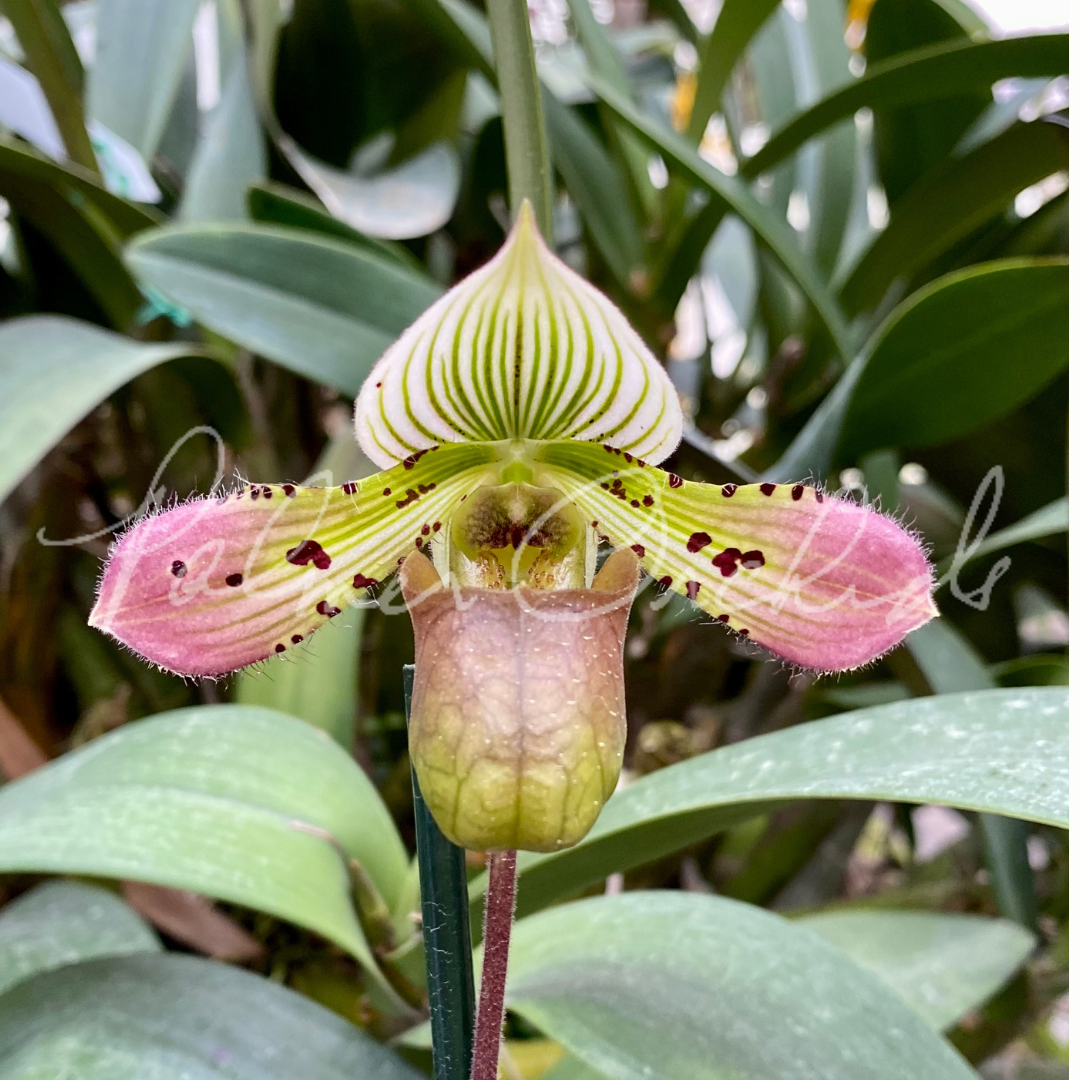
(Paphiopedilum venustum × Paphiopedilum acmodontum)
Primary hybrid of two species Paph species in the Barbata group.
Grown from seed, so flower characteristics vary somewhat from plant to plant.
Plants Available: Growing in 2” and 4” pots. The specific plants available for the 4” pot options (#1 and #2) are pictured. Orders will be filled with plants in spike/bud/bloom as blooming season and blooming stock permit.
Orchid Care: Grow in filtered light/bright shade. Pot in seedling mix or tree fern fiber and top dress with lime or your preferred calcium supplement. The substrate should be kept moist, but not soggy. Watering should be frequent and heavy in the summer, but more conservative in the winter.
-
09.21.23

(QF Naukana Kealoha x Nicholle Tower)
Blooms sequentially.
Grown from seed, so flower characteristics vary somewhat from plant to plant. Compare the blooms pictured for examples of these variations.
Plants Available: Growing in 4” pots. An example of the size available is pictured.
Orchid Care: Grow in moderate light and keep moist. Plants should not dry out between waterings. Repot annually. Plants may be cultivated indoors.
-
01.26.24

(Paphiopedilum sukhakulii × Paphiopedilum lawrenceanum v. hyeanum)
Primary hybrid of Paph. sukhakulii and Paph. lawrenceanum, two “lady slipper” species from the Barbata group.
Grown from seed so flower characteristics vary slightly from plant to plant.
Plants Available: Growing in 2” pots. An example of the size available is pictured.
Slipper Care: Grow in moderate shade and keep moist. Mimic monsoon conditions in the growing environment. Rain/water should be heavier during spring and summer, with somewhat drier conditions during the cooler months, however plants should not be allowed to dry completely for long periods.
-
08.04.23

(Phragmipedium longifolium × Phragmipedium sargentianum)
Primary hybrid of species Phrag. longifolium and Phrag. sargentianum. Blooms sequentially from the same bloom spike and can stay in flower for several weeks.
Grown from seed, so flower characteristics and color may vary somewhat from plant to plant.
Plants Available: Growing in 4”/5” pots and 6” pots. The plant pictured in full is an example of the size you will receive when you order the 4”/5” Pot. The 6” Pot option is a mature plant with multiple growths (3+). Orders will be filled with plants in spike/bud/bloom as blooming stock permits.
Orchid Care: Grow potted in bright, filtered light with good air circulation and keep moist. Plants should be watered generously and should not “dry hard” between waterings. Repot annually.
-
05.05.23

(Phrag. QF Naukana Kealoha × Phrag. Patti MacHale)
Grown from seed, so flower characteristics and color vary somewhat from plant to plant. Some plants in the grex bloom in shades of pink as in the first images shown. Others manifest more greens, reds, and browns in the flower. Some plants in the latter group have likewise developed branching bloom spikes as shown in the last image.
Bloom spikes on this variety can last for months—buds form sequentially along the spike so that as one flower drops, another is developing behind it.
Plants Available: Growing in 4”/5” and 6” pots. The 6” Pot option currently available is pictured. Orders will be filled with plants in spike/bud/bloom as blooming season and blooming stock permit.
Orchid Care: Grow potted in bright, filtered light with strong air circulation and keep moist. Plants should be watered generously and should not “dry hard” between waterings. Repot every 1-2 years.
-
04.15.23
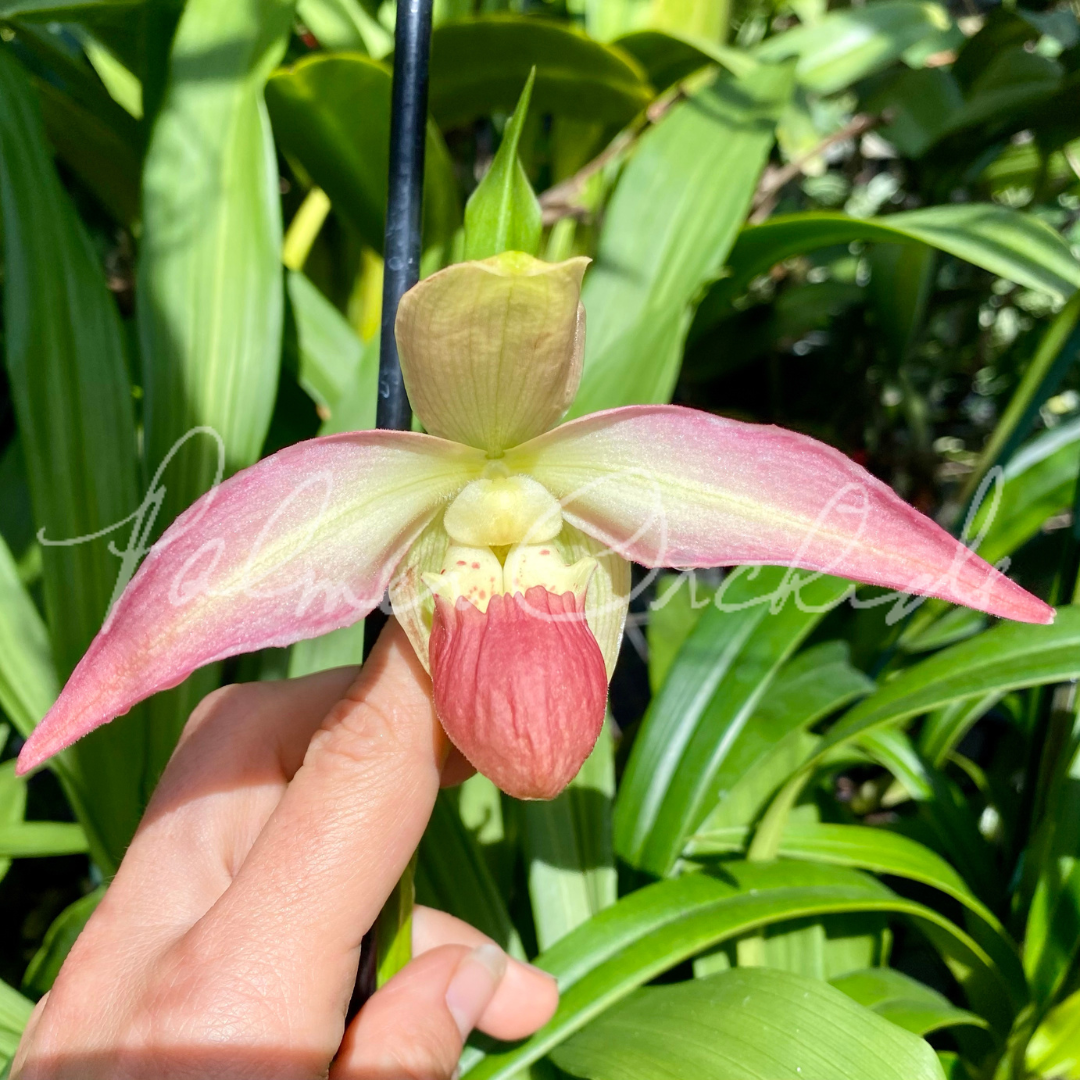
(Phrag. Eric Young × Phrag. QF Kamakakilo Tyler)
Grown from seed, so flower characteristics and color may vary somewhat from plant to plant.
Plants Available: Growing in 4” pots. Plants available are mature. Orders will be filled with plants in spike/bud/bloom as blooming season and blooming stock permit.
Orchid Care: Grow potted in bright, filtered light with good air circulation. Plants should be watered generously and regularly; do not dry hard between waterings. Repot every 1-2 years. Add limestone and oyster shells to your potting mix to increase the alkalinity and availability of calcium and magnesium to the root system.
-
12.10.22

x sib
Semi-terrestrial to epilithic species occurring in various parts of Central and South America. Member of section Lorifolia.
Grown from seed.
Plants Available: The plant available is the plant pictured—a mature plant with multiple fans growing in a 6” pot.
Orchid Care: Grow in bright, indirect light and keep moist. Plants should not dry out between waterings. Tree fern fiber makes for an excellent substrate with this species. May be cultivated indoors. Repot annually if using a bark-based substrate; with tree fern, repotting may be done every 2-3 years. Top dress with calcium annually.
-
12.09.22

(Phrag. QF Kamakakilo Tyler × Phrag. Twilight)
Grown from seed, so flower characteristics and color may vary somewhat from plant to plant. Compare the blooms pictured for examples of the variations among plants from this crop.
Plants Available: Growing in 4” pots. An example of the size available is pictured. Plants are blooming-size, with most in-spike in the spring or otherwise expected to produce a bloom spike this year. Orders will be filled with plants in spike/bud/bloom as blooming season and blooming stock permit.
Orchid Care: Grow potted in bright, filtered light with good air circulation. Plants should be watered generously and regularly; do not dry hard between waterings. Repot every 1-2 years. Add limestone and oyster shells to your potting mix to increase the alkalinity and availability of calcium and magnesium to the root system.
-
12.09.22

(Phrag. Patti MacHale × Phragmipedium warszewiczianum)
Grown from seed, so flower characteristics and color may vary somewhat from plant to plant.
Plants Available: Growing in 4”/5” pots. The plant pictured is an example of the size currently available. Orders will be filled with plants in spike/bud/bloom as blooming season and blooming stock permit; otherwise, mature plants, previously bloomed.
Orchid Care: Grow potted in bright, filtered light with good air circulation and keep moist. Plants should be watered generously and should not “dry hard” between waterings. Repot annually.
-
03.27.22

(Paphiopedilum acmodontum × Paphiopedilum hookerae)
Primary hybrid of Paph. acmodontum and Paph. hookerae—and a lovely combination of the two species! Blooms are shades of pink, green, and brown, typically with red spotting on the lateral petals and thin vertical stripes on the dorsal sepal. Foliage is attractively tessellated, light green leaves overlaid with a darker green mosaic.
Grown from seed, so flower characteristics vary somewhat from plant to plant. Compare the two blooms pictured for an example of these variations in two different plants.
Plants Available: Growing in 2” and 4” pots. An example of the 2” Pot option is pictured. Orders will be filled with plants in bud/bloom as blooming season and blooming stock permit; otherwise, plants that have bloomed previously.
Orchid Care: Grow in dappled light, with good air circulation and high humidity. Plants should be kept moist, but not soggy. Keep temperatures above 60F in the growing environment—the species that comprise this hybrid are accustomed to warm to hot conditions year round.
-
04.17.22

x sib
Section Barbutum
Plants Available: Growing in 4” pots.
Slipper Care: Grow in bright shade and keep moist during active growth. Mimic monsoon conditions, as per the plant’s natural growing environment (Sumatra/Malaysia). Repot annually.
-

(Paphiopedilum urbanianum × Paphiopedilum appletonianum)
Primary hybrid of Paph. urbanianum and Paph. appletonianum. Petals are rose-colored at the tips and hang downward, like little puppy ears.
Plants have tessellated foliage, with yellow green leaves whose upper side is mottled with a grey shade of green.
Grown from seed, so flower characteristics vary somewhat from plant to plant.
Plants Available: Growing in 2” and 4” pots. An example of the 2” Pot option is pictured. Orders will be filled with plants in bud/bloom as blooming season and blooming stock permit; otherwise, plants that have bloomed previously.
Orchid Care: Grow in bright shade, with good air circulation and high humidity. Plants should be kept moist, but not soggy. Keep temperatures above 55F in the growing environment.
-
02.08.24
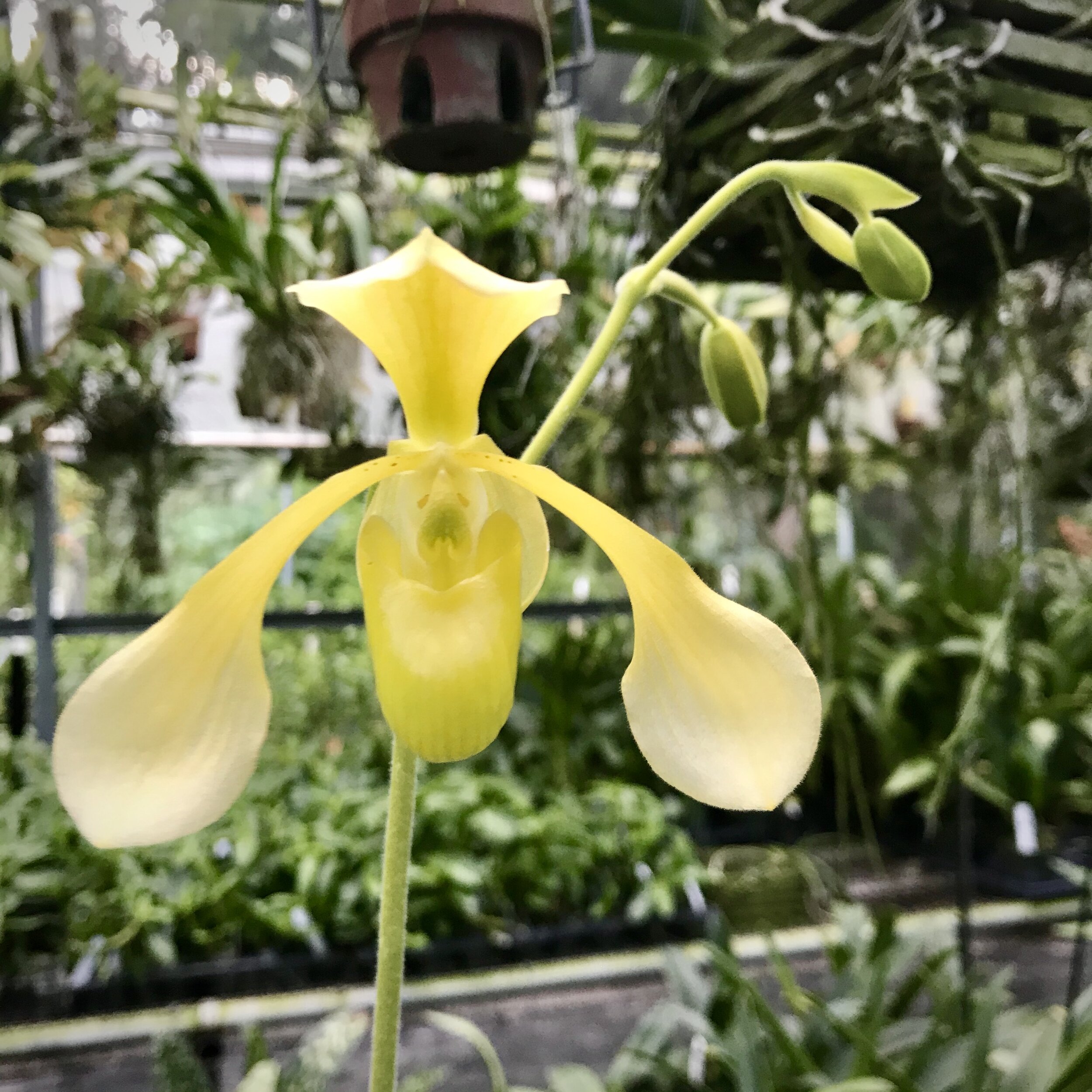
(Paphiopedilum haynaldianum v. album × Paphiopedilum lowii v. album)
Primary hybrid of slipper species Paph. haynaldium album and Paph. lowii album. Multifloral.
Grown from seed.
Plants Available: Growing in 4” and 6” pots. Plants available are mature—blooming plants or plants that have flowered previously with one or two growths. The plant pictured in full represents the size of plant you will receive when you order the 4” Pot.
Orchid Care: Grow in dappled light in intermediate to warm temperatures (FL summers are perfectly fine for this hybrid). Water frequently—plants should be kept moist but not soggy. Repot annually when plants are actively growing.
-
VANDA
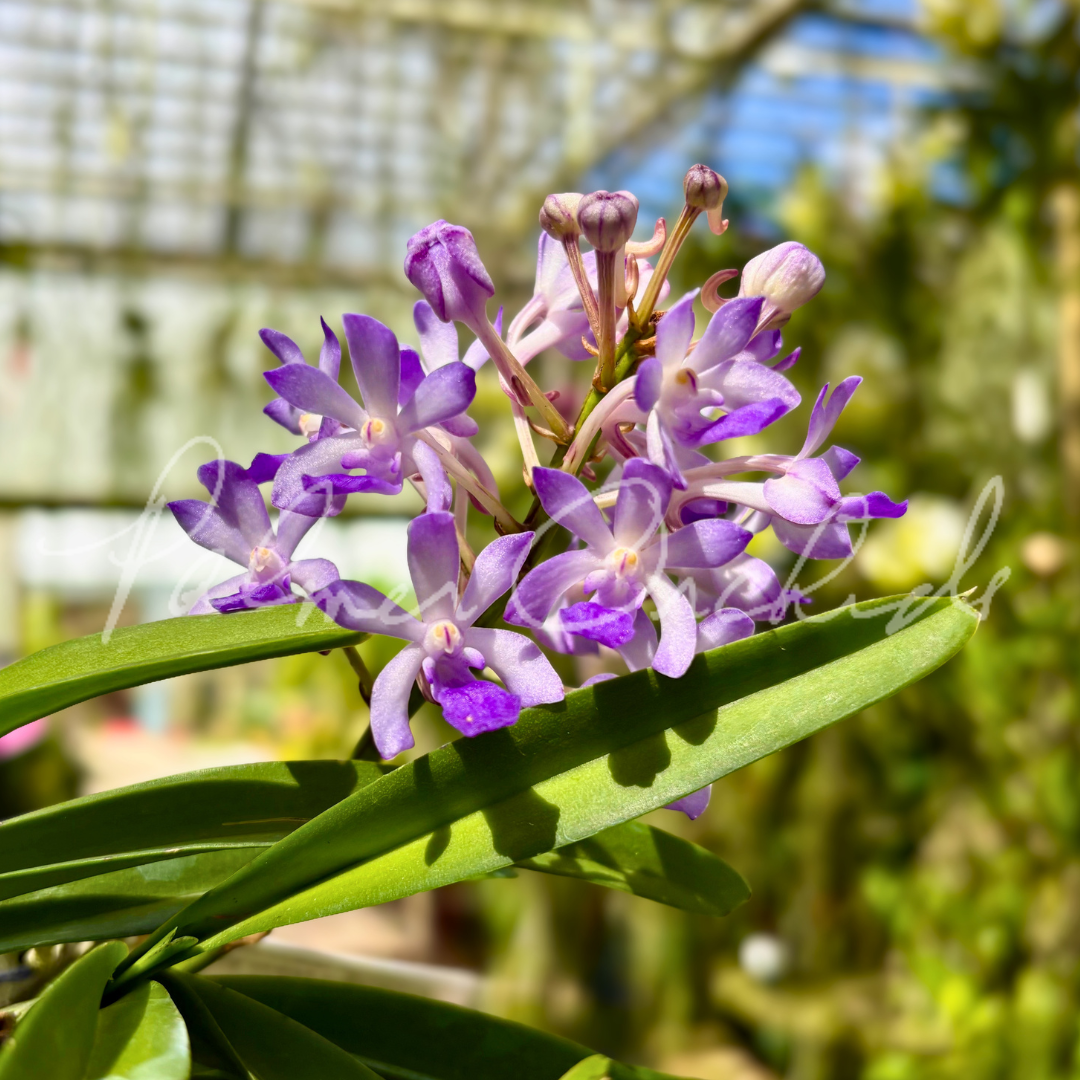
(Van. Lou Sneary x Rhy. coelestis)
Compact Neofinetia-Rhy. coelestis hybrid. Blooms are light coerulea (darker when grown in higher light) and fragrant.
Grown from seed so flower characteristics vary somewhat from plant to plant.
Plants Available: Examples of the size available are pictured. Plants have multiples fans and are growing bare root on black plastic plaques.
Orchid Care: Grow in bright, indirect light, with strong air circulation and moderate to high humidity. Plants can grown as they come on plastic plaques or remounted on cork or wood. Water generously, allowing the root system to dry thoroughly between waterings. Fertilize weakly, weekly.
—
09.12.26
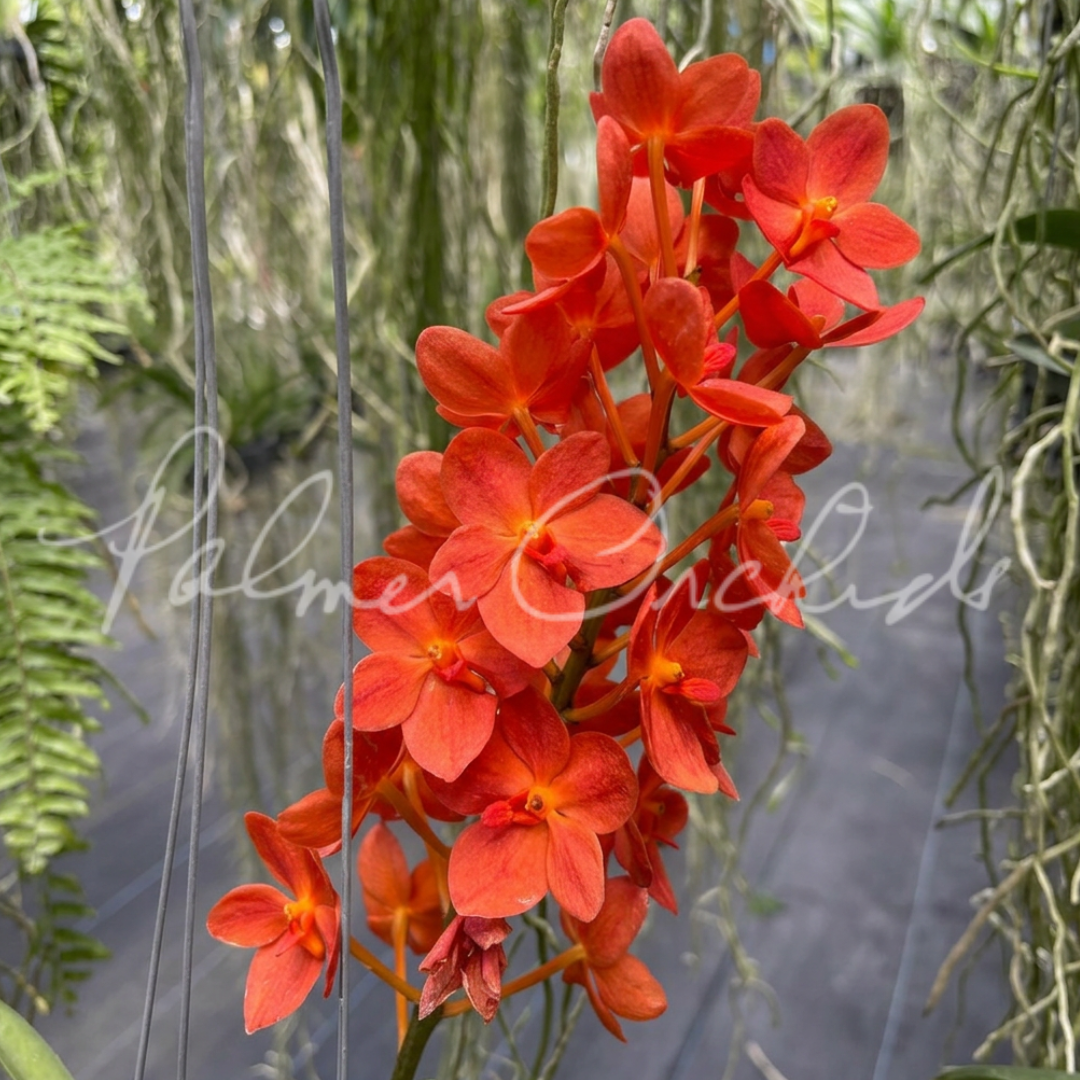
(Ren. Kalsom × Vanda Vilairat)
Renantanda with a head of vibrant orange blooms.
Mericlone.
Plants Available: Examples of the size available are pictured. Plants are mature, previously bloomed. Orders will be filled with plants in spike/bloom as stock permits; otherwise, mature plants which have bloomed previously.
Orchid Care: Grow in high light—bright, but indirect sun—and water generously. In the hotter months, plants should be watered daily. Reduce watering somewhat with cooler temperatures, when plants are not actively growing. Protect from temperatures below 55F. Fertilize weakly, weekly.
-
07.29.26

Introducing our signature orchid—Vanda sanderiana alba. Endemic to the Philippines, this species and has a long and significant history in Vanda hybridizing. Its two-tone color form and flower shape were prized by earlier breeders, making it a key ancestor to many popular commercial Vanda hybrids.
We’re currently offering plants from our most recent lines of breeding. (These may be sib crosses or selfings.)
Grown from seed.
Plants Available: Growing in 2” pots and in hanging baskets. Examples of the size available are pictured. The basket option (Basket - NBS) is a near blooming-size.
Orchid Care: Grow in high light—bright, indirect sun (about 50% shade). Protect from direct midday sun. Younger plants should be kept in slightly shadier conditions than mature, blooming-size plants to ensure robust root and foliar development. Allow roots to expand and hang freely. Provide strong air circulation and high humidity in the growing environment. Water regularly—daily when conditions are hot and plants do not receive rain. Protect from temperatures below 60F. Fertilize weakly, weekly.
-
09.11.26
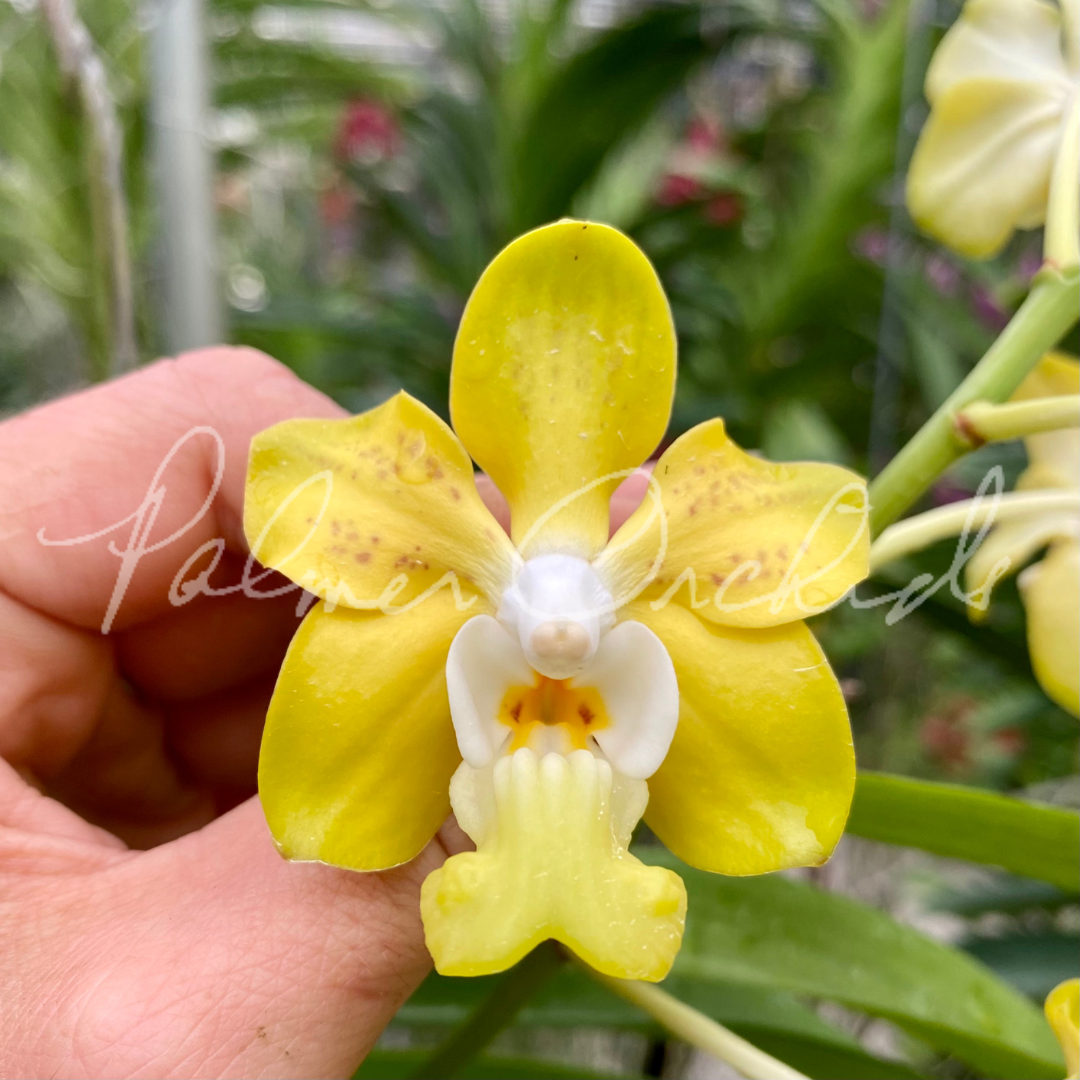
x sib
Vanda denisoniana is native to Southern China and southeast Asia, where it can be found growing on the trunks of trees in montane forests. Plants produce waxy, substantive flowers in shades of buttery yellow to golden yellow—and sometimes even orange! The lip of each flower, by contrast, is light yellow and uniquely fiddle-shaped.
V. denisoniana is prized for its vanilla-like fragrance, which is typically strongest in the evening and during the nighttime hours.
Grown from seed.
Plants Available: Growing in 2” pots and in baskets. Examples of the sizes available are pictured. The Basket - NBS option is a plant that is near blooming-size.
Orchid Care: Grow in high light—bright, indirect sun (about 50% shade). Protect from direct midday sun. Younger plants should be kept in slightly shadier conditions than mature, blooming-size plants to ensure robust root and foliar development. Plants may be grown in hanging pots or slatted baskets that allow roots to expand and hang freely. Provide strong air circulation and high humidity in the growing environment and water regularly. Plants should be watered daily when conditions are hot and plants do not receive rain. Fertilize weakly, weekly.
-
10.15.26
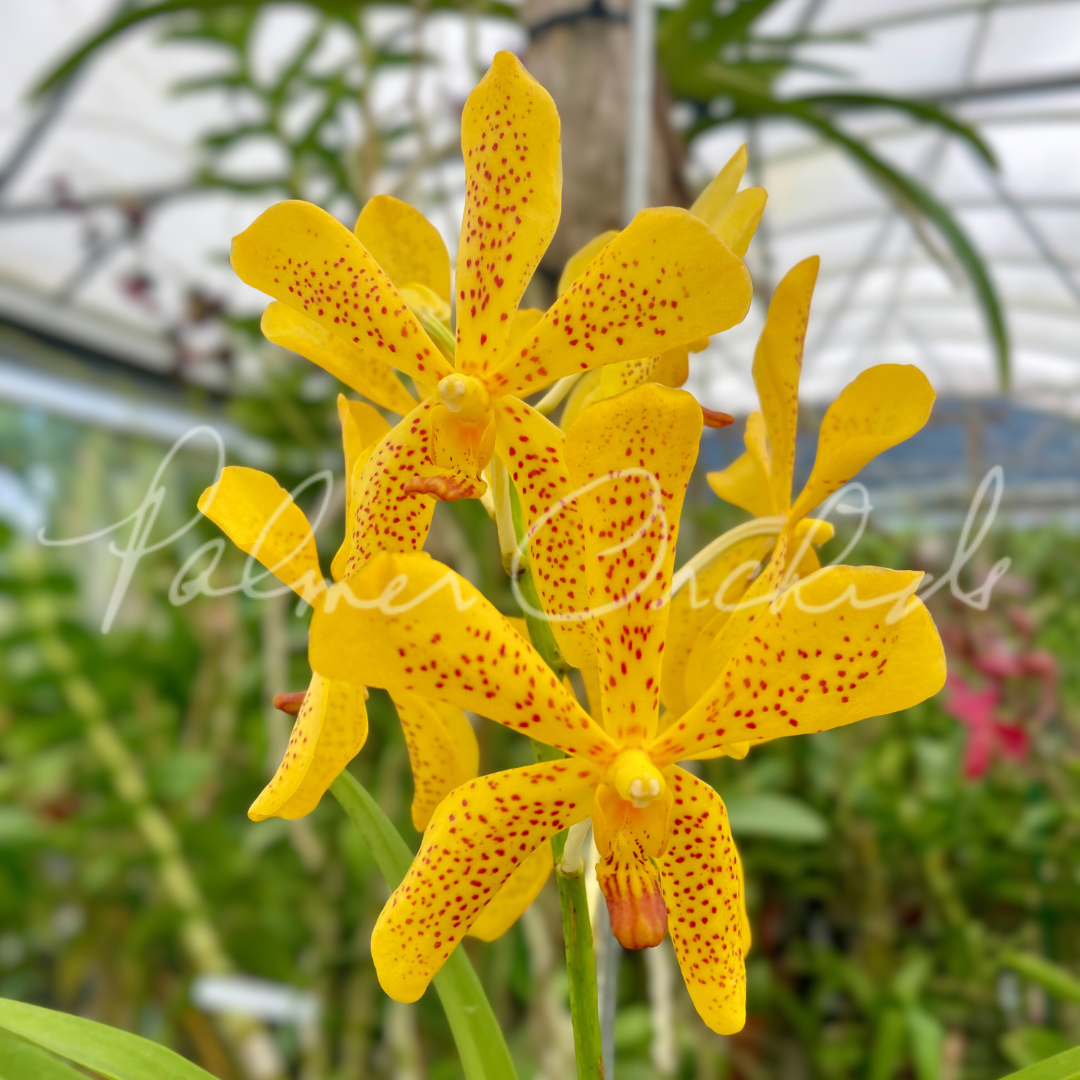
(Aranda Sayan × Vanda Duang Porn)
This Aranda hybrid produces yellow flowers with pin prick red spots. Ideal for high light environments and, in subtropical and tropical climates, for adding a tropical touch to landscaping.
Mericlone.
Plants Available: Growing in 2” pots. Plants are blooming-size. An example of the size available is pictured.
Orchid Care: Grow in high light—bright, indirect sun (about 50-70% sunlight). Provide strong air circulation and high humidity. Water regularly—daily when conditions are hot and plants do not receive rain. Protect from temperatures below 60F. Fertilize weakly, weekly.
-
09.13.25
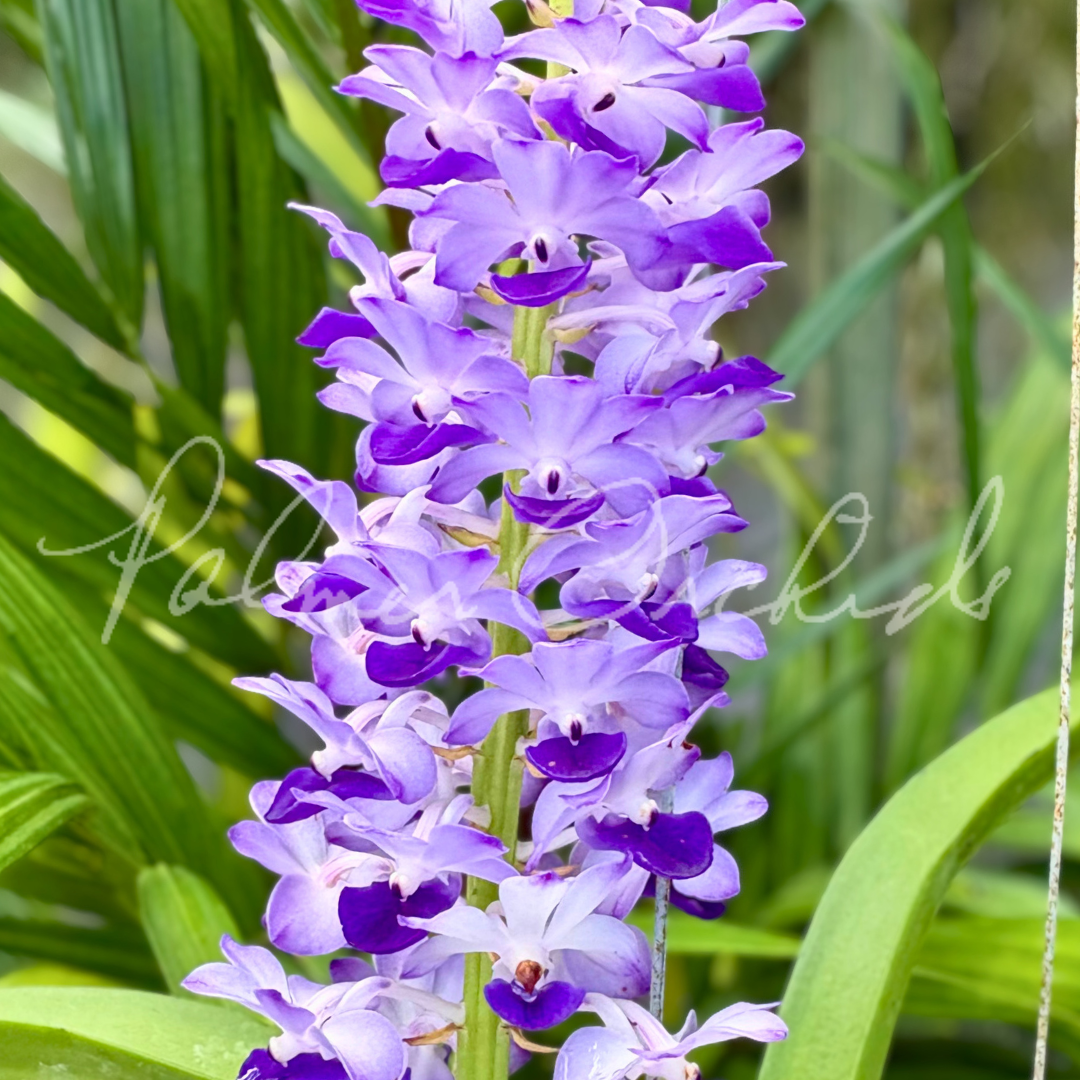
Lavender/coerulea form of Rhynchostylis coelestis, a vandaceaous species native to Southeast Asia. Plants are compact in growth habit. Blooms are fragrant.
Grown from seed so flower characteristics vary somewhat from plant to plant. Blooms from multiple plants are pictured to illustration variations.
Plants Available: Examples of the size available. Orders will be filled with plants in bloom as stock permits. Otherwise, mature plants that have bloomed previously.
Orchid Care: Grow in bright, filtered light (no direct sun), with good air circulation and high humidity. As with Vandas, Rhynchos can be grown bare-root, without substrate, established in wooden baskets or mounted.
Water generously and fertilize regularly while plants are in active growth (typically spring and summer). Reduce water and fertilizer somewhat during the cooler months, commensurate with the lowering of temperatures in the growing environment.
Note: These plants do not tolerate the cold. Protect them from temperatures below 50-60 F.
—
07.24.26
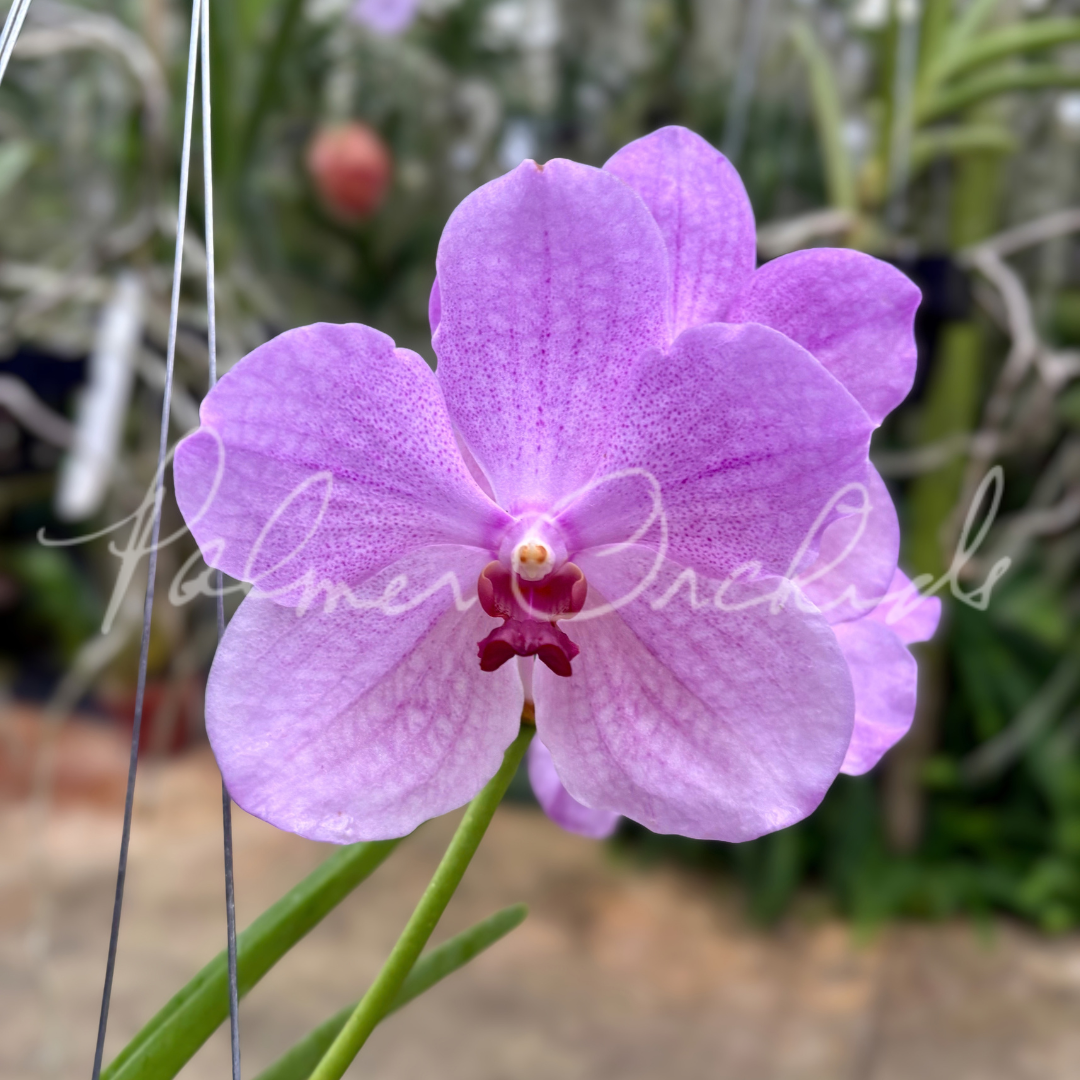
This hybrid does not have a registered name.
Plants produce large pink flowers. The blooms pictured are early examples from young plants in the crop. Expect multiple blooms per spike on mature plants.
Pda. Mevr. L. Velthuis × V. Nichanan is a quarter-terete Vanda hybrid, also referred to as a Paplionanda. The light requirements for Paplionandas are high, making them ideal candidates for landscaping in tropical and subtropical locations.
Grown from seed so flower characteristics may vary somewhat from plant to plant.
Plants Available: Growing in 2” pots (near blooming-size/blooming-size) pots and hanging baskets (blooming-size/first bloom). Examples of the available sizes are pictured. Plants in 2” pots are ready for mounting, establishing in baskets, or potting (e.g. with coarse well-draining material like charcoal and lava rock).
Orchid Care: Grow in high light and water often. This variety will perform best with bright, filtered sun for most of the day. It can tolerate full morning sun but should be provided with some shade or filtered light during the hottest midday hours. In the hotter months, plants should be watered daily. Watering can be reduced somewhat with cooler temperatures, when plant growth has slowed. Fertilize weakly, weekly.
-
10.08.26

This hybrid does not currently have a registered name.
Large-flowered golden yellow Vanda hybrid.
Plants Available: Plants are mature or previously bloomed. An example of a blooming-size plant is pictured.
Orchid Care: Grow in very bright, indirect light with strong air circulation and high humidity. Water regularly—daily when conditions are hot and plants do not receive rain. Protect from temperatures below 60F. Fertilize weakly, weekly.
-
07.25.26
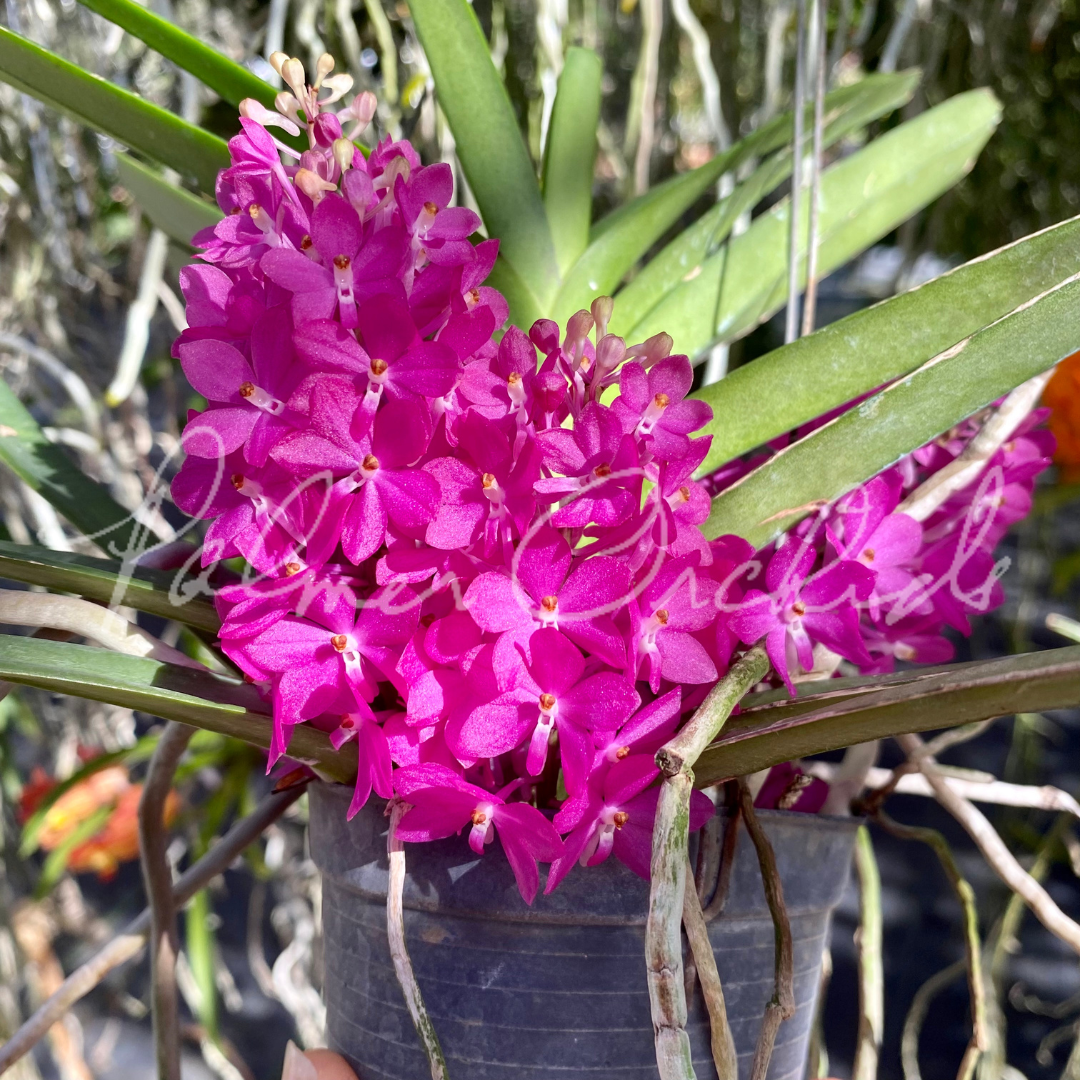
Syn. Vanda ampullacea
Pink form of a compact Vanda/Ascocentrum species. Typically blooms in late spring/early summer.
Plants Available: Growing in baskets. Plants with single, double, and multiple fans or growths. Orders will be filled with plants in spike/bud/flower as blooming season and stock permit. Otherwise mature, previously bloomed plants.
Orchid Care: Give plants moderate light, somewhat filtered or diffused. No direct sun at midday (11a-3p). Water heavily when plants are actively growing (late spring through early autumn), gradually reducing after new growths mature.
Grow in a well-drained container that will allow for adequate air circulation around the roots. Wooden baskets, tree fern, cork and driftwood mounts are all good options. Plants available are growing in slatted plastic baskets with no media.
-
04.18.26
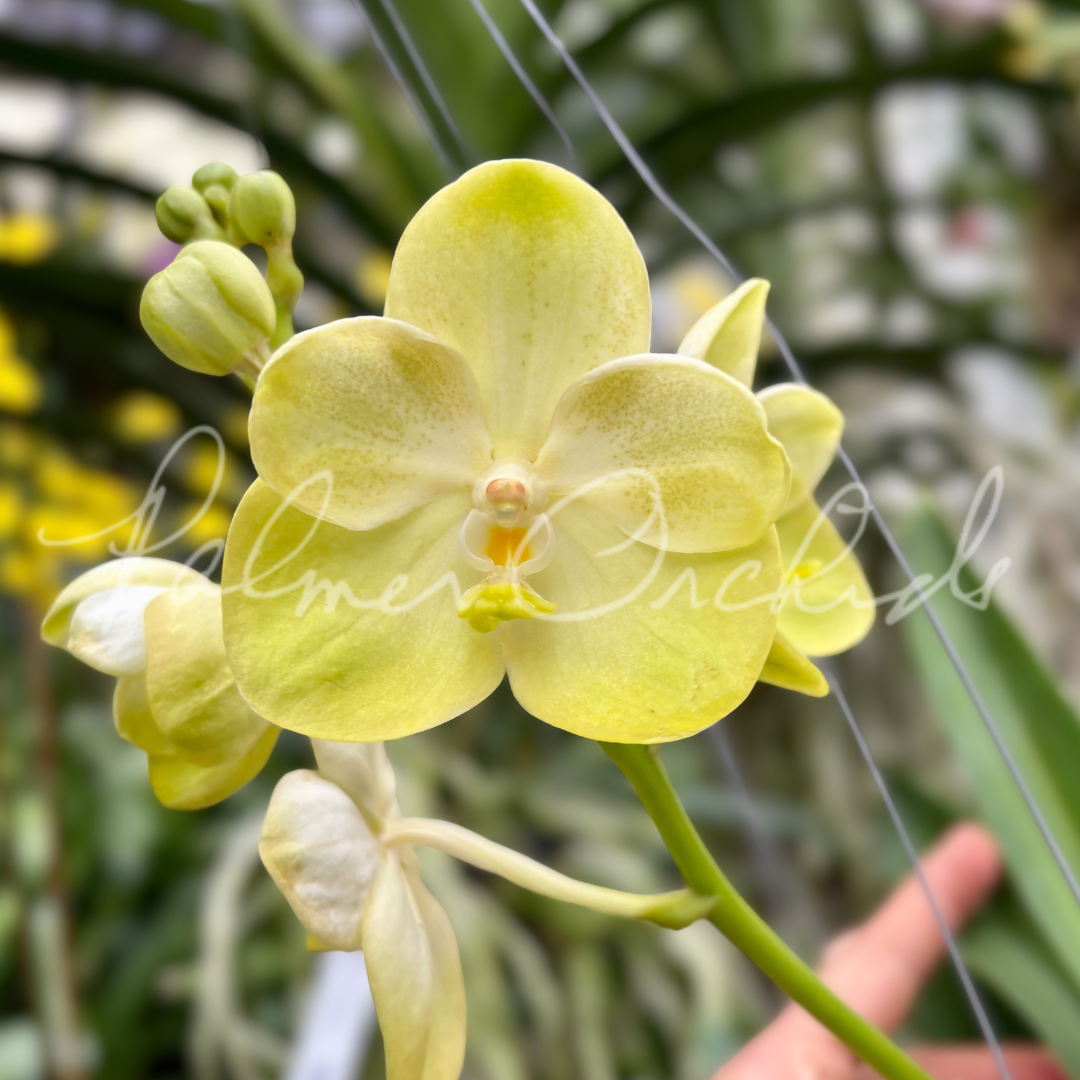
(Vanda Rasri Gold x Vanda Suksamran Gold)
Large-flowered yellow Vanda hybrid with faint spotting.
Mericlone.
Plants Available: Plants are blooming-size. An example of the size available is pictured.
Orchid Care: Grow in bright, indirect light with strong air circulation and high humidity. Water regularly—daily when conditions are hot and plants do not receive rain. Protect from temperatures below 60F. Fertilize weakly, weekly.
-
09.19.25
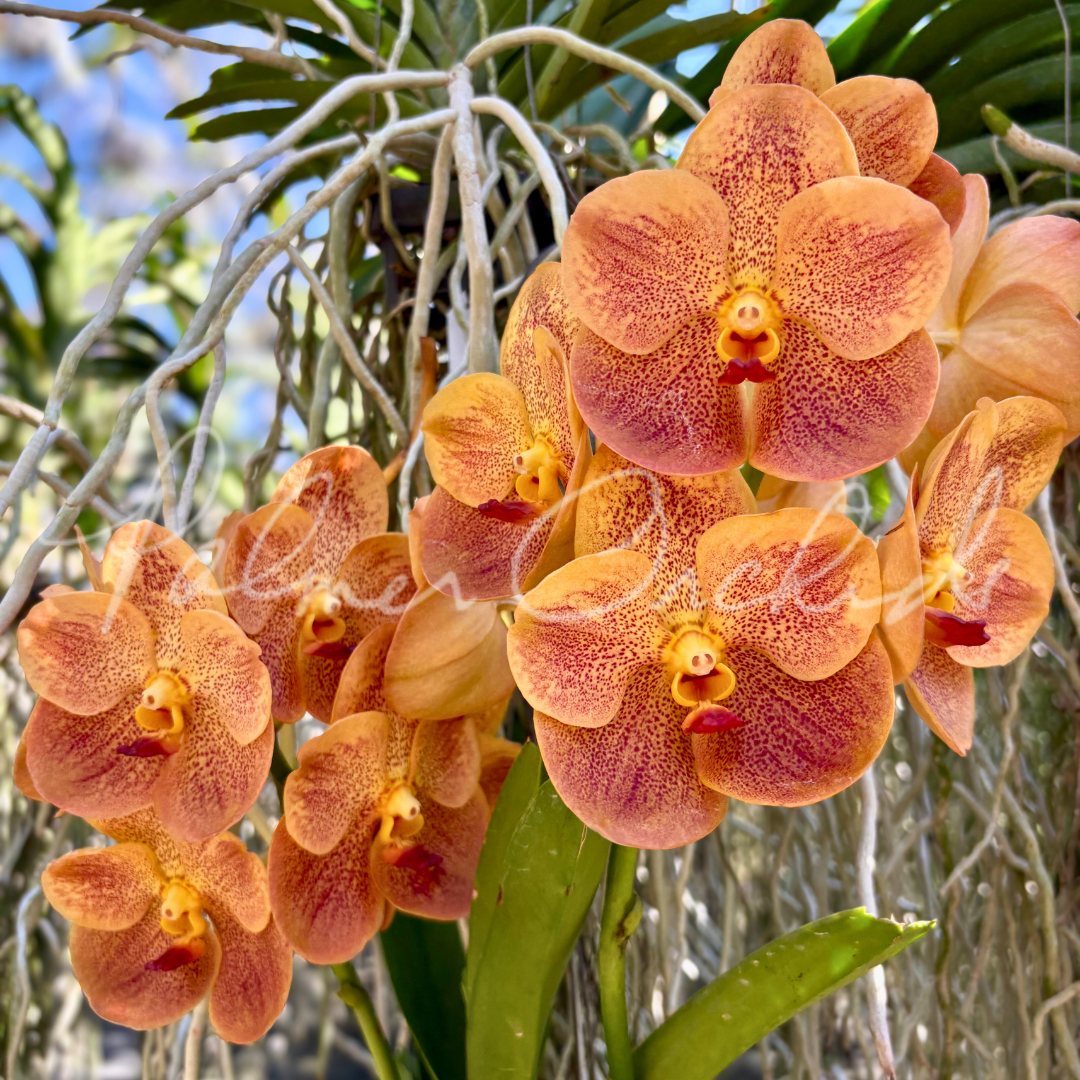
(Vanda Fuchs Harvest Moon x Dhongchai Pusavat)
‘No. 502’ mericlone.
Plants Available: Mature single and double plant options are available. Examples each are pictured. Orders will be filled with plants in spike/bud/bloom as blooming season and blooming stock permit. Otherwise, mature plants, previously bloomed.
Orchid Care: Grow in bright indirect light (about 60-70% shade), with strong air circulation and moderate to high humidity. Water generously. In the hotter months, plants should be watered daily. Watering can be reduced somewhat with cooler temperatures, when plants are not actively growing. Fertilize weakly, weekly.
—
09.20.25
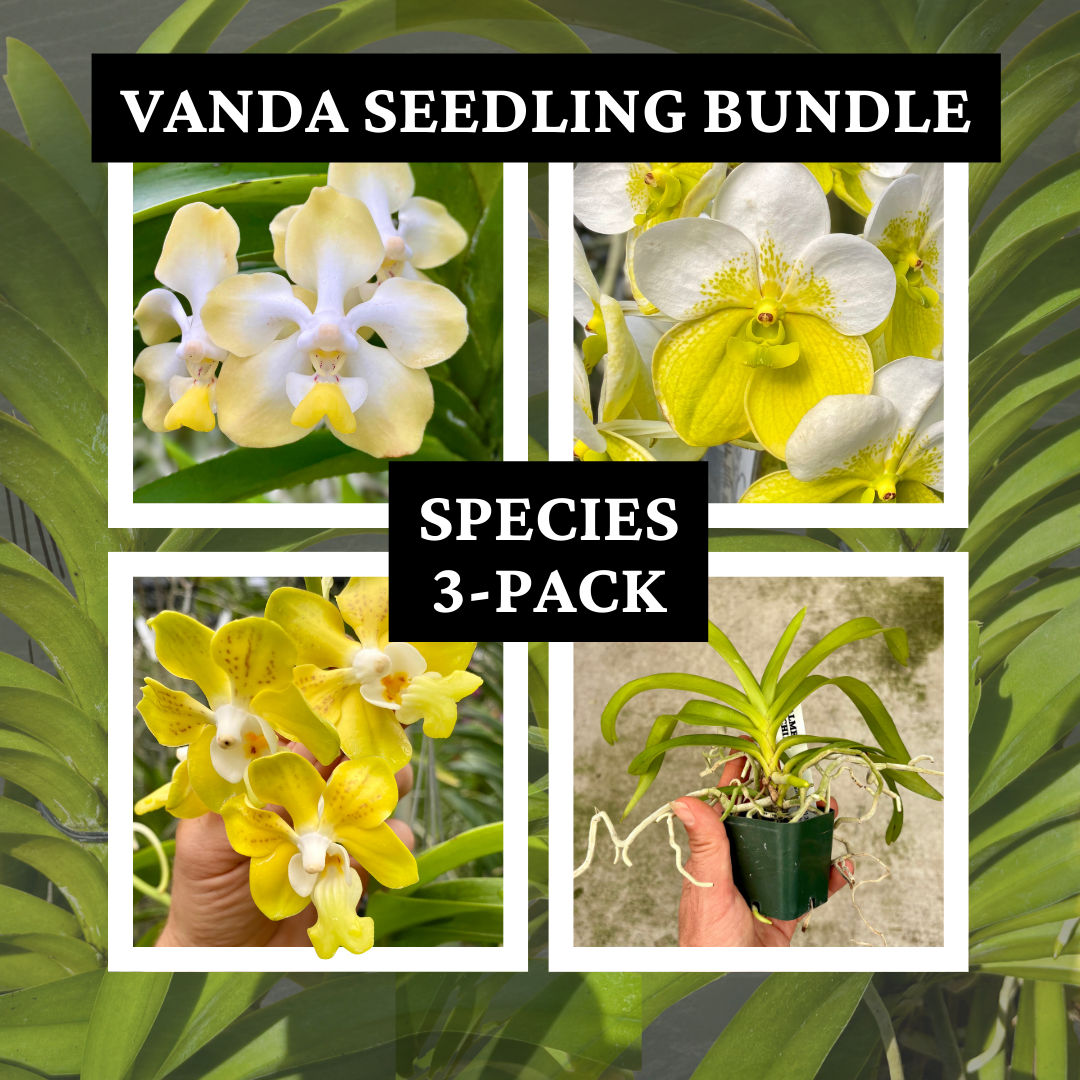
This is a starter pack of three Vanda species in 2” pots—Vanda sanderiana f. alba, Vanda denisoniana, and Vanda dearei.
Each variety offered is a seedling.
Plants Available: The 2” Pot - 3-Pack includes the following three varieties:
Vanda sanderiana f. alba
Vanda denisoniana
Vanda dearei
Plants are growing in 2” pots. Examples of the size available are pictured.
-
09.16.25
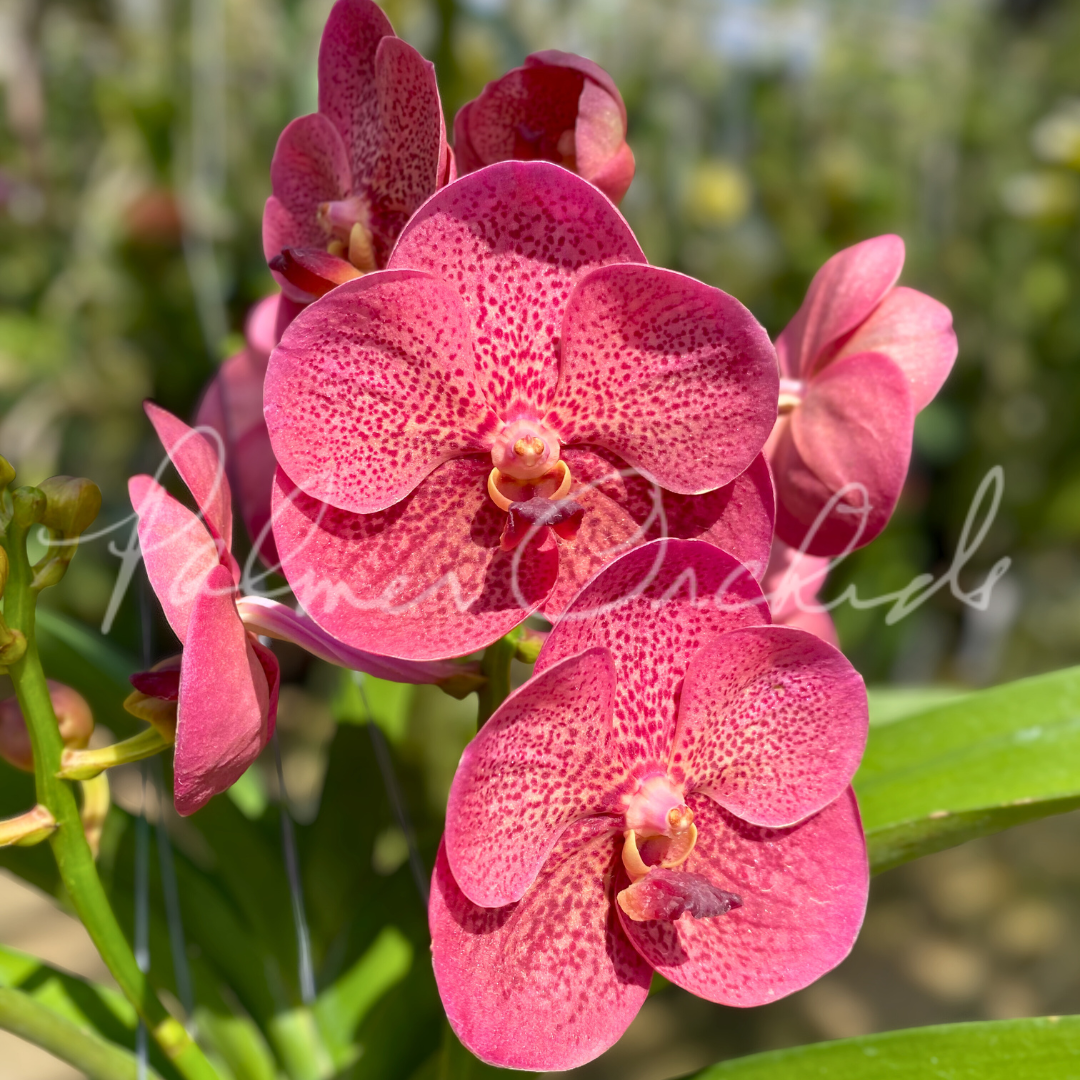
(Vanda Kulwadee Fragrance × Vanda Doctor Anek)
Vanda Uraiwan Belle is hybrid with multiple cultivars in circulation. Each features the characteristic round blooms and spotting of the V. Kulwadee Fragrance parent. This particular clone is the “red” version of the hybrid.
Red Mericlone.
Plants Available: Mature and large plants. An examples of the Large is pictured. Orders will be filled with plants in spike/bud/bloom as blooming season and stock permit.
Orchid Care: Grow in bright light and water often. In the hotter months, plants should be watered daily. Reduce watering somewhat with cooler temperatures, when plants are not actively growing. Fertilize weakly, weekly.
-
09.13.25

(Pda. Mimi Palmer x V. Doctor Anek)
Fragrant Mimi Palmer hybrid with waxy purple flowers.
Mericlone.
Plants Available: An example of the size available is pictured. Orders will be filled with plants in spike/bud/bloom as blooming season and blooming stock permit.
Orchid Care: Grow in bright light and water often. In the hotter months, plants should be watered daily. Reduce watering somewhat with cooler temperatures, when plants are not actively growing.
—
06.21.25
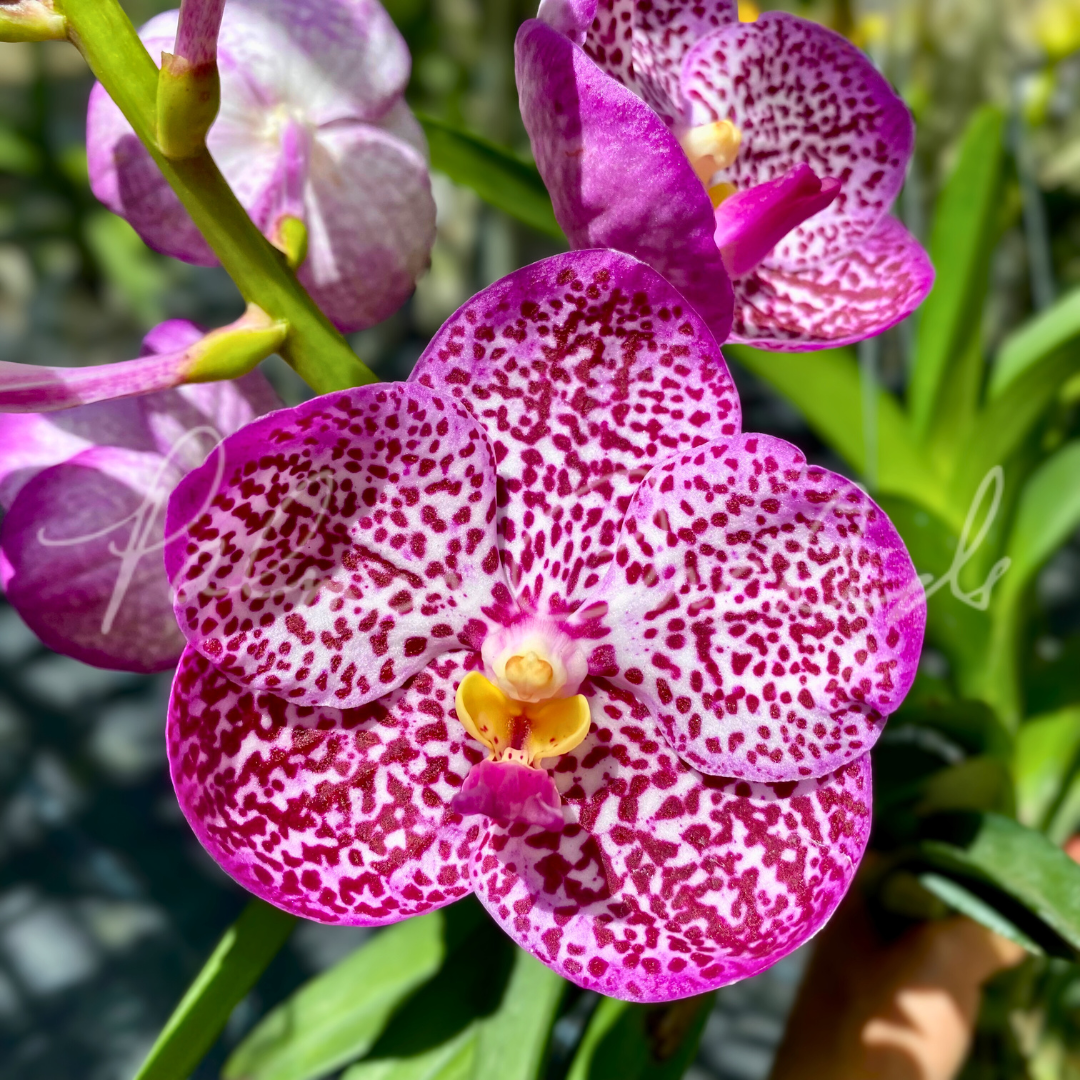
(Vanda Kulwadee Fragrance × Vanda Doctor Anek)
Round, spotted blooms with an electric pink perimeter.
Mericlone.
Plants Available: Single and double plants. Examples are pictured. Orders will be filled with plants in spike/bud/bloom as blooming season and stock permit.
Orchid Care: Grow in bright light and water often. In the hotter months, plants should be watered daily. Reduce watering somewhat with cooler temperatures, when plants are not actively growing. Fertilize weakly, weekly.
-
09.06.25
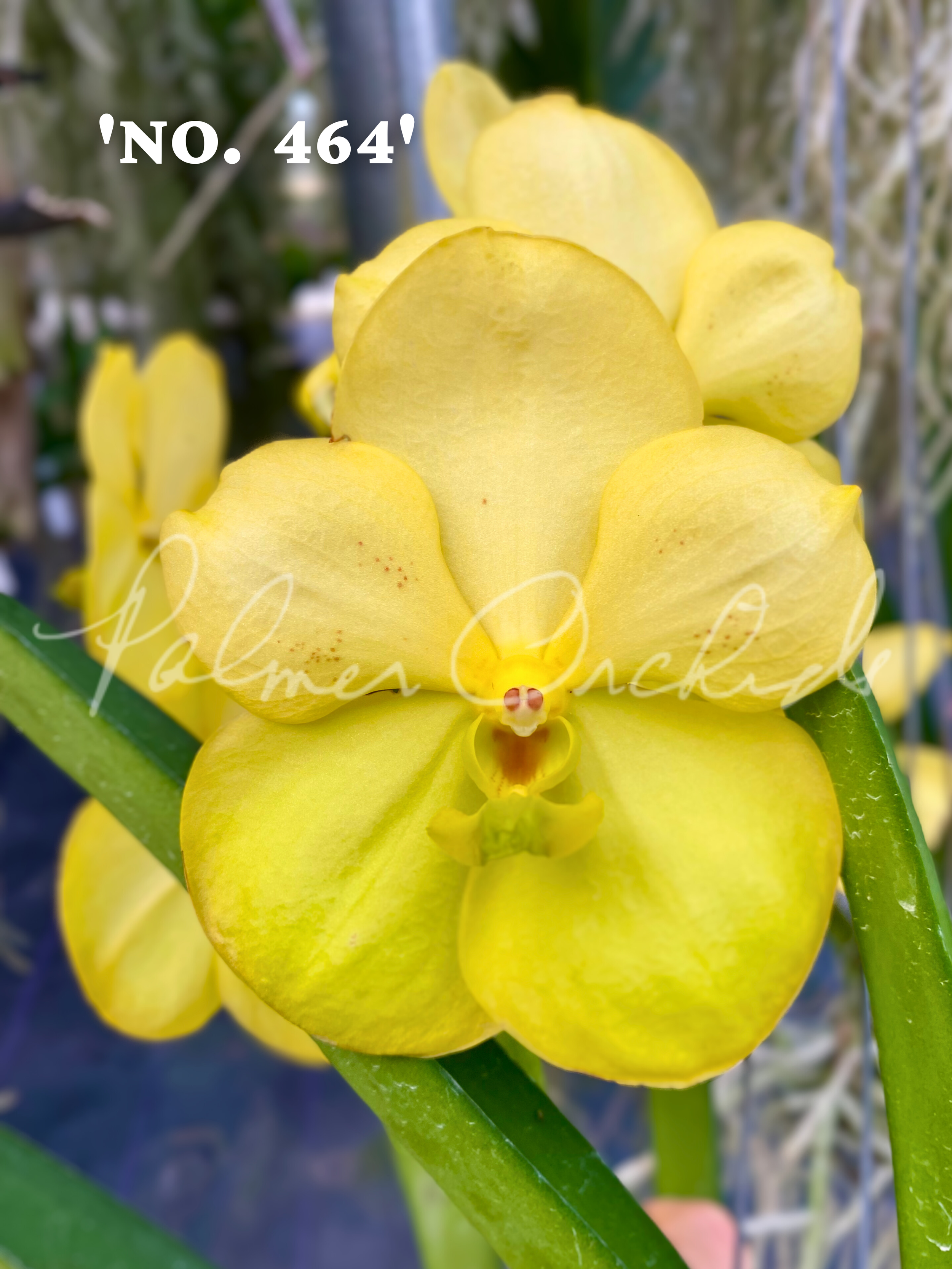
(Vanda Nopporn Gold × Vanda Rasri Gold) Syn. Ascda. Somsri Gold
Large-flowered yellow Vanda hybrid.
The ‘Pachara No. 1’ mericlone typically blooms in the summer months. The ‘No. 464’ mericlone typically blooms late fall/early winter.
Plants Available: ‘No. 464’ mericlone. Plants are mature. Examples of the size available are pictured. Orders will be filled with plants in spike/bud/flower as blooming season and blooming stock permit. Otherwise, mature plants that have bloomed previously.
Orchid Care: This hybrid is nearly 75% Vanda sanderiana and can be cultivated similarly. Grow in very bright, indirect light with strong air circulation and high humidity. Water regularly—daily when conditions are hot and plants do not receive rain. Protect from temperatures below 60F. Fertilize weakly, weekly.
-
09.01.25

(V. Robert's Delight x Pda. Mimi Palmer)
This Mimi Palmer hybrid produces indigo purple and white flowers. Blooms are fragrant.
Mericlone.
Plants Available: An example of the size available is pictured. Plants are blooming-size.
Orchid Care: Grow in high light—bright and indirect—and water generously. In the hotter months, plants should be watered daily. Watering can be reduced somewhat with cooler temperatures. Fertilize weakly, weekly.
—
06.21.25
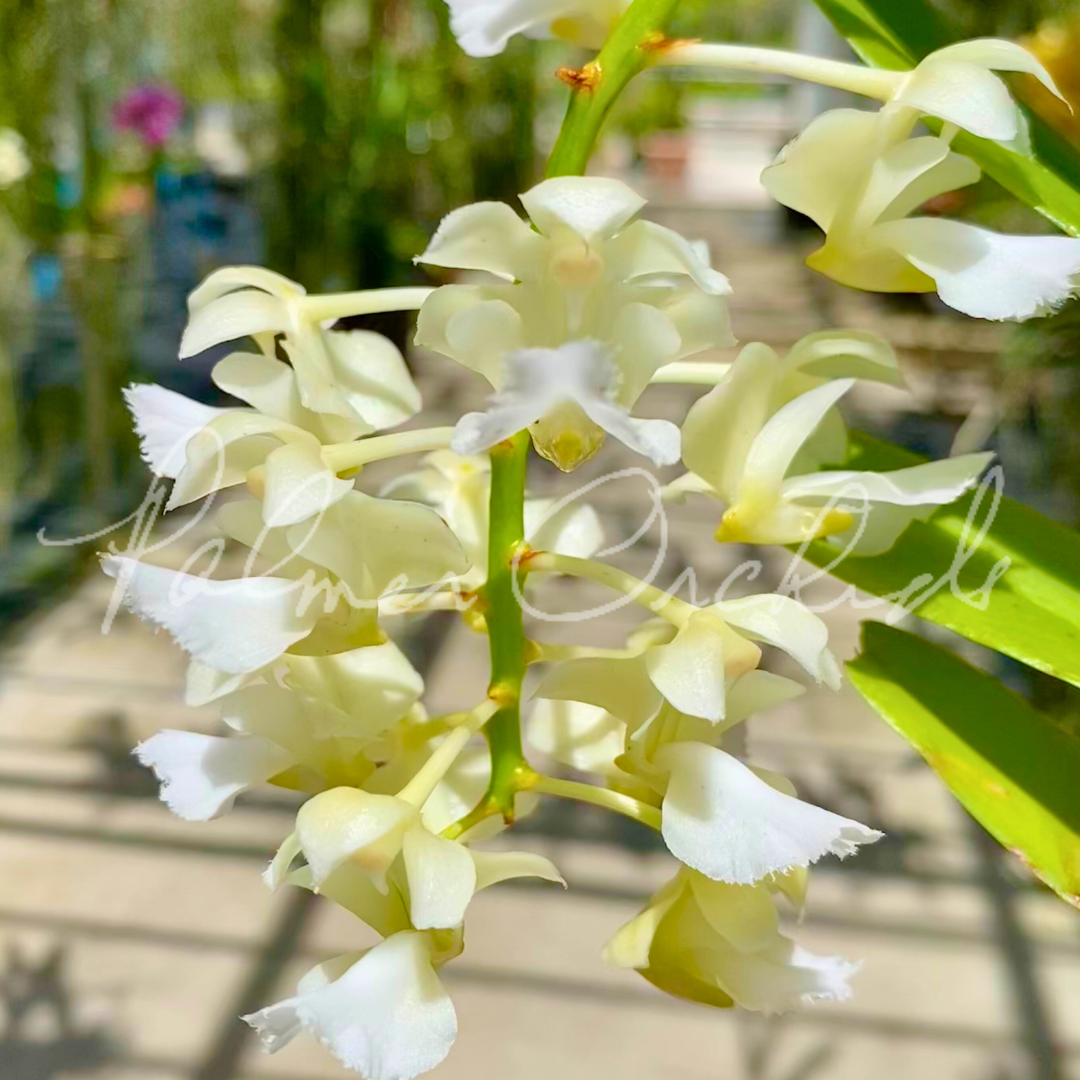
‘No. 176’ mericlone.
Lime green color form of Aerides houlletiana species. Flowers are waxy and substantive with a sweet, lemony scent.
Plants Available: Examples of the available sizes are pictured.
Orchid Care: Grow in bright, indirect light with high humidity and strong air circulation. Plants can be grown bare root (our method) or mounted. We recommend wooden baskets for growing at home since these can accommodate the growth of the plant and retain some moisture while still allowing air circulation to the roots. During the summer, daily watering is a must for plants like these grown without media. Water can be reduced somewhat during the cooler months, provided that plants are not dried hard between waterings.
-
07.23.24
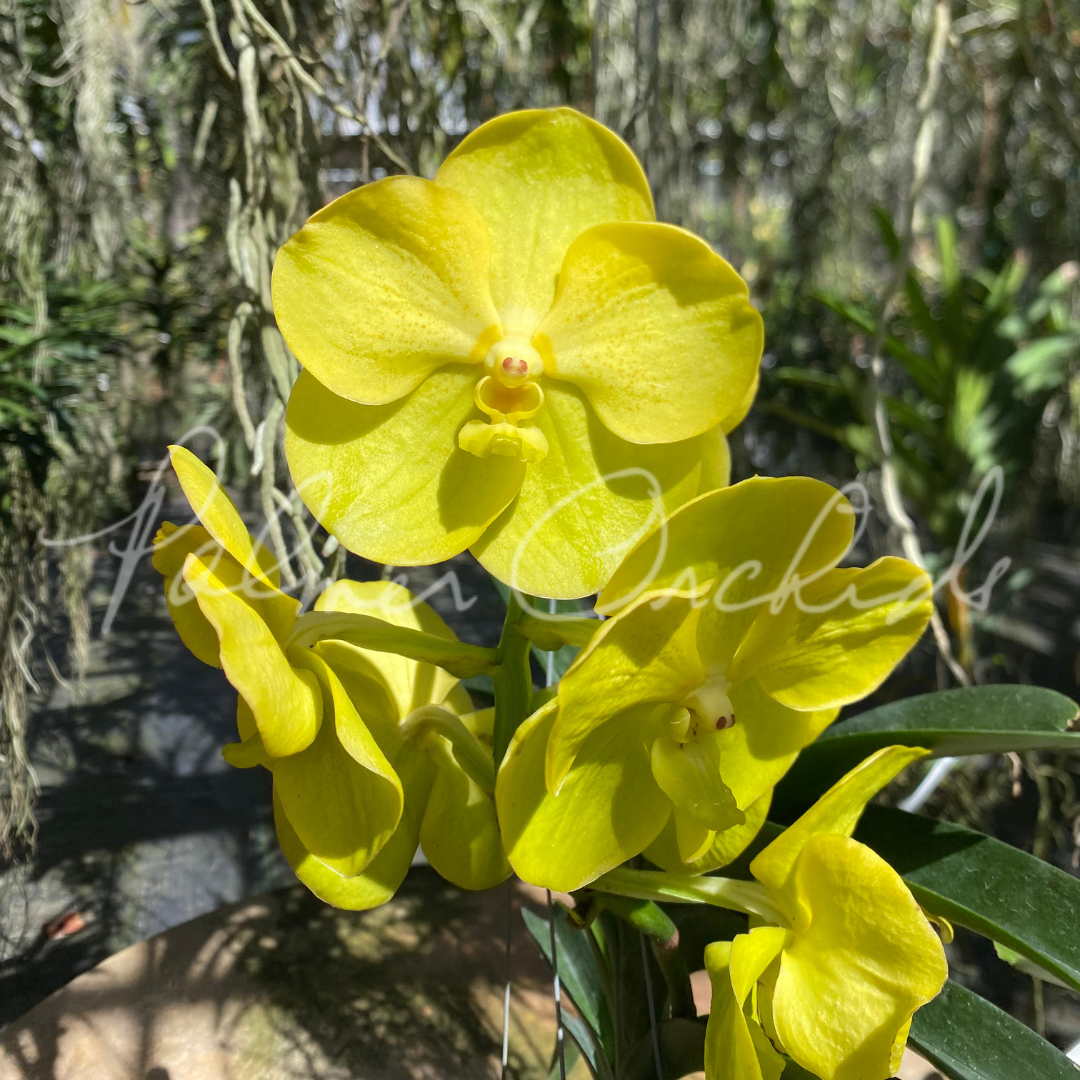
(Vanda Suksamran Gold × Vanda Thai Spots)
Mericlone.
Plants Available: Plants are mature. Orders will be filled with plants in spike/bud/flower as blooming season and blooming stock permit. Otherwise, plants that have bloomed previously.
Orchid Care: Grow in bright, indirect light with strong air circulation and high humidity. Water regularly—daily when conditions are hot and plants do not receive rain. Protect from temperatures below 60F. Fertilize weakly, weekly.
-
10.17.24

Syn. Vanda falcata
Neof. falcata are vandaceous. Grow in bright indirect light and water daily.
These plants grow hanging from the uppermost rungs in our greenhouses—the brightest spot under the shade cloth. Reduce water somewhat in cooler months, but plants should not be allowed to dry out completely.
Blooms in the summer months. Fragrant.
Plants Available: Growing in 3” pots. An example of the 3" Pot option is pictured. Plants are blooming-size.
--
09.12.24

(Vanda tessellata x Vanda Pudtan-Yip Sum Wah)
Medium-sized and somewhat waxy flowers (a la Vanda tessellata). Blooms are shades of orange and yellow with dark burnt orange to red spots.
'Orange Spots' mericlone.
Plants Available: An example of the size available is pictured. Orders will be filled with plants in spike or bloom as blooming season and blooming stock permit; otherwise, mature plants, previously bloomed.
Orchid Care: Grow in bright, indirect light and water generously. In the hotter months, plants should be watered daily. Watering can be reduced somewhat with cooler temperatures, but do not allow the foliage to become wrinkled. Fertilize weakly, weekly.
-
09.07.24
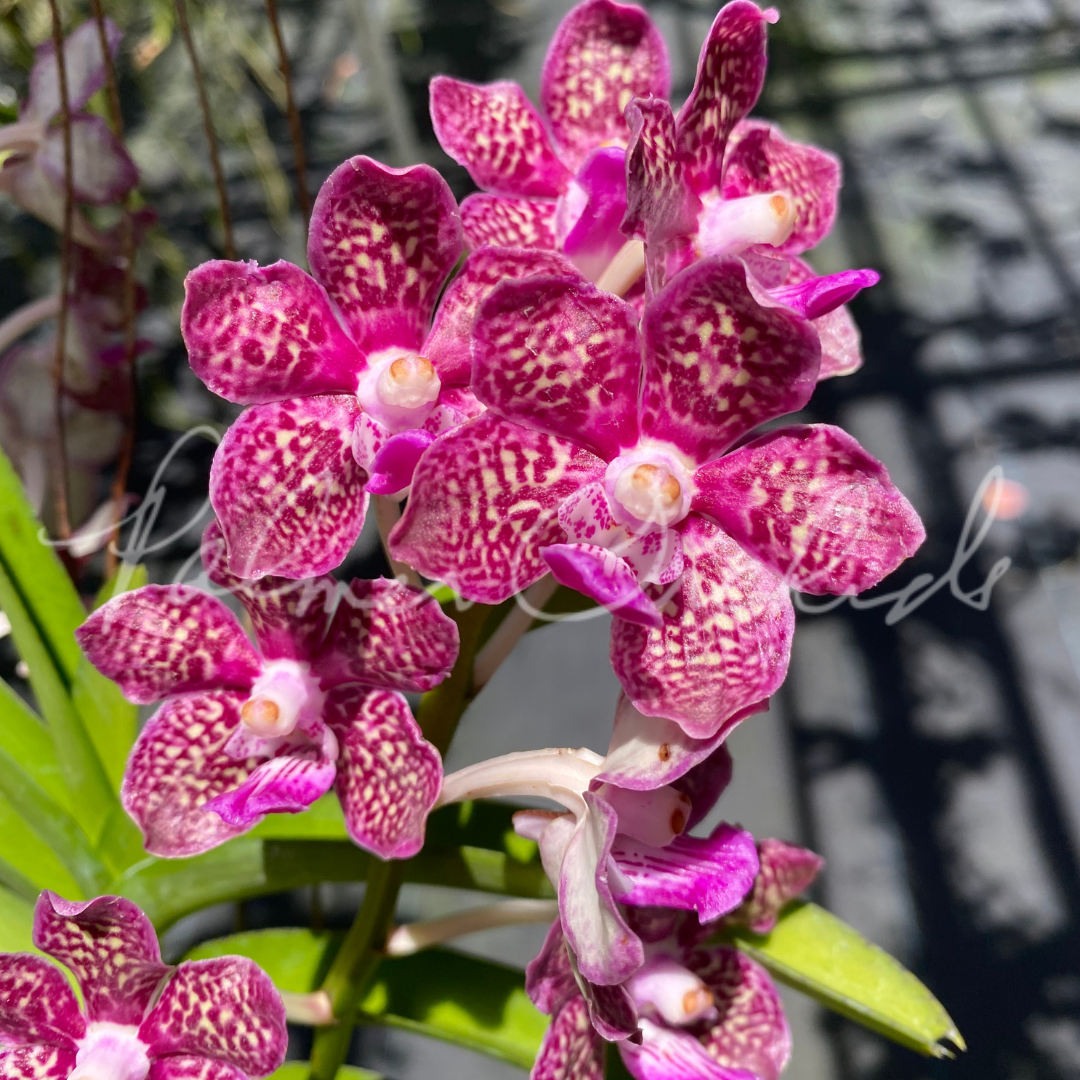
(Van. Ocean Storm x Pda. Mimi Palmer)
Fragrant Mimi Palmer hybrid with bright pink tessellations. Blooms in a head of pink and white flowers, with waxy substance.
Mericlone.
Plants Available: Mature plants, previously bloomed. Examples of the available plants are pictured. The plants pictured are roughly 22” (Size 1) and 26” (Size 2) from the base of the basket to the tip of the top leaf.
Orchid Care: Bright light, lots of water—in the summer, that’s daily watering or equivalent as supplemented by rain. You’ll know your plants are getting a good amount of light when you see a reddish/purple pigment darkening the edges of the foliage a bit.
—
08.18.26

(Vanda Haad Song-Khla × Red Devil)
Red Ascocenda-type Vanda.
Mericlone.
Plants Available: Mature. Orders will be filled with plants in spike/bud/bloom as blooming season and blooming stock permit.
Orchid Care: Grow in bright, indirect light and warm-to-hot conditions with high humidity and strong air circulation. Protect from temperatures below 55F. Grow in a basket or mounted. If grown without media or grown on a mount/basket that does not retain moisture (e.g. a plastic basket), plants should be watered daily or nearly so during the warmer months. Water can be reduced somewhat with cooler temperatures. Fertilize weakly, weekly.
-
05.23.25
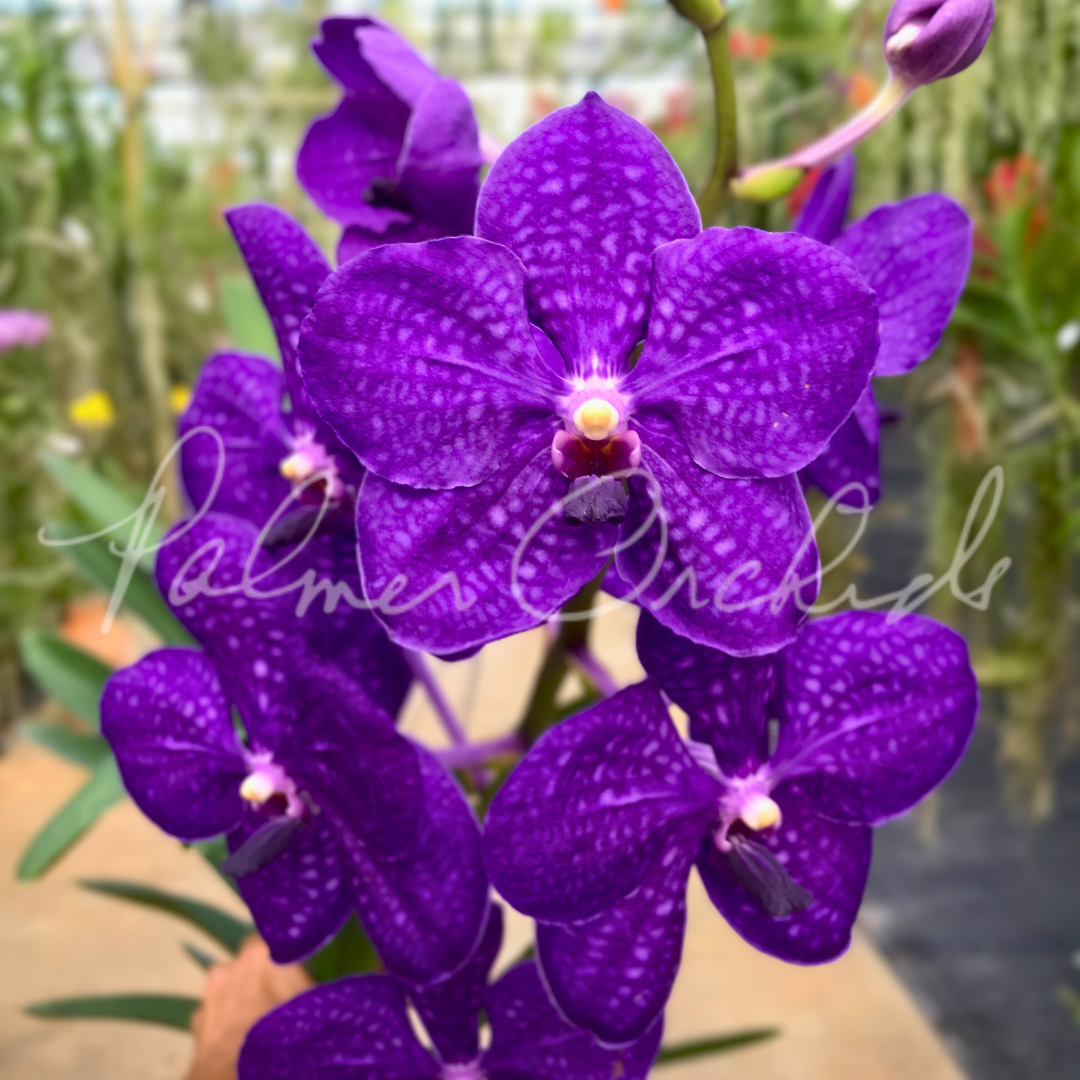
(Vanda Karulea × Vanda Gordon Dillon)
A popular first for new growers interested in trying their hand at Vandas. Pachara Delight tends to bloom twice (and sometimes thrice!) a year and its striking color certainly stands out in the landscaping or on the lanai.
Plants Available: Blooming-size plants. Examples of the size available are pictured.
Orchid Care: Grow in high light—bright, but indirect sun—and water generously. In the hotter months, plants should be watered daily. Reduce watering somewhat with cooler temperatures, when plants are not actively growing. Fertilize weakly, weekly.
-
07.24.26
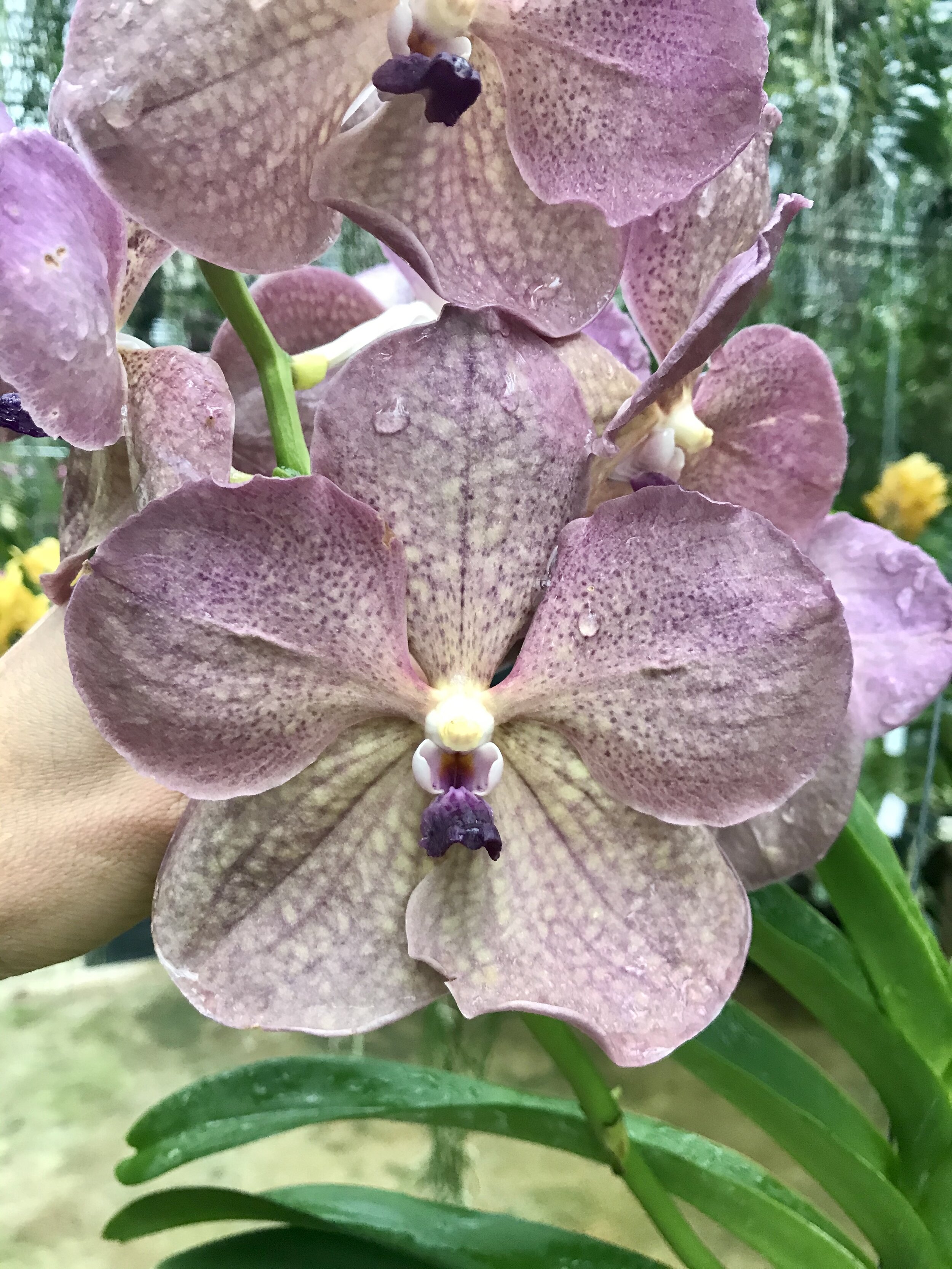
Vanda Prapathom Gold x Vanda coerulea
(This cross does not currently have a registered name)
Plants Available: An example of the blooming-size option is pictured.
Orchid Care: Grow in bright light and water generously. In the hotter months, plants should receive water (or rain) daily. Water can be reduced somewhat with cooler temperatures, when plants are not actively growing. Fertilize weakly, weekly.
-
07.13.24
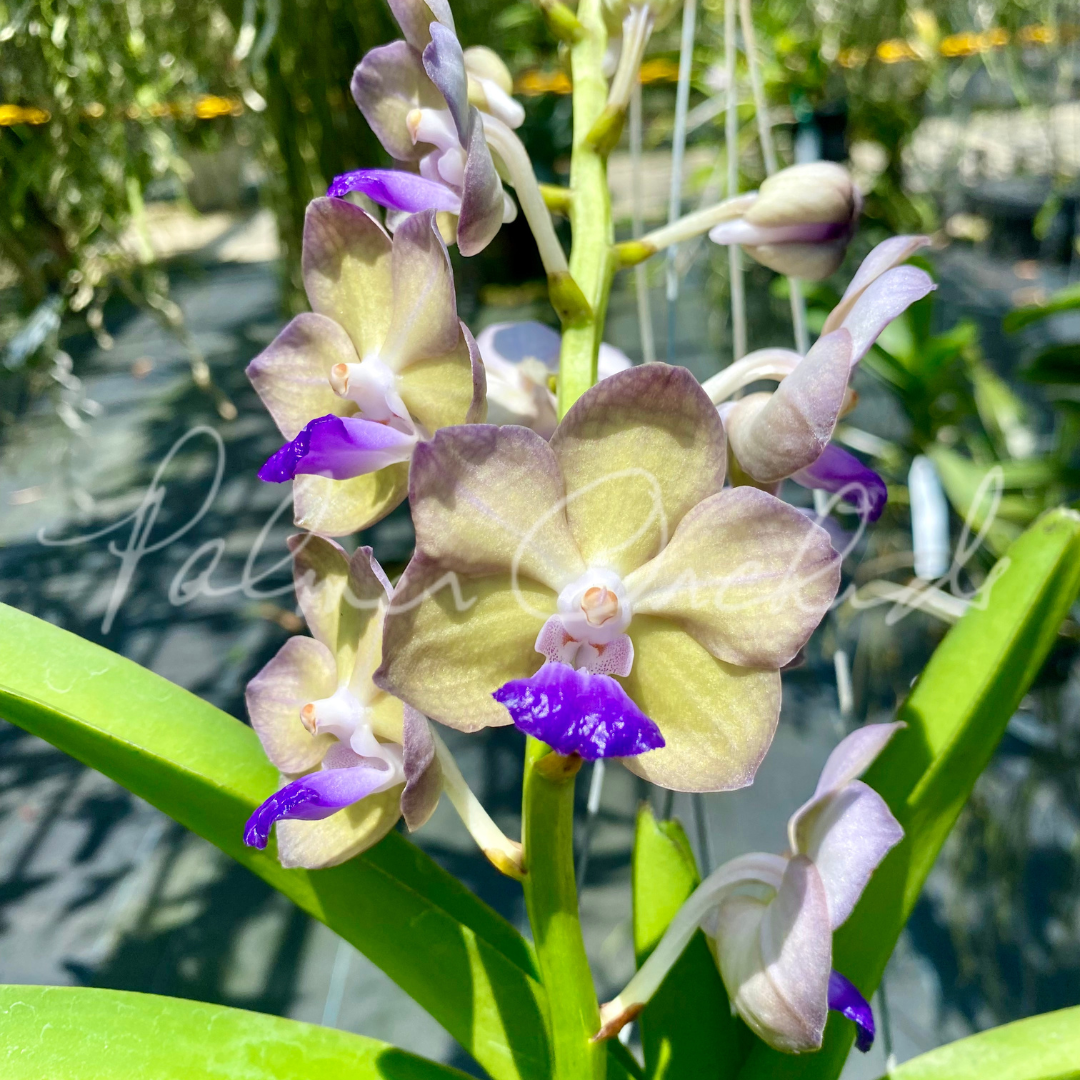
(Van. Nopporn Orange Rosy × Sasicha)
Compact-growing Sasicha hybrid. Blooms are muted yellow-gold, with petals becoming light tessellated indigo at the perimeter and a vibrant indigo lip.
No. 712 mericlone.
Plants Available: An example of the size available is pictured. Orders will be filled with plants in spike/bud/bloom as blooming season and blooming stock permit.
Orchid Care: Grow in bright, indirect light and warm-to-hot conditions with high humidity and strong air circulation. Protect from temperatures below 55F. Grow in a basket or mounted. If grown without media or grown on a mount/basket that does not retain moisture (e.g. a plastic basket), plants should be watered daily, particularly during the warmer months when plants are actively growing. Water can be reduced somewhat during the cooler months. Fertilize weakly, weekly.
-
05.23.24
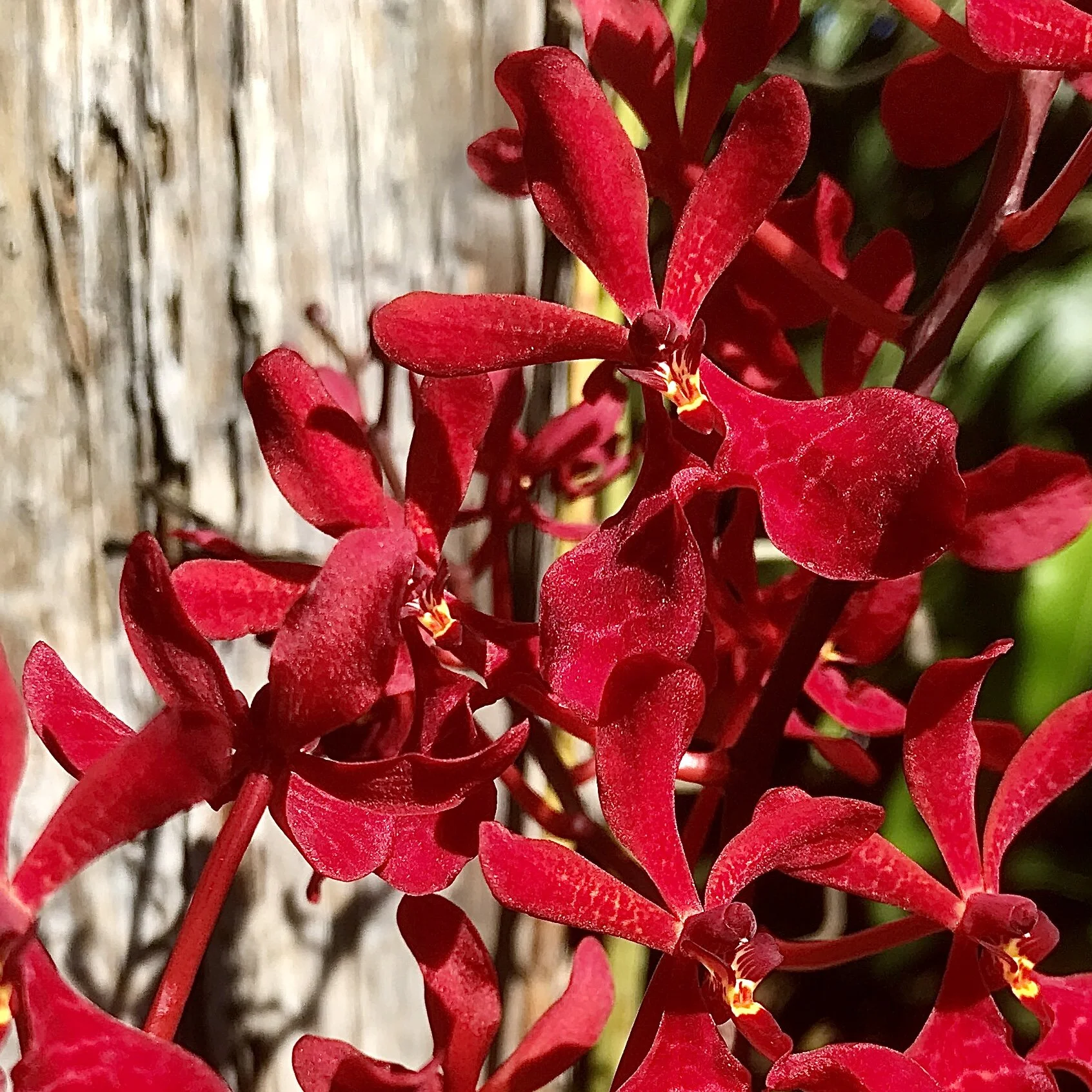
(Ren. philippinensis × Ren. Brookie Chandler)
‘T-Orchids’ mericlone.
Plants Available: See dropdown menu with plant selection for current availability. Examples of the options available are pictured. The Near Blooming-Size option is a plant nearing maturity, and is approximately 1-2 from first bloom.
Orchid Care: Grow in high light to partial sun. Plants prefer a humid environment and frequent watering—80% humidity and daily watering (or rain) in the summer. May be grown mounted or potted. If potting, use a large aggregate substrate, LECA, or lava rock. Heavy-bottomed terra cotta pots are ideal.
-
012.08.23
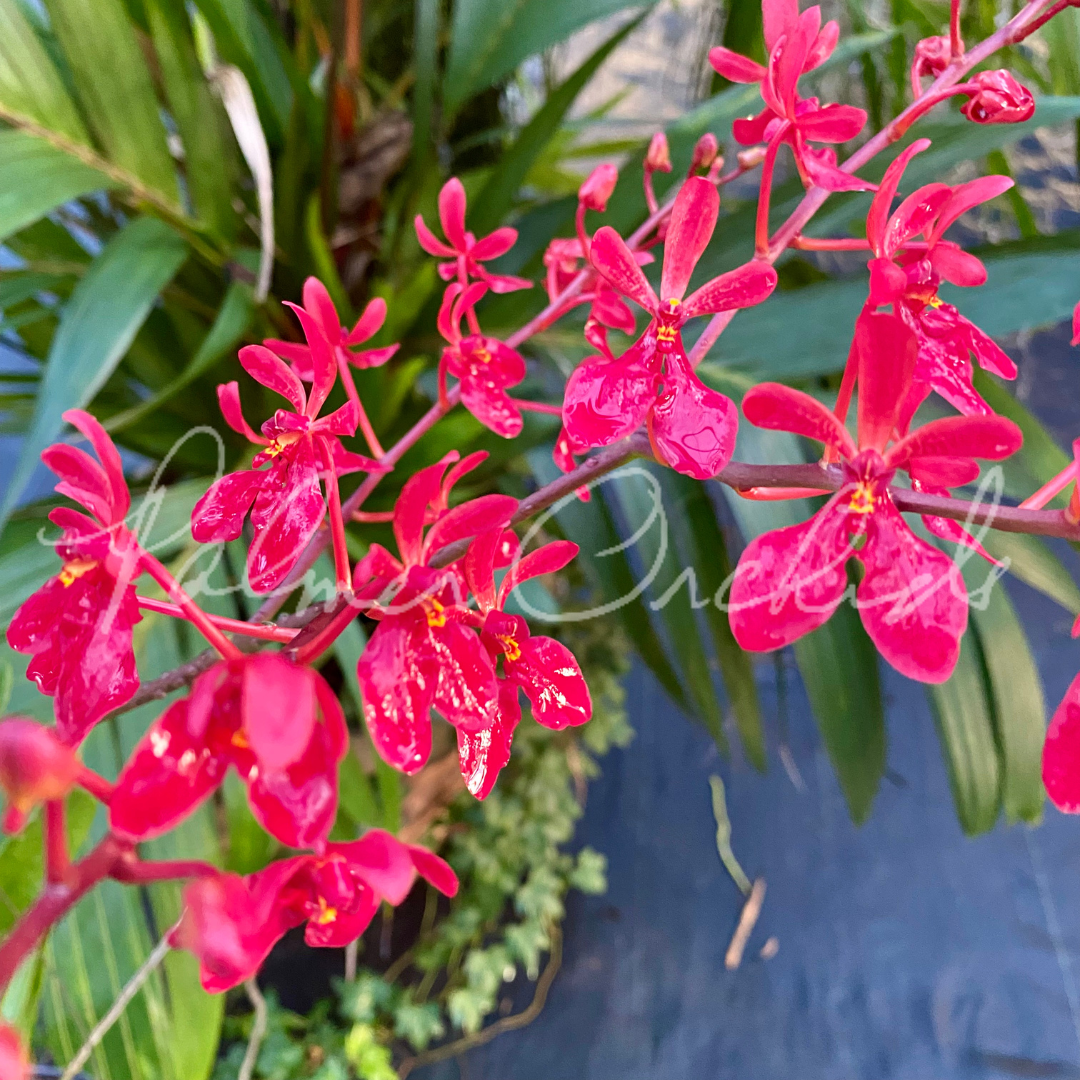
(Renanthera philippinensis × Renanthera storiei)
Plants Available: Mature. An example of the size available is pictured.
Orchid Care: Grow in high light to partial sun. Plants prefer a humid environment and frequent watering—80% humidity and daily watering (or rain) in the summer. Mounting is ideal. Protect from temperatures below 60F.
-
010.24.23
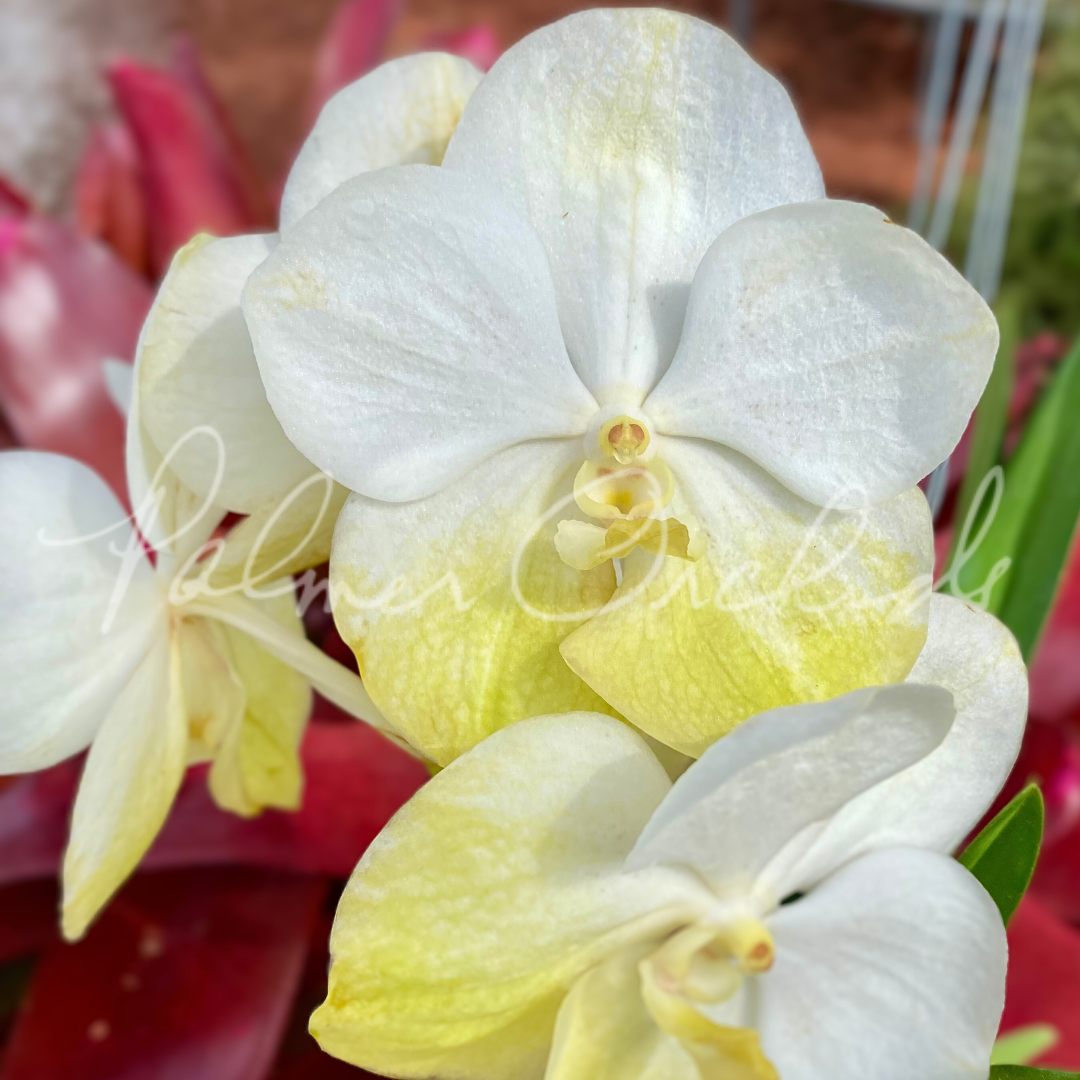
(Vanda Muang Thong × Vanda Hollingsworth)
Large white flowers with accents of yellow-green overlaid like watercolor.
Plants Available: Mature plants in three sizes. The Mature option is a plant with a single growth. The Large option is a plant with a single mature growth and one or more keikis. The Multi option is a plant with multiple growths. Examples of the sizes available are pictured. Orders will be filled with plants in spike/bud/bloom as blooming season and stock permit.
Orchid Care: Grow in bright light and water often. In the hotter months, plants should be watered daily. Watering can be reduced somewhat with cooler temperatures. Fertilize weakly, weekly.
-
03.28.24
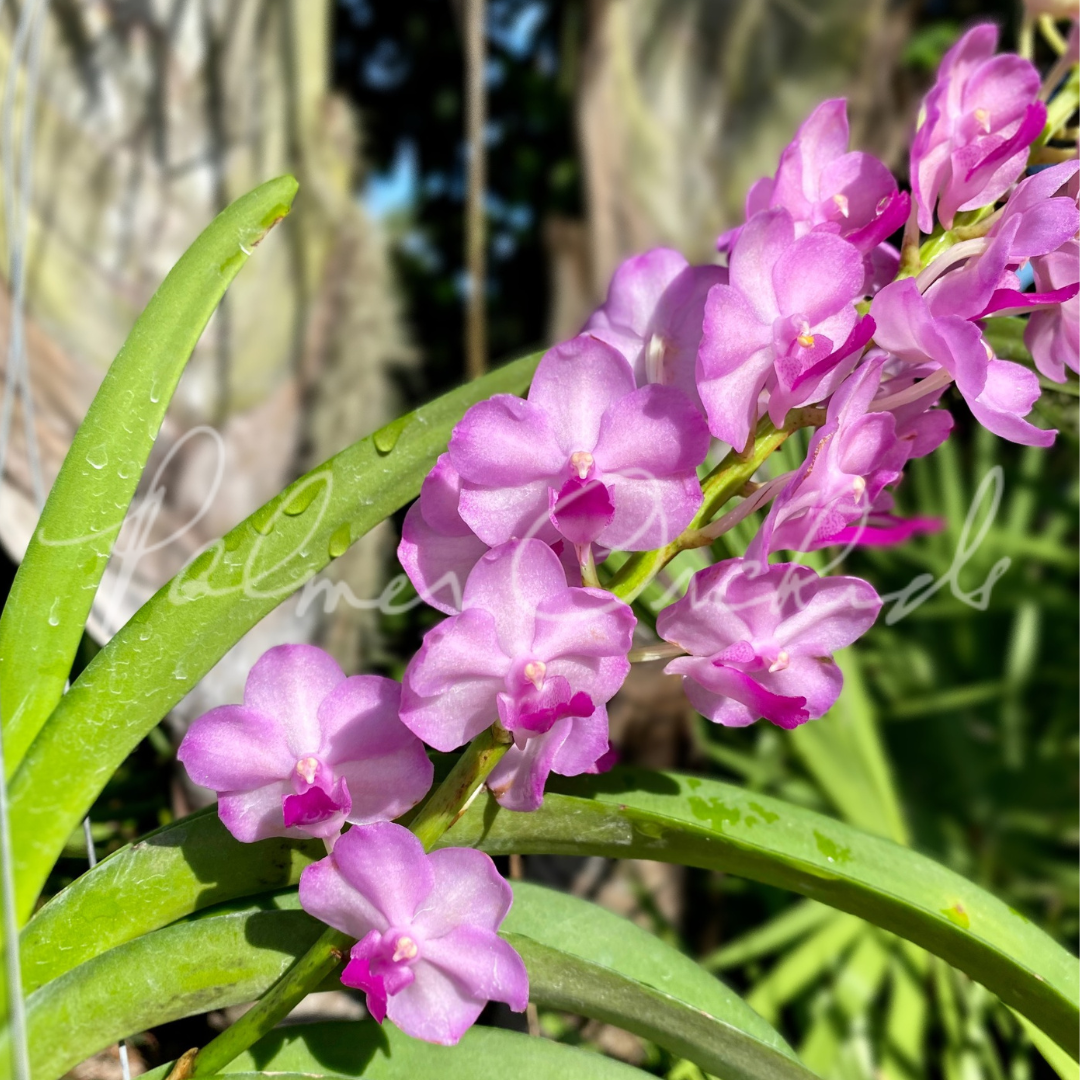
(Van. Pine Rivers × Thonglor)
Compact-growing Pine Rivers hybrid. Inflorescence of several soft but bright pink flowers with a light, mild sweet scent.
Mericlone.
Plants Available: Mature plants. An example of the size available is pictured. Orders will be filled with plants in spike/bud/bloom as blooming season and blooming stock permit; otherwise, mature plants which have bloomed previously.
Orchid Care: Grow in bright, indirect light and warm-to-hot conditions with high humidity and strong air circulation. Protect from temperatures below 55F. Grow in a basket or mounted. If grown without media or grown on a mount/basket that does not retain moisture (e.g. a plastic basket), plants should be watered daily, particularly during the warmer months when plants are actively growing. Water can be reduced somewhat during the cooler months. Fertilize weakly, weekly.
-
10.05.23
ZYGOPETALUM
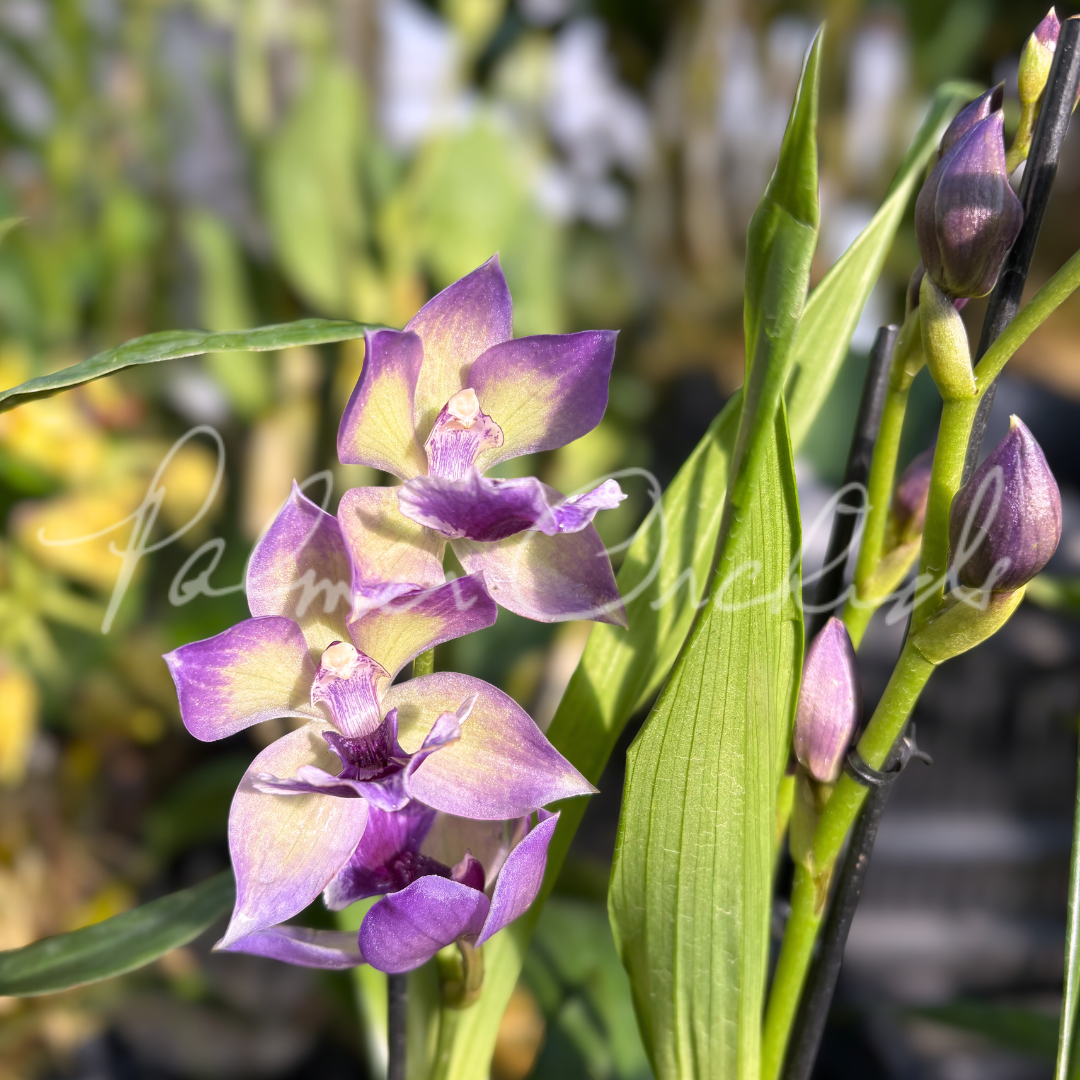
(Aganisia cyanea × Zygopetalum Skippy Ku)
‘Blue Birds’ mericlone.
Fragrant.
Plants Available: Growing in 4” pots. An example of the 4” Pot option is pictured. Orders will be filled with plants in spike/bud/flower as blooming season and blooming stock permit; otherwise, mature plants which have bloomed previously.
Orchid Care: Grow in bright, diffused light with good air circulation and intermediate temperatures. Avoid stagnant environments with little air movement. Plants should be kept evenly moist, particularly during active growth; do not let roots and medium become crispy dry. Potting media should be moisture-retentive (e.g. sphagnum moss). Water thoroughly when media is beginning to reach dryness.
—
12.04.25

(Zygo. Titanic × Zygo. Helen-Ku)
‘HOF’ awarded mericlone.
Fragrant.
Plants Available: Growing in 4” pots. An example of the size available is pictured. Orders will be filled with plants in spike/bud/bloom as blooming stock permits; otherwise, mature plants, previously bloomed.
Orchid Care: Grow in bright, indirect light with strong air circulation and roughly 50% humidity. Plants should not dry out completely—water just as the potting media starts to dry. Plants potted in a porous, well-draining mix (e.g. our standard bark mix) will require more frequent applications of water than those potted in sphagnum. Water generously (according to moisture retention of your media) when plants are actively growing in spring and summer, and reduce water during the cooler months.
—
05.08.25
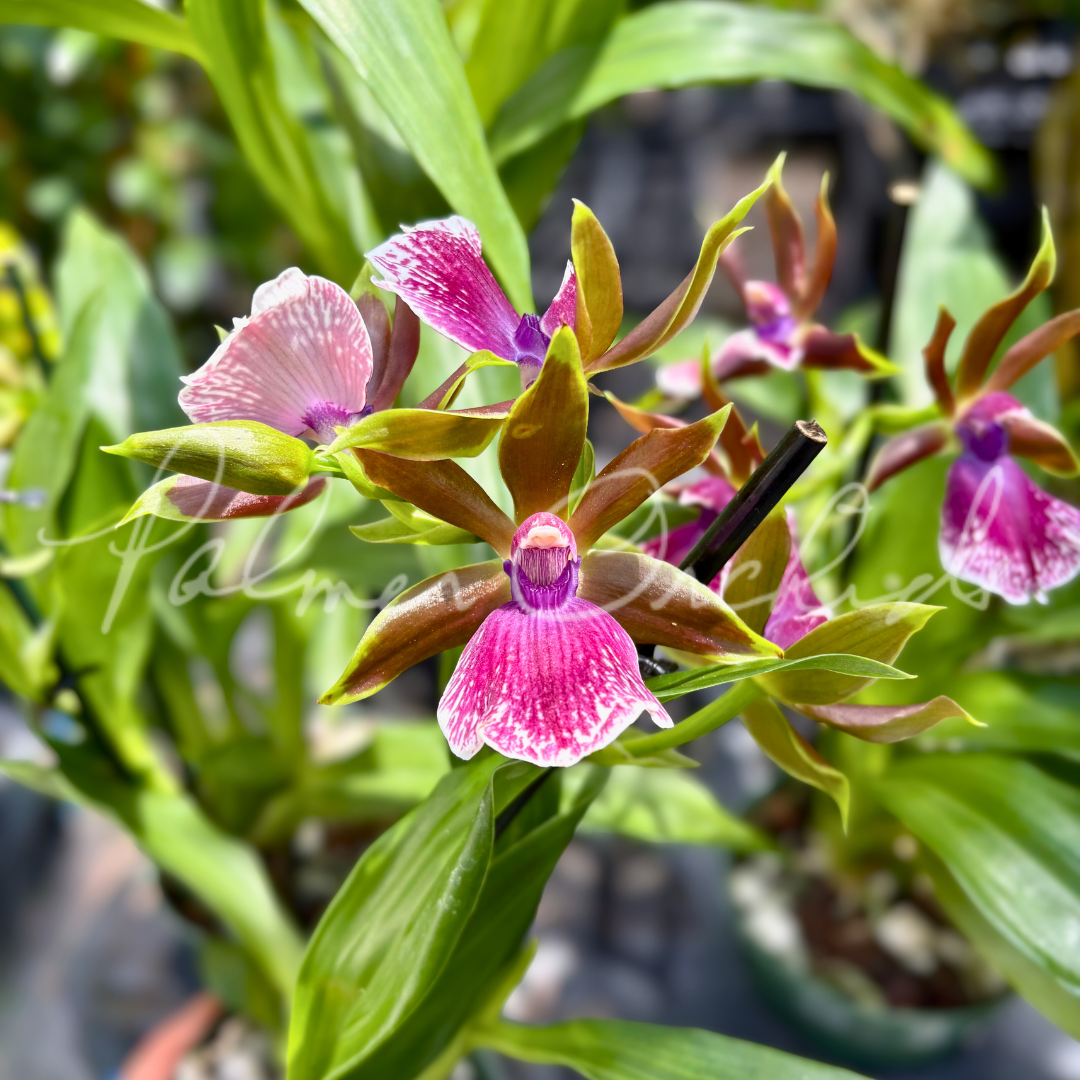
(Zygosepalum labiosum × Zygo. Artur Elle)
'Rhein Moonlight' mericlone.
Plants Available: Growing in 4” pots. An example of the size available is pictured. Orders will be filled with plants in spike/bud bloom as blooming season and blooming stock permit.
Orchid Care: Grow in bright, diffused light, avoiding direct sun. Zygos are often best grown potted. Some hobbyists prefer to pot with sphagnum moss. We use an airy mix of medium-grade bark. Plants should be watered just as the potting medium starts to dry out—every 2–3 days during the summer/warmer months and about once a week in winter, adjusting for the water retentiveness of the potting media. This medium should not remain soggy.
—
09.13.25
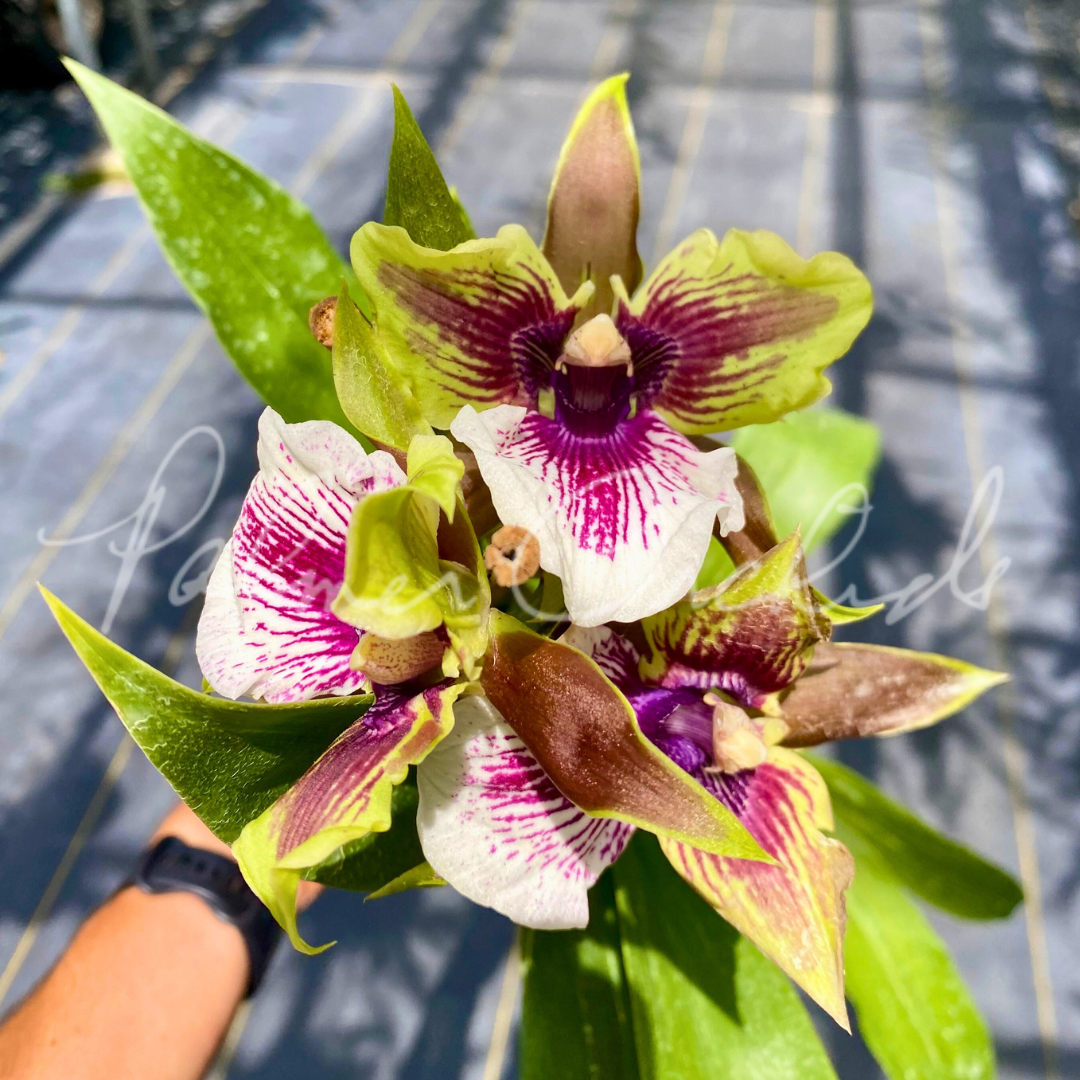
(Zygosepalum labiosum × Zygo. Artur Elle)
‘Peloric’ mericlone.
Plants Available: Growing in 4” pots. An example of the size available is pictured. Orders will be filled with plants in spike/bud/bloom as blooming season and blooming stock permit; otherwise, mature plants which have bloomed previously.
Orchid Care: Grow in bright, indirect light with strong air circulation and roughly 50% humidity. Plants should not dry out completely—water just as the potting media starts to dry. Plants potted in a porous, well-draining mix (e.g. our standard bark mix) will require more frequent applications of water than those potted in sphagnum. Water generously (according to moisture retention of your media) when plants are actively growing in spring and summer, and reduce water during the cooler months.
--
08.13.26
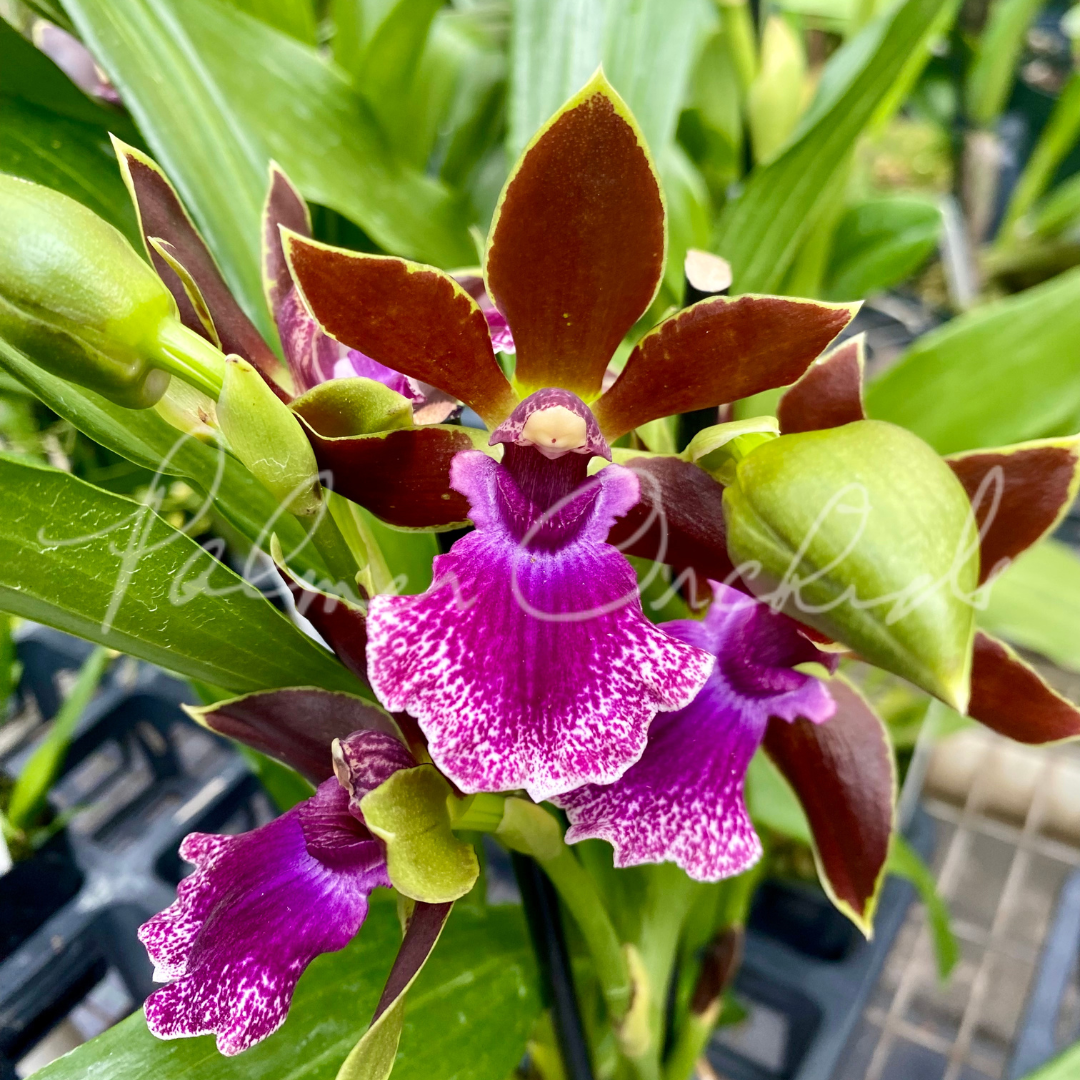
(Zygo. Imagination × Zygo. Helen-Ku)
Fragrant blooms with chocolate brown petals and a velvety purple lip.
'Honolulu Baby’ AM/AOS awarded mericlone.
Fragrant.
Plants Available: Growing in 4” pots. An example of the size available is pictured. Orders will be filled with plants in spike or bloom as blooming season and blooming stock permit; otherwise, mature plants, previously bloomed.
Orchid Care: Grow in bright, indirect light with strong air circulation and roughly 50% humidity. Plants should not dry out completely—water just as the potting media starts to dry. Plants potted in a porous, well-draining mix (e.g. our standard bark mix) will require more frequent applications of water than those potted in sphagnum. Water generously (according to moisture retention of your media) when plants are actively growing in spring and summer, and reduce water during the cooler months.
--
09.13.24
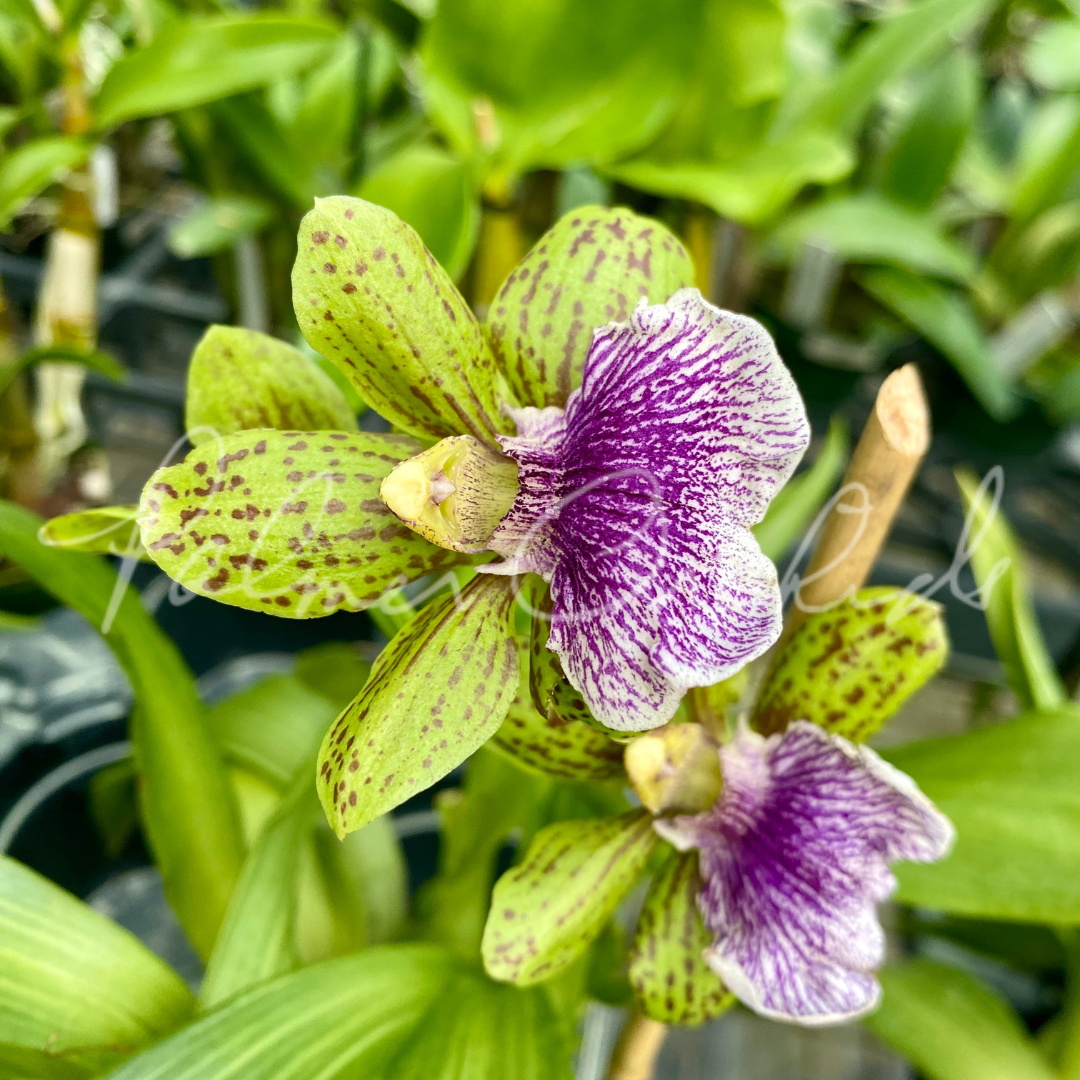
(Frankquintalara Kai Quintal × Zygoneria Sweet Jade)
With Zga. Sweet Jade and Gptm. Starburst in its lineage, this Zygopetalum hybrid likewise produces waxy green flowers and a purple-veined lip. Flowers are fragrant with a spicy sweet scent.
Grown from seed so flower characteristics vary somewhat from plant to plant.
Plants Available: Growing in 4” pots. An example of the size available is pictured. Orders will be filled with plants in spike/bud/bloom as blooming stock permits; otherwise, mature plants, previously bloomed.
Orchid Care: Grow in bright, indirect light with strong air circulation and roughly 50% humidity. Plants should not dry out completely—water just as the potting media starts to dry. Plants potted in a porous, well-draining mix (e.g. our standard bark mix) will require more frequent applications of water than those potted in sphagnum. Water generously (according to moisture retention of your media) when plants are actively growing in spring and summer, and reduce water during the cooler months.
-
09.13.24
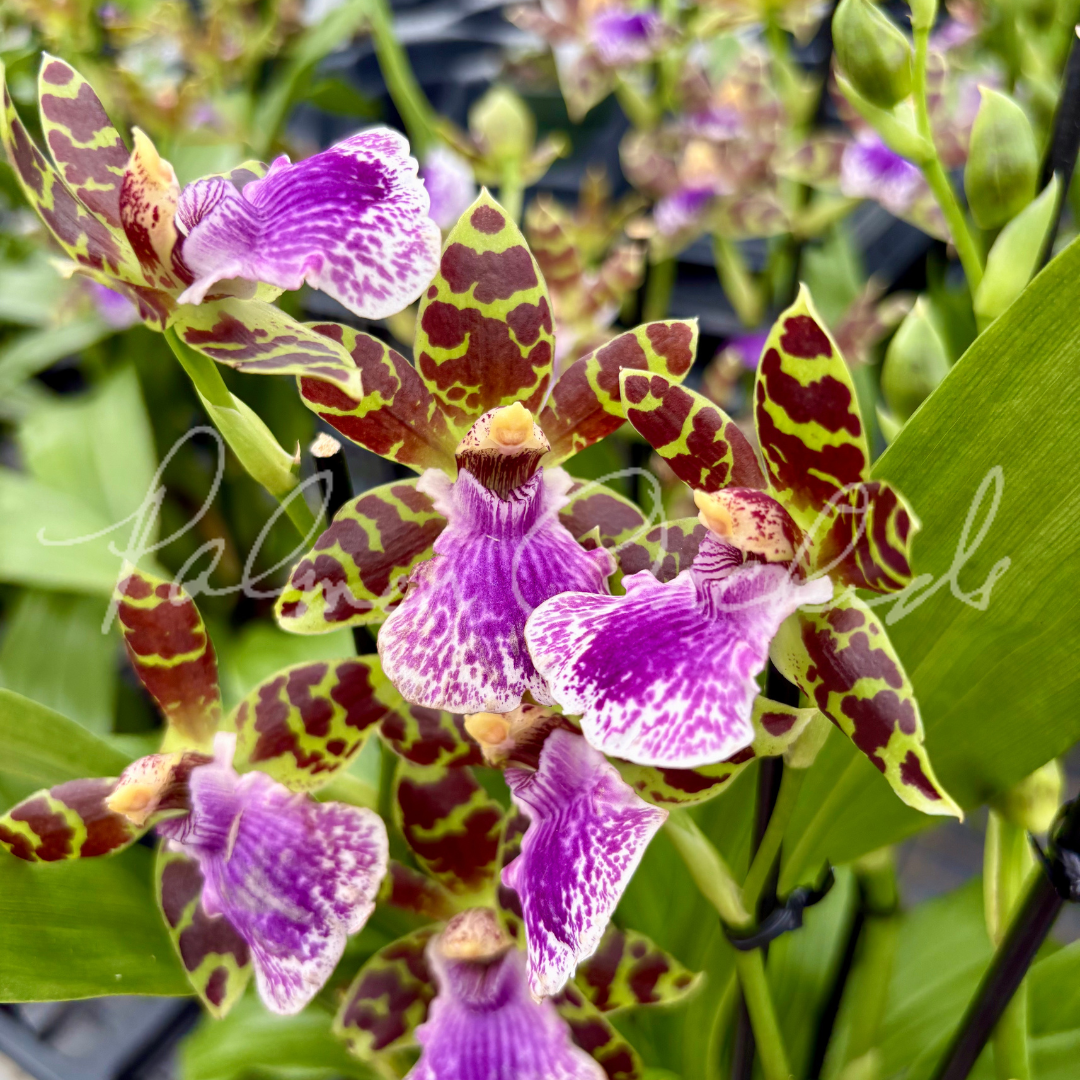
(Zygo. Skippy Ku × Zygo. Artur Elle)
Blooms in a spray of purple and green flowers overlaid with brown markings. From the back of the flower, petals appear green. Viewed from the front or anterior side, these green petals are overlaid with heavy brown streaks, but a distinct green perimeter remains around the edges of the petals. Flowers are fragrant—a spicy, sweet scent.
Plants currently available are from a mericlone crop.
Plants Available: Growing in 4” pots. An example of the size available is pictured. Orders will be filled with plants in spike/bud bloom as blooming stock and season permit.
Orchid Care: Similar to intergeneric Oncidiums. Grow in bright, diffused light with good air circulation. Plants should be watered just as the potting medium starts to dry out. Water heavily when plants are actively growing, but reduce water during the cooler months.
-
05.30.26
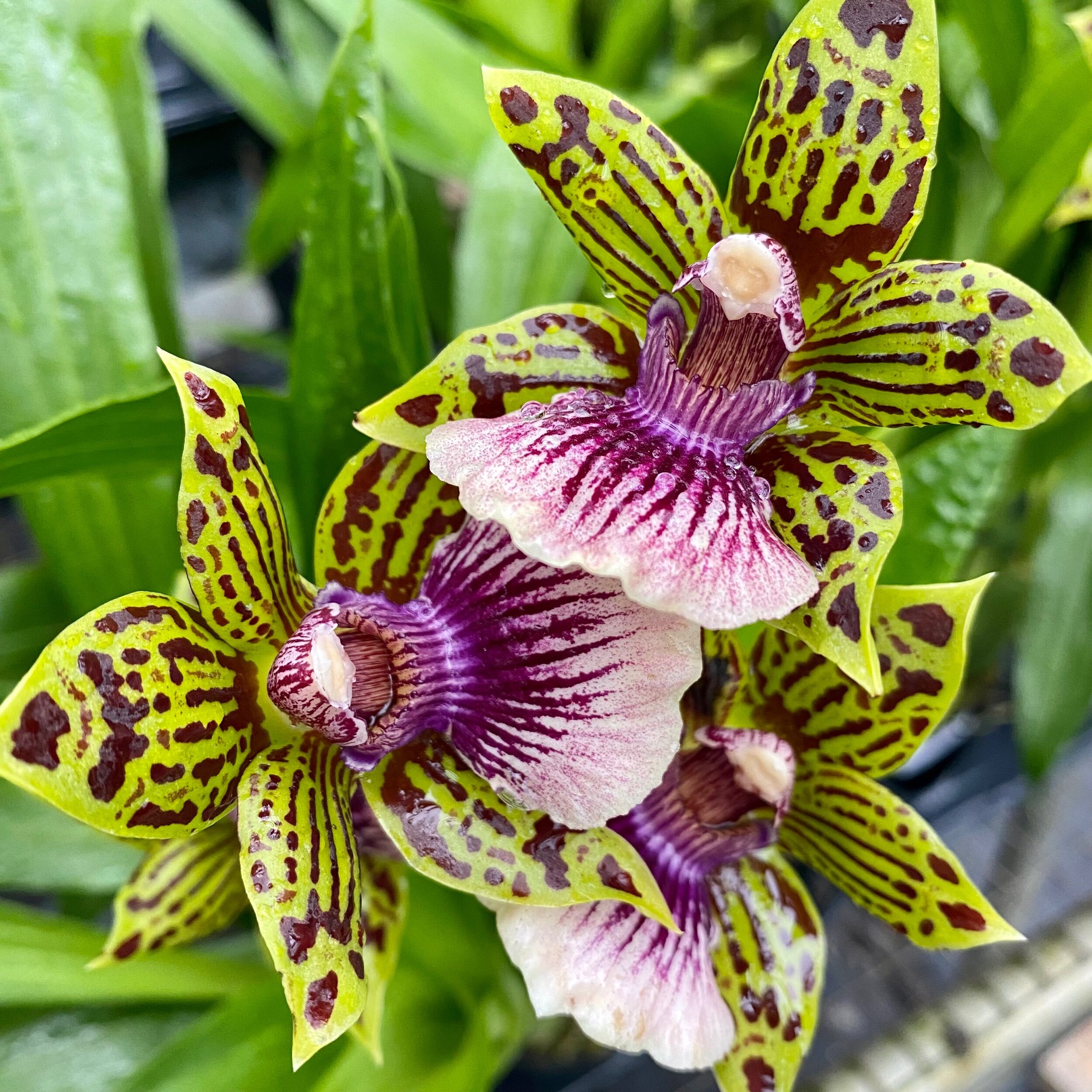
(Galeottiafimbriata × Zygo. Jumpin Jack)
Mericlone.
Beautiful Zygo. hybrid with lush gently pleated foliage and a spicy sweet fragrance.
Plants Available: Growing in 4” pots. An example of the size available is pictured. Plants available are mature—in spike/bud/bloom as blooming stock permits; otherwise, previously bloomed.
Orchid Care: Grow in bright, indirect light with strong air circulation and roughly 50% humidity. Plants should not dry out completely—water just as the potting media starts to dry. Plants potted in a porous, well-draining mix (e.g. our standard bark mix) will require more frequent applications of water than those potted in sphagnum. Water generously (according to moisture retention of your media) when plants are actively growing in spring and summer, and reduce water during the cooler months.
-
06.22.23
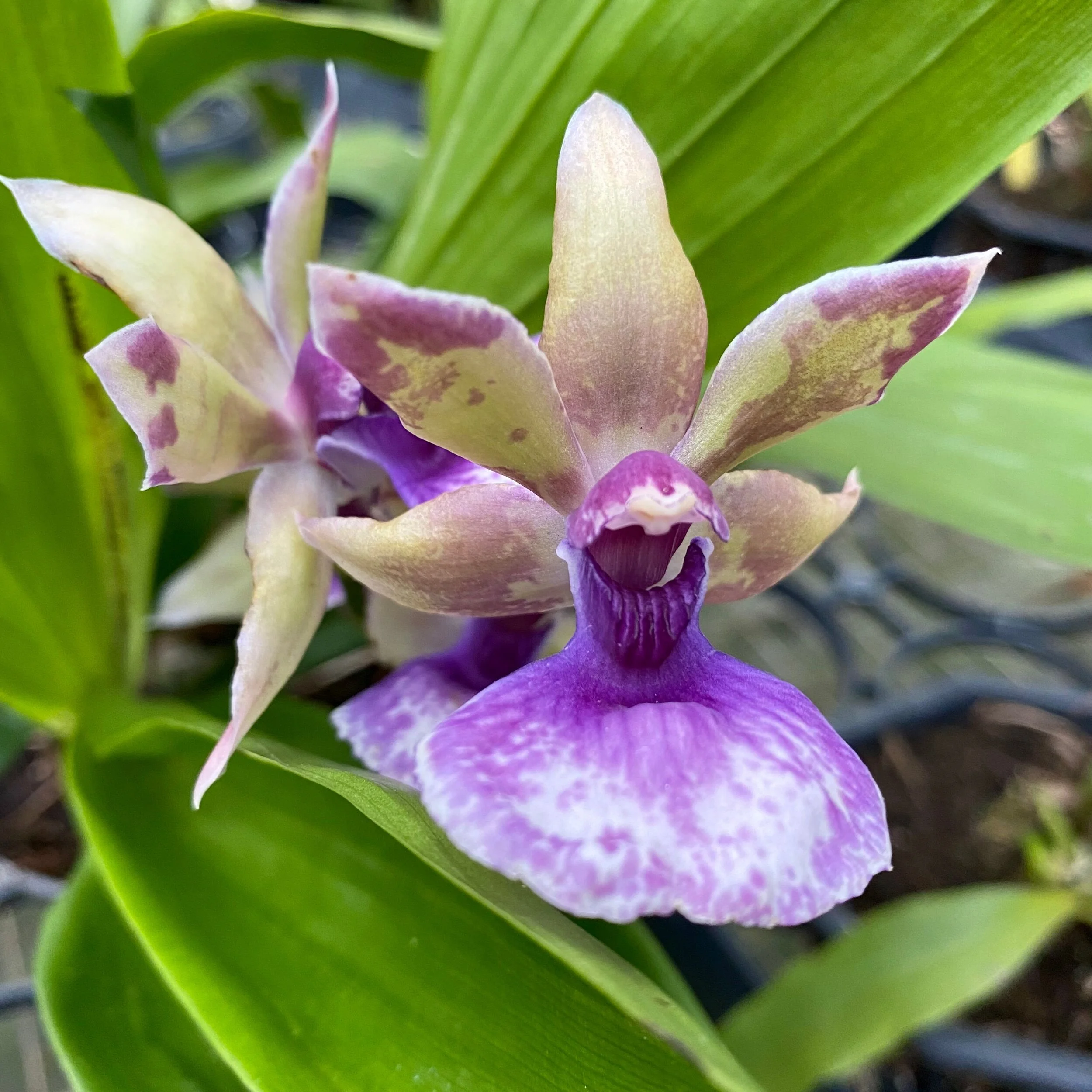
(Aganisia cyanea × Zygopetalum Jumpin Jack)
‘Kaila’ HCC/AOS mericlone.
Fragrant.
Blooms in late spring/early summer.
Plants Available: Growing in 4” pots. An example of the 4” Pot - Small option is pictured. Orders will be filled with plants In bud or flower as blooming stock and season permit; otherwise, mature plants which have bloomed previously.
Orchid Care: Similar to intergeneric Oncidiums. Grow in bright, diffused light with good air circulation. Plants should be watered just as the potting medium starts to dry out. Water heavily when plants are actively growing, but reduce water during the cooler months.
-

(Brassavola nodosa × Rhyncholaelia digbyana)
Primary hybrid of the species B. nodosa and Rl. digbyana. Plants remain compact in stature as they mature, producing blooms that are large relative to the size of the plant. Flowers are fragrant at night.
Grown from seed so flower characteristics may vary somewhat from plant to plant.
Plants Available: Growing in 4” pots. Examples of the sizes available are pictured.
Orchid Care: Grow in high light—bright, indirect sun. Allow the root system of the plant to dry thoroughly between waterings. When plants outgrow 4” pots, they can be potted up or mounted/established in baskets. Fertilize weakly, weekly.
—
11.06.25