
Vanda
Vanda Species, Hybrids, & Allied Varieties
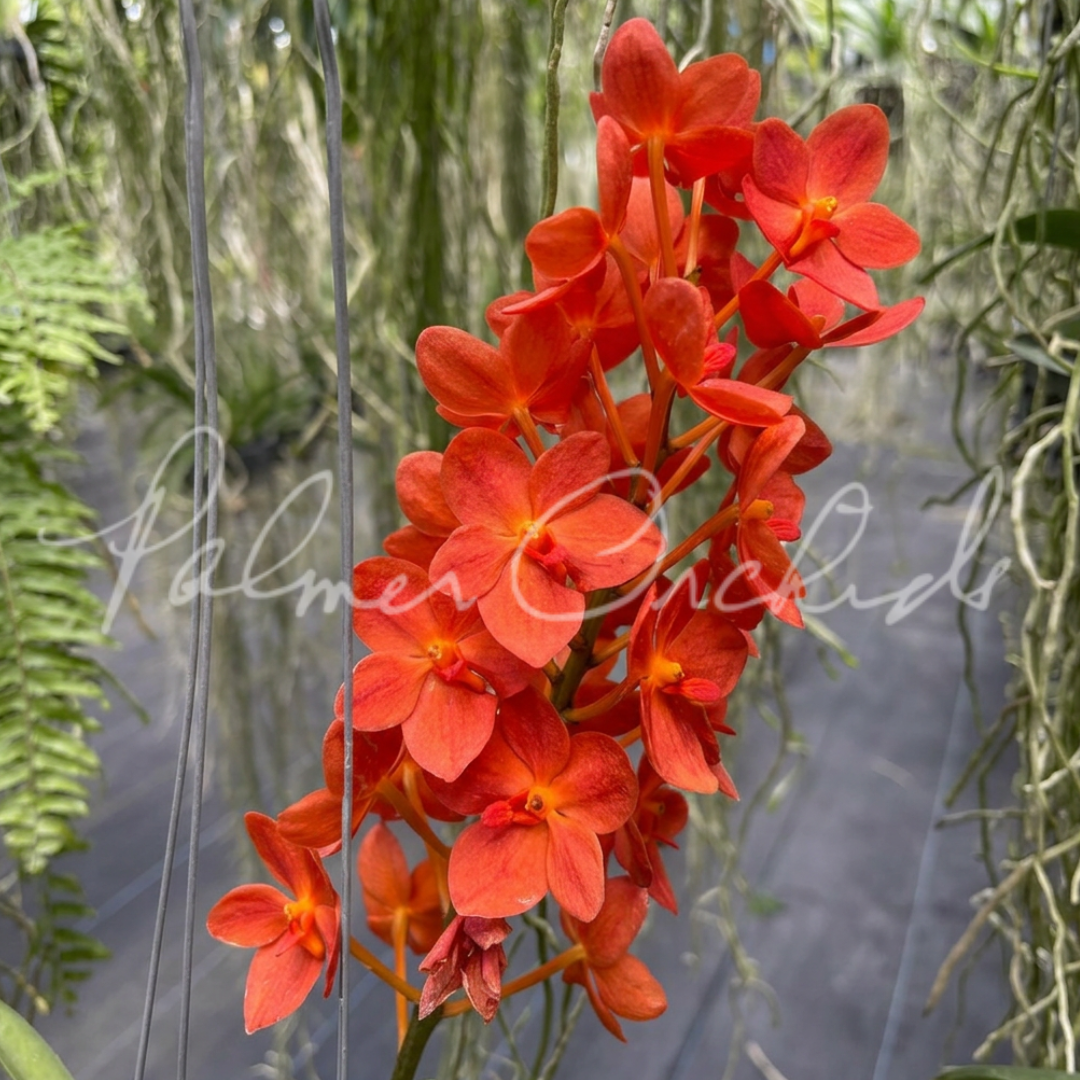
(Ren. Kalsom × Vanda Vilairat)
Renantanda with a head of vibrant orange blooms.
Mericlone.
Plants Available: Examples of the size available are pictured. Plants are mature, previously bloomed. Orders will be filled with plants in spike/bloom as stock permits; otherwise, mature plants which have bloomed previously.
Orchid Care: Grow in high light—bright, but indirect sun—and water generously. In the hotter months, plants should be watered daily. Reduce watering somewhat with cooler temperatures, when plants are not actively growing. Protect from temperatures below 55F. Fertilize weakly, weekly.
-
07.29.26

Introducing our signature orchid—Vanda sanderiana alba. Endemic to the Philippines, this species and has a long and significant history in Vanda hybridizing. Its two-tone color form and flower shape were prized by earlier breeders, making it a key ancestor to many popular commercial Vanda hybrids.
We’re currently offering plants from our most recent lines of breeding. (These may be sib crosses or selfings.)
Grown from seed.
Plants Available: Growing in 2” pots and in hanging baskets. Examples of the size available are pictured. The basket option (Basket - NBS) is a near blooming-size.
Orchid Care: Grow in high light—bright, indirect sun (about 50% shade). Protect from direct midday sun. Younger plants should be kept in slightly shadier conditions than mature, blooming-size plants to ensure robust root and foliar development. Allow roots to expand and hang freely. Provide strong air circulation and high humidity in the growing environment. Water regularly—daily when conditions are hot and plants do not receive rain. Protect from temperatures below 60F. Fertilize weakly, weekly.
-
09.11.26
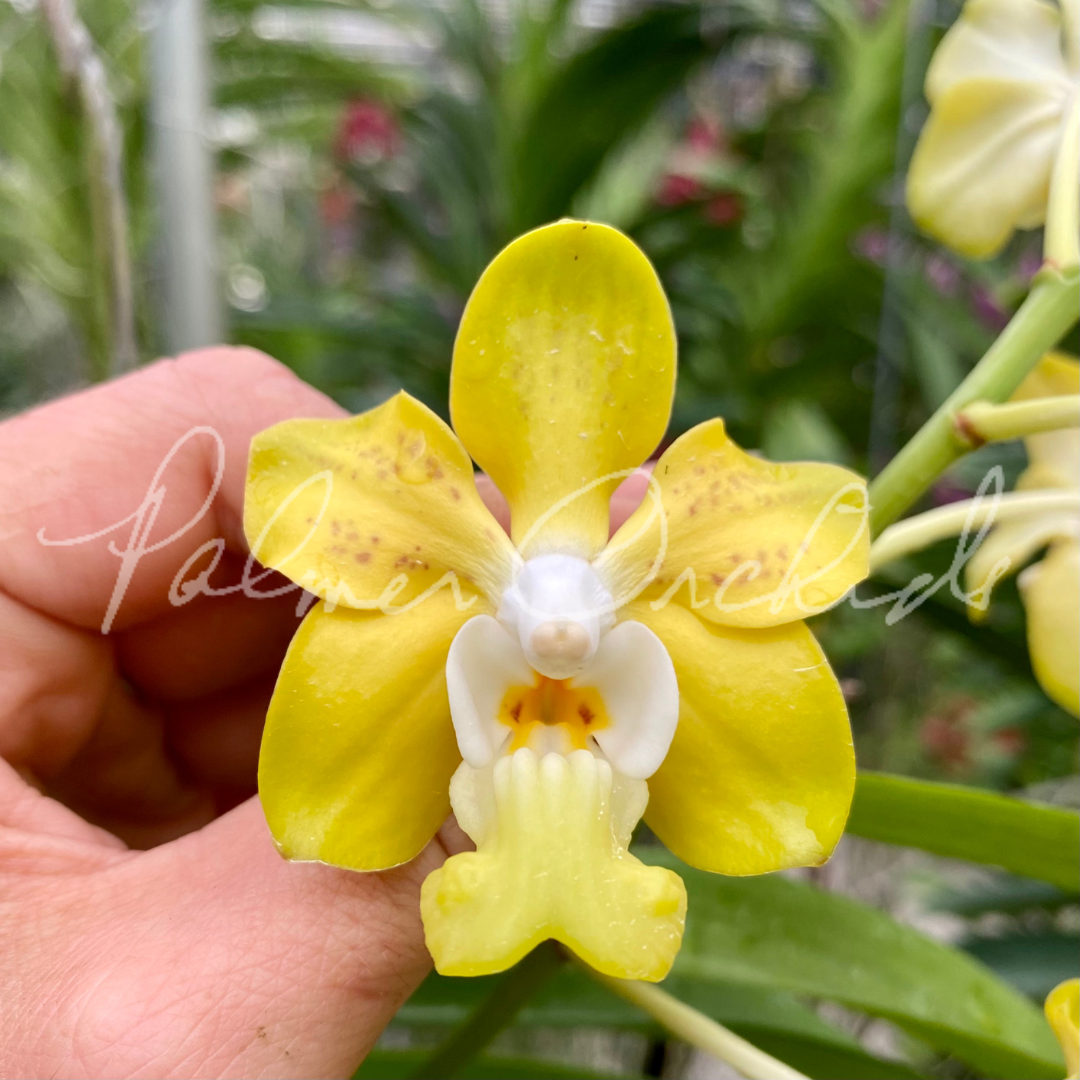
x sib
Vanda denisoniana is native to Southern China and southeast Asia, where it can be found growing on the trunks of trees in montane forests. Plants produce waxy, substantive flowers in shades of buttery yellow to golden yellow—and sometimes even orange! The lip of each flower, by contrast, is light yellow and uniquely fiddle-shaped.
V. denisoniana is prized for its vanilla-like fragrance, which is typically strongest in the evening and during the nighttime hours.
Grown from seed.
Plants Available: Growing in 2” pots and in baskets. Examples of the sizes available are pictured. The Basket - NBS option is a plant that is near blooming-size.
Orchid Care: Grow in high light—bright, indirect sun (about 50% shade). Protect from direct midday sun. Younger plants should be kept in slightly shadier conditions than mature, blooming-size plants to ensure robust root and foliar development. Plants may be grown in hanging pots or slatted baskets that allow roots to expand and hang freely. Provide strong air circulation and high humidity in the growing environment and water regularly. Plants should be watered daily when conditions are hot and plants do not receive rain. Fertilize weakly, weekly.
-
10.15.26
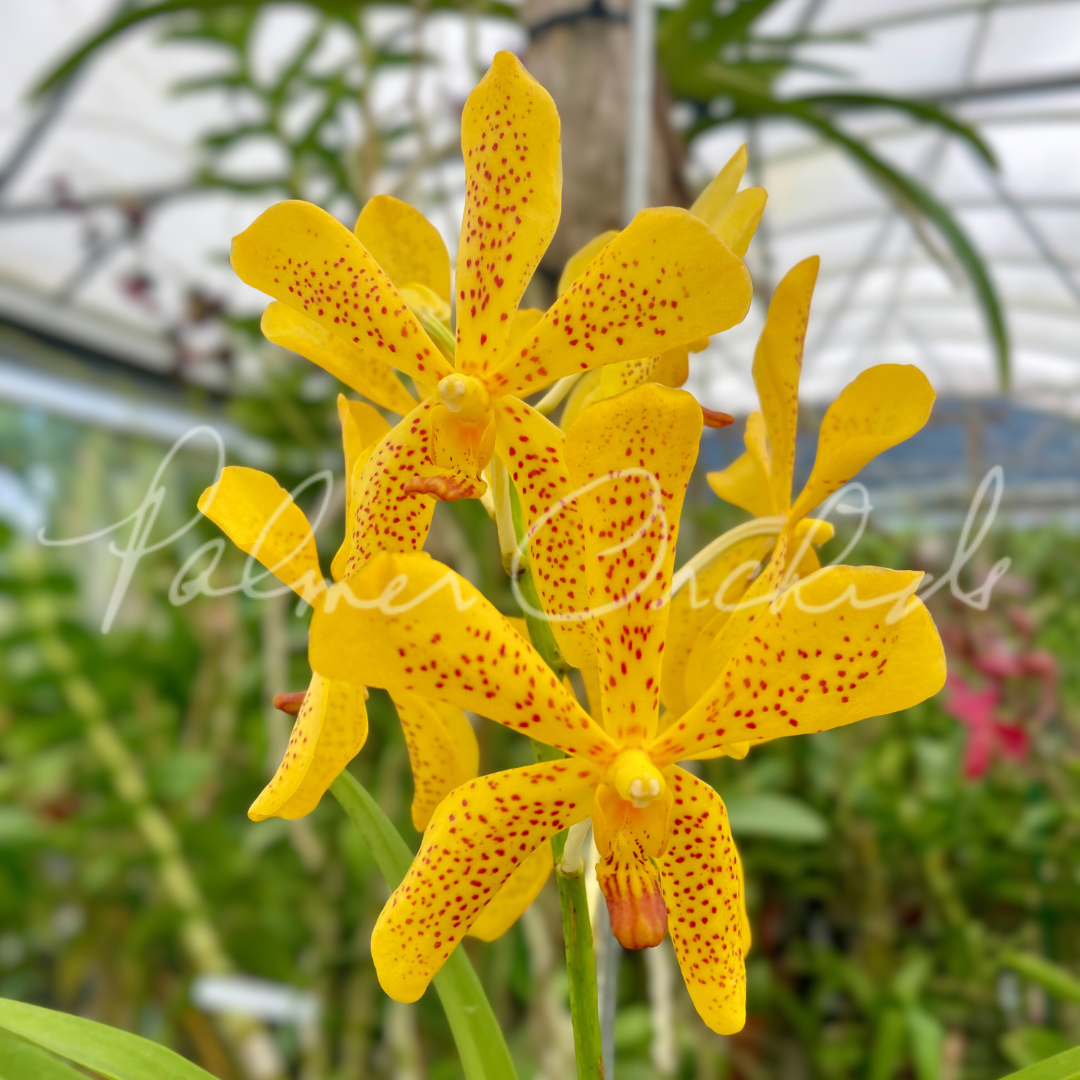
(Aranda Sayan × Vanda Duang Porn)
This Aranda hybrid produces yellow flowers with pin prick red spots. Ideal for high light environments and, in subtropical and tropical climates, for adding a tropical touch to landscaping.
Mericlone.
Plants Available: Growing in 2” pots. Plants are blooming-size. An example of the size available is pictured.
Orchid Care: Grow in high light—bright, indirect sun (about 50-70% sunlight). Provide strong air circulation and high humidity. Water regularly—daily when conditions are hot and plants do not receive rain. Protect from temperatures below 60F. Fertilize weakly, weekly.
-
09.13.25
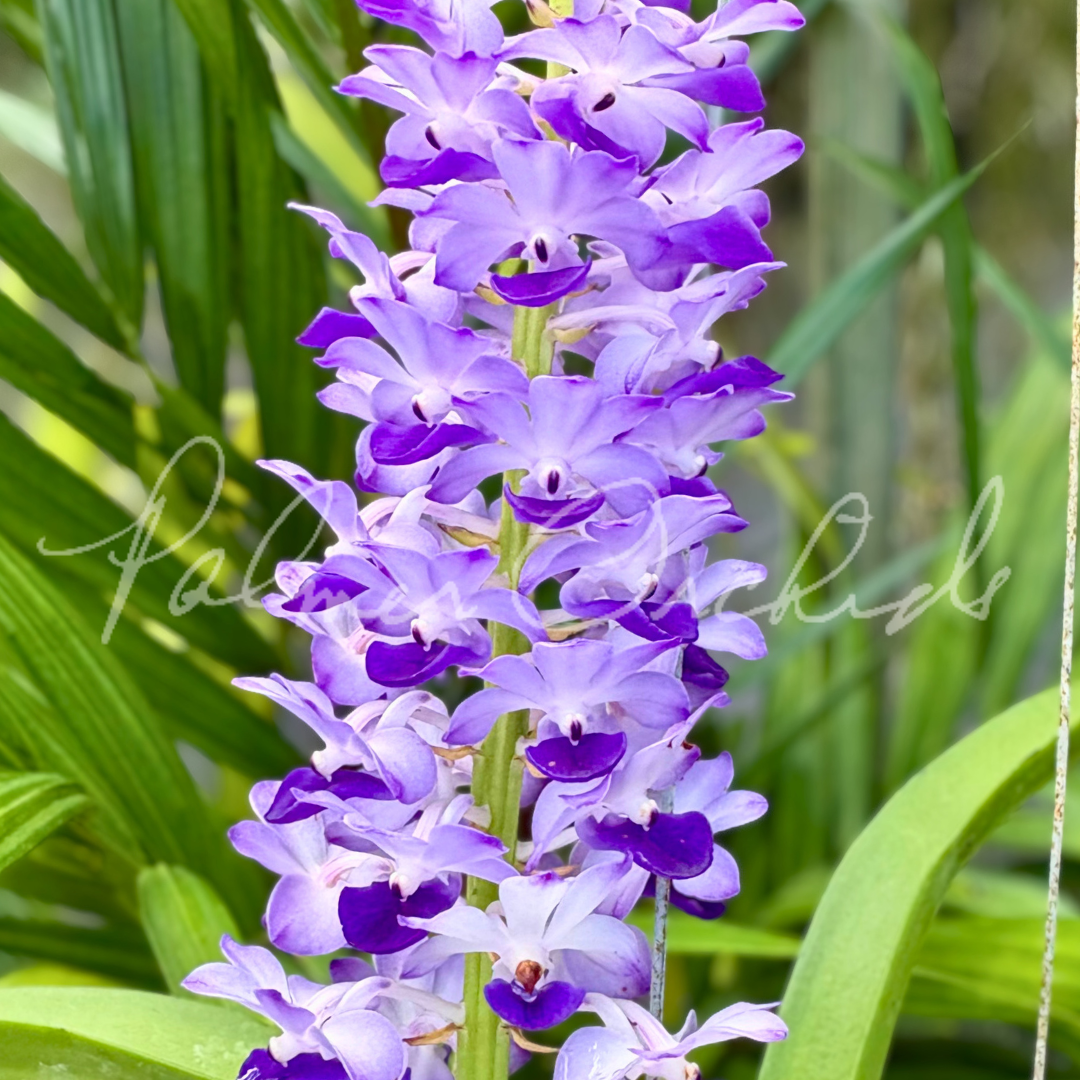
Lavender/coerulea form of Rhynchostylis coelestis, a vandaceaous species native to Southeast Asia. Plants are compact in growth habit. Blooms are fragrant.
Grown from seed so flower characteristics vary somewhat from plant to plant. Blooms from multiple plants are pictured to illustration variations.
Plants Available: Examples of the size available. Orders will be filled with plants in bloom as stock permits. Otherwise, mature plants that have bloomed previously.
Orchid Care: Grow in bright, filtered light (no direct sun), with good air circulation and high humidity. As with Vandas, Rhynchos can be grown bare-root, without substrate, established in wooden baskets or mounted.
Water generously and fertilize regularly while plants are in active growth (typically spring and summer). Reduce water and fertilizer somewhat during the cooler months, commensurate with the lowering of temperatures in the growing environment.
Note: These plants do not tolerate the cold. Protect them from temperatures below 50-60 F.
—
07.24.26
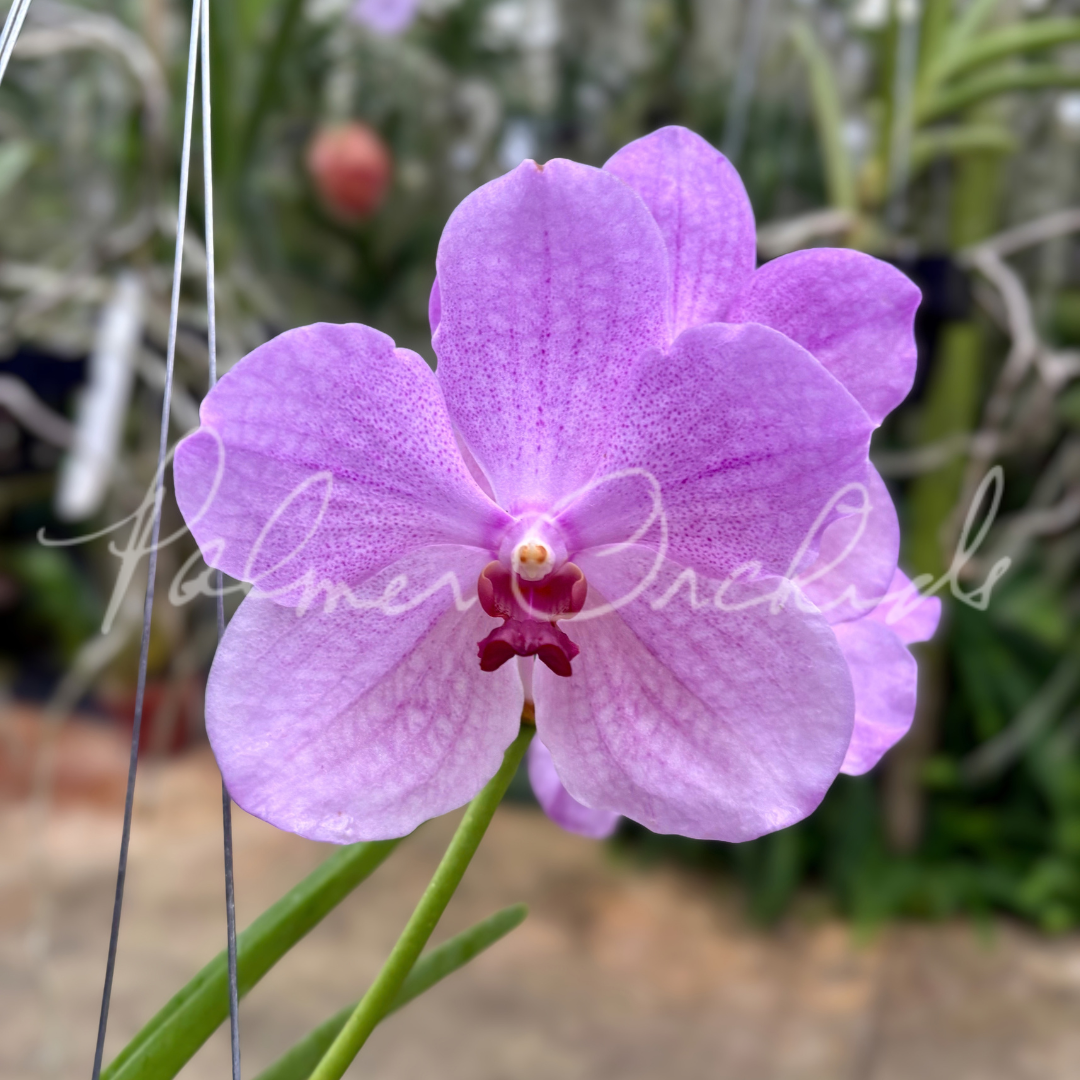
This hybrid does not have a registered name.
Plants produce large pink flowers. The blooms pictured are early examples from young plants in the crop. Expect multiple blooms per spike on mature plants.
Pda. Mevr. L. Velthuis × V. Nichanan is a quarter-terete Vanda hybrid, also referred to as a Paplionanda. The light requirements for Paplionandas are high, making them ideal candidates for landscaping in tropical and subtropical locations.
Grown from seed so flower characteristics may vary somewhat from plant to plant.
Plants Available: Growing in 2” pots (near blooming-size/blooming-size) pots and hanging baskets (blooming-size/first bloom). Examples of the available sizes are pictured. Plants in 2” pots are ready for mounting, establishing in baskets, or potting (e.g. with coarse well-draining material like charcoal and lava rock).
Orchid Care: Grow in high light and water often. This variety will perform best with bright, filtered sun for most of the day. It can tolerate full morning sun but should be provided with some shade or filtered light during the hottest midday hours. In the hotter months, plants should be watered daily. Watering can be reduced somewhat with cooler temperatures, when plant growth has slowed. Fertilize weakly, weekly.
-
10.08.26

This hybrid does not currently have a registered name.
Large-flowered golden yellow Vanda hybrid.
Plants Available: Plants are mature or previously bloomed. An example of a blooming-size plant is pictured.
Orchid Care: Grow in very bright, indirect light with strong air circulation and high humidity. Water regularly—daily when conditions are hot and plants do not receive rain. Protect from temperatures below 60F. Fertilize weakly, weekly.
-
07.25.26
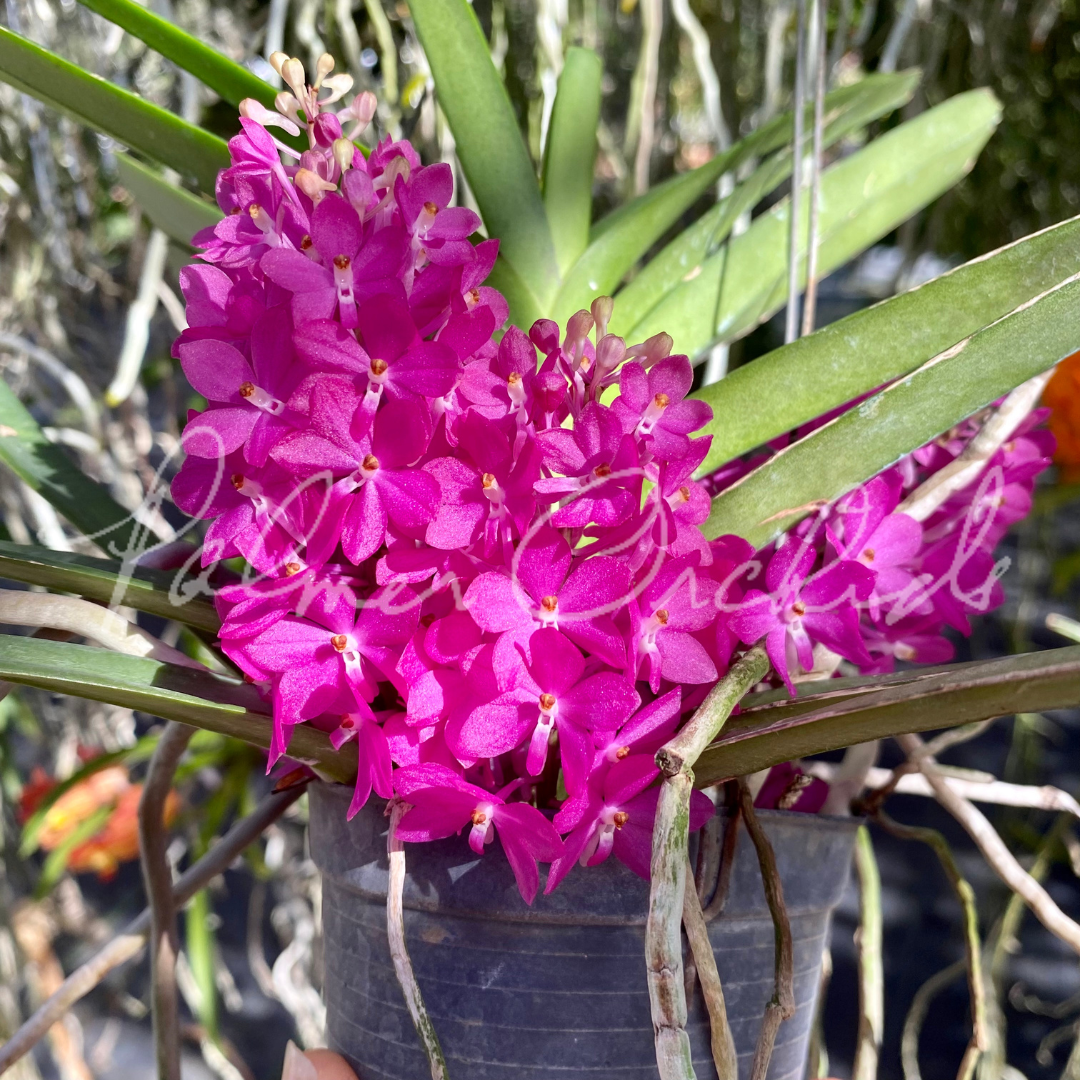
Syn. Vanda ampullacea
Pink form of a compact Vanda/Ascocentrum species. Typically blooms in late spring/early summer.
Plants Available: Growing in baskets. Plants with single, double, and multiple fans or growths. Orders will be filled with plants in spike/bud/flower as blooming season and stock permit. Otherwise mature, previously bloomed plants.
Orchid Care: Give plants moderate light, somewhat filtered or diffused. No direct sun at midday (11a-3p). Water heavily when plants are actively growing (late spring through early autumn), gradually reducing after new growths mature.
Grow in a well-drained container that will allow for adequate air circulation around the roots. Wooden baskets, tree fern, cork and driftwood mounts are all good options. Plants available are growing in slatted plastic baskets with no media.
-
04.18.26
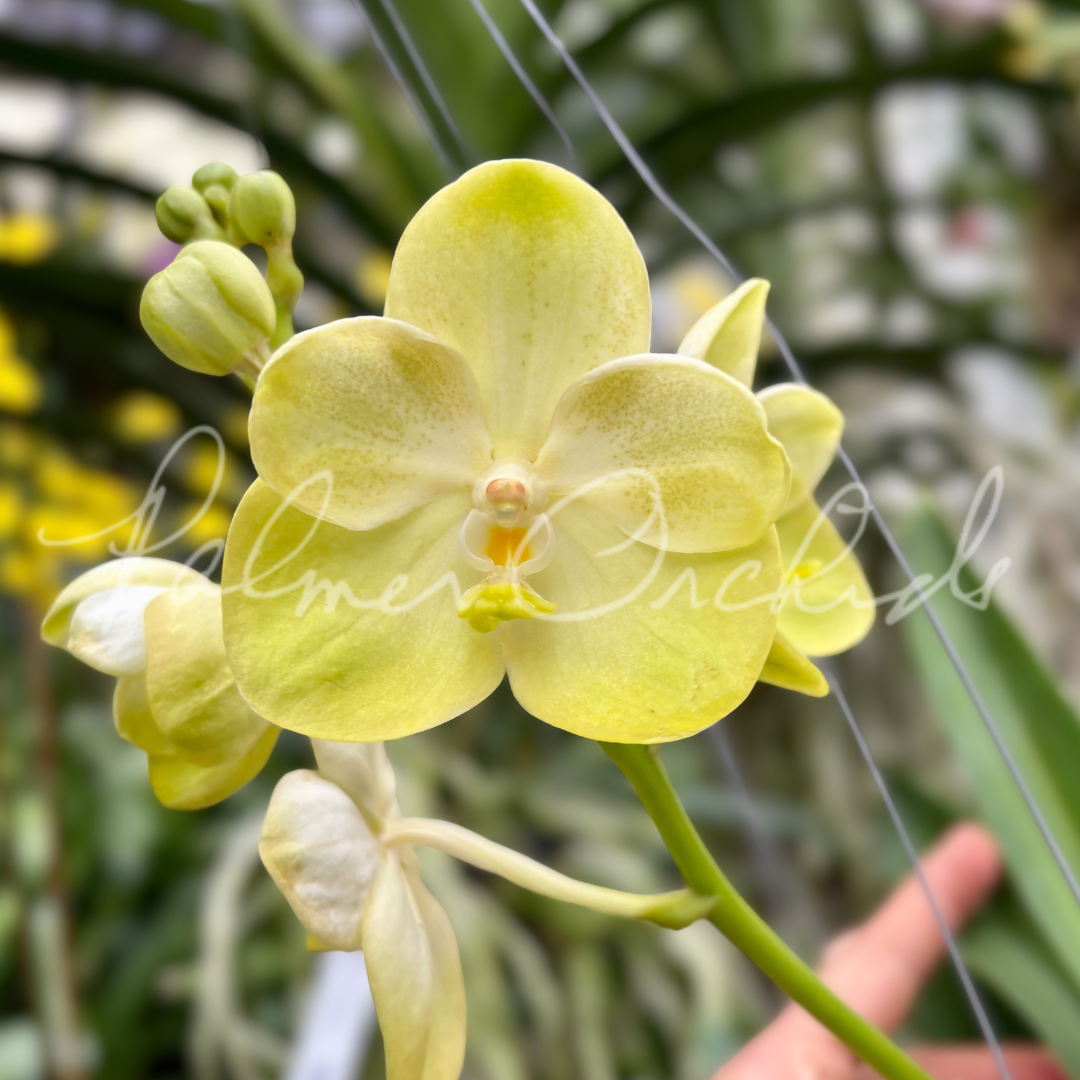
(Vanda Rasri Gold x Vanda Suksamran Gold)
Large-flowered yellow Vanda hybrid with faint spotting.
Mericlone.
Plants Available: Plants are blooming-size. An example of the size available is pictured.
Orchid Care: Grow in bright, indirect light with strong air circulation and high humidity. Water regularly—daily when conditions are hot and plants do not receive rain. Protect from temperatures below 60F. Fertilize weakly, weekly.
-
09.19.25
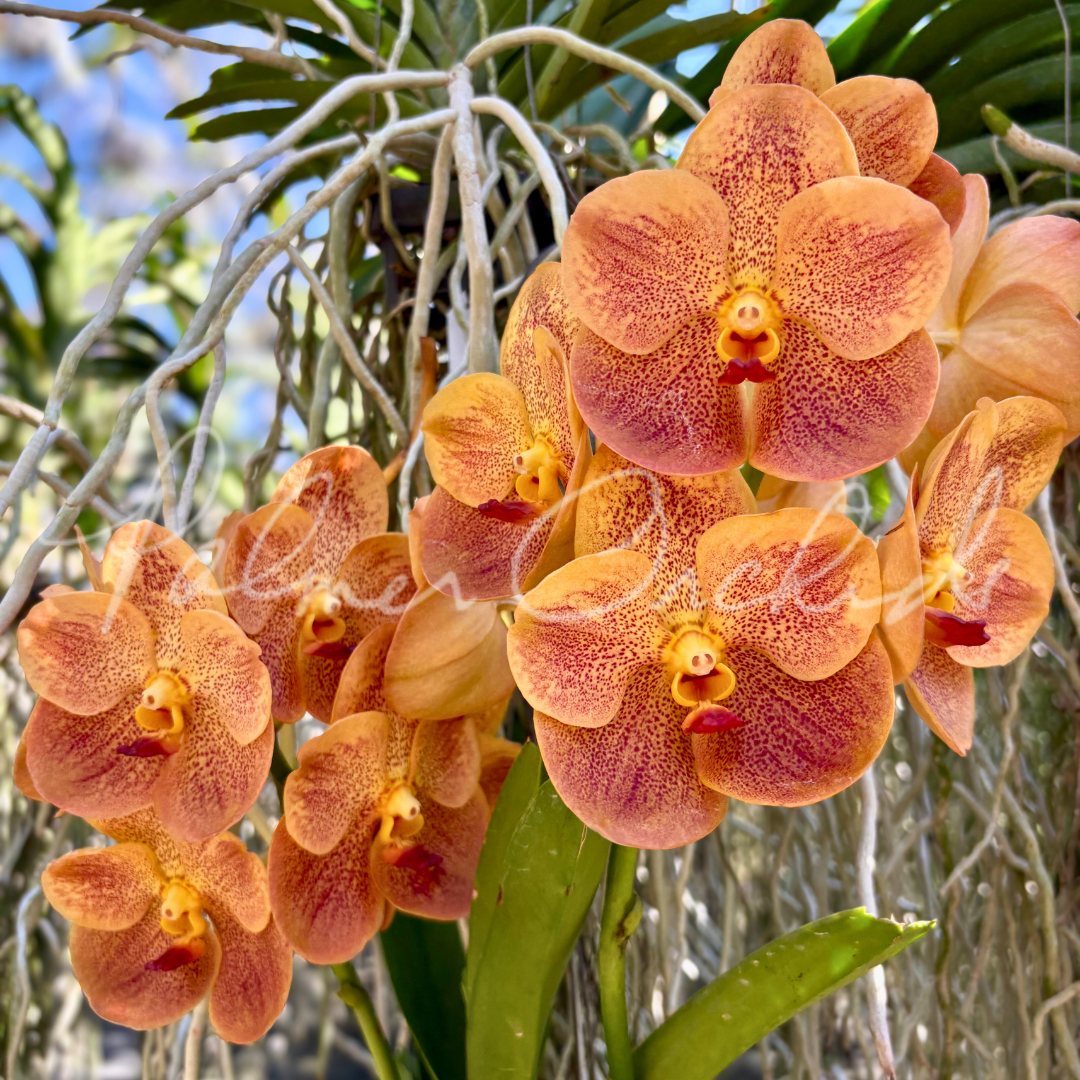
(Vanda Fuchs Harvest Moon x Dhongchai Pusavat)
‘No. 502’ mericlone.
Plants Available: Mature single and double plant options are available. Examples each are pictured. Orders will be filled with plants in spike/bud/bloom as blooming season and blooming stock permit. Otherwise, mature plants, previously bloomed.
Orchid Care: Grow in bright indirect light (about 60-70% shade), with strong air circulation and moderate to high humidity. Water generously. In the hotter months, plants should be watered daily. Watering can be reduced somewhat with cooler temperatures, when plants are not actively growing. Fertilize weakly, weekly.
—
09.20.25
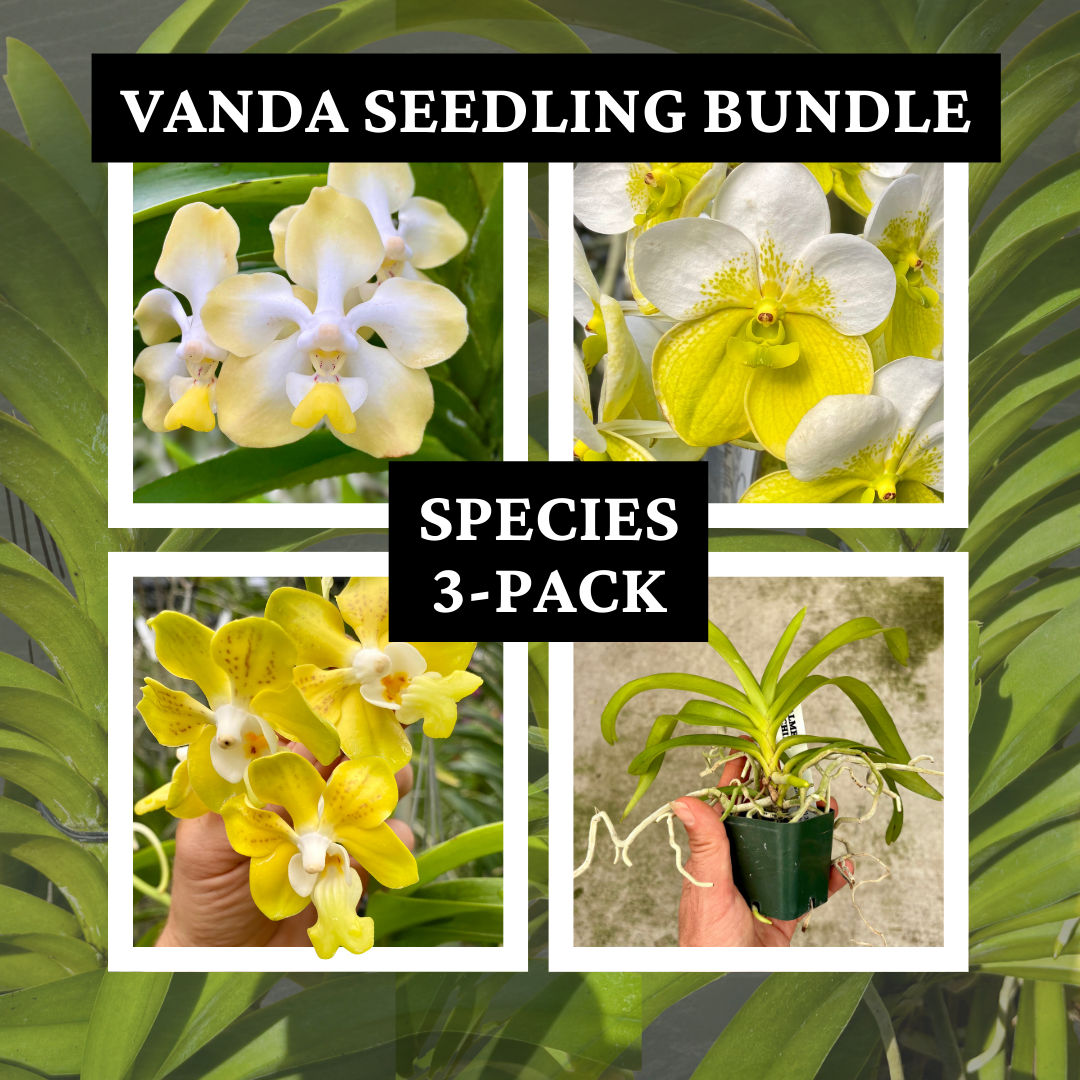
This is a starter pack of three Vanda species in 2” pots—Vanda sanderiana f. alba, Vanda denisoniana, and Vanda dearei.
Each variety offered is a seedling.
Plants Available: The 2” Pot - 3-Pack includes the following three varieties:
Vanda sanderiana f. alba
Vanda denisoniana
Vanda dearei
Plants are growing in 2” pots. Examples of the size available are pictured.
-
09.16.25
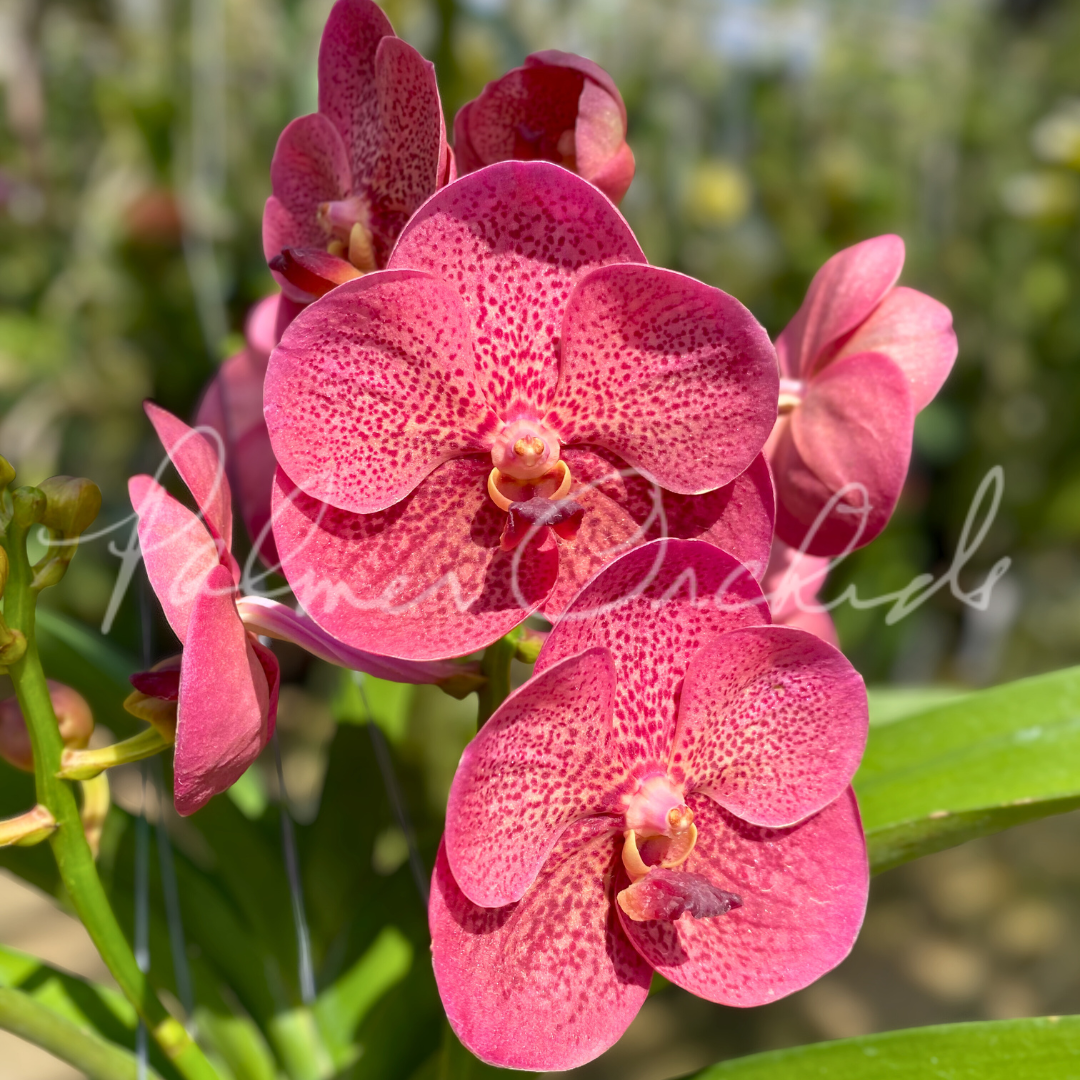
(Vanda Kulwadee Fragrance × Vanda Doctor Anek)
Vanda Uraiwan Belle is hybrid with multiple cultivars in circulation. Each features the characteristic round blooms and spotting of the V. Kulwadee Fragrance parent. This particular clone is the “red” version of the hybrid.
Red Mericlone.
Plants Available: Mature and large plants. An examples of the Large is pictured. Orders will be filled with plants in spike/bud/bloom as blooming season and stock permit.
Orchid Care: Grow in bright light and water often. In the hotter months, plants should be watered daily. Reduce watering somewhat with cooler temperatures, when plants are not actively growing. Fertilize weakly, weekly.
-
09.13.25

(Pda. Mimi Palmer x V. Doctor Anek)
Fragrant Mimi Palmer hybrid with waxy purple flowers.
Mericlone.
Plants Available: An example of the size available is pictured. Orders will be filled with plants in spike/bud/bloom as blooming season and blooming stock permit.
Orchid Care: Grow in bright light and water often. In the hotter months, plants should be watered daily. Reduce watering somewhat with cooler temperatures, when plants are not actively growing.
—
06.21.25
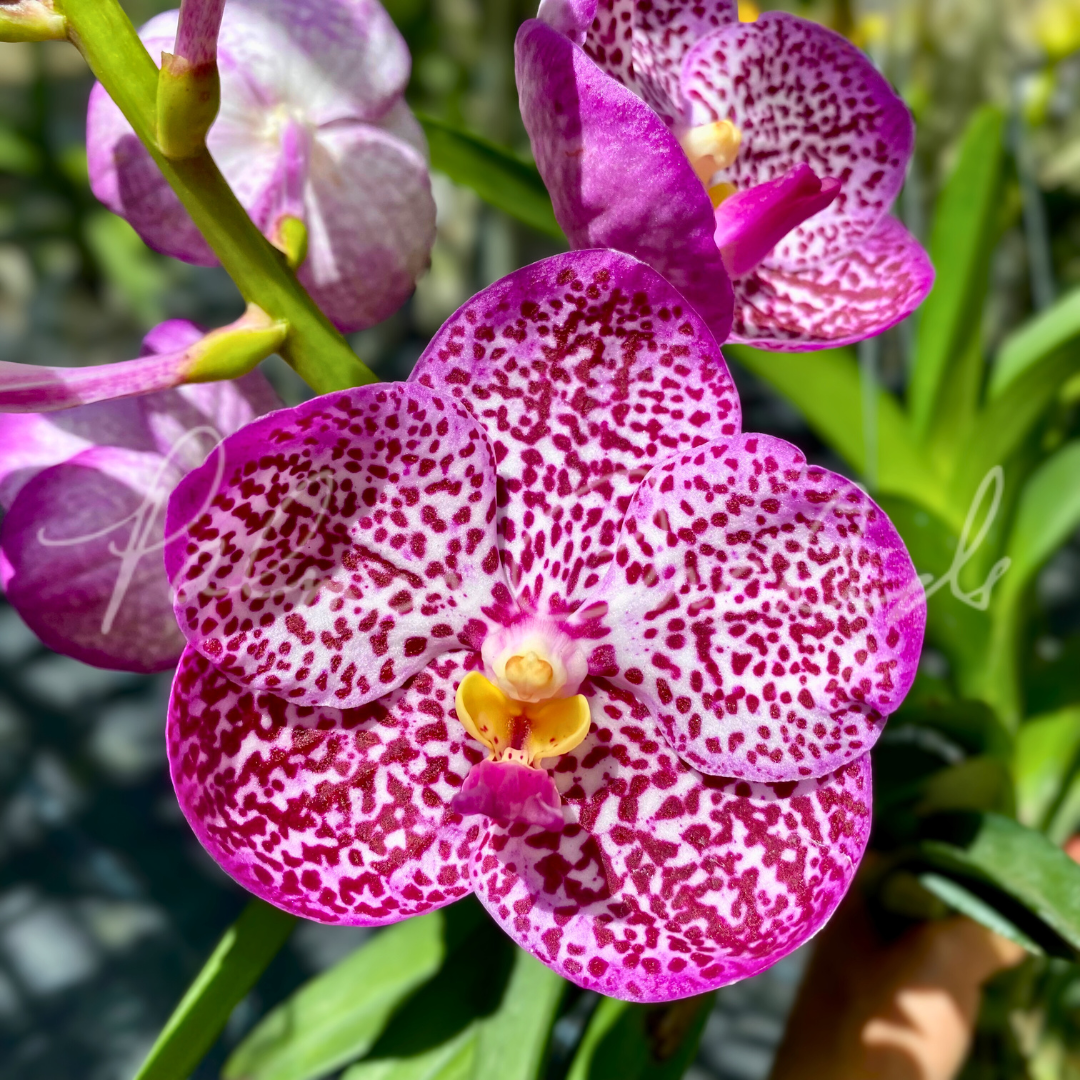
(Vanda Kulwadee Fragrance × Vanda Doctor Anek)
Round, spotted blooms with an electric pink perimeter.
Mericlone.
Plants Available: Single and double plants. Examples are pictured. Orders will be filled with plants in spike/bud/bloom as blooming season and stock permit.
Orchid Care: Grow in bright light and water often. In the hotter months, plants should be watered daily. Reduce watering somewhat with cooler temperatures, when plants are not actively growing. Fertilize weakly, weekly.
-
09.06.25
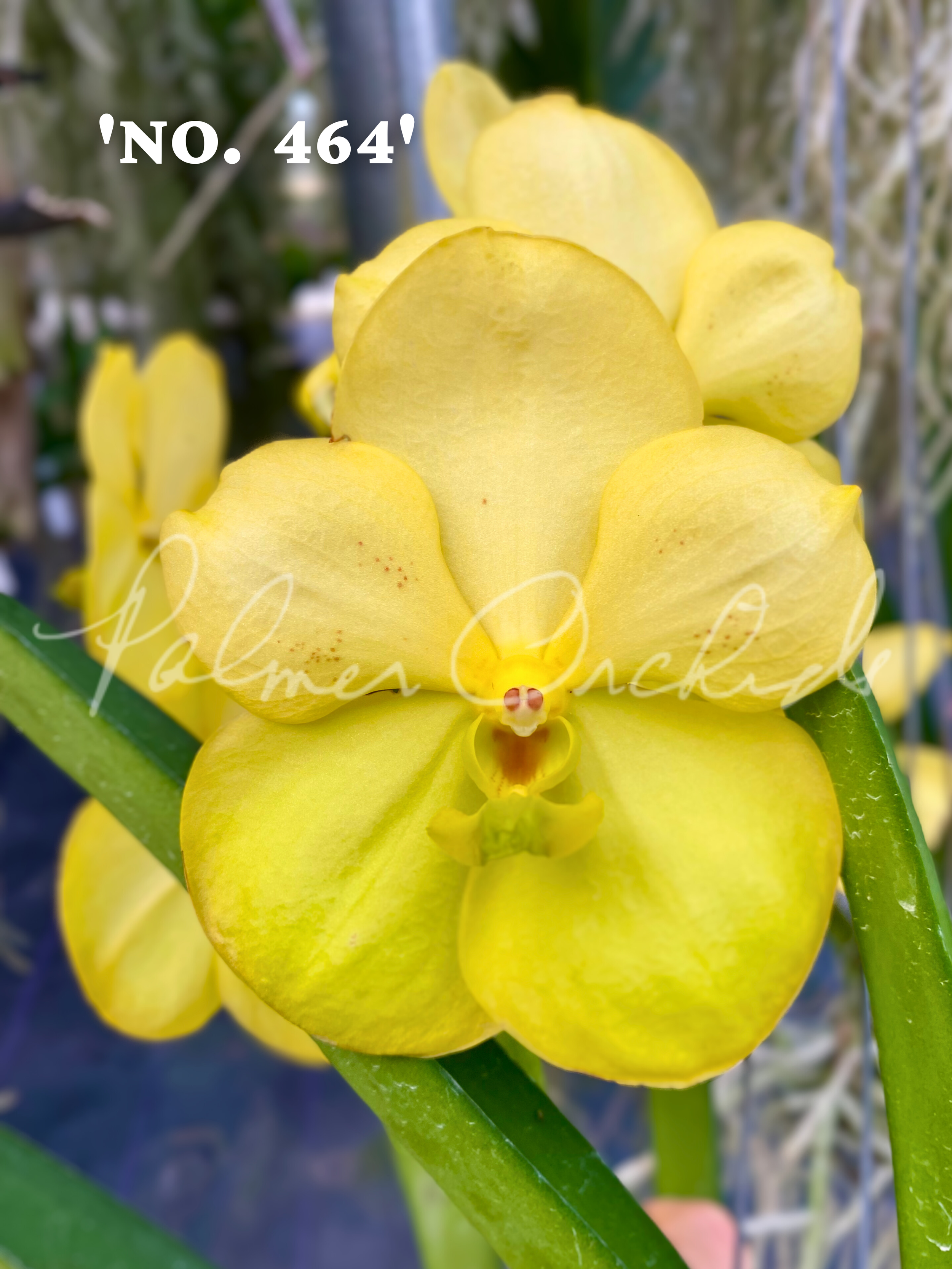
(Vanda Nopporn Gold × Vanda Rasri Gold) Syn. Ascda. Somsri Gold
Large-flowered yellow Vanda hybrid.
The ‘Pachara No. 1’ mericlone typically blooms in the summer months. The ‘No. 464’ mericlone typically blooms late fall/early winter.
Plants Available: ‘No. 464’ mericlone. Plants are mature. Examples of the size available are pictured. Orders will be filled with plants in spike/bud/flower as blooming season and blooming stock permit. Otherwise, mature plants that have bloomed previously.
Orchid Care: This hybrid is nearly 75% Vanda sanderiana and can be cultivated similarly. Grow in very bright, indirect light with strong air circulation and high humidity. Water regularly—daily when conditions are hot and plants do not receive rain. Protect from temperatures below 60F. Fertilize weakly, weekly.
-
09.01.25

(V. Robert's Delight x Pda. Mimi Palmer)
This Mimi Palmer hybrid produces indigo purple and white flowers. Blooms are fragrant.
Mericlone.
Plants Available: An example of the size available is pictured. Plants are blooming-size.
Orchid Care: Grow in high light—bright and indirect—and water generously. In the hotter months, plants should be watered daily. Watering can be reduced somewhat with cooler temperatures. Fertilize weakly, weekly.
—
06.21.25
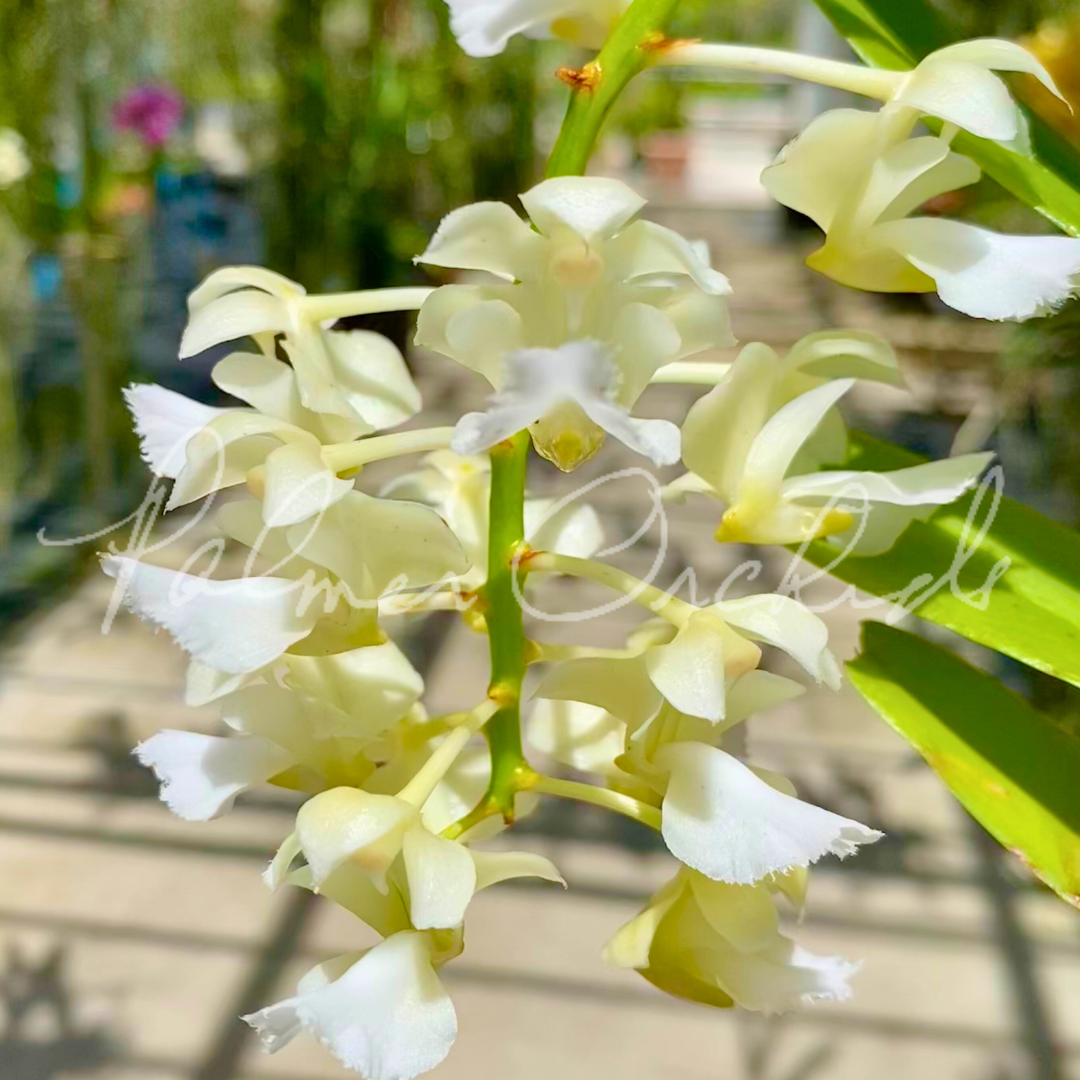
‘No. 176’ mericlone.
Lime green color form of Aerides houlletiana species. Flowers are waxy and substantive with a sweet, lemony scent.
Plants Available: Examples of the available sizes are pictured.
Orchid Care: Grow in bright, indirect light with high humidity and strong air circulation. Plants can be grown bare root (our method) or mounted. We recommend wooden baskets for growing at home since these can accommodate the growth of the plant and retain some moisture while still allowing air circulation to the roots. During the summer, daily watering is a must for plants like these grown without media. Water can be reduced somewhat during the cooler months, provided that plants are not dried hard between waterings.
-
07.23.24
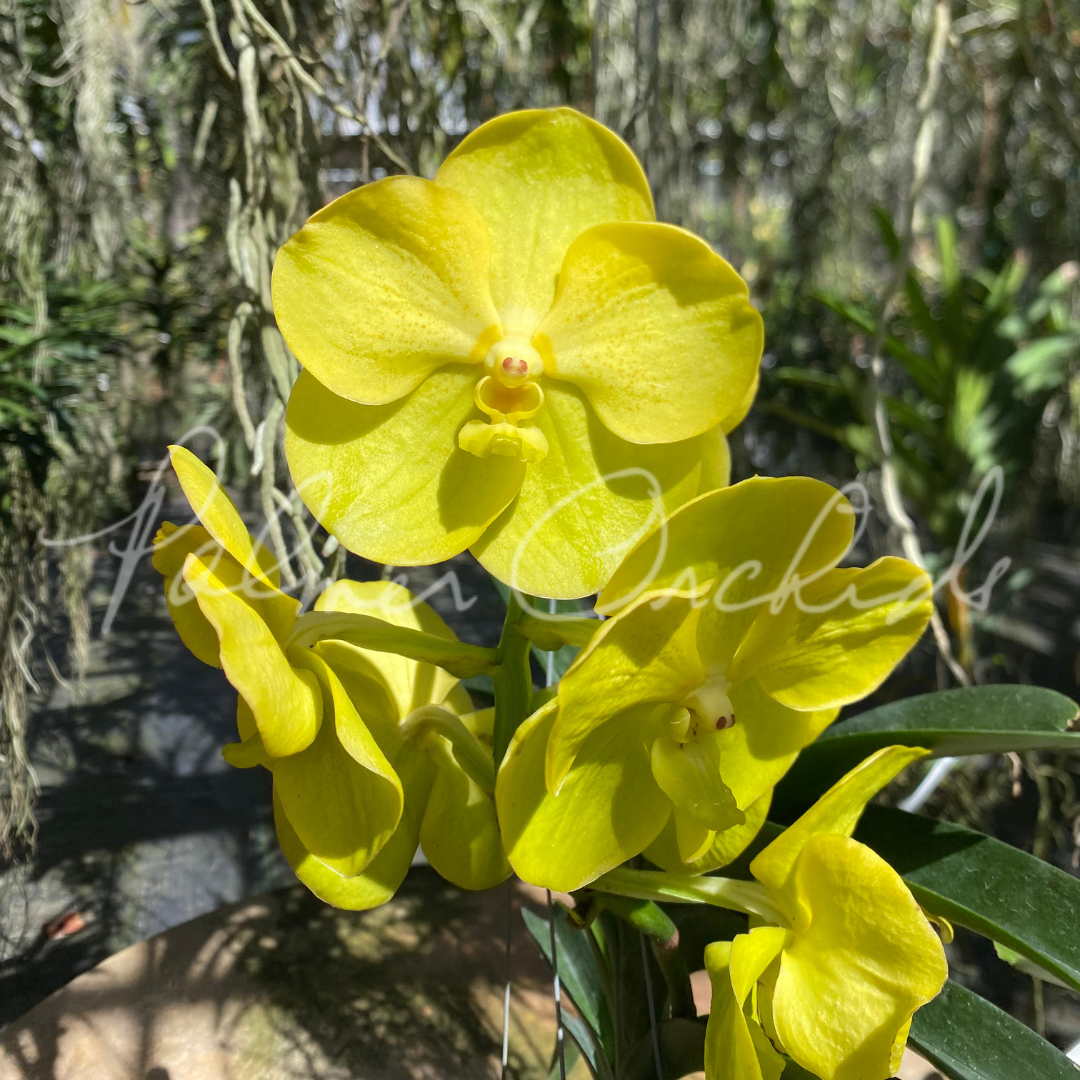
(Vanda Suksamran Gold × Vanda Thai Spots)
Mericlone.
Plants Available: Plants are mature. Orders will be filled with plants in spike/bud/flower as blooming season and blooming stock permit. Otherwise, plants that have bloomed previously.
Orchid Care: Grow in bright, indirect light with strong air circulation and high humidity. Water regularly—daily when conditions are hot and plants do not receive rain. Protect from temperatures below 60F. Fertilize weakly, weekly.
-
10.17.24

Syn. Vanda falcata
Neof. falcata are vandaceous. Grow in bright indirect light and water daily.
These plants grow hanging from the uppermost rungs in our greenhouses—the brightest spot under the shade cloth. Reduce water somewhat in cooler months, but plants should not be allowed to dry out completely.
Blooms in the summer months. Fragrant.
Plants Available: Growing in 3” pots. An example of the 3" Pot option is pictured. Plants are blooming-size.
--
09.12.24

(Vanda tessellata x Vanda Pudtan-Yip Sum Wah)
Medium-sized and somewhat waxy flowers (a la Vanda tessellata). Blooms are shades of orange and yellow with dark burnt orange to red spots.
'Orange Spots' mericlone.
Plants Available: An example of the size available is pictured. Orders will be filled with plants in spike or bloom as blooming season and blooming stock permit; otherwise, mature plants, previously bloomed.
Orchid Care: Grow in bright, indirect light and water generously. In the hotter months, plants should be watered daily. Watering can be reduced somewhat with cooler temperatures, but do not allow the foliage to become wrinkled. Fertilize weakly, weekly.
-
09.07.24
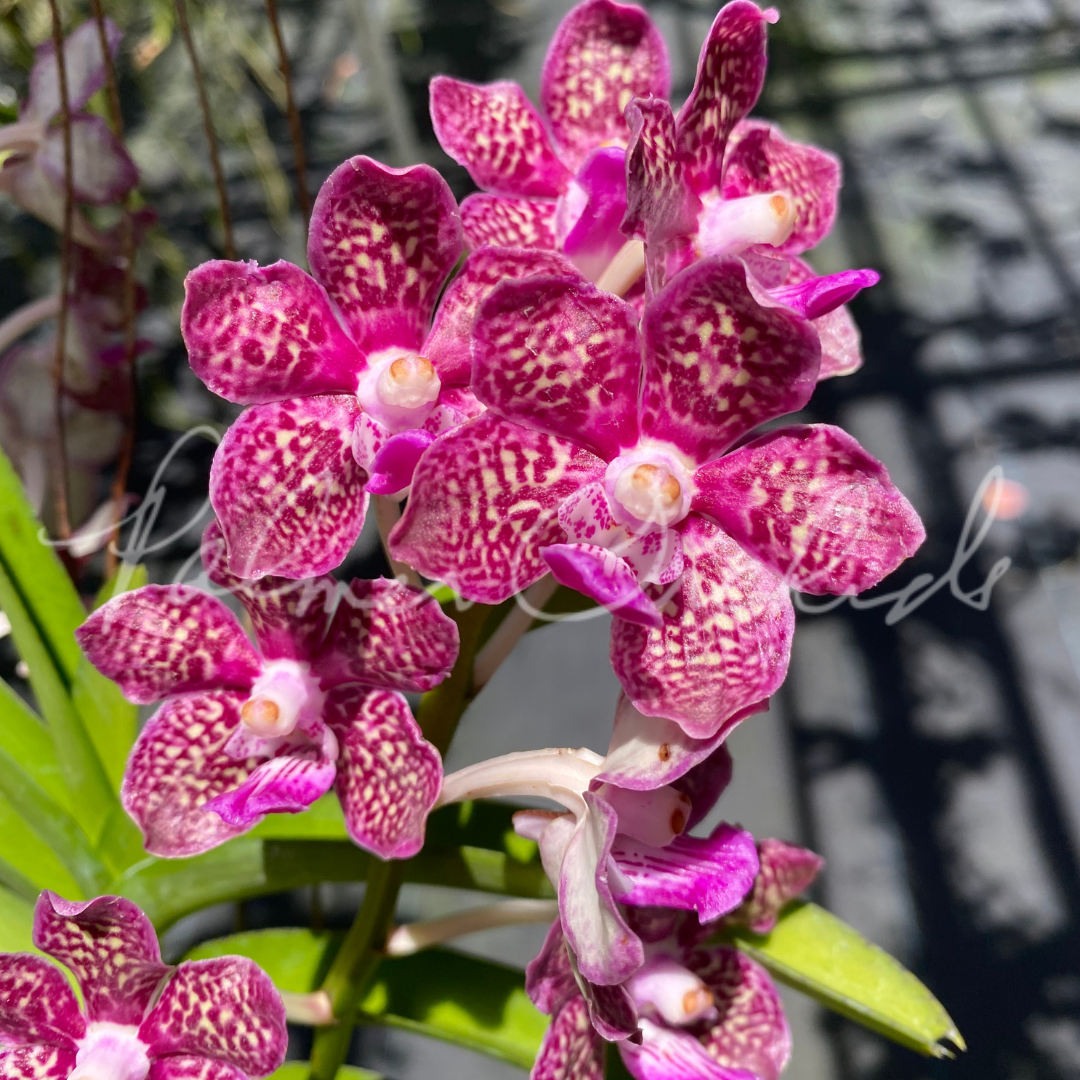
(Van. Ocean Storm x Pda. Mimi Palmer)
Fragrant Mimi Palmer hybrid with bright pink tessellations. Blooms in a head of pink and white flowers, with waxy substance.
Mericlone.
Plants Available: Mature plants, previously bloomed. Examples of the available plants are pictured. The plants pictured are roughly 22” (Size 1) and 26” (Size 2) from the base of the basket to the tip of the top leaf.
Orchid Care: Bright light, lots of water—in the summer, that’s daily watering or equivalent as supplemented by rain. You’ll know your plants are getting a good amount of light when you see a reddish/purple pigment darkening the edges of the foliage a bit.
—
08.18.26

(Vanda Haad Song-Khla × Red Devil)
Red Ascocenda-type Vanda.
Mericlone.
Plants Available: Mature. Orders will be filled with plants in spike/bud/bloom as blooming season and blooming stock permit.
Orchid Care: Grow in bright, indirect light and warm-to-hot conditions with high humidity and strong air circulation. Protect from temperatures below 55F. Grow in a basket or mounted. If grown without media or grown on a mount/basket that does not retain moisture (e.g. a plastic basket), plants should be watered daily or nearly so during the warmer months. Water can be reduced somewhat with cooler temperatures. Fertilize weakly, weekly.
-
05.23.25
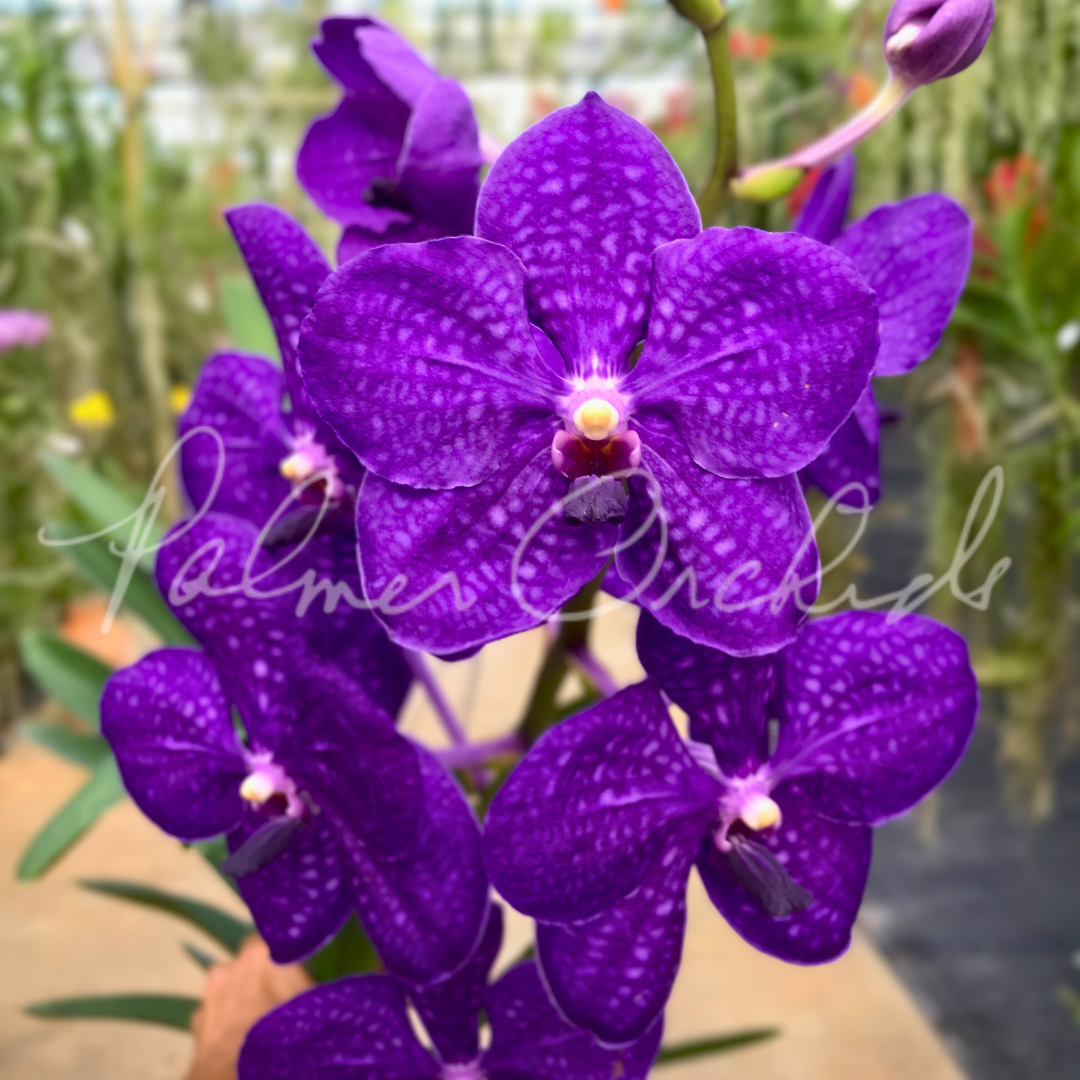
(Vanda Karulea × Vanda Gordon Dillon)
A popular first for new growers interested in trying their hand at Vandas. Pachara Delight tends to bloom twice (and sometimes thrice!) a year and its striking color certainly stands out in the landscaping or on the lanai.
Plants Available: Blooming-size plants. Examples of the size available are pictured.
Orchid Care: Grow in high light—bright, but indirect sun—and water generously. In the hotter months, plants should be watered daily. Reduce watering somewhat with cooler temperatures, when plants are not actively growing. Fertilize weakly, weekly.
-
07.24.26
>> See Additional Vandas <<
(Van. Lou Sneary x Rhy. coelestis)
Compact Neofinetia-Rhy. coelestis hybrid. Blooms are light coerulea (darker when grown in higher light) and fragrant.
Grown from seed so flower characteristics vary somewhat from plant to plant.
Plants Available: Examples of the size available are pictured. Plants have multiples fans and are growing bare root on black plastic plaques.
Orchid Care: Grow in bright, indirect light, with strong air circulation and moderate to high humidity. Plants can grown as they come on plastic plaques or remounted on cork or wood. Water generously, allowing the root system to dry thoroughly between waterings. Fertilize weakly, weekly.
—
09.12.26